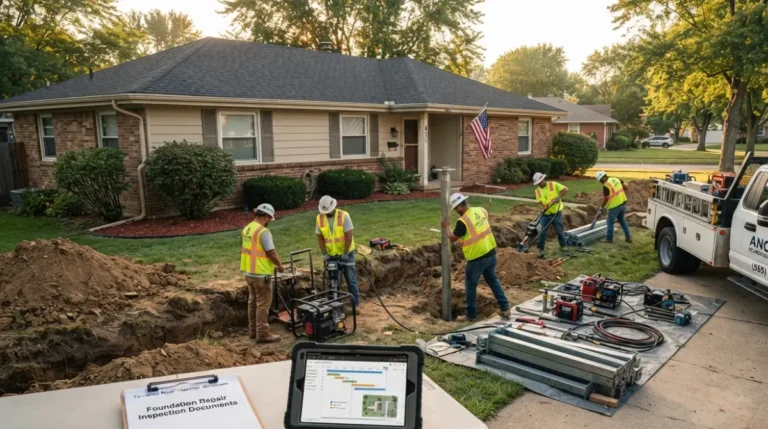
Common Foundation Drainage Problems and How to Fix Them

Foundation drainage fixes manage water, not movement. Here’s the 6-inch grade check, downspout table, and signs it’s time to call an engineer.
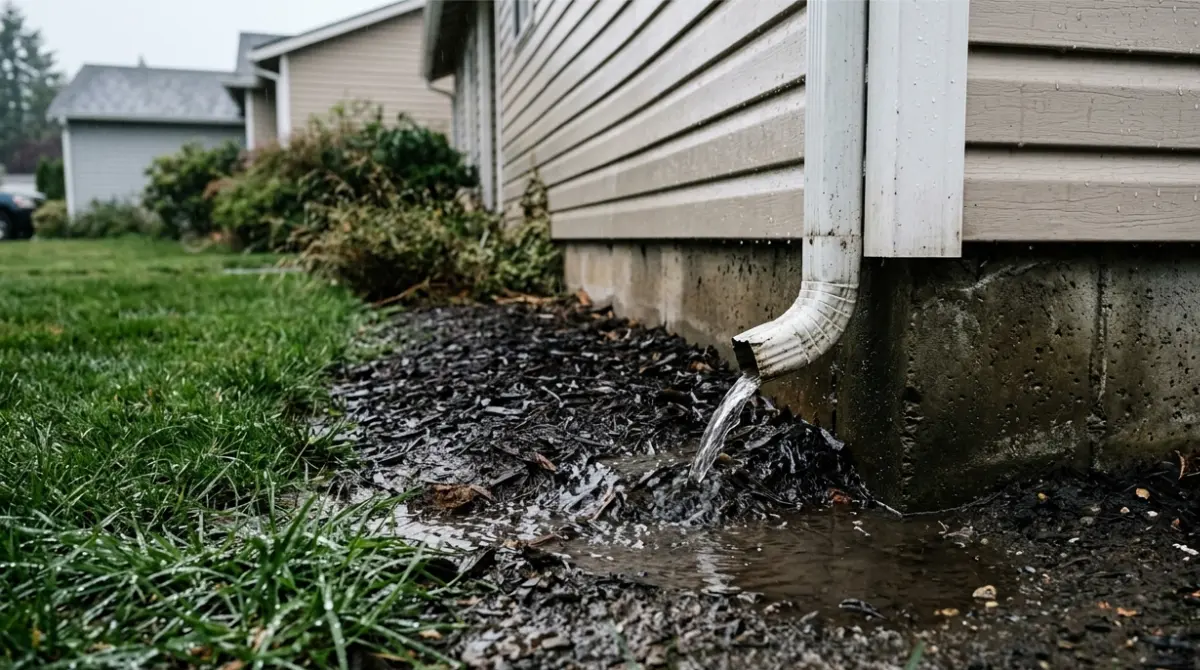
Table of Contents
Is water at your foundation a drainage problem?
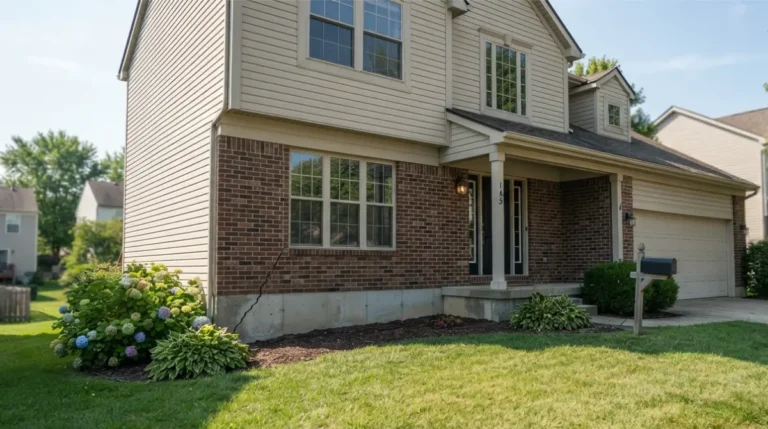
Water at the wall after rain is usually a foundation drainage problem, and often a cheap one to fix. If you see cracks, start with what foundation cracks mean by pattern; if water is already inside, fix the outside first, then read the last section.
Signs water is reaching your foundation
Roof water that saturates the soil can wick through a foundation, inviting mold and rot, per the Department of Energy’s building science guidance.
A 10-minute walk-around after rain
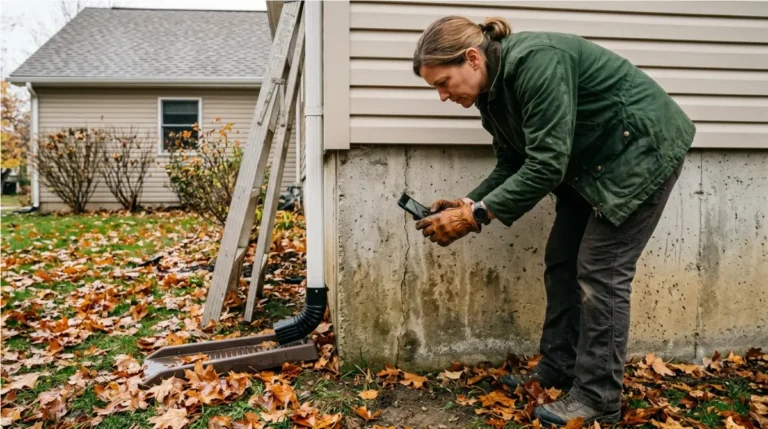
Walk the perimeter and note pooling, spilling gutters, downspouts emptying at the wall, and soil sloping toward the house.
ℹ️ Safety Note: Gutter work means ladders, digging can hit buried utilities, and cracks need a professional’s eye. This is general information; hire a licensed pro and follow local code and permits.
How much should the ground slope away from your house?
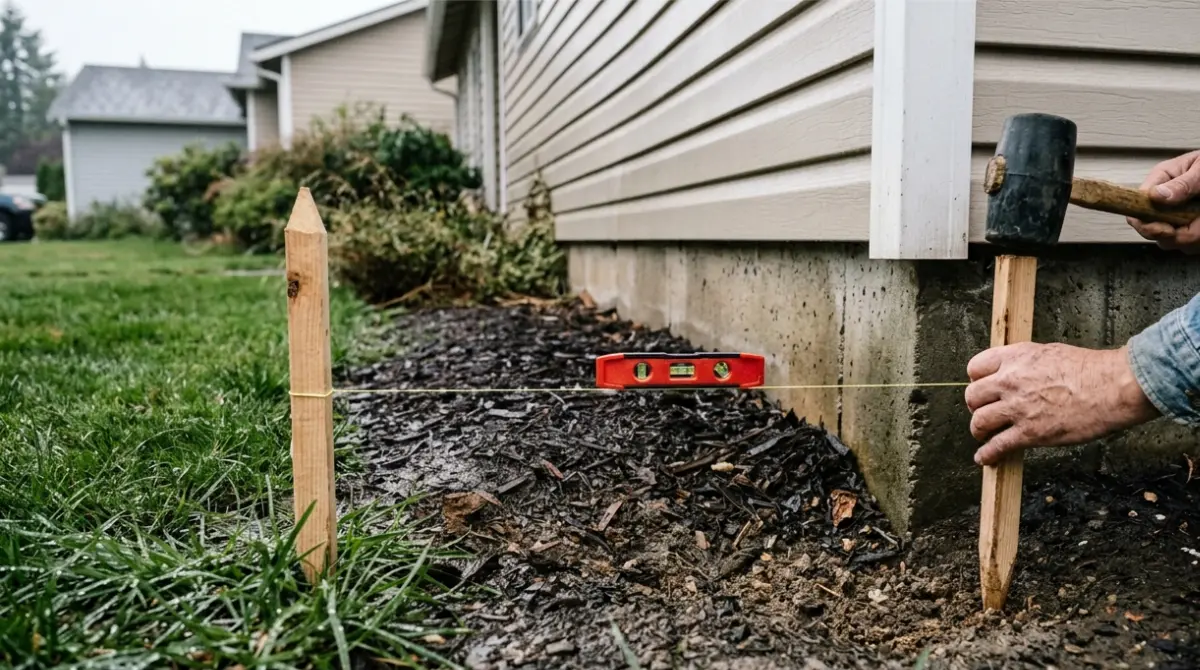
The ground should fall at least 6 inches in the first 10 feet, a 5% slope, under International Residential Code section R401.3 for new homes.
The 6-inches-in-10-feet rule
Iowa State Extension gives the same drop for existing homes. It’s 5%, not 6%: 6 inches ÷ 120 inches = 0.05.
How to check your slope
Stake the soil at the wall and 10 feet out, stretch a string line and level between them, and measure down at both stakes; the far reading should be 6 inches larger. Fill any low spot, and keep soil eight inches below wood siding.
When you can’t get 10 feet
Where walls or lot lines block it, the code calls for drains or swales, and patios within 10 feet should slope 2% away. For bigger jobs, see regrading around a foundation.
✅ Do This: Before a major regrade, ask a licensed civil engineer or general contractor whether it will push water onto a neighbor’s lot, and check local drainage rules.
Gutters: size, slope, and why they overflow
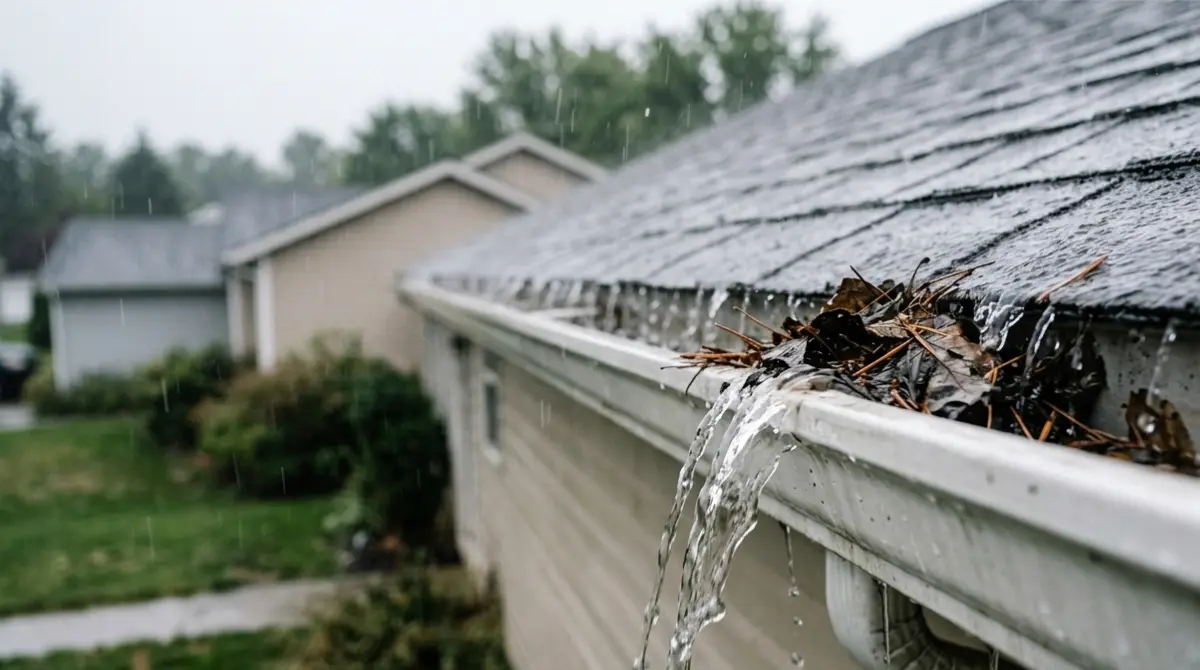
Gutters decide how much water reaches your foundation.
How much water your roof sends
📊 Tested / Spec: Roughly 620 gallons per inch of rain per 1,000 square feet of roof footprint (1,000 × 1/12 ft × 7.48 gal/ft³; the Las Vegas Valley Water District’s guide uses the same factor). Real collection runs lower.
Cleaning, slope, and overflow fixes
Clean gutters yearly, more often near trees, and slope them at least ¼ inch per 10 feet, per NREL’s Standard Work Specifications. Spillover in normal rain signals clogged or undersized gutters, says Fairfax County’s soil and water conservation district; our gutter maintenance guide covers the routine.
✅ Do This: If heights worry you, hire a licensed gutter or roofing contractor to check slope, downspout count, and sizing.
How far should a downspout drain from your foundation?
Discharge roof water farther than 5 feet from the foundation, and farther where basement water is a problem, per the Department of Energy and Iowa State Extension.
| Situation | Distance | Key Detail |
|---|---|---|
| Surface discharge | Over 5 ft, onto sloping ground | DOE |
| Basement water problems | 5 to 10 ft | Iowa State |
| Steep, well-drained lawn, no basement water | Splash block usually enough | Iowa State |
| Underground catchment | Over 10 ft | DOE; keep off foundation drain |
Extensions, splash blocks, and buried pipe
A splash block protects the outlet from erosion; non-perforated corrugated pipe, on the surface or buried, carries water to a suitable area, per county guidance.
Never tie a downspout into the foundation drain
DOE guidance keeps downspout water out of the foundation drain system; give it its own discharge.
⚠️ Watch Out: Buried pipe means digging. Call 811 first, then hire a licensed plumber or drainage contractor; ask where it discharges and whether local rules allow it.
Does your soil change how much drainage you need?
Yes, because some soils change volume with moisture.
Clay and expansive soil
Expansive soils swell when wet and shrink when dry, and the Virginia Department of Energy lists downspouts and rerouted drainage among conditions that can worsen that movement.
🔍 Why It Works: Clay minerals such as montmorillonite absorb water and swell, so concentrated roof water can change soil moisture at one spot.
Slab-on-grade and dry-climate homes
The Department of Energy’s PNNL Building America guide notes ENERGY STAR doesn’t require gutters on slab-on-grade homes or in dry climates, yet calls them particularly important in expansive soils. Ask your local extension office about your soil.
Materials and tools for fixing foundation drainage
A few inexpensive items cover most surface fixes.
The short shopping list
County guidance says gutter guards can reduce cleaning frequency and extensions should be non-perforated pipe.
What to leave to a pro
Leave buried pipe, major regrading, and structural questions to licensed professionals; if water still gets in, compare wet basement foundation repair vs waterproofing.
When drainage fixes aren’t enough: who to call
Drainage manages water; it doesn’t repair movement that already happened.
Signs drainage alone won’t solve it
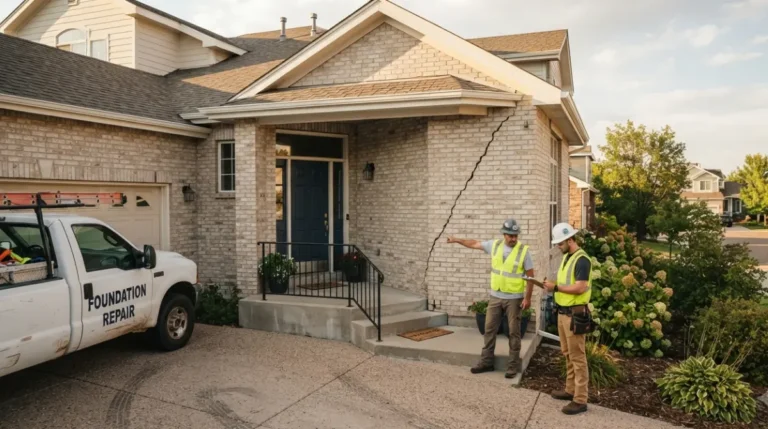
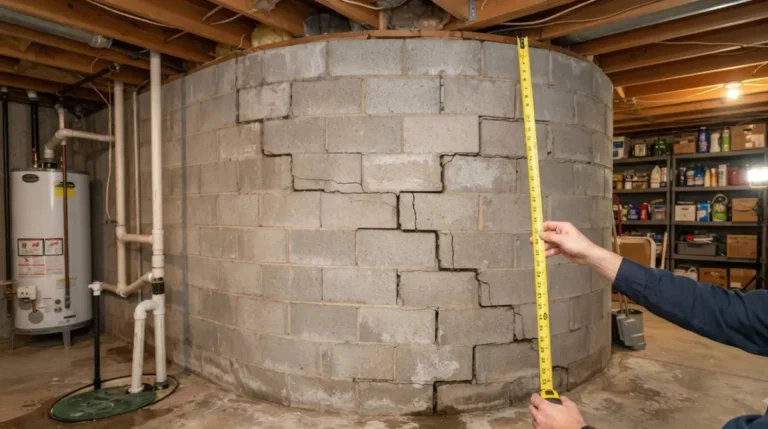
Growing cracks, shifting doors or floors, or water that persists after you fix grade, gutters, and downspouts mean you have a structural question.
Who to call first
✅ Do This: Hire a structural engineer or licensed foundation contractor for a written cause assessment before any repair quote. Our foundation repair cost and who-to-call guide covers the order.
Foundation drainage FAQ
1. How far should downspouts drain from the foundation?
For foundation drainage, discharge more than 5 feet out on sloping ground; homes with basement water trouble should aim for 5 to 10 feet.
2. What slope does foundation drainage need?
Foundation drainage starts with at least 6 inches of fall in the first 10 feet from the wall, a 5% slope.
3. Is 6 inches in 10 feet the same as 5%?
Yes. Six inches over 120 inches is 0.05, so the foundation drainage grade is 5%, not 6%.
4. How often should gutters be cleaned?
For foundation drainage, clean gutters at least yearly, and more often if trees are close to the house.
5. What slope should gutters have?
Gutters supporting foundation drainage should drop at least ¼ inch per 10 feet toward the downspout.
6. Why do my gutters overflow in normal rain?
Overflow usually means clogged or undersized gutters, which undermines foundation drainage; clean first, then consider larger gutters.
7. Can a downspout connect to the foundation drain?
No. For sound foundation drainage, keep downspout water out of the foundation drain system and give it a separate discharge point.
8. Do splash blocks alone work?
On steep, well-drained lawns without basement water problems a splash block may do; otherwise foundation drainage needs a longer extension.
9. Does clay soil change foundation drainage needs?
Yes. Expansive clay swells and shrinks with moisture, and downspouts can worsen it, so foundation drainage matters more there.
10. When is it a structural problem?
Foundation drainage fixes manage water, not existing movement. If cracks or shifting continue, hire a structural engineer or licensed foundation contractor.
Your weekend plan
After the next rain, walk the perimeter and fix the free items first: clear gutters, extend downspouts, and fill low spots. Recheck after the following storm. If water or movement persists, start with our guide to foundation repair costs and who to call first.