A Right-Sized Foundation Inspection Checklist for Fall

A foundation inspection checklist starts with water: dry water-damaged areas within 24–48 hours, and log each crack with a dated photo.
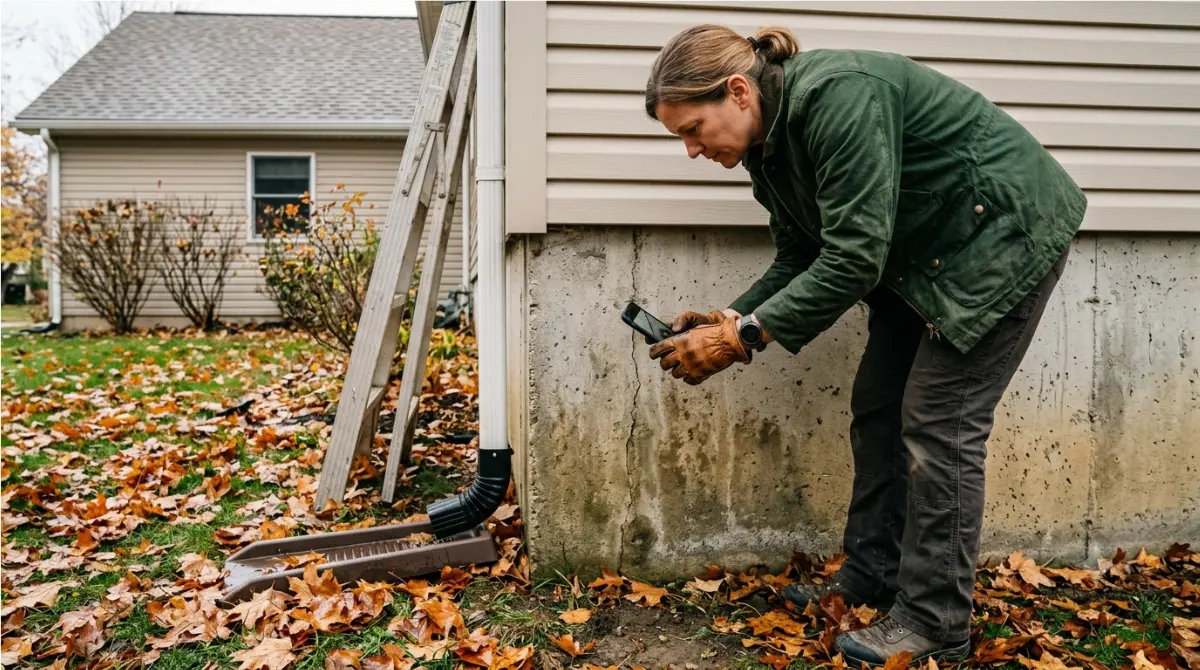
Table of Contents
What to check on your foundation before winter
A fall foundation walkaround takes one dry afternoon, and water is what you’re hunting.
The 10 checks at a glance
Walk the outside first, then the inside:
- Gutters clear and flowing
- Downspouts discharging 5 feet out
- Window wells clear
- Soil sloping away from the wall
- Soil gaps at the wall
- Sprinklers and plants at the wall
- Exterior cracks, measured
- Interior signs: doors, drywall
- Basement moisture and humidity
- Sump pump test
Find your situation
- Found a crack? Skip to the cracks section.
- Damp basement? Go to the moisture section.
- Renting? Report moisture problems to your building owner right away, as the EPA advises.
ℹ️ Safety Note: Judging structural damage, roof-height work, digging near a foundation, and sump pump wiring carry risk of injury or major damage. This is general information, not an engineering evaluation. Hire a licensed structural engineer or contractor, and follow local code and permit rules.
When to inspect, and what changes where you live
Inspect after the leaves drop and before the ground freezes.
Best timing: after leaf drop, before the ground freezes
Clear gutters first, then work the walls.
Cold climates: freeze-thaw and frost heave
NDSU Extension’s explanation of frost heaving says ice layers can form when the frost line sits near the water table, lifting soil. Heaving is likelier with a high water table and clay or silt soil. Warning signs are in frost heave foundation cracks.
🔍 Why It Works: Very wet soil expands as its water freezes, so soggy soil beside the wall pushes harder.
Mild or dry regions: swelling and shrinking soil
Where winters stay mild, watch dry spells. Expansive clay can swell when wet and shrink when dry, leaving gaps at the wall.
Check gutters, downspouts and window wells first
Start with roof water.
Gutters: clear and flowing
Packed gutters overflow at the wall. The Department of Energy’s Building America Solution Center advises keeping cold-climate gutters clear so they don’t hold water that freezes. Clear and hose-test every downspout from the ground.
Downspouts: where does the water land?
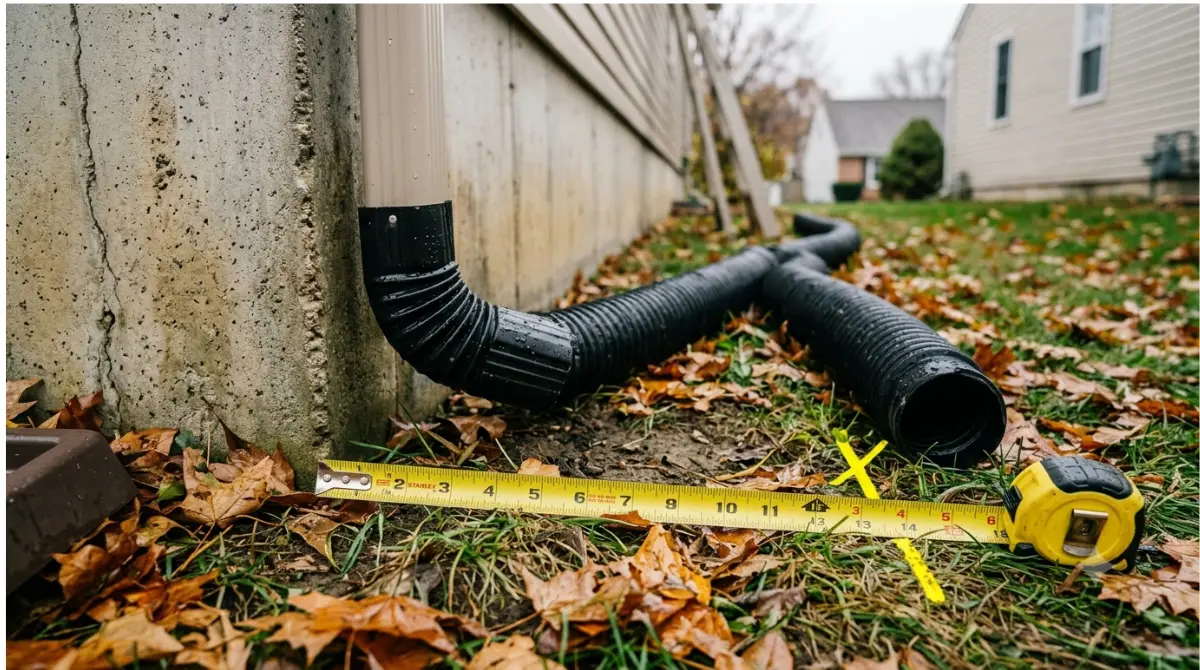
Measure from the wall to where each downspout lands. DOE says surface discharge should end at least 5 feet from the foundation, or feed an underground catchment at least 10 feet away.
Window wells: clear and draining
Scoop debris from each window well, then check for standing water after rain.
✅ Do This: Hire a gutter professional for two-story homes, steep roofs, or loose gutters. Ask whether they flush each downspout.
Check the grade, soil and plants at the wall
Soil sloping toward the house sends rain to the foundation.
Does the ground slope away?
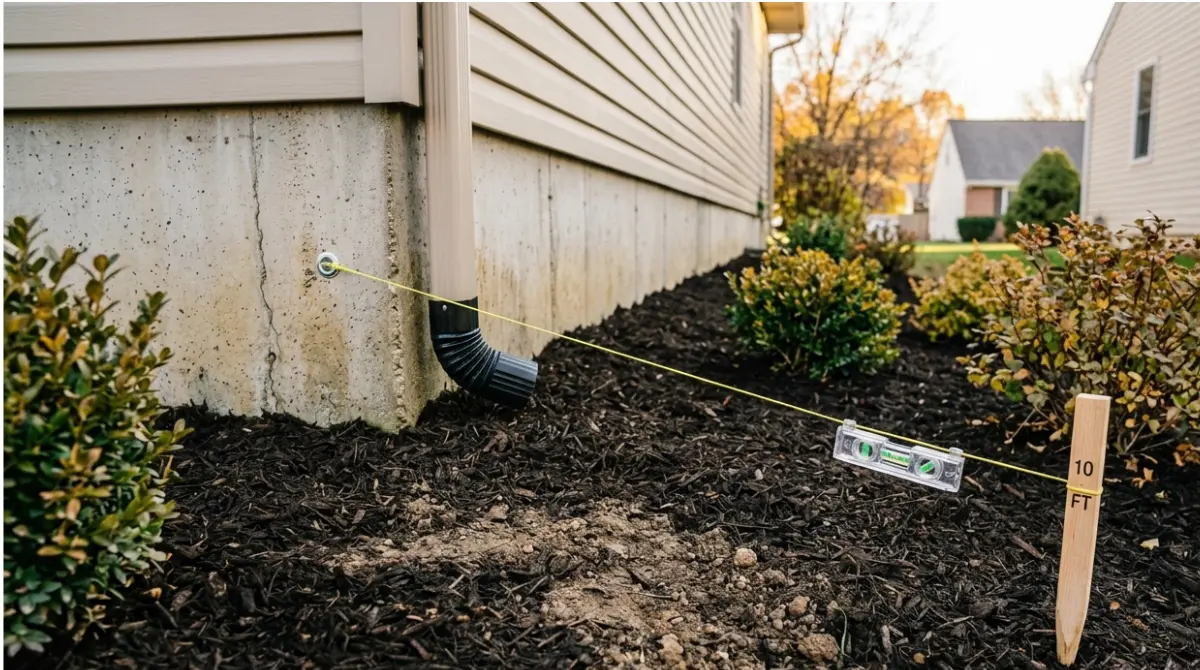
DOE’s Standard Work Specifications call for about 6 inches of fall over the first 10 feet. DOE’s building-science grading guidance gives the minimum as ½ inch per foot for new construction, with swales or drains under 10 feet. Check your grade with a string and level.
Soil gaps, settling and hard surfaces
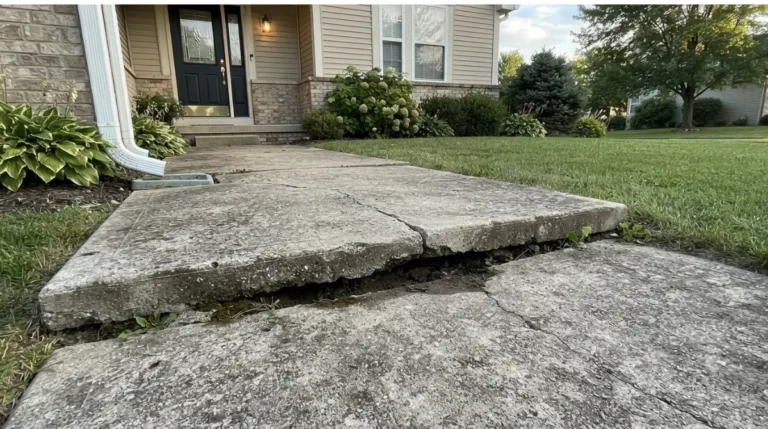
Look for soil that has settled or pulled from the wall, and for patios sloping toward it.
Sprinklers, shrubs and trees at the wall
Point sprinklers away from the wall. Trim plants so they don’t block drainage.
⚠️ Watch Out: Don’t dig along the wall. Call 811 before digging, and hire a licensed contractor for repeated flooding.
Check foundation walls and cracks, inside and out
Direction and change tell you more about a crack than width alone.
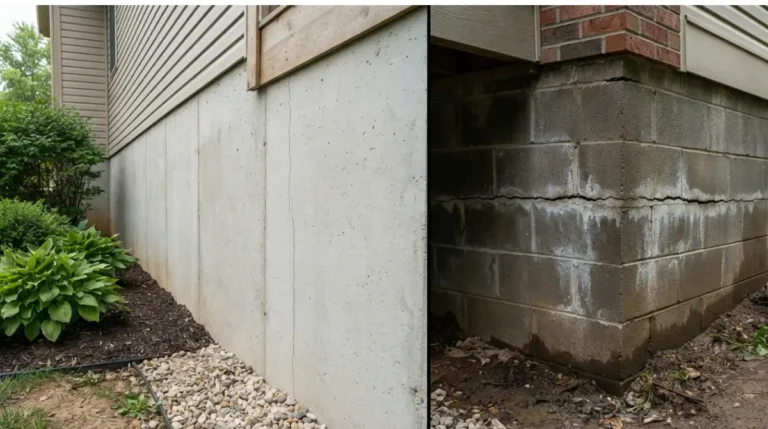
Outside: walls, cracks and spalling
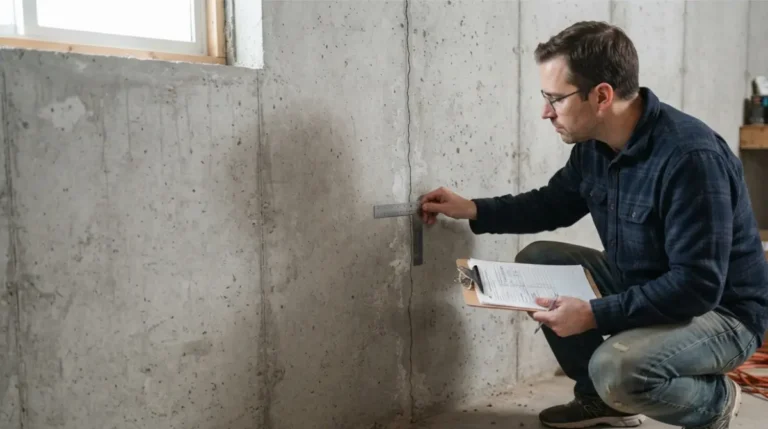
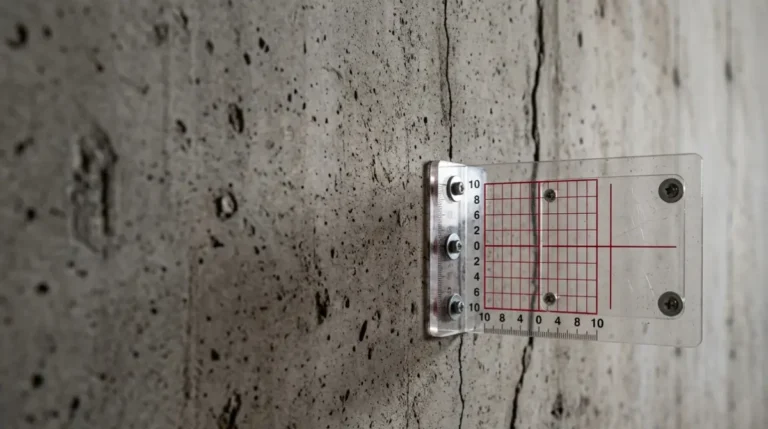
Walk each wall for cracks and flaking concrete. Photograph each crack with a ruler in frame; log width and date.
Pass, watch or call: reading a crack
| Crack | What to do |
|---|---|
| Pass: thin, dry, unchanged | Log it |
| Watch: wider than a thin line, or changed | Re-measure every three to six months |
| Call: horizontal, stair-step, bowing, offset, leaking, growing | See a licensed structural engineer first |
Rules of thumb. HUD’s foundation inspection standard flags cracks ¼ inch or wider and 12 inches or longer.
Inside: doors, windows and basement walls
Note sticking doors, new drywall cracks, and floor gaps. Humidity can also stick doors; see sticking doors and foundation trouble.
✅ Do This: For horizontal, growing, or leaking cracks, book an independent licensed structural engineer before anyone patches them; sealing an active crack can hide movement. Confirm their license.
Check basement moisture, humidity and the sump pump
Catch moisture early.
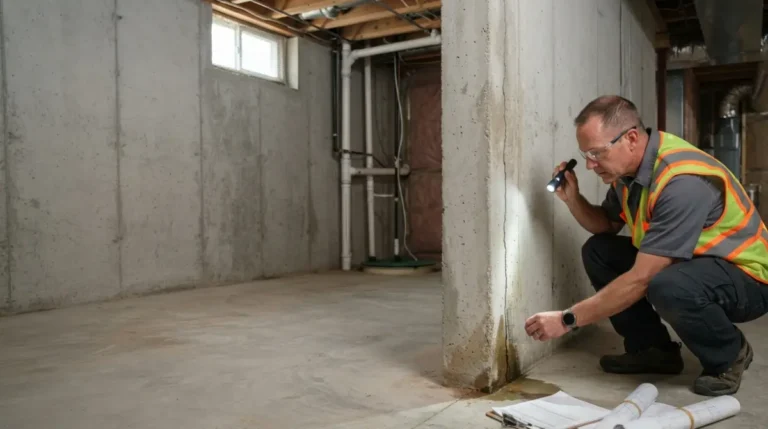
Basement walls and floor: damp, stains, musty smell
Look for damp patches and musty smells. EPA’s guide to mold and moisture says to dry water-damaged areas within 24–48 hours; mold over about 10 square feet needs professional-level guidance.
Humidity: keep it under control
The EPA advises keeping indoor humidity below 60%, ideally 30–50%; a hygrometer shows it.
Sump pump: a quick test
Following NDSU Extension’s sump pump check:
- Confirm the outside discharge pipe is clear and points away from the house.
- Check that it’s plugged in and the sump holds no debris.
- Lift the float about 10 seconds if the sump is dry, or pour water in slowly.
- Confirm the pump switches on and off at least twice.
✅ Do This: New to sump pumps? NDSU suggests a licensed plumber. For mold past EPA’s size line, hire a professional.
Found something? Fix, monitor or call a pro
Your log gives each finding one of three outcomes.
Pass: log it and move on
Save the dated photo as your spring baseline.
Watch: re-measure on a schedule
Re-measure on schedule and note changes.
Call: who to phone first
For horizontal, growing, or leaking cracks, call an independent structural engineer first. Choose a foundation company first only for a problem you already know. Read who to call first and what repairs cost before you commit.
✅ Do This: Confirm any contractor’s license with your state or county, and get multiple written estimates before signing.
Fall foundation checklist: quick answers
1. What is on a fall foundation inspection checklist?
A fall foundation inspection checklist covers gutters, downspouts, window wells, grade, soil gaps, plants, cracks, interior signs, humidity, and the sump pump.
2. When should I do a foundation inspection before winter?
Do your foundation inspection after the leaves drop and before the ground freezes, so gutters are clear before water freezes.
3. Can I do a foundation inspection checklist myself?
You can walk the foundation checklist yourself, but not diagnose cracks; for horizontal, growing, or leaking cracks, call a licensed structural engineer.
4. How much should soil slope away from a foundation?
DOE calls for about 6 inches of fall per 10 feet from the foundation, or ½ inch per foot in its guide.
5. How far should downspouts discharge from the foundation?
DOE guidance says at least 5 feet for surface discharge, or into an underground catchment at least 10 feet from the foundation.
6. Should I seal foundation cracks before winter?
Not before a diagnosis: have a licensed structural engineer assess horizontal, growing, or leaking foundation cracks first, since sealing an active crack can hide movement.
7. How wide a foundation crack is a problem?
Direction and change matter more than width; HUD’s inspection standard flags foundation cracks ¼ inch or wider and 12 inches or longer.
8. How do I test a sump pump before winter?
Lift the sump pump float about 10 seconds or pour water in slowly, then confirm it switches on and off at least twice.
9. What basement humidity should a foundation checklist target?
A foundation checklist should target basement humidity below 60%, ideally 30–50%, according to the EPA, measured with a hygrometer.
10. What does freezing do to a foundation?
Per NDSU Extension, ice layers can lift soil beside a foundation when the frost line sits near the water table.
Your next step before the first freeze
Pick one dry afternoon, walk the ten checks, and record findings with dated photos. Save the log, then repeat the walkaround in spring and compare. Our free Fall Foundation Walkaround Log keeps measurements, photos, and dates in one place.