When Wet Basement Foundation Repair Is the Wrong Answer

Wet basement walls have a mold clock: EPA says to dry them within 24–48 hours. Then find out if it’s water, humidity, or a moving wall.
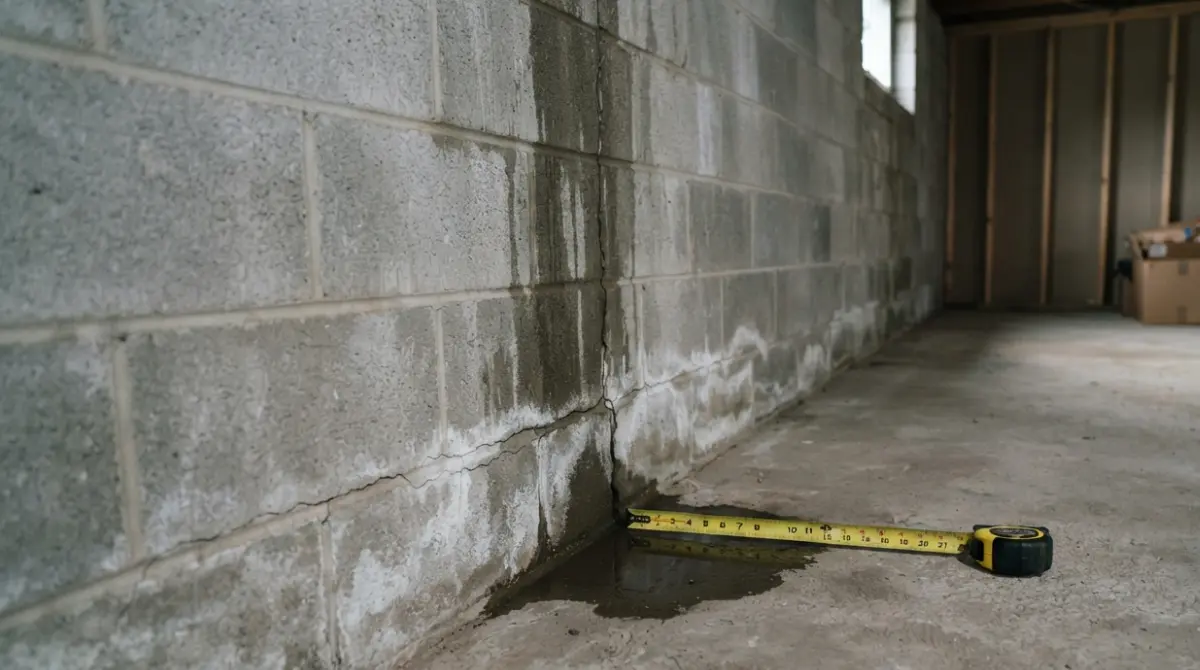
Table of Contents
Wet basement walls: foundation repair or waterproofing?
A wet wall is not always a failing foundation.
The short answer
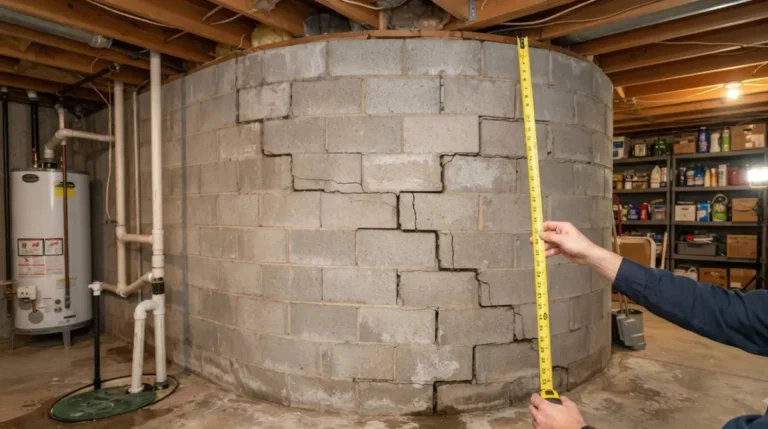
Wet basement foundation repair is the right call only when the wall is moving. The University of Minnesota (UMN) Extension notes that many basements are structurally sound but poorly drained, so water control usually comes first. Horizontal cracks, stair-step cracks, or an inward bow mean the wall itself needs an engineer.
Find your situation
- Damp after rain, no cracks: run the three checks below, then start with gutters and grading.
- Beads of water on muggy days: rule out condensation first.
- Horizontal crack or bowing wall: read what foundation repair costs and who to call first, then the engineer section below.
ℹ️ Safety Note: Judging structural damage, sealing active cracks, mold cleanup, and digging near a foundation carry risk of injury and major damage. This is general information, not an engineering evaluation; hire a licensed structural engineer or contractor and follow local code and permit rules.
Why basement walls get wet in the first place
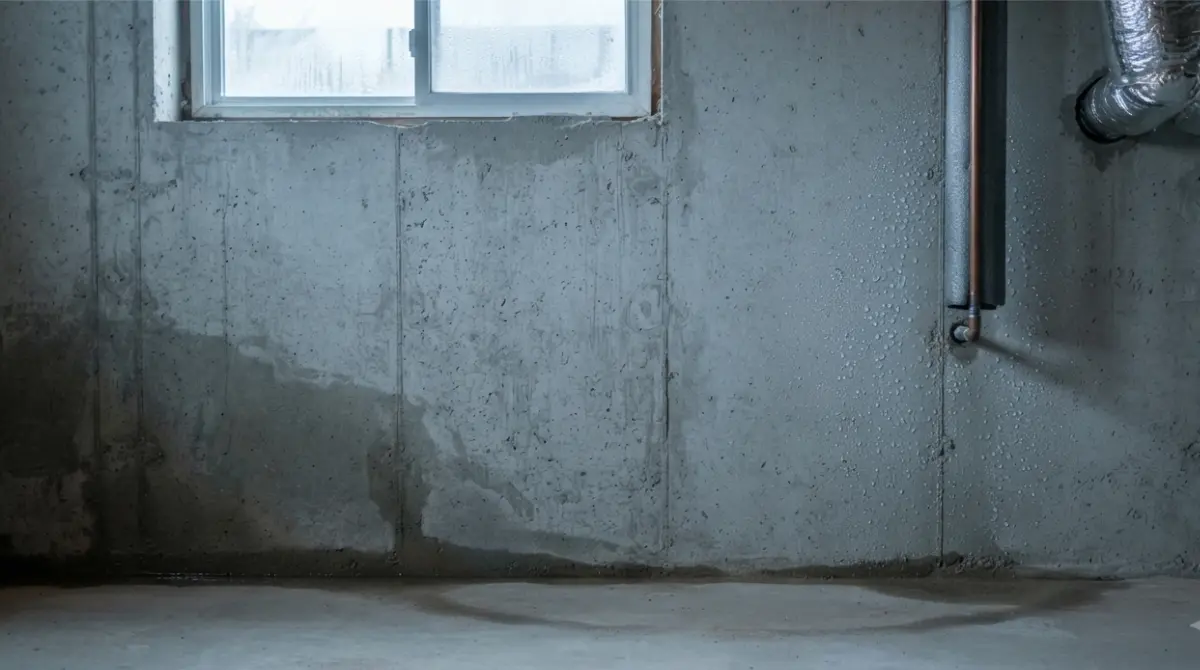
Basement moisture has three sources, and only some of them involve the foundation.
Three moisture sources
The University of Minnesota Extension lists three sources:
- Rain or groundwater
- Interior moisture from showers, cooking, and unvented dryers
- Humid outside air that condenses on cool walls
Each needs a different fix, so a wet wall alone tells you little about the foundation.
Four ways water moves through a wall
Water reaches a wall by liquid flow, capillary suction, vapor diffusion, or air movement.
🔍 Why It Works: Capillary suction pulls water through tiny pores in concrete, which creates the ring of dampness seen at the base of many basement walls.
How to tell if wet basement walls need repair or waterproofing
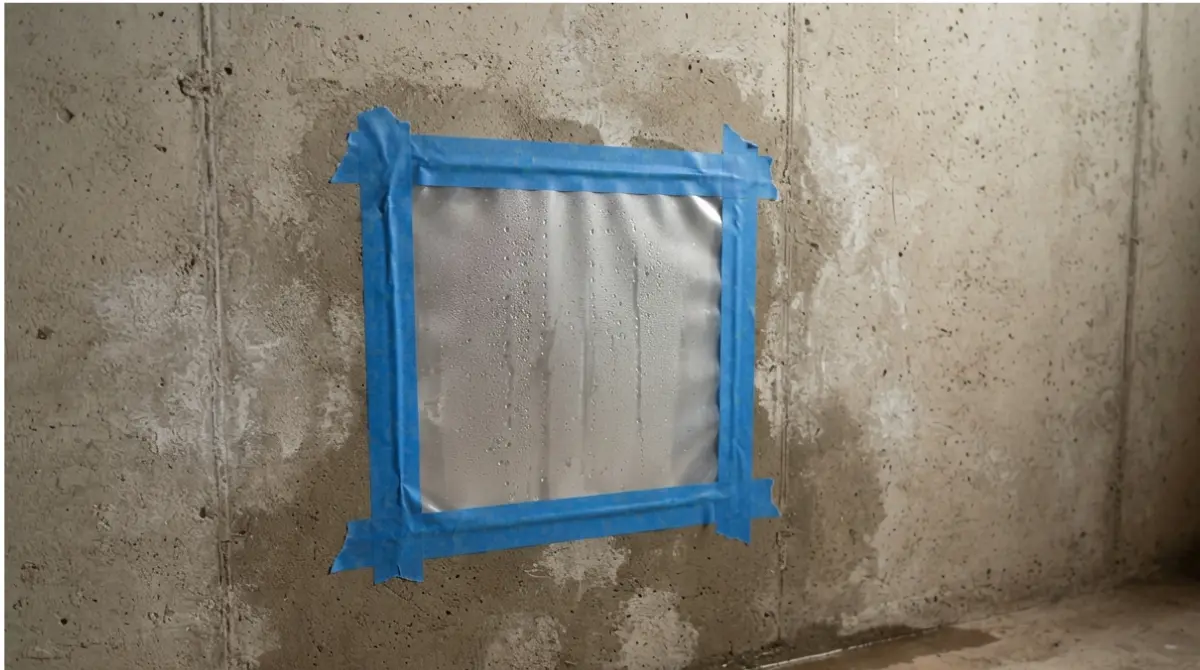
Three quick checks point a wet wall toward water, humidity, or structure.
Check 1: the sheet test
Tape a 12-inch foil or plastic square flat to the wall and wait. Moisture on the room side means humid air; moisture behind it means water is coming through the wall, per This Old House. Our waterproofing paint guide uses a 24–48 hour version.
Check 2: when the wall gets wet
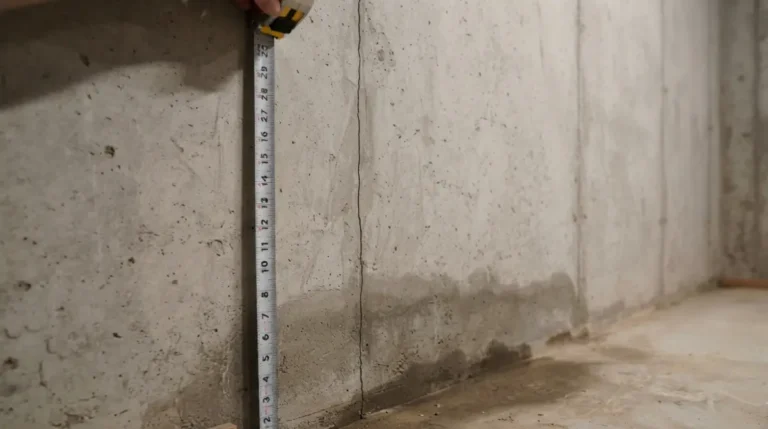
Dampness after rain points to rain or groundwater; dampness on dry, humid days points to condensation, which many homeowners mistake for a leak (UMN Extension).
Check 3: the crack and the wall’s shape
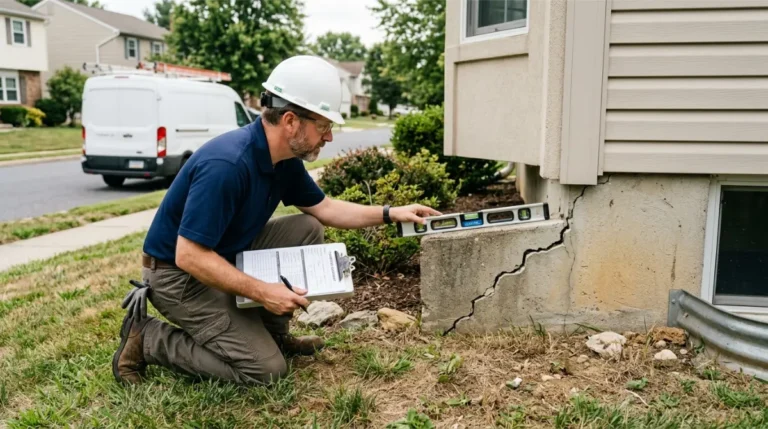
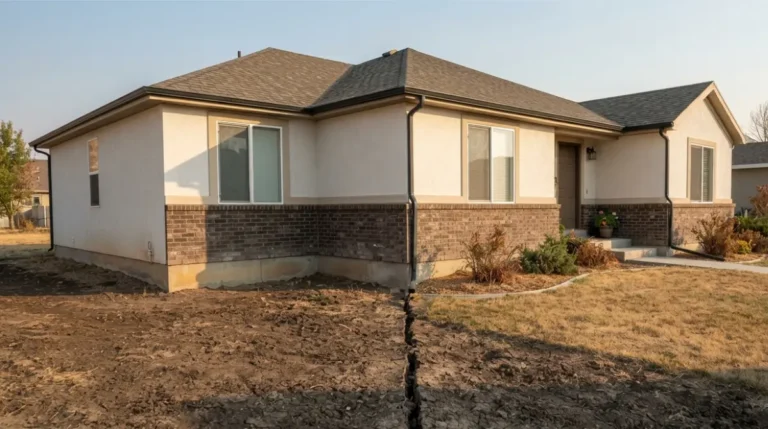
Horizontal cracks, stair-step cracks, and inward bowing suggest pressure on the wall and need a professional evaluation. Our crack-pattern guide explains each type.
| What you see | Likely cause | First call |
|---|---|---|
| Beads on the room side of the sheet | Humid indoor air | Cut interior moisture sources |
| Moisture behind the sheet, or wet after rain | Water through the wall | Gutters and grading, then drainage |
| Horizontal or stair-step crack, inward bow | Pressure on the wall | Independent structural engineer |
When wet walls do need foundation repair
A wet wall needs foundation repair when the wall itself is moving.
Signs the wall is moving
Bowing walls and cracks that keep growing call for professional evaluation, according to This Old House. Saturated soil expands and pushes on the wall, which is how horizontal cracks usually form.
Why drainage and repair often go together
Our foundation cost guide notes that bowing-wall repair is usually part of a larger plan that includes drainage or soil work. Our guide to bowing basement wall fixes and costs covers the options.
✅ Do This: Before anyone patches a horizontal crack or bowed wall, book a licensed structural engineer who does not sell repairs, and confirm their license in your state.
Fix order: gutters and grading before drains
UMN Extension recommends this order, since early fixes may solve the problem.
- Control interior moisture: remove humidifiers, ventilate dryers and bathrooms, and skip humid summer ventilation.
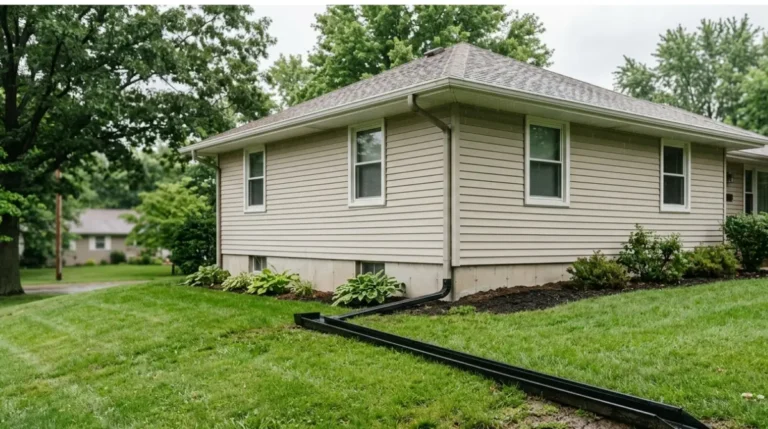
- Fix gutters and downspouts: extensions should discharge at least 4 feet beyond the wall.
- Correct the grading: slope soil away at least 1 inch per foot for at least 6 feet. Figures vary by source.
- Add drainage if the problem persists: exterior systems cost most but work best; hire a licensed contractor with a written scope.
⚠️ Watch Out: A dehumidifier alone is not a permanent fix and may draw moisture through the wall faster, worsening efflorescence and spalling. An interior coating is temporary because the water is still there, UMN Extension says.
What each path costs: waterproofing vs foundation repair
Compare like with like: the two paths price differently.
| Path | Typical cost | Source |
|---|---|---|
| Seal minor interior cracks | From about $600 | Angi, Jul 2026 |
| Independent engineer’s report | $300–$1,000 | Our cost guide, citing Angi |
| Helical pier | $1,000–$3,000 each | This Old House, citing Angi |
Waterproofing costs
📊 Tested / Spec: Sourced, not tested by us. Angi puts professional basement waterproofing at $2,461 to $8,202, averaging $5,241 (updated July 20, 2026), and says full systems can reach $15,000.
Angi’s averages are about $3,000 for interior and $7,000 for exterior work, because interior skips excavation; see interior vs. exterior waterproofing.
Foundation repair costs
Pier work is priced per pier, so ask for the count and price per pier in writing. Angi’s ranges shift with method and basement size, so budget by problem.
Mold and safety while the wall is still wet
Mold needs moisture, so the water fix and the mold fix go together.
Dry fast, but fix the water first
EPA says to dry water-damaged areas within 24 to 48 hours and keep indoor humidity below 60%, ideally 30 to 50%. Cleaning up mold without fixing the water problem means it will most likely return.
When to stop and call a pro
EPA suggests considering a contractor when mold covers more than about 10 square feet, or an experienced professional if you suspect hidden mold.
⚠️ Watch Out: Do not paint or caulk over mold, or finish or insulate a wall until it is dry and the water source is fixed.
Wet basement foundation repair questions, answered quickly
1. Do wet basement walls mean my foundation is failing?
Often not. Wet basement walls frequently trace to drainage, but horizontal cracks or bowing suggest movement, so call a structural engineer.
2. Is wet basement foundation repair or waterproofing the right fix?
Foundation repair fits a moving wall; waterproofing and drainage fit a wall that is only wet. The sheet test and crack shape show which.
3. Can waterproofing fix a bowing basement wall?
A bowed wall needs a professional evaluation first; repair usually pairs structural work with drainage or soil work.
4. How can I tell condensation from a leak on wet basement walls?
Tape foil or heavy plastic to the wall; moisture on the room side means humid air, behind it means water through the wall.
5. Will a dehumidifier fix wet basement walls?
Not permanently. UMN Extension says a dehumidifier may draw moisture through the wall faster, worsening efflorescence and spalling.
6. Does waterproofing paint fix wet basement walls?
UMN Extension calls an interior coating or membrane a temporary solution because the water is still there. Fix the water source first.
7. How much does it cost to waterproof wet basement walls?
Angi reports a $2,461 to $8,202 range for professional waterproofing in 2026, with interior work averaging about $3,000 and exterior about $7,000.
8. Who should I call first for wet basement walls?
Fix gutters and grading first if nothing is moving; if a crack is horizontal or the wall bows, call an independent structural engineer.
9. How quickly should wet basement walls be dried to prevent mold?
EPA advises drying wet, water-damaged areas within 24 to 48 hours to help prevent mold growth. Larger or hidden mold may call for a professional.
10. Should I fix gutters and grading before hiring a waterproofer?
Yes. UMN Extension says gutter, downspout, and grading corrections should come first because they may solve the problem.
Your next step for wet basement walls
Tape a foil or plastic square to the wettest spot this weekend, then photograph it with the date and last rainfall. If a crack is horizontal or the wall bows, book an independent structural engineer before anyone patches it. If nothing is moving, start with gutters and grading. Keep a dated photo log either way.