Smart Foundation Repair Methods for Settling, Walls and Slabs

Foundation repair methods fix different problems, and even Angi’s own pages disagree on pier prices. Here is how to match the fix to your problem.
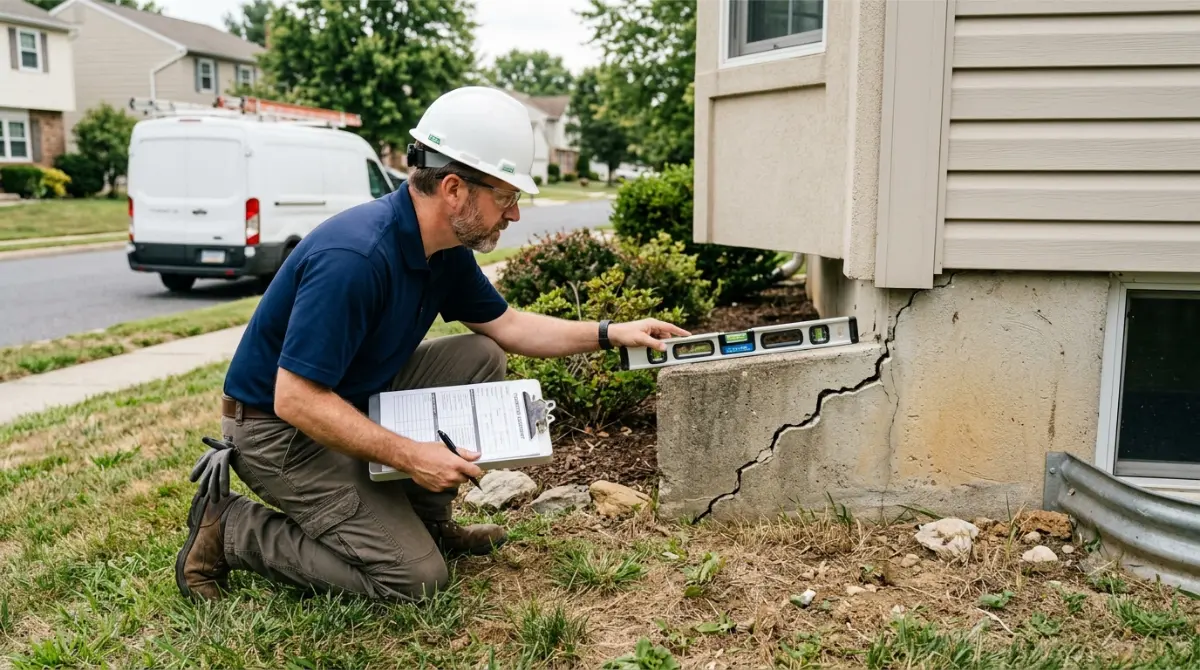
Table of Contents
Piers, anchors or foam: which foundation repair fits?
One quote says piers, another anchors, a third foam, and each sounds certain. These foundation repair methods fix different problems, so the problem should pick the method. This guide compares published sources and tests nothing; prices and who to call first are in our foundation repair cost ranges and who to call first.
The short answer: the problem picks the method
Piers carry a settling foundation’s load to firmer soil. Anchors and straps hold a bowing basement wall. Foam fills voids under a slab and lifts it. An independent structural engineer should find the cause first.
Where to jump: settling, bowing wall or sunken slab
House sinking on one side? Go to piers. Wall curving inward? Go to anchors and straps. Sunken patio or garage floor? Go to foam.
ℹ️ Safety Note: Judging structural damage, and any piers, bracing, jacking or foam injection, carries injury and major-damage risk. This is general information, not an engineering evaluation. Hire a licensed structural engineer and contractor, and follow local code and permit rules.
Which problem each foundation repair method is built for
Foundation repair methods fall into three families: piers for support, wall bracing for walls, and foam or mudjacking for slabs.
The three families in one table
| Problem | Family | Angi 2026 price | Doesn’t fix | Sources disagree |
|---|---|---|---|---|
| House settling | Piers | $1,500 push, $3,000 helical, per pier | Water or soil cause | Angi’s underpinning page: ~$2,000 push |
| Bowing wall | Anchors, straps | $400–$700 per anchor; $350–$1,000 per strap | Cause; full straightening | Bow-depth cutoff |
| Sunken slab | Foam | $900–$7,500 | Underlying cause | Angi: “temporary” vs “sometimes suitable” |
| Sagging pier-and-beam | Shimming, spot piers | $3,000; $1,500 | Major structural issues | — |
📊 Tested / Spec: Sourced, not tested by us. These are marketplace estimates from Angi’s 2026 methods guide and its bowing wall guide, not quotes.
The rule none of them breaks: fix the cause
Angi says foam and strips don’t fix the root cause, and This Old House says bracing sits inside a larger plan. Start by telling settling from other foundation problems.
Foundation piers: when a sinking house needs deep support
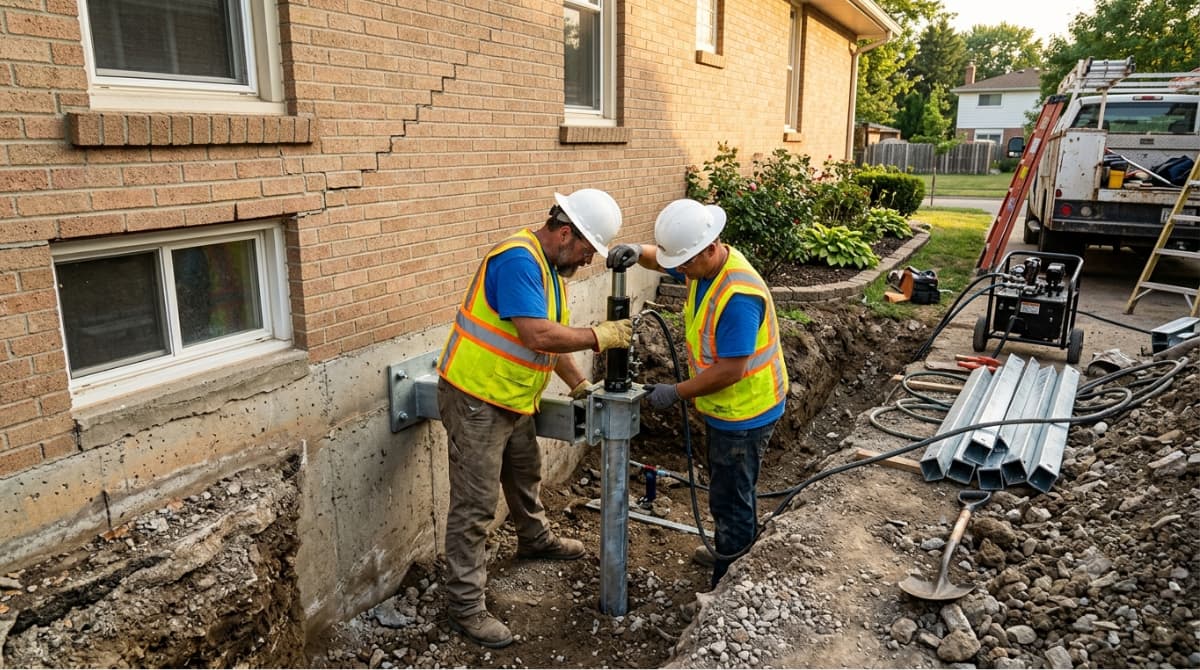
Piers are the family built for a sinking foundation.
What piers do that anchors and foam don’t
Piers carry the footing’s load past weak soil to firmer ground; Angi calls steel piers best for sinking or shifting foundations. Angi lists $1,500 per push pier and $3,000 per helical pier, though its underpinning guide says about $2,000 for push.
What an engineer must design and record
An ICC-ES evaluation report for one helical system requires a registered design professional’s design, a special inspector recording torque and final depth, and professional verification of any lifting. It covers one manufacturer’s helical system, not push piers.
Push vs helical: choose after the diagnosis
Sources disagree on which type is stronger, so soil conditions and house weight decide; see push piers vs helical piers.
✅ Do This: Hire a licensed structural engineer and foundation contractor; ask who designs the piers, who pulls the permit, and for torque and depth records.
Wall anchors and straps: fixes for a bowing basement wall
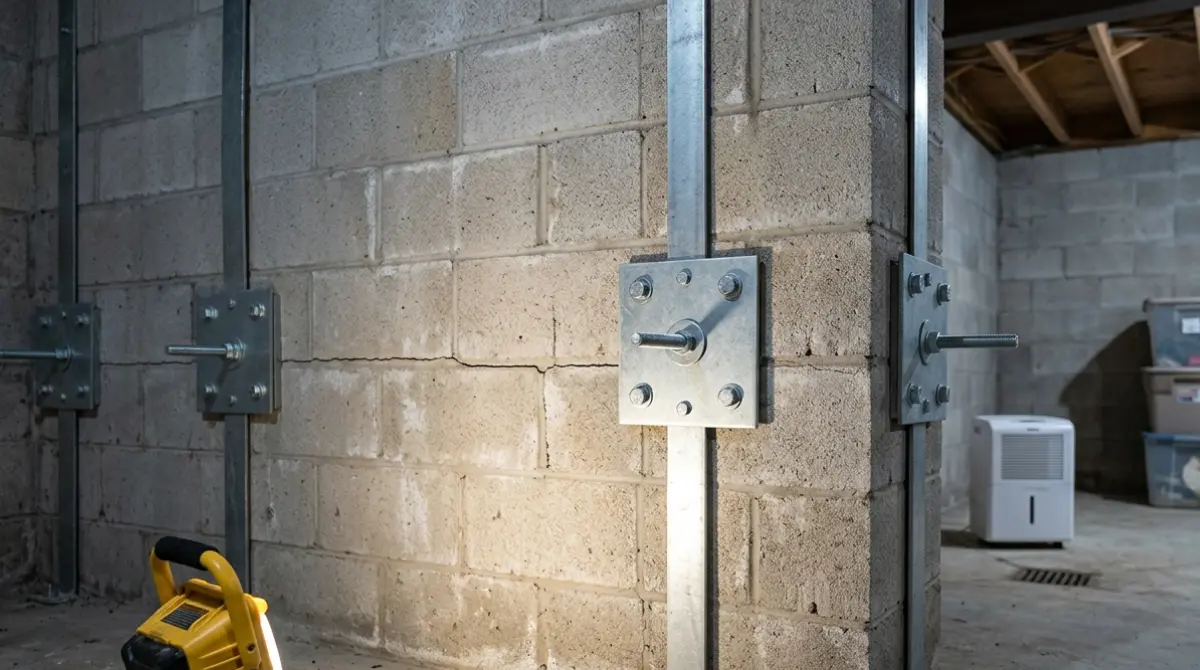
A bowing basement wall is pushed in from outside, so these fixes hold the wall, not lift the house.
🔍 Why It Works: Saturated soil expands and presses on foundation walls, which can cause horizontal cracks, bowing or leaks, according to This Old House.
Anchors, straps and tiebacks in one line each
Wall anchors join an inside plate to a buried outside plate; Angi’s bowing wall cost guide lists $400–$700 each. Straps attach vertically inside at $350–$1,000 each. Helical tiebacks, angled shafts, run $1,500–$1,800 each.
What bracing stops vs what it straightens
Not reliably: Angi says bracing mostly stops further bowing and may recover a little; straightening is a separate service. This Old House says bracing usually sits inside a larger plan.
Why “2 inches” is a rule of thumb, not a verdict
Angi suggests straps under 2 inches of bow and anchors beyond it, but our bowing basement wall repair options and costs shows HomeGuide splitting the other way; treat 2 inches as a rule of thumb.
✅ Do This: Don’t brace the wall, dig beside it or buy a DIY kit. Hire a licensed structural engineer to measure the bow and find the cause.
Foam vs piers: what polyurethane foam can and can’t do
Polyurethane foam can lift a settled slab by filling voids beneath it, but Angi says it doesn’t fix the cause and isn’t suited to heavy structures.
What foam does: fills voids and lifts slabs
Crews inject it beneath the slab, where it expands; Angi lists 10–20 years.
Why Angi calls it temporary, and where it still fits
Angi doesn’t recommend it for settling. Its underpinning guide adds that polyjacking sometimes suits slab stabilization, though underpinning is generally the most permanent route. For slabs, see mudjacking vs foam lifting.
What the research covers: pavement, not houses
A Tennessee DOT-funded pavement study found foam on two interstates held pavement condition steady, neither better nor worse, and recommended a ground investigation before injecting. That is highway research. We found no independent long-term study of foam under houses as of October 9, 2026, only pavement research and vendor claims.
How to check the method on your repair quote
A quote should name the problem, the cause and why this method fits.
Ask why this method, and what caused the movement
Ask what moved the foundation and why this method fits. Angi’s contractor-reviewer says to involve a structural engineer from the start.
When a quote lists two methods
Two methods on one quote can be sound: This Old House says bracing usually sits inside a larger plan. Ask which problem each method covers, and which it leaves.
Fix the water before the structure
Ask who fixes the water or soil cause. Also ask what the warranty covers; Angi’s reviewer notes a lifetime warranty lasts only while the company does.
What not to do when one method is being pushed
These four lines keep a bad call from becoming an expensive one.
Don’t pick a method before an independent diagnosis
Don’t accept foam, straps or piers from the company selling them without an engineer’s diagnosis. Don’t treat foam or straps as a permanent fix while the cause remains.
Don’t DIY piers, bracing or jacking
Don’t try piers, bracing or jacking yourself: Angi says foundation work needs a pro, and ICC-ES requires a design professional for pier design. Call a licensed structural engineer and a licensed contractor, and confirm both licenses.
Foundation repair methods: questions answered quickly
1. Which foundation repair method is best?
The best foundation repair method depends on the problem: piers for settling, anchors or straps for bowing walls, foam for slabs. Have a licensed structural engineer diagnose first.
2. Are piers better than foam?
As a foundation repair method, piers support a sinking foundation, while Angi says foam isn’t suited to heavy structures or settling. Ask your engineer which fits.
3. Do wall anchors fix a bowing wall?
As a foundation repair method, anchors mostly stop further bowing and may recover a little; straightening is a separate service, per Angi. Get an engineer’s measurement first.
4. Can foam lift a house foundation?
Foam lifts slabs, but Angi doesn’t recommend this foundation repair method for settling, and we found no independent study under houses. Ask an engineer before agreeing.
5. How long does foam foundation repair last?
Angi lists 10–20 years for this foundation repair method, but we found no independent long-term study of foam under houses.
6. How much do foundation piers cost?
Angi lists $1,500 per push pier and $3,000 per helical pier, though its pages differ; treat this foundation repair method’s cost as a range.
7. Push piers or helical piers?
Sources disagree on which pier is stronger, so soil conditions and house weight decide this foundation repair method. Ask a licensed structural engineer to choose.
8. What is the cheapest foundation repair method?
Prices can’t be compared across foundation repair methods because each fixes a different problem; Angi’s figures in our table span $350 to $7,500.
9. Do I need an engineer first?
Yes: Angi’s contractor-reviewer says to involve a structural engineer from the start, before choosing a foundation repair method. Confirm their license.
10. Can one house need more than one method?
Yes: This Old House says bracing usually sits inside a larger plan, so one foundation repair method may pair with drainage or soil work.
Your next step for choosing a foundation repair method
Measure and photograph the problem, then book an independent licensed structural engineer before you sign anything. Ask which problem each proposed method fixes, and what it leaves unfixed. Our cost guide includes a free quote-comparison worksheet and crack log.