Foundation cracks in a drought and the hidden limits of watering

Foundation cracks in drought often trace to shrinking clay. Spot the soil gap at your wall, then rate your clay before you turn on a hose.
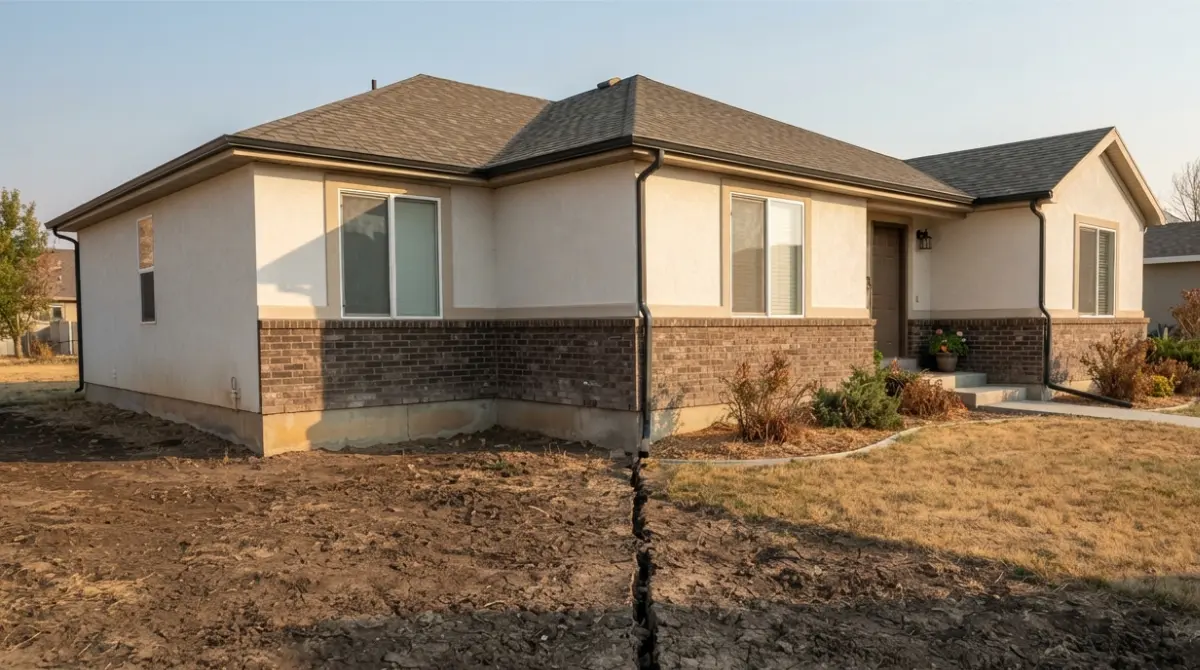
Table of Contents
Can a drought really crack your foundation?
Yes, mostly on expansive clay soil, which swells when wet and shrinks when dry. NDSU Extension says cracks in walls or ceilings can signal a building shifting as soil shrinks. Soils with little clay don’t behave the same way, so your soil sets your risk.
Where are you? Clay yard, gap at the wall: try the gap check. Unsure of your soil: start with the soil lookup. Growing crack: skip to who to call.
ℹ️ Safety Note: This is general guidance, not an engineering evaluation. If a crack is growing, horizontal, or paired with sticking doors or sloping floors, have a licensed structural engineer evaluate it, and follow local drought rules.
Should you water clay soil around your foundation?
Only if you have deep expansive clay, and only to keep soil moisture steady, not saturated. The Weather Channel reported in September 2026 that engineers call foundation watering a localized fix for deep expansive clay, not a rule for every house.
When it makes sense
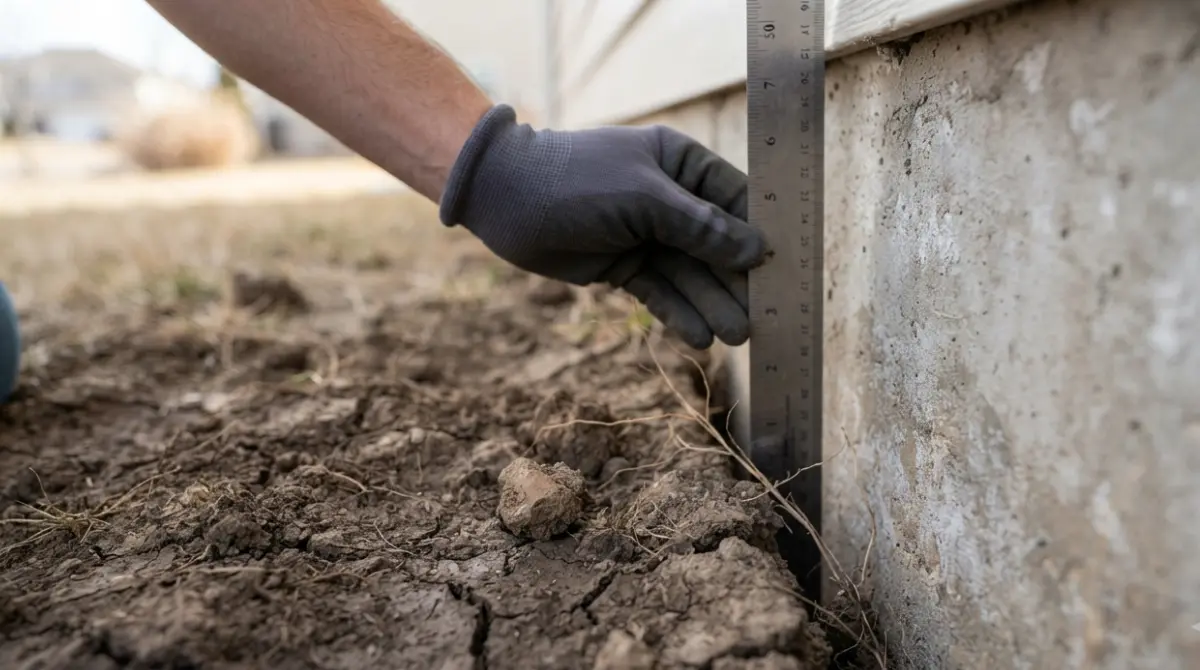
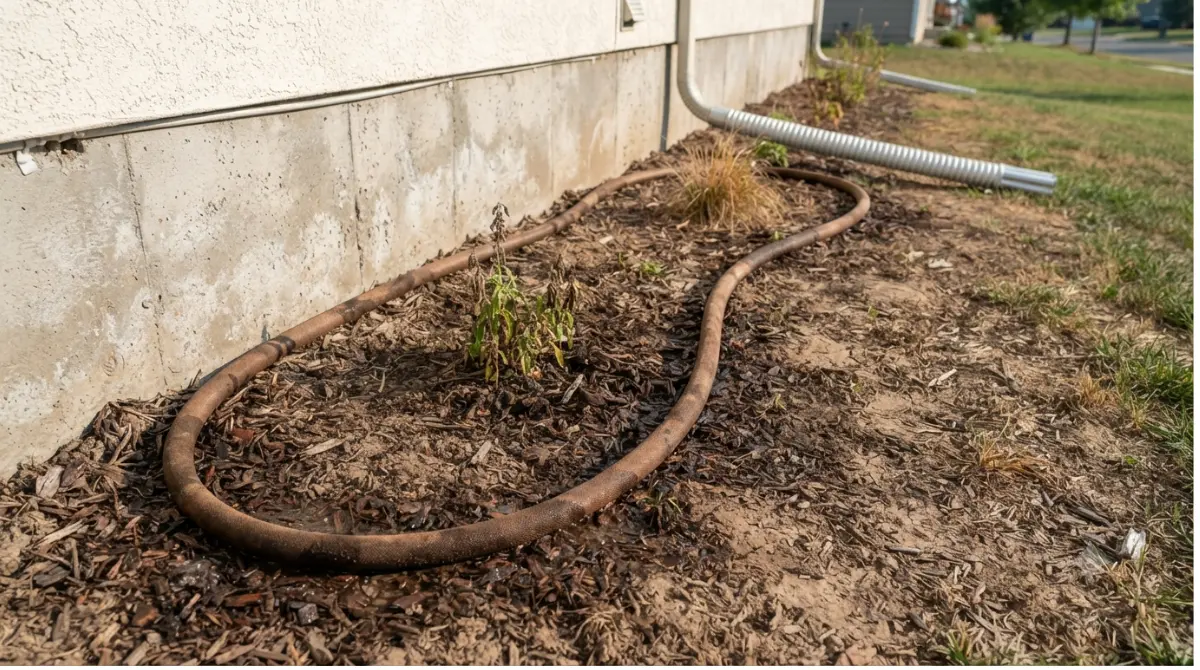
On clay, NDSU advises watering when soil pulls away from the foundation wall, using a soaker-type hose so water stays off the wall.
When it backfires
The same report warns heavy soaking around a sudden crack or gap can create uneven moisture.
What it can’t do
A Bob Vila explainer argues proof that watering works is lacking, and warns homeowners may mistake it for a repair.
🔍 Why It Works: Steady moisture limits clay’s shrink-swell cycle, which is why extension guidance stresses consistency.
How to tell if your soil is too dry: the gap check
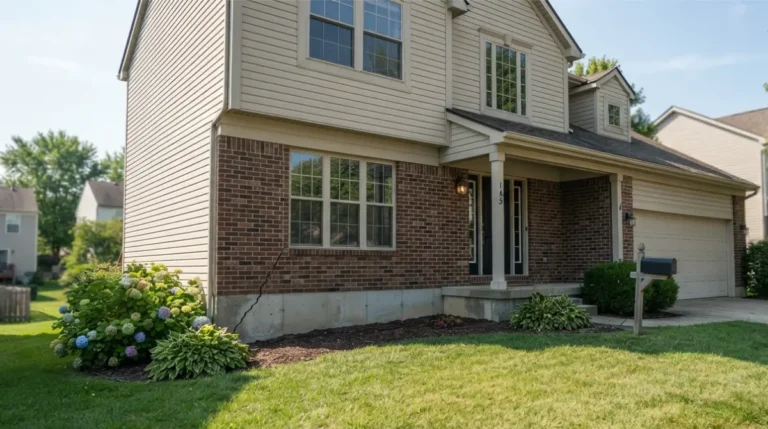
Walk the perimeter
Look for a gap where soil meets the wall; no gap suggests moisture is holding. Texas A&M AgriLife guidance says to water until the soil swells and closes a gap.
Check your soil
In USDA’s Web Soil Survey, define your area of interest, open Soil Data Explorer, then Soil Properties and Qualities, and find linear extensibility.
📊 Tested / Spec: USDA-NRCS rates shrink-swell low under 3 percent linear extensibility, moderate at 3–6, high at 6–9, and very high above 9. Moderate or higher can damage buildings.
Rule out other causes
Nearby trees, poor drainage, and plastic under landscape rock beside the wall can all undermine watering.
How to water clay soil near a foundation safely
Why schedules disagree
| Source | Hose distance | Schedule | Type |
|---|---|---|---|
| City of Denton brochure | 12–18 in. | 8–10 hrs/day, 3×/week; about 8 hrs daily in drought | 2012, municipal |
| The Weather Channel | About 2 ft | About 4×/week, 15 min | 2026, media |
| Texas repair-company guide | 12–18 in. | 2–3×/week, 15–30 min in drought | 2026, contractor |
Placement and drainage
Place a soaker hose farther from the wall if the slab has cracks, since Denton warns water can seep into them, and pair watering with drainage that slopes soil away about an inch per foot for five feet. See regrading around your foundation.
✅ Do This: Ask a licensed foundation contractor or structural engineer how far from the wall and how long to water for your soil.
Watering your foundation during drought restrictions
Check your city’s rules
Texas A&M AgriLife guidance says some cities allow foundation watering under outdoor-watering bans, and drip systems may be exempt, so read your utility’s drought plan. The Drought Monitor map viewer shows whether your county is abnormally dry or in drought.
What it costs
Steady watering can raise your bill, a Bob Vila explainer notes. Estimate cost as run time × hose flow × utility rate; we haven’t measured any hoses, so we give no dollar figure.
Drought cracks vs. cracks that need a pro
Cracks that may close
Texas A&M AgriLife guidance says rewetted clay can lift a foundation and sometimes close cracks. NDSU advises waiting on repairs to other wall and ceiling cracks until soil moisture returns to normal.
Signs it’s more than drought
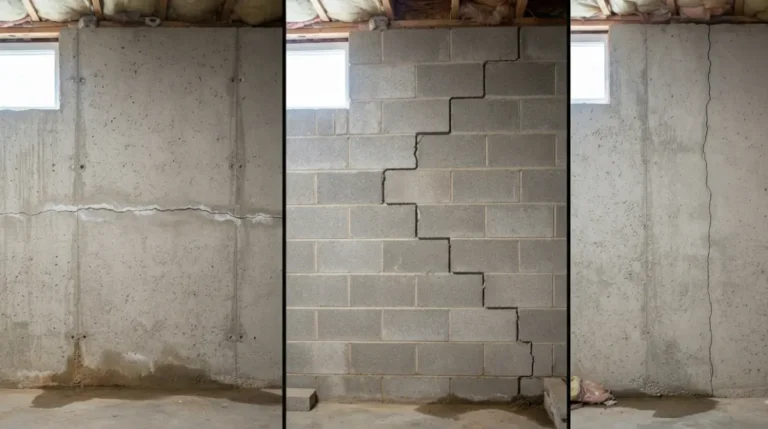
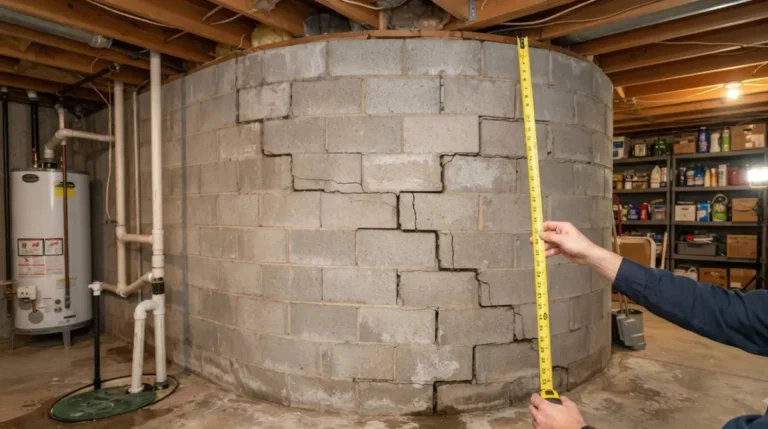
Get a crack evaluated if it’s horizontal, stair-step in block or brick, widening, or paired with sticking doors, sloping floors, or bowing walls. Published width cutoffs vary from about 1/8 to 1/4 inch, so pattern and change matter more. Compare against foundation cracks by pattern and signs of foundation problems vs. settling.
⚠️ Watch Out: Don’t patch a crack that’s still moving; diagnosis comes first. Have a licensed structural engineer evaluate it.
Who to call when cracks keep growing
Stop signs
Call a licensed structural engineer or foundation contractor when a crack grows, runs horizontal, or comes with sticking doors, sloping floors, or bowing walls. Ask what is moving, why, and whether it is still changing. Our guide to foundation repair costs and who to call first covers cost and order, and sloping floors: foundation or not covers floor symptoms.
After the drought
Call before adding water near a sudden crack, and keep gutters and downspouts clear for when rain returns.
Foundation cracks and drought: quick answers
1. Can drought cause foundation cracks?
Yes, mainly on expansive clay, which shrinks as it dries and can pull away from the house.
2. Should you water your foundation during a drought?
Only on deep expansive clay, and only to keep soil moisture steady rather than saturated. Confirm with a licensed pro.
3. How do I know if my soil is expansive clay?
Check linear extensibility in USDA’s Web Soil Survey; moderate to very high ratings mean shrink-swell can damage buildings.
4. How far should a soaker hose be from the foundation?
Sources above range from 12 inches to about 2 feet, and farther if the slab has cracks. Ask a licensed pro first.
5. How often should you water a foundation?
No single standard exists; published schedules range from minutes several times weekly to hours daily. Watch whether the soil gap closes.
6. Can you water a foundation during water restrictions?
Rules vary by city; some allow foundation watering and drip systems may be exempt, so read your utility’s drought plan.
7. Can overwatering damage a foundation?
Yes. Heavy soaking creates uneven moisture, and Denton’s brochure warns rainy-season excess is as harmful as dry-season neglect.
8. Do drought foundation cracks close when it rains?
Sometimes; rewetted clay can lift a foundation and close cracks, but keep watching them for change.
9. Which foundation cracks are serious?
Horizontal cracks, stair-step cracks in masonry, and cracks that widen or come with sticking doors or sloping floors. Have a licensed engineer evaluate them.
10. Should I repair drought cracks right away?
No; NDSU advises waiting on wall and ceiling repairs until soil moisture normalizes, and not patching moving cracks.
Your next step this week
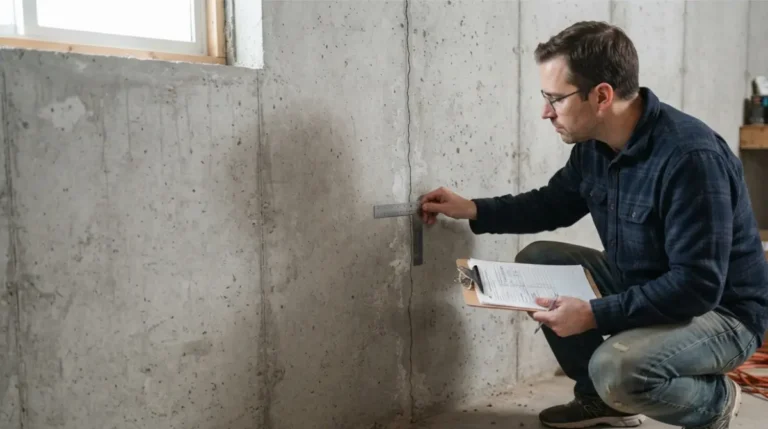
Check your soil in the Web Soil Survey, walk the perimeter for a gap, and photograph any crack beside a ruler. If one grows, call a licensed structural engineer before adding water.