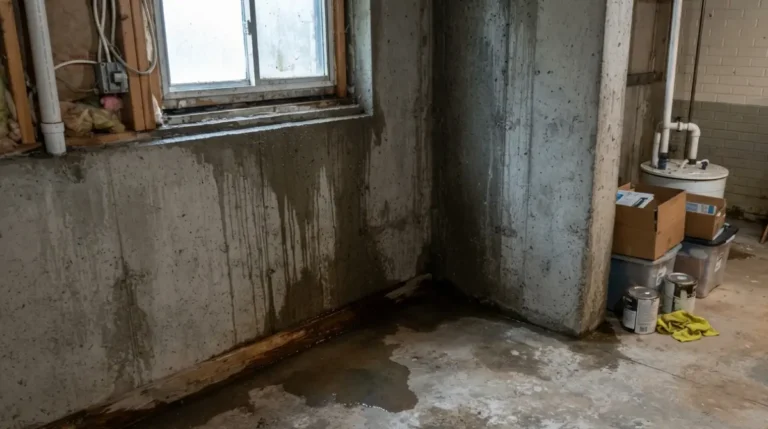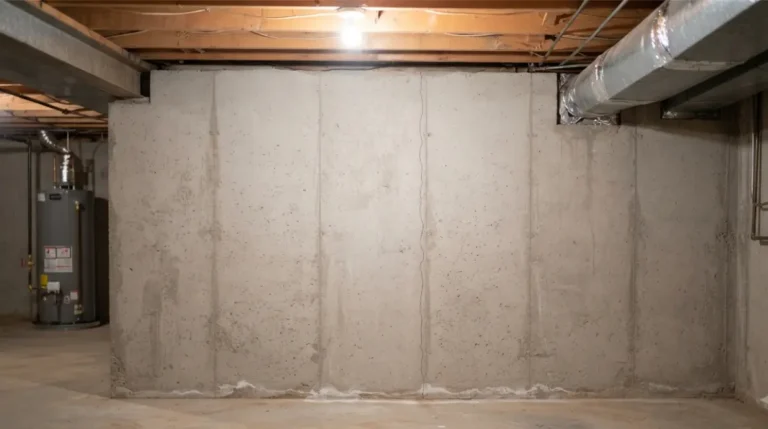
Sealing a Basement Wall Crack With Hydraulic Cement, Done Right

Sealing a basement wall crack starts before you mix: rule out horizontal, offset, or 1/4-inch-plus cracks, then undercut, press top-down, and hold.
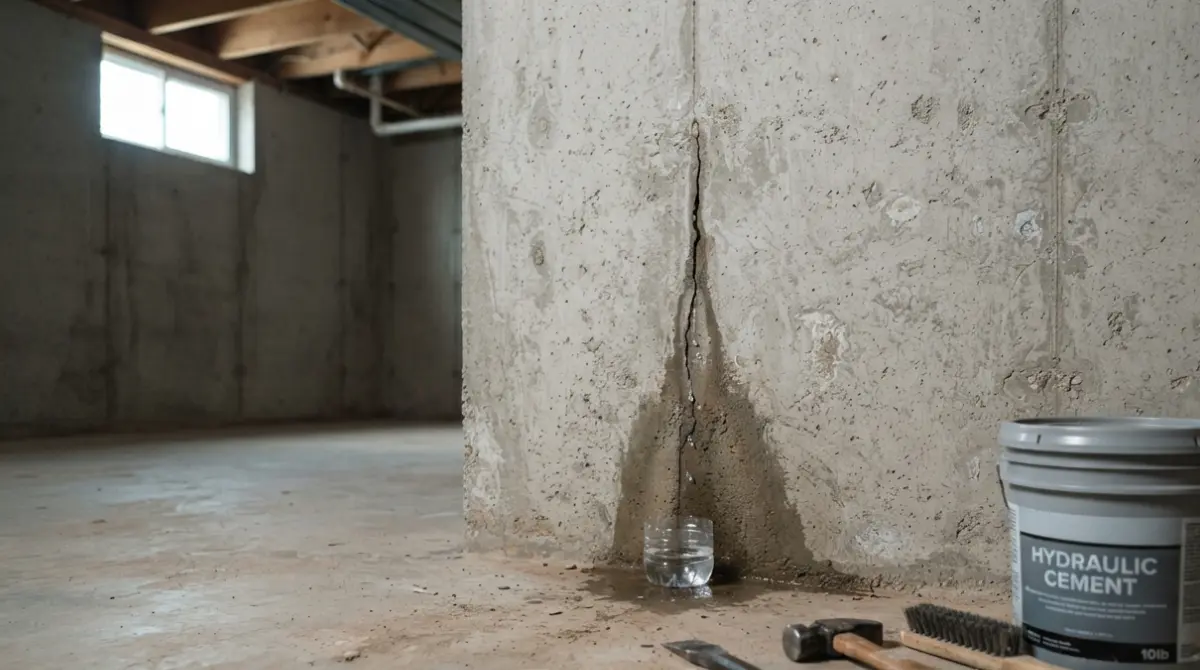
Table of Contents
Can you fix a leaking basement crack yourself?
Often, yes, if the crack is narrow and not moving.
The 30-second answer
Hydraulic cement is made to plug actively leaking cracks in concrete and masonry, and it sets in about five minutes. It stops water at the crack; it doesn’t fix a shifting wall.
Who should skip straight to Section 3
- Horizontal or wide crack: if it runs sideways or looks wider than about 1/4 inch, read the four warning signs first.
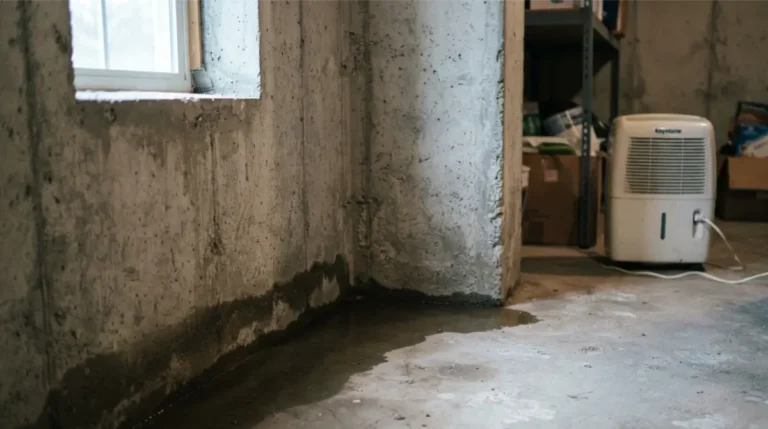
- Damp but not dripping: moisture across the whole wall may not be a leak, so run the condensation-versus-seepage test first.
- Narrow vertical crack that weeps after rain: you’re in the right place.
ℹ️ Safety Note: Hydraulic cement is caustic and can burn skin and eyes, and chiseling concrete creates dust you shouldn’t breathe. This guide covers plugging leaks in narrow, stable cracks only. Horizontal, wide, offset, or growing cracks need an evaluation by a licensed structural engineer before any repair.
How hydraulic cement stops water, and where it falls short
Hydraulic cement works because it hardens fast enough to set while water is still pushing through.
Why it sets in minutes
📊 Spec (manufacturer data): Quikrete’s data sheet for its Hydraulic Water-Stop Cement lists final set at 5 minutes or less, reaching about 1,000 psi at 2 hours and 5,500 psi at 28 days. It’s rated for above- and below-grade use.
The rigid-plug problem
Once set, the plug is rigid. Waterproofing contractors report that as a foundation wall expands and contracts with temperature and moisture, a rigid plug can lose its bond and work loose.
🔍 Why It Works: The patch seals the crack’s face, but most cracks run clear through the wall. If the wall keeps moving, water finds the plug’s edge.
Is your crack safe to patch? Check these four signs first
Get a structural assessment before patching if any one of these is true:
- The crack runs horizontally or stair-steps through block mortar joints.
- It’s wider than about 1/4 inch.
- One side sits higher or farther out than the other.
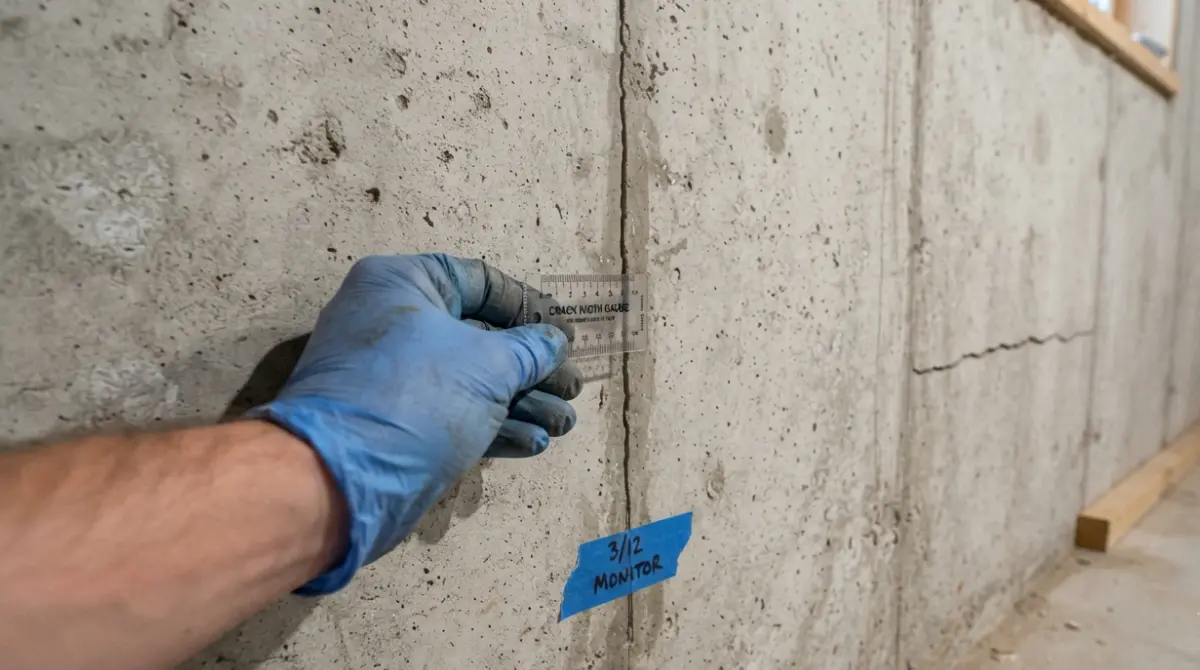
- It’s growing over 30 to 90 days.
Foundation professionals commonly treat these as signs of movement, not ordinary shrinkage. Compare yours against how to tell if a basement wall crack is structural.
The mouse-width rule
The CDC’s rodent-proofing guidance notes mice can squeeze through a hole about 1/4 inch wide. If a mouse could fit, get the crack assessed before patching. Afterward, seal the smaller mouse entry points nearby.
Mark it and watch it for 30 days
Pencil a dated line across each end of the crack and recheck monthly.
✅ Do This: For any warning sign, hire an independent licensed structural engineer before calling repair companies. Ask for a written answer on whether the wall is moving and whether a surface patch is appropriate.
What you need before you mix a single batch
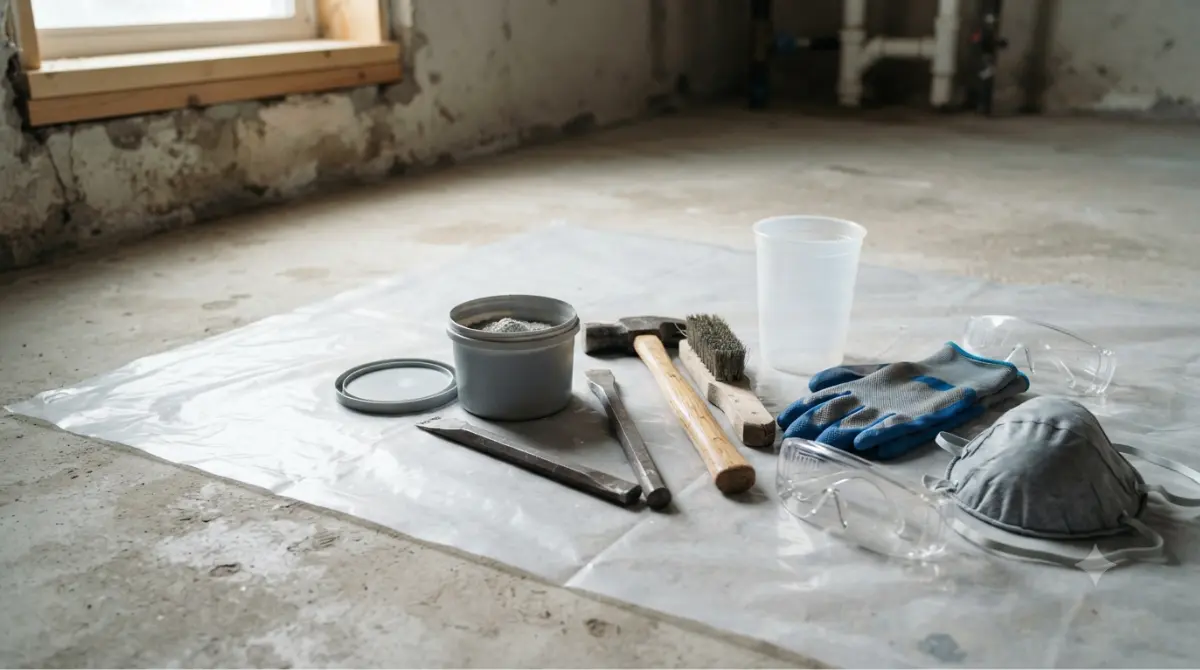
Gather everything first, because you’ll have only a couple of minutes to work.
Protective gear the label requires
Quikrete’s label calls for impervious gloves such as nitrile, a mask, and eye protection. It warns of severe skin burns and eye damage, and says repeatedly breathing the dust may cause lung damage or cancer.
⚠️ Watch Out: Cement burns may not hurt right away, so pain isn’t a reliable warning. If cement touches skin, remove it and rinse thoroughly with water.
What it costs
- Hydraulic water-stop cement, sold in 10, 20, and 50 lb pails.
- A cold chisel, hammer, and stiff wire brush.
- Nitrile gloves, safety glasses, and a dust mask.
How to seal a basement wall crack with hydraulic cement
Undercut the crack instead of V-cutting it, mix tiny batches, and press from the top down.
Undercut, don’t V-cut
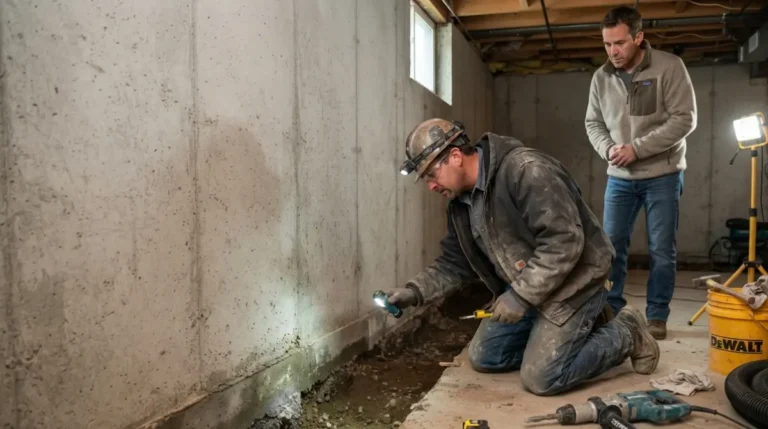
- Clean it. Remove loose concrete, dirt, paint, or sealant.
- Shape the edges. Chisel the sides square or undercut, so the crack is wider inside than at the surface.
- Brush out the dust.
💡 Pro Tip: Many popular guides say to chisel a V-groove. Quikrete’s current data sheet says the opposite: edges must be square or undercut, and V-shaped cuts should be avoided.
Mix, press, and hold
- Mix one small batch. About 4½ oz of powder to 1 oz of water makes a golf-ball-size putty. Mix only what you can place in 2 to 3 minutes, and use warm water below 50°F.
- Press top-down. Start at the crack’s top and work down with light pressure until initial set begins and the leak stops.
- Overlap while wet. Add any next batch before the last one fully sets, then scrape off the excess. No special curing is needed.
Why the patch leaks again, and what fixes the real cause
A patch that weeps again within a season usually means the water pressure outside hasn’t changed.
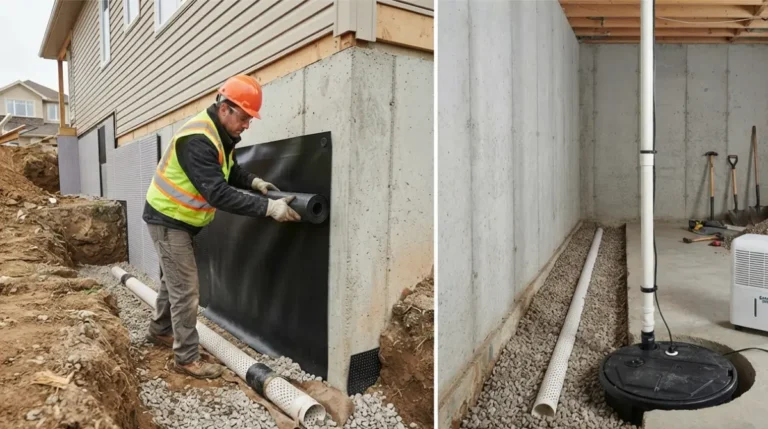
Fix the drainage outside first
The University of Minnesota Extension’s guide to basement moisture notes many wet basements are structurally sound but drain poorly. The usual causes are ground that doesn’t slope away, weak gutters and downspouts, or missing subsurface drains. Start with gutters that stop dumping water at your foundation, and if that and patching fall short, see what each basement waterproofing line item costs.
Sealing isn’t radon mitigation
The EPA’s Consumer’s Guide to Radon Reduction says homes draw radon in through foundation cracks, but it doesn’t recommend sealing alone, because settling reopens entry routes. Test your basement; at 4 pCi/L or higher, EPA advises hiring a qualified mitigation contractor.
Mistakes that make hydraulic cement patches fail
Most failed patches trace back to a handful of avoidable errors.
Prep and mixing mistakes
- V-cutting the crack, which the manufacturer says to avoid.
- Mixing a big batch that sets in the bucket before you can place it.
Using it in the wrong place
- Patching a moving crack (horizontal, wide, or growing) instead of getting it assessed.
- Skimming the whole wall. Quikrete says the product only fills active leaks and isn’t for coating flat surfaces.
- Filling an expansion joint. These joints are designed to move and need a flexible sealant.
Hydraulic cement and basement crack FAQ
1. How long does hydraulic cement take to set?
Quikrete’s hydraulic water-stop cement reaches final set in 5 minutes or less, so mix only a 2-to-3-minute batch.
2. Should I V-cut a basement crack for hydraulic cement?
No. Quikrete says hydraulic cement needs square or undercut crack edges and warns against V-shaped cuts.
3. Is hydraulic cement a permanent fix?
Not always. Hydraulic cement is rigid, and contractors report plugs can loosen as a foundation wall moves.
4. When is a basement wall crack too serious to patch?
A horizontal, offset, or growing basement wall crack, or one wider than about 1/4 inch, needs assessment first. Call a licensed structural engineer.
5. Can hydraulic cement go on an active leak?
Yes. Hydraulic water-stop cement is designed for active leaks; press it in from the top down until it sets.
6. How much hydraulic cement should I mix at once?
About 4½ oz of hydraulic cement powder with 1 oz of water, which makes a golf-ball-size batch.
7. Is hydraulic cement dangerous to handle?
Yes. Hydraulic cement can burn skin and eyes, sometimes without early pain. Wear nitrile gloves, eye protection, and a mask.
8. Can I use hydraulic cement on an expansion joint?
No. Expansion joints move, so rigid hydraulic cement is the wrong material; use a flexible sealant.
9. Does sealing basement cracks reduce radon?
Not reliably. The EPA doesn’t recommend sealing basement cracks alone for radon. Test, and hire a qualified mitigation contractor at 4 pCi/L or higher.
10. Will sealing a basement wall crack keep mice out?
It closes that gap. The CDC notes mice fit through holes about 1/4 inch wide, so seal other entry points too.
Your next step
Triage first: any horizontal, wide, offset, or growing crack goes to a structural engineer. If yours is narrow and stable, undercut it, mix small, press top-down, and fix the drainage pushing water in. Then pencil-date both ends and check them monthly.