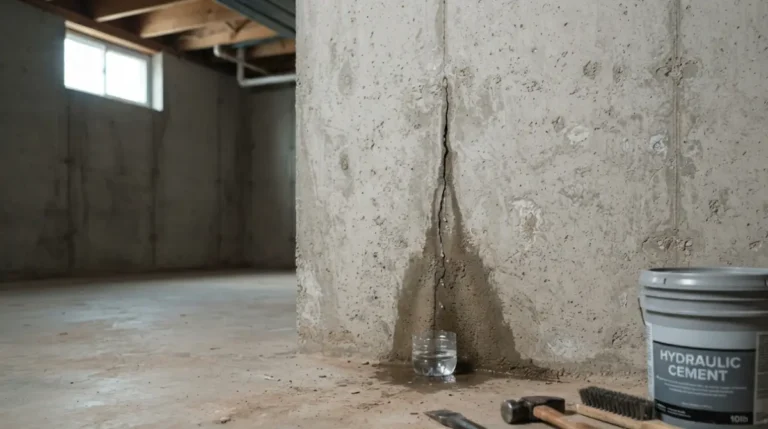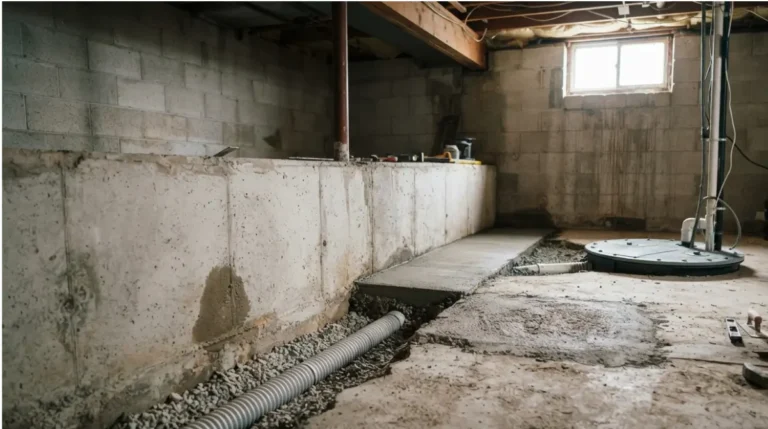
The real cost of an interior French drain in a basement

Interior French drain cost in a basement lands between $40 and $100 a linear foot — but the number only means something once you know what it covers.
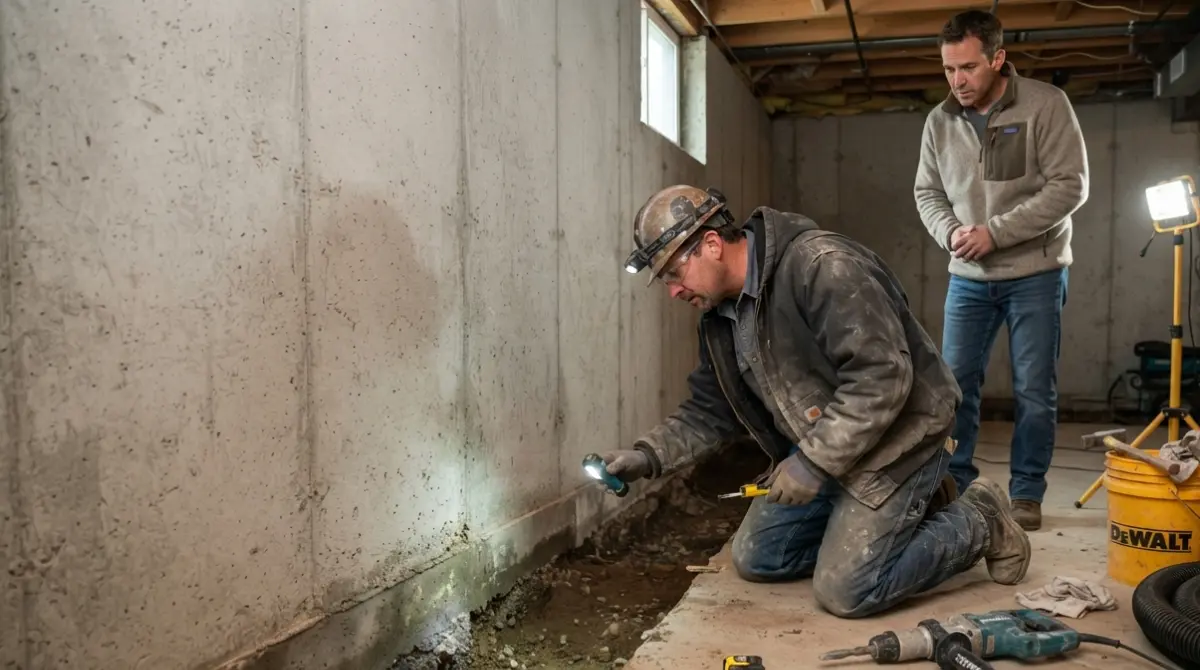
Table of Contents
An interior French drain costs $40 to $100 per linear foot installed, putting most basements between $4,000 and $17,000. Where you land inside that range depends on scope, not luck.
Two readers usually arrive here.
If a contractor’s quote is already in your hand, go to the line-item breakdown below and check it against what a complete estimate contains. That comparison is the fastest way to separate a fair number from a padded one.
If you are still working out whether water is seeping in or condensing on cold surfaces, the cost question is early. A simple basement test separates the two, and the answer changes which system you need.
ℹ️ Safety Note: An interior French drain means demolishing the perimeter of a structural basement slab beside your foundation footings, and the finished system changes how moisture and soil gas move into the room. Treat everything here as general understanding for budgeting. Hire a licensed basement waterproofing or foundation contractor and follow your local permit requirements.
What an interior French drain actually costs per foot
Published contractor data puts interior basement drains at $40 to $100 per linear foot, with typical project totals of $4,000 to $17,000. A 100-foot perimeter therefore lands somewhere between roughly $4,000 and $10,000 before extras.
Why published estimates disagree
The published ranges do not agree, and the reason matters more than the spread.
| Source (2026) | Interior range | What the figure includes | Key detail |
|---|---|---|---|
| HomeGuide | $40–$85/ft | Drain only; sump pump priced separately | $4,000–$17,000 typical total |
| LawnStarter | $40–$100/ft | Interior named the most expensive drain type | Exterior compared at $10–$65/ft |
| BuiltRight | $50–$100/ft | Full perimeter system | $5,000–$15,000 typical total |
| Breasy | $70–$150/ft | Concrete cutting and sump pump bundled | 12-metro sample, not national |
They differ because each counts a different scope, not because the market is chaotic. Confirm what your quote includes before comparing it to any number online.
What’s inside that per-foot price
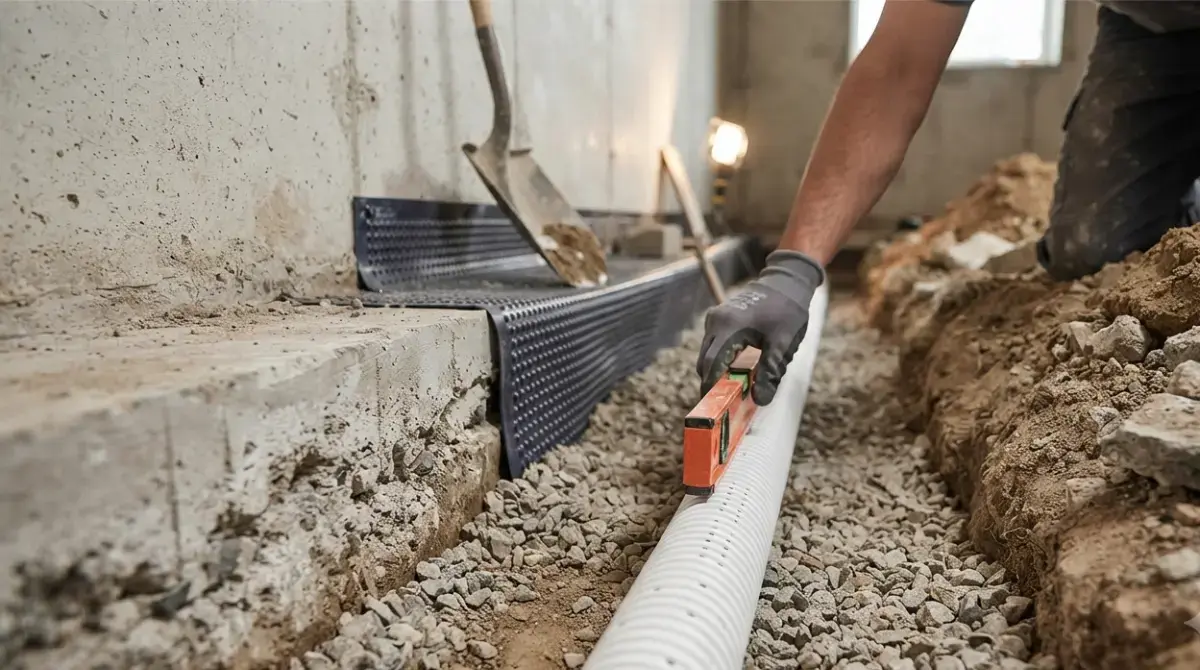
This breakdown is assembled from published contractor cost data, not from a job we ran. It covers the per-foot figure only — the full project cost, line by line, sits with the parent guide.
| Line item | What it is | Standard or optional | Sourced detail |
|---|---|---|---|
| Slab cutting and removal | Jackhammering the floor perimeter to reach the footings | Standard | The main reason interior costs more than exterior |
| Spoil removal | Hauling concrete and soil out of an occupied basement | Standard | Access difficulty raises labour |
| Gravel bed and perforated pipe | The drain itself | Standard | Pipe is a small share of the total |
| Sump pit and pump | The system’s outlet | Standard | Adds $625–$2,625 |
| Drainage board or membrane | Guides wall seepage into the channel | Usually standard | — |
| Full wall encapsulation | Sealed barrier across the whole wall | Optional | Adds $2,000–$8,000 |
| Slab re-pour | Patching the cut trench | Standard | Estimate the concrete for the trench patch |
📊 Sourced: Soil type, trench depth and regional labour rates can move a quote 30–60% from the baseline range, which is why a site-assessed quote beats a phone estimate. (Breasy, 2026 contractor data)
Wall encapsulation is the line item most often presented as standard. Ask why it is on your estimate.
Why the sump pump isn’t an optional add-on
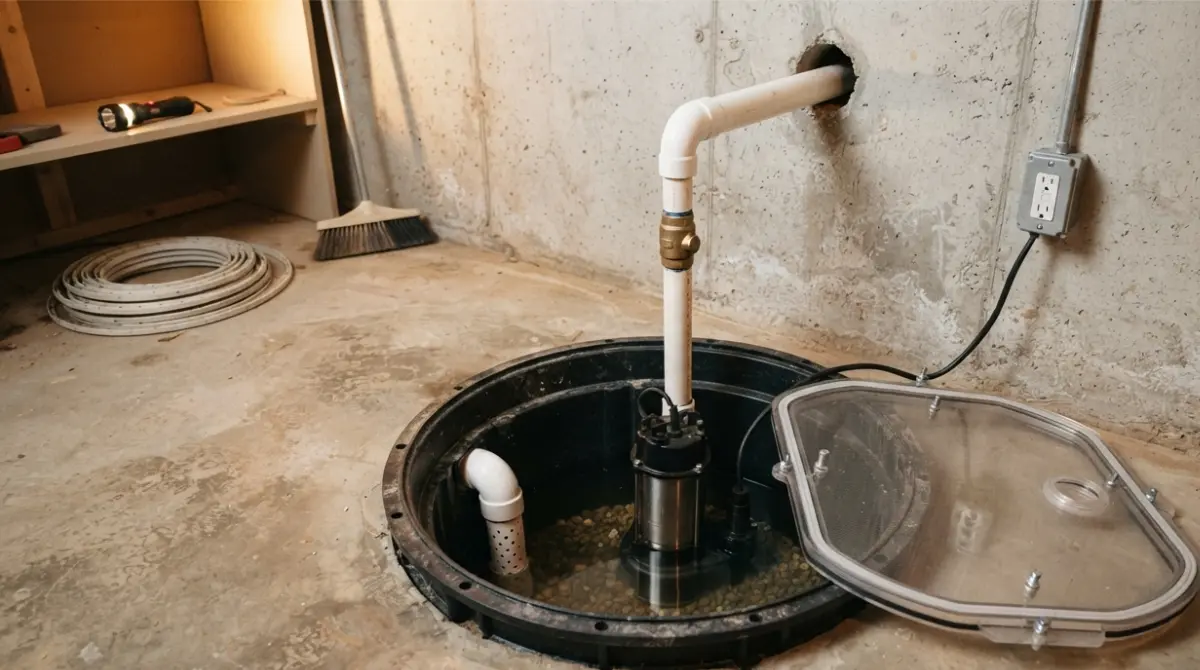
A sump pump is not an upsell on an interior system. The drain collects water beneath the slab and has nowhere to send it without a pit and a pump.
🔍 Why It Works: Water entering below floor level cannot drain uphill to the outside. The perforated pipe carries it to a sump pit, and the pump lifts it out and discharges it away from the foundation.
Published data puts the pump system at $625 to $2,625 on top of the drain. Combined drain-plus-pump work is often quoted at $50 to $100 per linear foot.
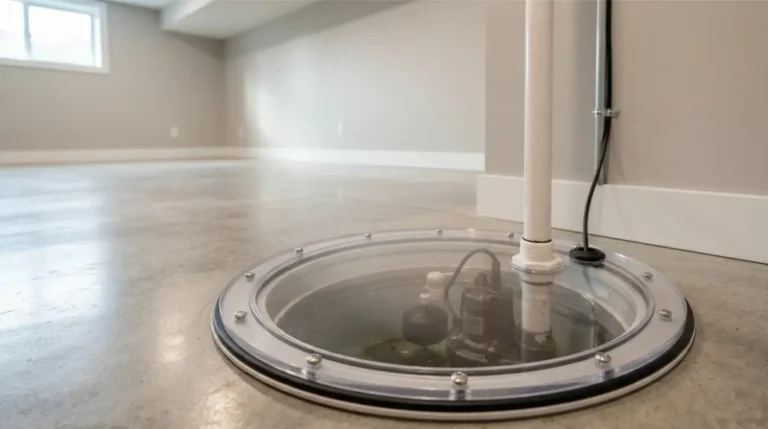
The pit itself needs a sealed lid. Department of Energy guidance notes that an open or loose-lidded pit evaporates standing water into the house, raising humidity and encouraging mould and wood decay — see the Department of Energy guidance on sump pit covers.
Interior vs exterior: cheaper isn’t always the right fix
Exterior drainage is cheaper per foot. That does not make it the right fix, because the two systems intercept water at different points.
| Interior perimeter drain | Exterior footing drain | |
|---|---|---|
| Published cost | $40–$100/ft | $10–$65/ft; deep perimeter $30–$90/ft |
| Intercepts | Water already under or through the wall | Water approaching the foundation |
| Best for | Active seepage with no exterior access | New builds, correctable grading, open yard |
Before either, University of Minnesota Extension points to grading and gutters: missing or non-functioning drainage and ground that fails to slope away from the foundation are among the most common causes, and correcting them sometimes resolves the problem outright. Their guide to moisture in basements walks the diagnosis. A fuller comparison sits in our guide to how the two approaches compare.
Hiring, permits, and why this isn’t a DIY job
This is not a DIY project. The work means demolishing a structural slab next to your foundation footings inside an occupied house, then re-pouring it.
✅ Do This: Hire a licensed basement waterproofing or foundation contractor. Verify state licensing and insurance, insist on a written itemised estimate you can map against the table above, and require a site visit before any number is quoted. If walls are cracked, bowing or moving, bring in a structural engineer first.
Permit requirements vary by jurisdiction. Confirm with your local building department rather than relying on the contractor’s assurance, and get the answer in writing.
Quotes that differ by thousands usually differ in scope. Our guide to comparing waterproofing costs side by side shows how to normalise them.
The sump pit is a soil-gas pathway
Your new drain connects the gravel beneath the slab to an open pit inside the room. That pit is a known entry route for radon and other soil gases.
⚠️ Watch Out: An unsealed sump pit lets soil gas enter the basement and mix with indoor air. EPA recommends fixing a home at a confirmed radon level of 4 pCi/L or higher — see the EPA’s homeowner guide to radon reduction. Test after the system is installed and running, not before.
Model building code addresses this for new construction, requiring pits open to soil or terminating drain tile loops to carry a gasketed or sealed lid — though it sits in an appendix that applies only where a jurisdiction adopts it, so a retrofit is not automatically covered. Moisture matters here too: EPA’s position is that controlling indoor moisture is the key to controlling mould.
✅ Do This: Ask a certified radon measurement professional to test once the system is operating, and confirm the lid is gasketed with sealed pass-throughs for wiring and discharge.
Interior French drain cost: common questions
1. How much does a 100 ft interior French drain cost?
At $40 to $100 per linear foot, a 100-foot perimeter runs roughly $4,000 to $10,000 before the sump pump.
2. Why is an interior French drain so expensive?
Cutting and removing the slab perimeter, hauling spoil from an occupied basement, and re-pouring the floor drive the interior French drain cost.
3. Do I need a sump pump with an interior French drain?
Yes. The drain collects water below floor level and has no outlet without a pit and pump.
4. How much does the sump pump add?
Published contractor data puts the pump system at $625 to $2,625 above the drain installation itself.
5. Can I install an interior French drain myself?
No. It requires demolishing a structural slab beside your foundation footings. Hire a licensed waterproofing or foundation contractor.
6. Is exterior drainage cheaper than interior?
Yes, at $10 to $65 per foot. But it intercepts water approaching the foundation, not water already coming through.
7. Do I need a permit?
Requirements vary by jurisdiction. Confirm with your local building department in writing before work starts.
8. Why do published prices for this job disagree?
Each source counts a different scope — some include the sump pump or wall encapsulation, others price the drain alone.
9. Is wall encapsulation required?
No. It is optional and adds $2,000 to $8,000. Ask why it appears on your estimate.
10. Can a sump pit let radon into the basement?
Yes. The pit connects to the gravel under your slab, a known soil-gas route. Have a certified radon professional test after installation.
Before you sign anything
Interior French drain cost runs $40 to $100 per linear foot, but the number on your quote means little until you know what it covers. Get a site-assessed, itemised written estimate, map it against the line items above, and ask what is standard and what is optional.