Smart Basement Waterproofing When There’s No Exterior Access

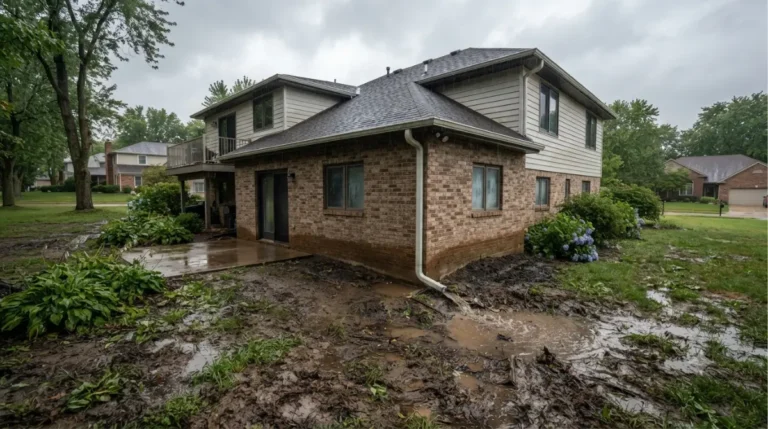
Basement waterproofing without exterior access still starts outside: a 1-inch rain drops about 1,250 gallons on a 2,000-sq-ft roof. Where does it go?
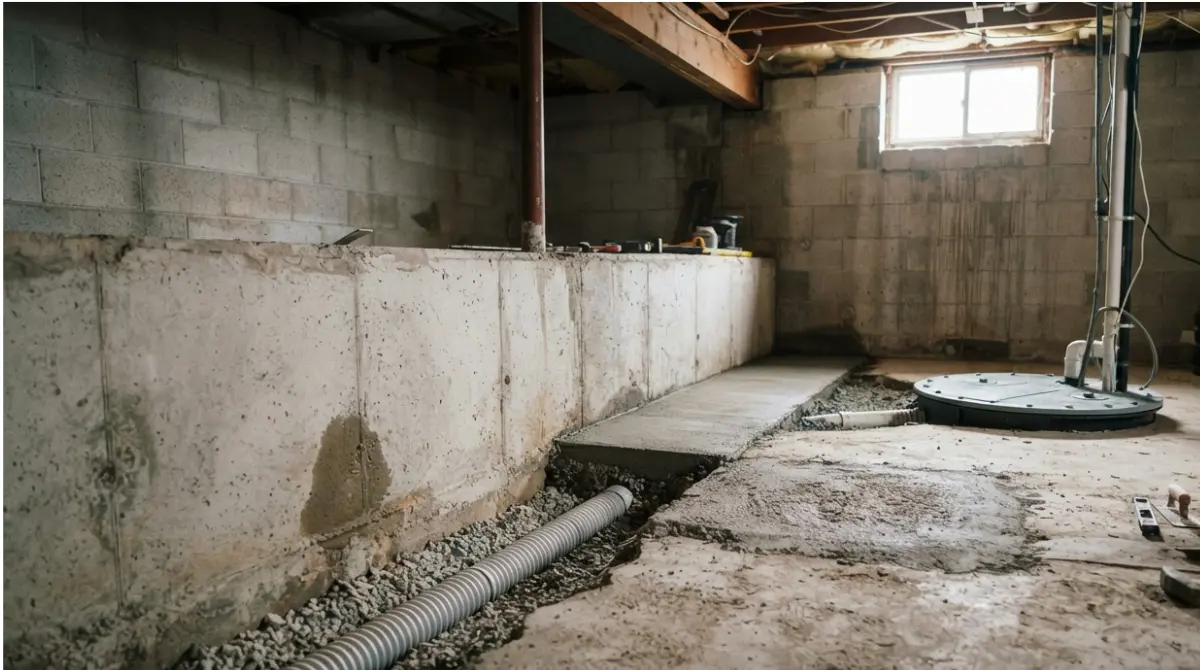
Table of Contents
Can you waterproof a basement from the inside only?
Yes. An interior drainage system can keep your floor dry, but it manages water after it reaches the wall instead of keeping it off.
Why excavation is off the table for you
Your foundation might sit on a property line, under a driveway or patio, or against a neighbor’s rowhouse. Or an HOA or condo board may control the ground outside. Start where your situation points:
- Damp walls, no puddles: run the 24-hour test below.
- Water after rain: fix outside runoff first.
- Quotes in hand: skip to the three drain systems.
What “inside only” can and can’t do
University of Minnesota Extension rates exterior drainage as the most effective fix for existing homes, and also the most costly. Indoors, the realistic goal is collecting water and pumping it out, not stopping it at the wall.
ℹ️ Safety Note: Cutting a concrete slab, wiring a sump pump, and judging foundation cracks carry injury, shock, and structural risk. Dampness can also mean mold or radon. This article is for general understanding: hire a licensed waterproofing contractor, plus a structural engineer or certified radon professional where noted, and follow local code and permit requirements.
Is it condensation or real seepage? A 24-hour test
Before paying for drainage, confirm the water is actually coming through the wall.
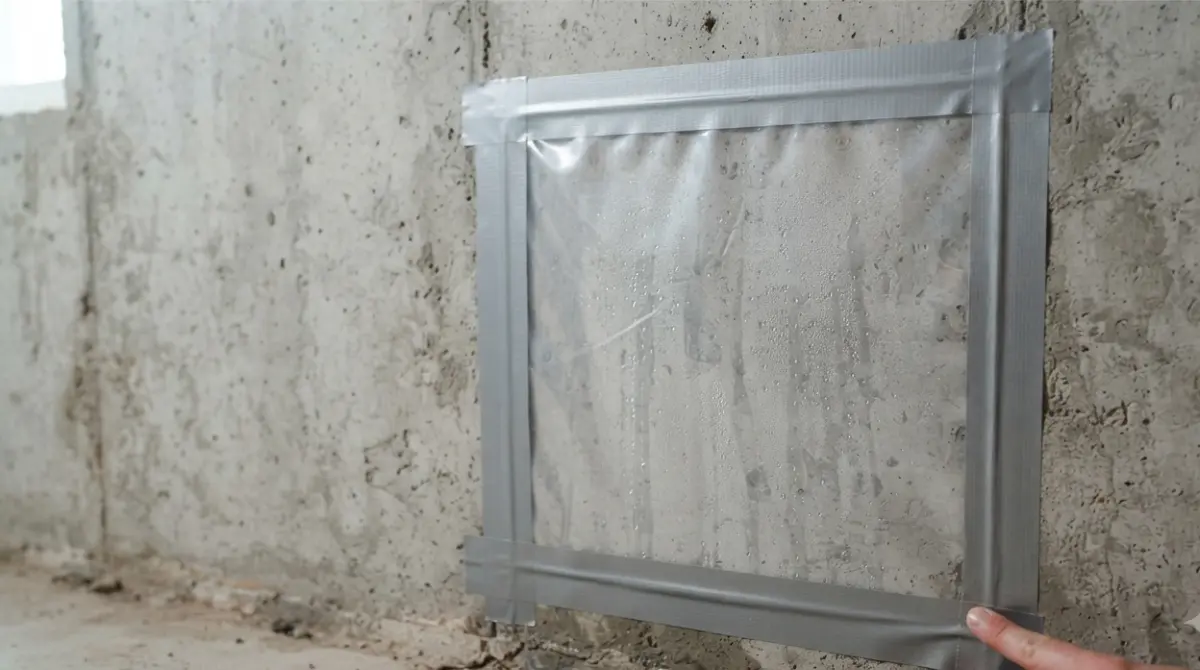
How to run the patch test
- Dry a small patch of the basement wall.
- Tape a 12-inch square of foil or plastic wrap over it, sealing all four edges.
- Leave it for 24 hours, then check both sides.
Reading the result
Moisture on the room-facing side is condensation, which is a humidity problem rather than a leak. Moisture underneath is seepage from the soil, and that’s what the rest of this article addresses. For unclear results, our step-by-step condensation vs seepage test walks through the edge cases.
🔍 Why It Works: Below-grade concrete stays cool, so humid air condenses on it like water on a cold glass. UMN Extension notes many homeowners mistake this condensation for wall leakage.
Signs it’s groundwater, not surface water
Water that arrives with rainstorms usually traces back to roof and yard runoff. Dampness that lingers through a wet season, or water rising at floor cracks, points toward groundwater. UMN Extension notes the water table can rise with flooding or seasonal site conditions.
Fixes that don’t need a shovel near the wall
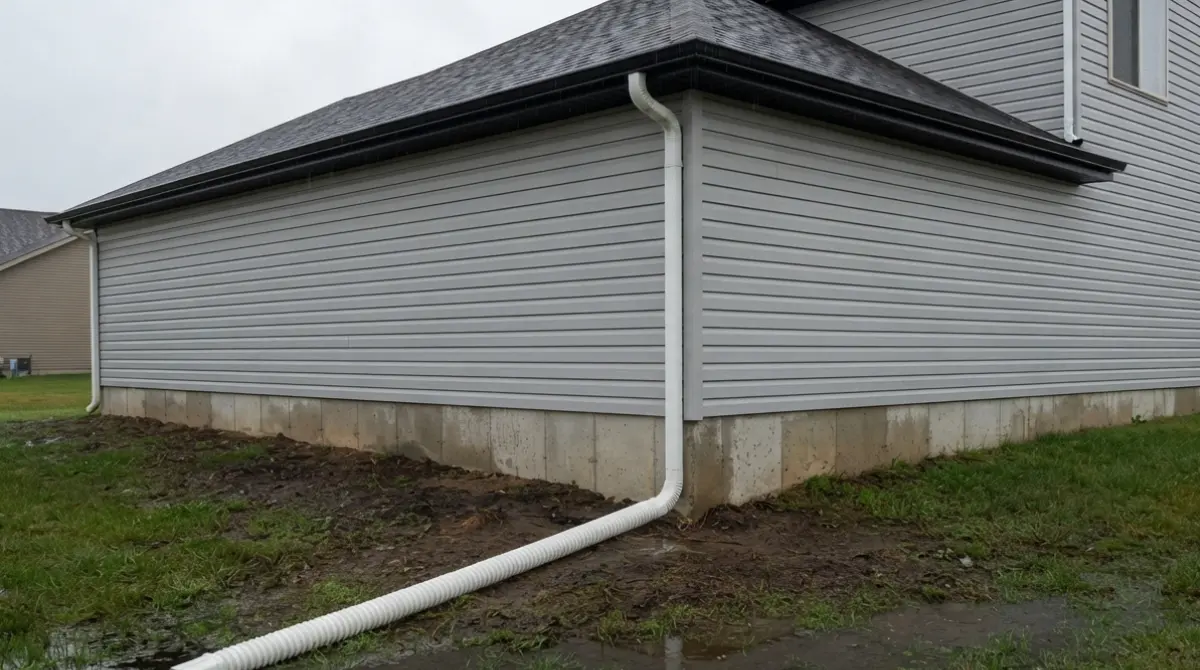
Even without digging, you can usually cut how much water reaches the foundation.
📊 Spec: In a 1-inch rain, about 1,250 gallons fall on the roof of a 2,000-square-foot house (University of Minnesota Extension).
Gutters and downspout extensions
UMN warns that a downspout without an extension or splash block can be worse than none, because it dumps roof water in one spot beside the basement. Its guidance is at least one downspout per 50 feet of eave, with extensions discharging at least 4 feet beyond the wall.
Regrading what you do control
Where you control the soil, UMN recommends a grade slope of at least 1 inch per foot for at least 6 feet away from the wall. Even one corrected side lightens the load on any interior system.
Window wells
A badly built window well acts like a drain right beside the wall. If yours fills during storms, have a contractor check that it drains away from the foundation.
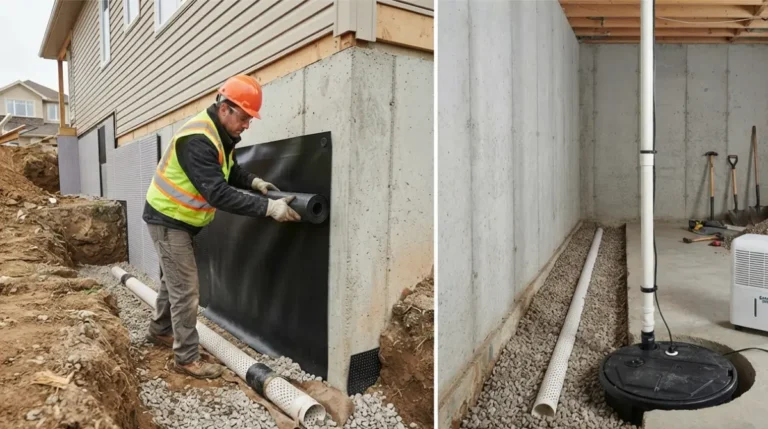
The three interior drain systems and what each can’t do
Nearly every interior quote uses one of three designs described in University of Minnesota Extension’s basement moisture guide.
| System | How it works | Best For | Can’t do |
|---|---|---|---|
| Channel on top of slab | Channel at the wall-floor joint drains to a sump | Cracked poured-concrete walls; least costly | Drain block cores or water under the slab |
| Channel at slab edge | Slab edge removed; channel sits on the footing | Block walls, via holes drilled into each core | Skip capping block tops and coating walls |
| Pipe under slab | Slab edge removed; perforated pipe plus dimpled sheeting | Most effective interior option | Take rising groundwater in tight soils without gravel under the slab |
Source: University of Minnesota Extension. Not hands-on tested by Gladewick.
Channel on top of the slab
No concrete is cut, but water only drops to slab level, so humidity and mildew can persist.
Channel at the slab edge
The core drilling and capping are part of the job, so check that the quote includes them.
Pipe under the slab
UMN recommends pairing it with an active soil-gas system connected to the sump. Before comparing prices, see how each line item on a waterproofing quote is priced.
✅ Do This: Ask every licensed waterproofing contractor which of these three systems they’re quoting and why it suits your wall type. Get the answer in writing.
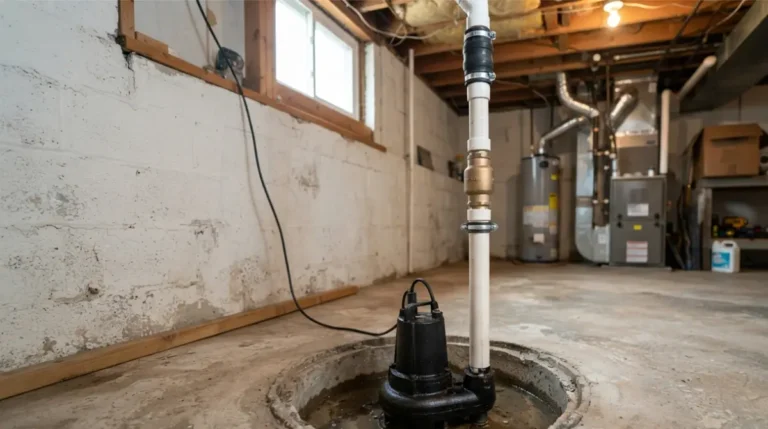
Why the sump pit is the part people get wrong
Every interior system ends at a sump pit, so a weak pit undermines the whole job.
Airtight, childproof cover
Warm air rising through a house pulls moist soil air in through openings like an open sump, UMN explains. Its guidance is an airtight, childproof cover.
When the power goes out
UMN also notes the sump pump itself can fail. Ask whether the quote includes a backup pump and an alarm, and have a licensed electrician handle the pump’s circuit.
Test for radon after the install
Opening the slab disturbs the soil that radon comes from, so test once the work is done. Our guide to the sump pit as a radon entry point explains why the lid matters.
✅ Do This: If your radon test comes back high, use EPA’s guide to finding a certified radon professional. It points you to your state radon program, which lists providers credentialed by NRPP, NRSB, or a state license.
Sealers and dehumidifiers: helpful, but not the fix
Cheaper options belong in the plan, just not as the whole plan.
Waterproof paint and interior coatings
UMN calls interior coatings and membranes temporary. The water stays behind them and eventually finds another path in.
Crack injection on poured walls
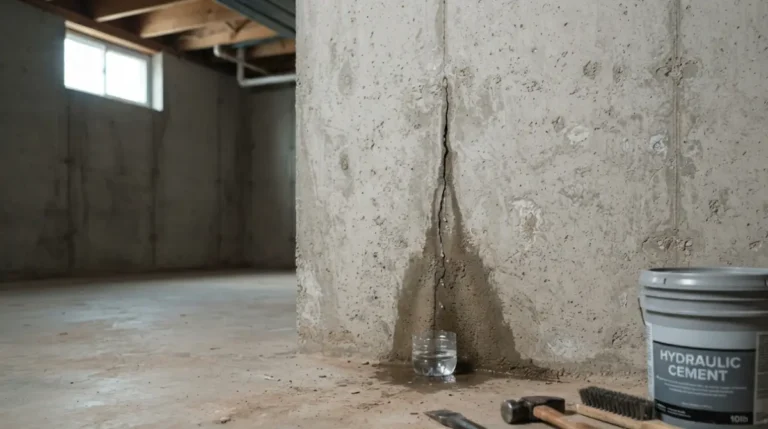
Crack injection can seal a leaking crack in poured concrete, but it doesn’t relieve water pressing on the rest of the wall.
Dehumidifiers and target humidity
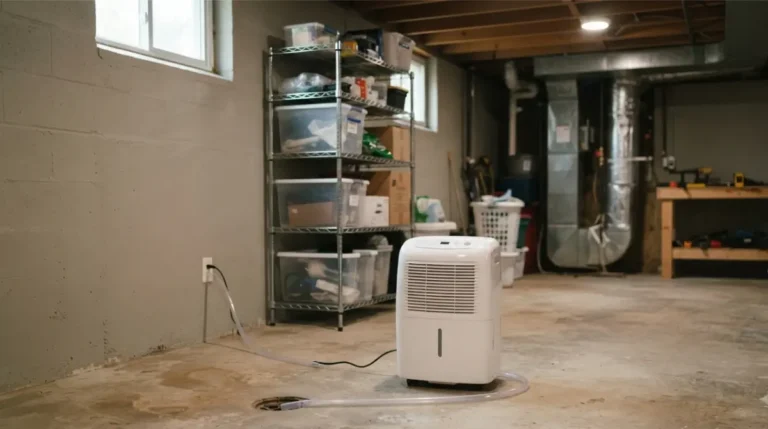
A dehumidifier eases odor and dampness, but UMN warns it isn’t permanent and can draw moisture through walls faster. EPA’s guide to mold and moisture at home advises keeping indoor humidity below 60 percent, ideally 30 to 50. If you’re shopping, see our recall-checked basement dehumidifier picks.
⚠️ Watch Out: Don’t paint or caulk over moldy surfaces. EPA says to clean and dry them first, because paint applied over mold is likely to peel.
Red flags that change who you call
Some wet basements are really structural or mold problems wearing a water costume.
Cracks and walls that need an engineer
A bowing wall or a crack that keeps widening needs a structural engineer before any waterproofing work. Our guide to telling whether a basement wall crack is structural covers the signs.
Mold beyond a DIY cleanup
EPA says mold covering less than about 10 square feet can usually be handled yourself. Larger growth or heavy water damage calls for an experienced professional.
Five questions for every quote
- Which system, and why for my walls?
- Is the sump cover airtight?
- Where does discharge go, and does it meet local rules?
- Is a backup pump included?
- Is the warranty transferable?
Frequently asked questions
1. Is interior waterproofing as good as exterior?
Not quite. UMN Extension rates exterior drainage as most effective, but interior drainage is the realistic basement waterproofing option when excavation isn’t possible.
2. Do interior basement drains need a sump pump?
Yes. All three interior drain systems carry water to a sump, where a pump lifts it outside. Pumps can fail, so ask about a backup.
3. Does basement waterproofing paint work?
Only temporarily. UMN Extension calls interior coatings and membranes temporary because water stays behind them and eventually finds another path into the basement.
4. Will a dehumidifier fix a wet basement?
No. A dehumidifier eases odor and humidity, but UMN warns it isn’t a permanent fix and can draw moisture through walls faster.
5. How far should downspouts extend from a basement wall?
UMN Extension recommends downspout extensions discharging at least 4 feet beyond the foundation wall, with at least one downspout per 50 feet of eave.
6. Can a basement sump pit let radon in?
An open sump pit lets soil air into the basement, which is why UMN calls for airtight covers. Test for radon after installation. If levels are high, hire an NRPP- or NRSB-credentialed professional.
7. When is a basement wall crack structural?
A bowing wall or a steadily widening crack suggests a structural problem rather than a simple leak. Have a structural engineer assess it before waterproofing.
8. How much basement floor is removed for interior drainage?
Slab-edge channels and under-slab pipes both require removing and replacing concrete along the slab edge. The above-slab channel cuts no concrete.
9. Does interior basement drainage work on block walls?
A slab-edge channel does, because holes drilled into each block core drain it. An above-slab channel leaves water trapped in the cores.
10. How big a basement mold area can I clean myself?
EPA says mold covering less than about 10 square feet can usually be handled yourself. Beyond that, or with heavy water damage, bring in an experienced professional.
Your next step
Run the 24-hour test, fix whatever runoff you can still reach, then match an interior system to your wall type. Get at least two written quotes that name the system, the sump cover, and the discharge route. Then check each line item against the cost guide linked above before you sign.