Sump Pump Radon Starts at an Open Pit, and Here’s the Real Fix

Sump pump radon problems start at an open pit. EPA rates sump-hole suction at 50–99% typical reduction; here’s what a sealed lid can and can’t do.
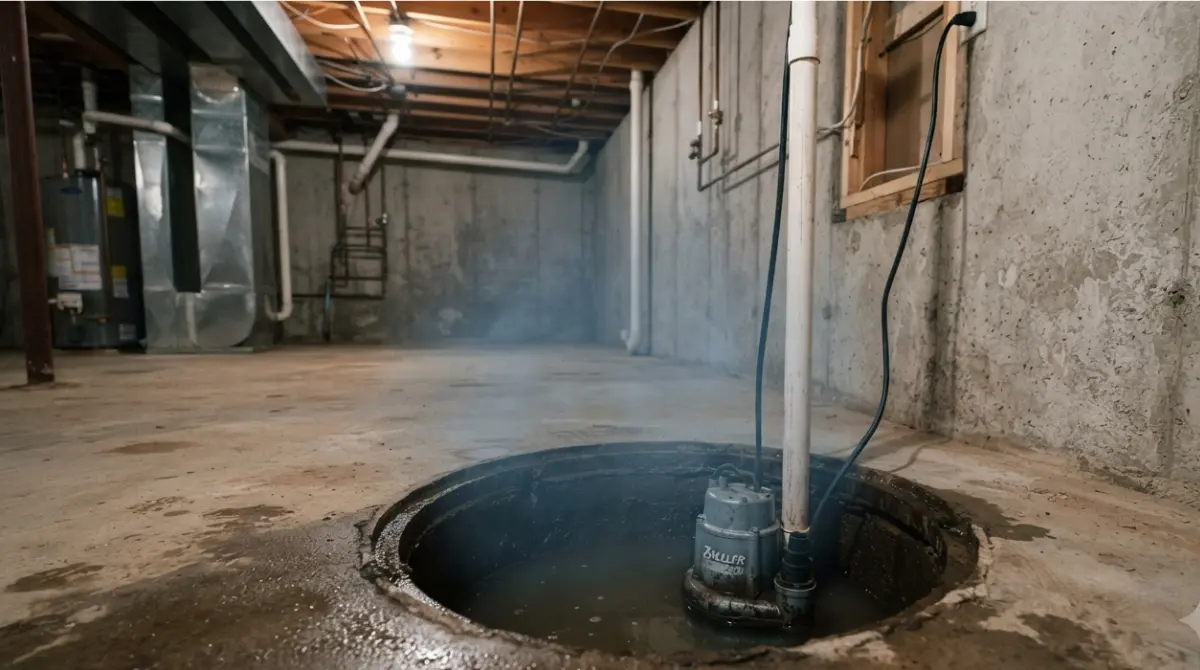
Table of Contents
Why an open sump pit can let radon into your home
An open sump pit is a hole in your basement floor that leads to the soil, where radon gas comes from. That’s the sump pump radon problem, and it’s measurable and fixable.
What radon is and why the basement matters
Radon forms when uranium in soil and rock breaks down, and you can’t see or smell it. It’s the second leading cause of lung cancer in the U.S., with EPA’s best estimate of radon-related lung cancer deaths at about 21,000 a year.
Where to jump if you already have a test result
- No test yet: start with the testing section below.
- 4 pCi/L or higher: go straight to the sealed-lid and sump-suction sections.
- Holding quotes: skip to costs and hiring.
ℹ️ Safety Note: Radon exposure raises lung cancer risk, and radon systems involve slab penetrations, powered fans, and electrical connections. This article is general guidance. Have a state-licensed or NRPP/NRSB-certified radon mitigation professional design and install any system, following local code.
How radon gets from the soil into your sump pit
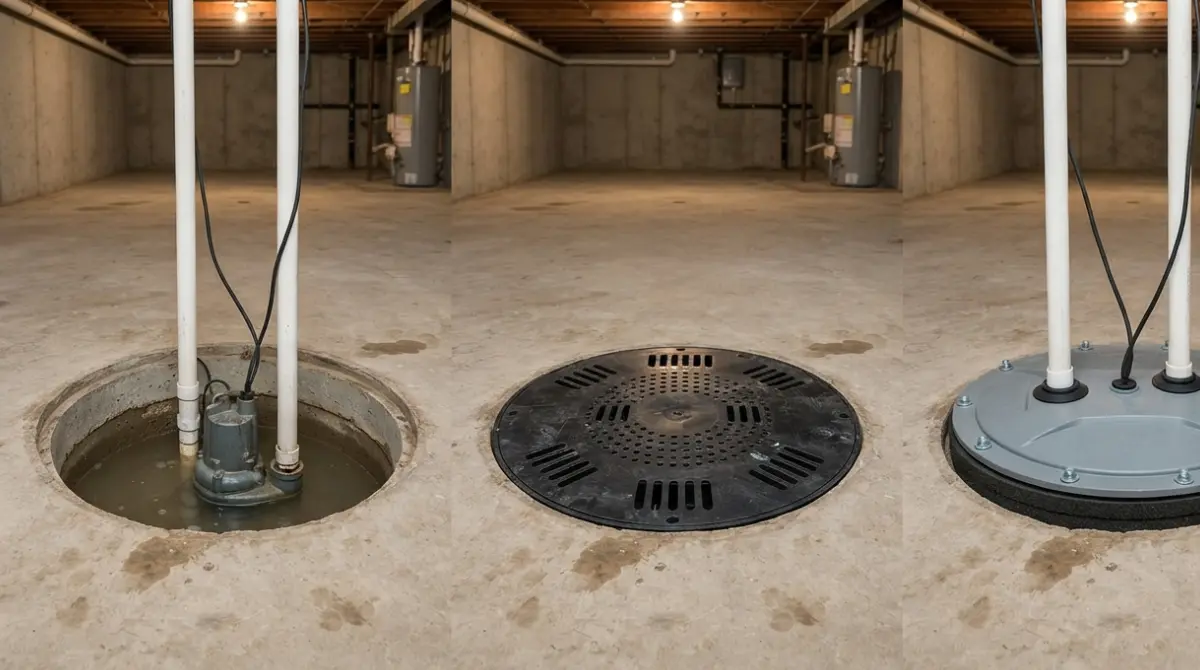
Yes, radon can come through a sump pit. An open pit connects basement air to the gravel, soil, and drain tile under the slab, where radon collects.
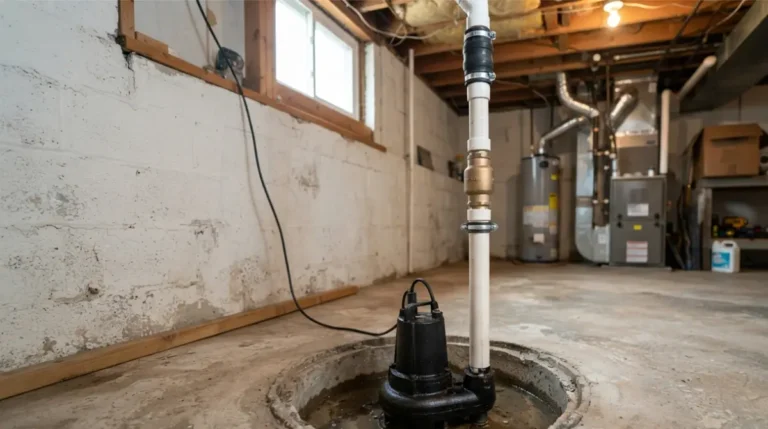
The pit is a hole in your slab
The EPA explains that indoor air pressure is usually lower than the soil pressure around your foundation, so the house acts like a vacuum, drawing radon through cracks and openings. An uncovered pit is about as direct an opening as a basement has.
🔍 Why It Works: Warm air escaping upstairs lowers pressure at basement level. Soil gas moves toward that low pressure, and an open pit gives it a clear path.
Why drain tile makes the pathway bigger
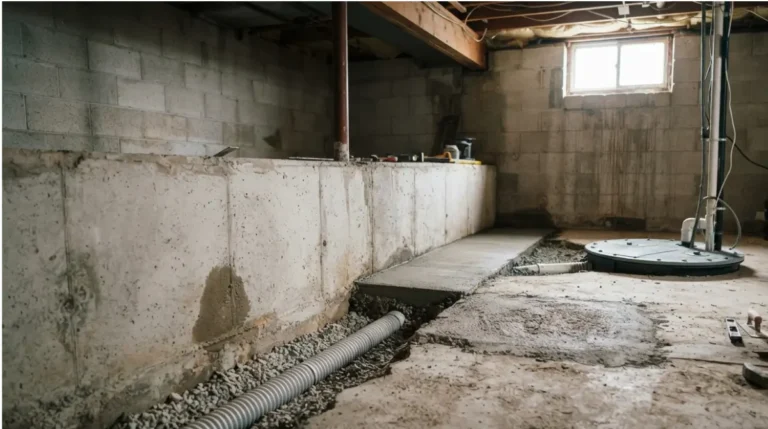
A pit fed by perforated drain pipe connects to that whole loop under your floor. Here’s what interior drain tile costs to install.
How to tell if radon is coming up through your sump
Here’s how the EPA reads your result:
- 4 pCi/L or higher (one long-term test, or two short-term tests averaged): fix your home.
- 2 to 4 pCi/L: consider fixing.
Short-term vs. long-term radon tests
Every radon test should run at least 48 hours. Short-term tests run 2 to 90 days; long-term tests run more than 90 days and better reflect your year-round average.
What your number means: 2 and 4 pCi/L
A basement reading shows the room’s level, not which opening it came from. The CDC’s radon guidance notes there’s no known safe level.
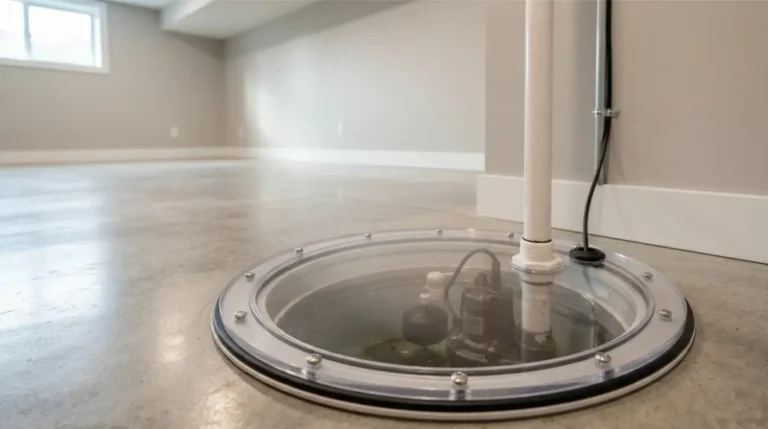
Check your lid type: open, perforated, or sealed
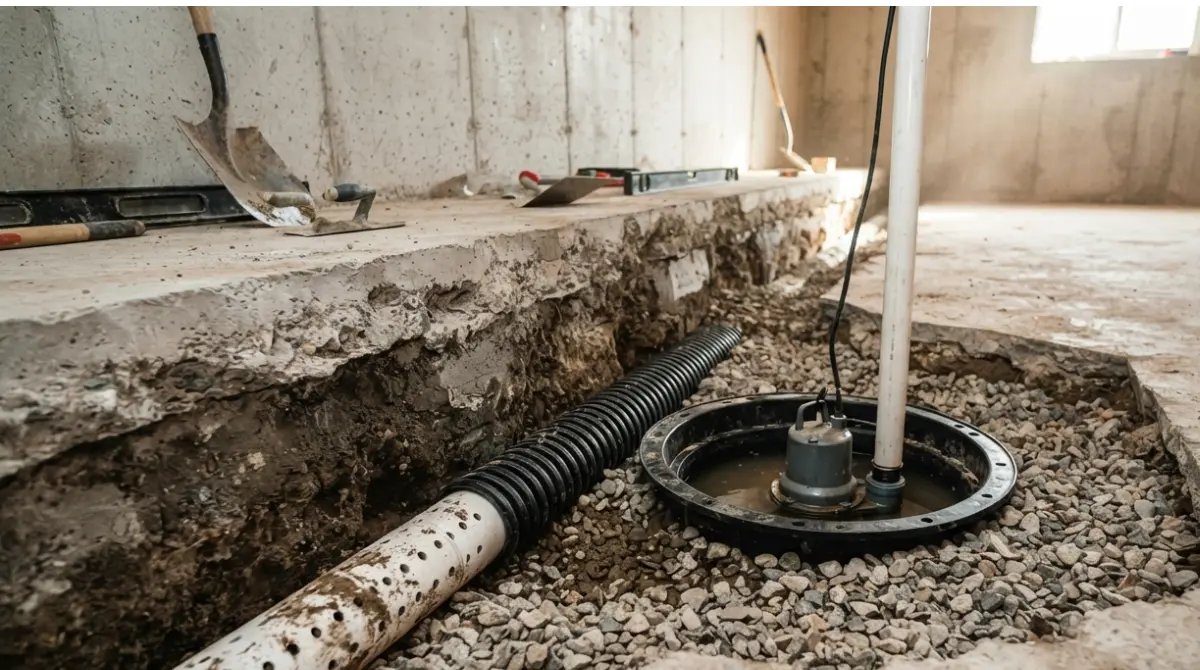
Open and perforated lids let soil gas through by design. For discounted kits and qualified testers, use EPA’s radon test kit and professional finder.
What a sealed sump lid fixes, and what it doesn’t
A sealed sump lid closes one of the most direct radon pathways, but alone it isn’t a radon fix. The EPA doesn’t recommend sealing alone, because it hasn’t been shown to lower radon significantly or consistently.
Gasketed lid vs. perforated lid
An airtight sump lid has a rim gasket and sealed openings for each pipe and cord. A perforated lid lets soil gas through.
Keeping the pump, cord, and discharge sealed
Every penetration must be sealed, and the pump must stay reachable for service. Compare sump pump covers built for radon before you buy.
⚠️ Watch Out: Don’t cut the pump’s cord or reroute its discharge to make a lid fit. A damaged cord near water is a shock hazard, and a blocked discharge can flood the basement. Leave those connections to a plumber or your mitigator.
Why a lid alone isn’t a mitigation system
A lid is a pathway fix. If your retest stays high, the pit itself can become the fix.
When your sump pit becomes the radon suction point
Sump-hole suction turns the pit into part of the solution. In the EPA’s Consumer’s Guide to Radon Reduction, the sump is capped so it keeps draining water while holding a suction pipe.
How sump-hole suction works
A fan pulls soil gas from under the slab through the capped pit and vents it outdoors.
📊 Tested / Spec: EPA lists sump-hole suction at a typical 50–99% radon reduction, working best when air moves easily to the sump from under the slab.
The fan, pipe, and manometer you’ll see
- Radon fan: in unconditioned space, never in or below living area.
- Vent pipe: exhausts above the roof.
- Warning device: usually a manometer showing the fan is pulling.
✅ Do This: Ask your certified mitigator where the fan and exhaust will go, and how to read the warning device.
What a sump-based radon fix costs, line by line
The EPA says most homes can be fixed for about the same cost as other common home repairs. Wisconsin’s Department of Health Services puts the average contractor-installed radon system at $1,000–$2,000.
Lid-only vs. full sump-suction system
| Line item | What it covers | Key detail to ask |
|---|---|---|
| Diagnostics | Smoke or soil tests | Charged separately? |
| Sealed lid | Gasketed cap, sealed openings | Pump still serviceable? |
| Pipe and fan | Suction from pit to exhaust | Fan location, vent height |
| Warning device | Manometer or alarm | Visible from living space? |
| Permits, electrical | Fan circuit to local code | In the total price? |
| Retest | Post-install measurement | Independent tester? |
Line items from the EPA’s Consumer’s Guide; table structure is Gladewick’s.
Radon lines inside a waterproofing quote
If a radon lid appears on a waterproofing estimate, check it with our method for reading a basement waterproofing quote line by line.
Hiring a certified mitigator and retesting after
The right contractor matters more than the lid you pick.
NRPP vs. NRSB certification
Check your state radon office first, since many states license radon professionals. Otherwise, search NRPP’s certified mitigator directory or the NRSB’s.
What to get in writing
Ask for proof of certification and liability insurance, a warning device, post-install testing, and a guarantee to reach 4 pCi/L or below. Sealing cracks is part of most approaches, and sealing basement wall cracks covers the water side.
Retest after the fix
EPA says test no sooner than 24 hours and within 30 days after installation, ideally independently. Then retest every two years.
Sump pump radon FAQ
1. Can radon come through a sump pump pit?
Yes. An open sump pit connects basement air to the soil and drain tile under the slab, where radon collects.
2. Does a sealed sump pump cover stop radon?
It closes one pathway, but EPA doesn’t recommend sealing alone, since it hasn’t consistently lowered radon. Retest after sealing.
3. Can I seal my sump pit myself?
You can fit a radon-rated lid, but never modify the pump’s cord or discharge plumbing yourself. Have a certified mitigator verify the seal.
4. Will a sealed lid stop my sump pump from working?
It shouldn’t. In EPA’s sump-hole suction method, the capped sump keeps draining water. Confirm your pump stays serviceable with a pro.
5. What radon level means I should act?
EPA recommends fixing your home at 4 pCi/L or higher, and considering a fix between 2 and 4 pCi/L.
6. How long should a radon test run?
At least 48 hours. Short-term radon tests run 2 to 90 days; long-term tests run more than 90 days.
7. Can my sump pit be part of a radon system?
Yes. EPA lists sump-hole suction, where the capped pit holds the suction pipe, at 50–99% typical reduction. Hire a certified mitigator.
8. How much does sump pump radon mitigation cost?
Wisconsin’s health department puts the average contractor-installed radon system at $1,000–$2,000; home size and design change the price.
9. Who should install a radon system?
A state-licensed or NRPP- or NRSB-certified mitigator. Check your state radon office first, since many states require licensing.
10. When should I retest after mitigation?
EPA says no sooner than 24 hours and within 30 days of installation, ideally independently, then every two years.
Your next step with a sump pit and radon
Test first, then seal the pit, then verify with a retest. Then retest every two years. If your number is 4 pCi/L or higher, bring in a certified mitigator and use the line-item table above to compare quotes. Want our radon quote checklist? Email hello@gladewick.com and we’ll send it over.