Finding the hidden source of a dead mouse smell in the wall

Dead mouse smell in the wall starts at the nest, not where the odor is strongest. A half-ounce carcass, one stud bay — here’s how to narrow it down
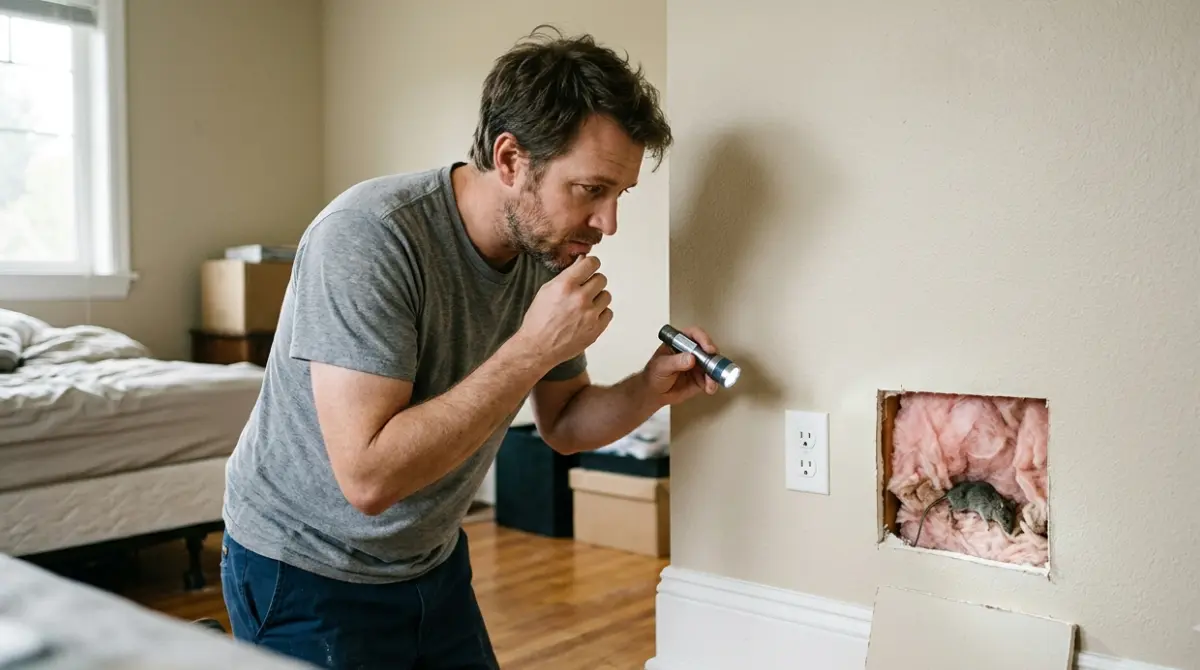
Table of Contents
How long a dead mouse in the wall actually smells
A dead mouse smell in a wall usually runs one to three weeks, peaking somewhere in the middle and fading as the carcass dries out. Warmth, humidity, and absorbent insulation stretch it; cool, dry, ventilated wall cavities shorten it. No health agency publishes a decomposition timeline for a mouse in a wall, so treat that range as observed, not measured.
If the smell just started
You’re near the beginning, so expect it to get stronger before it fades. Start narrowing down the location now.
If you’re two weeks in and it’s getting worse
Something is holding moisture: absorbent insulation, a warm cavity, or more than one carcass. The cut-or-wait section below is written for you.
ℹ️ Safety Note: Removing a dead rodent means handling material that can carry bacteria and viruses, and reaching it usually means opening a cavity that holds electrical wiring and plumbing. The guidance here is for general understanding.
Follow the CDC’s cleanup steps, and for extraction, duct work, or any cutting, hire a licensed pest control professional or a qualified contractor and follow local code.
What decides whether it’s five days or five weeks
Four variables decide where you land in that range: body mass, temperature, airflow, and what the fluids soaked into.
Body size and where it settled
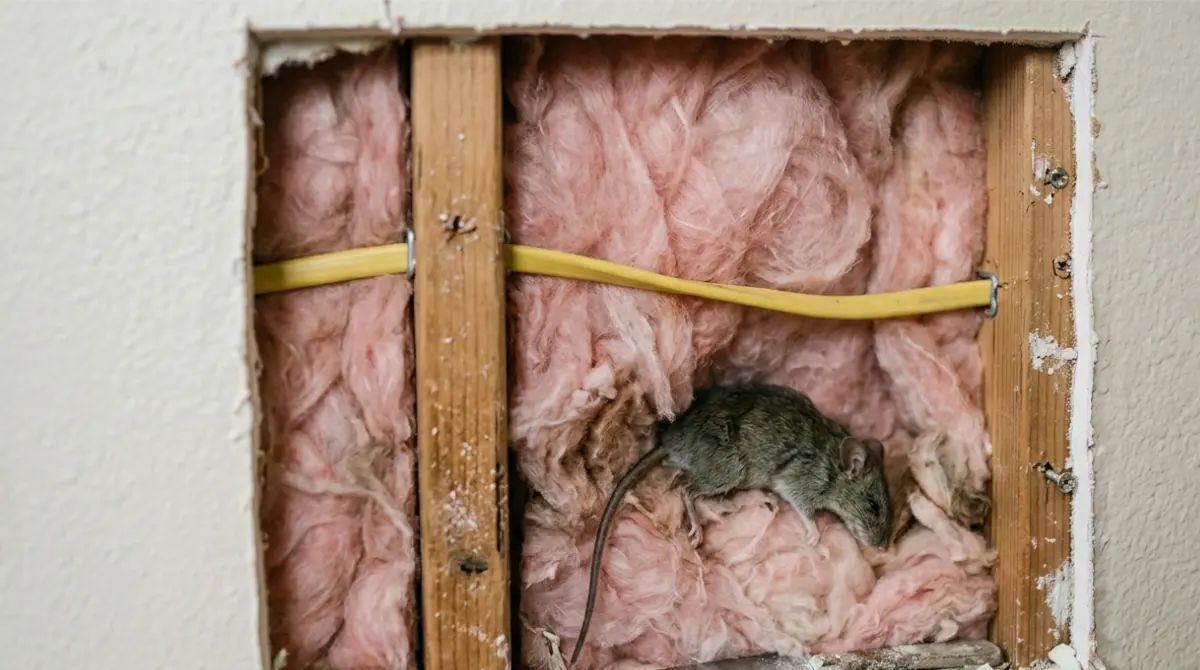
📊 Sourced: University of California IPM lists an adult house mouse at 5 to 7 inches including the tail, weighing about half an ounce. That small mass is why a mouse clears in weeks and a rat takes longer.
Temperature, humidity and airflow
A cool, dry, ventilated cavity can finish in under a week. A warm, humid one can run past three.
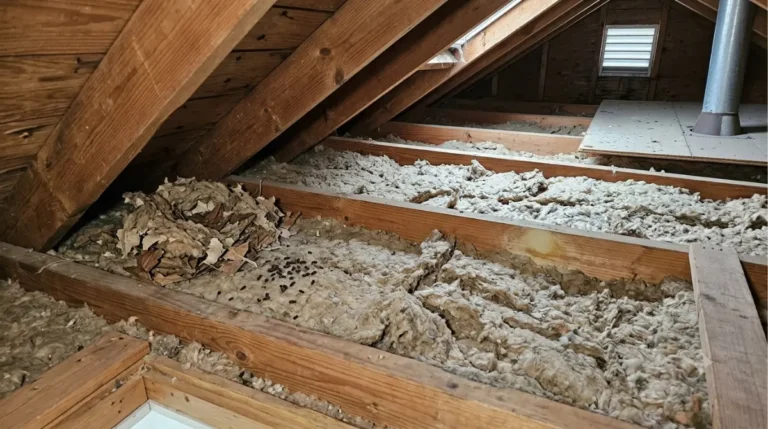
Why insulation stretches it out
🔍 Why It Works: The smell is gas released as tissue breaks down. Once the carcass dries, that source stops. Fluids absorbed by batt insulation keep releasing after the body itself is dry.
Where to look first: the 30-foot rule
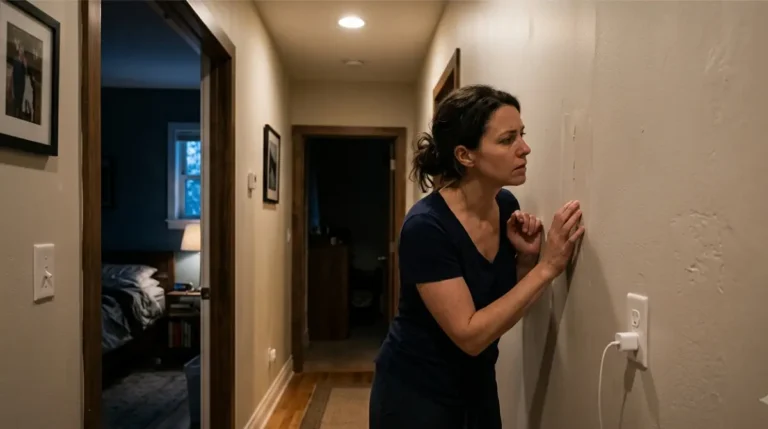
Most people search outward from the smell, which is the slow way round, because odour travels through a cavity and the source rarely sits where the smell is strongest.
Start at the nest, not the smell
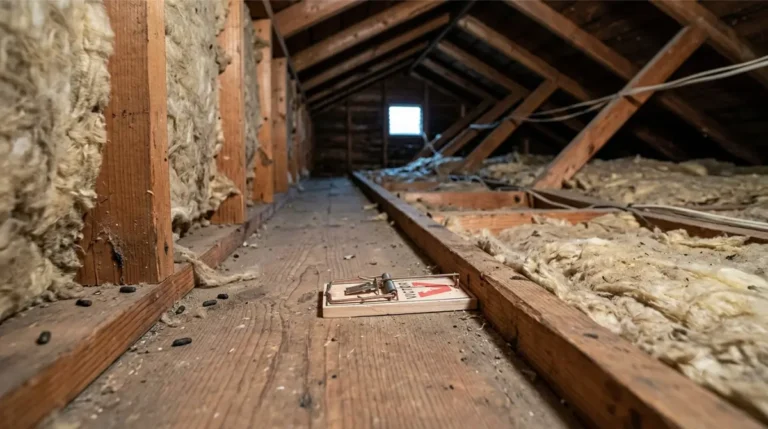
- Find the droppings or shredded nesting material. That is your centre point.
- Search within 30 feet of it. University of California IPM’s house mouse guide notes that house mice seldom venture further than that from their nest and food supply.
- Rule cavities in by warmth first: near ducts, water heaters, dishwashers, and recessed lights.
The signs that narrow it to one stud bay
- Flies clustering repeatedly at one register, outlet, or ceiling seam.
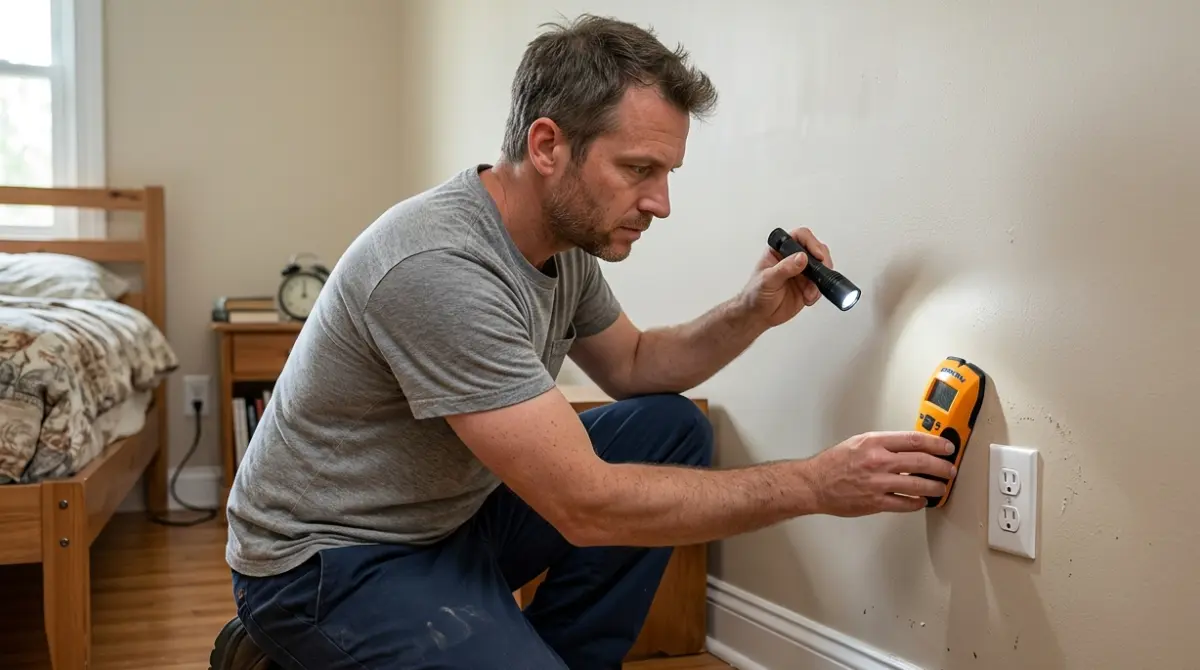
- A stud finder trace showing which bay is enclosed at both ends.
- Odour strength at outlet and switch plates, the only unsealed openings into a bay.
When the smell moves around
If it shifts room to room with the heating, you are smelling duct-borne odour, not a wall. It also pays to know where mice get into the house in the first place, because entry routes point toward nest sites.
Cut the wall open, or wait it out?
The honest arithmetic is usually simple: if the smell started under two weeks ago, waiting costs less than opening and repairing a wall.
| Path | What it costs | Key detail |
|---|---|---|
| Wait it out | Time only | Best when the odour is under two weeks old |
| Open the cavity | Repair varies by wall type; get three written quotes | Cavities carry wiring and plumbing; qualified contractor only |
| Call a pest pro | Quoted per visit | Ask for extraction plus sanitation in the written scope |
If the smell is coming from a vent
The EPA’s guidance on when duct cleaning is warranted lists vermin infestation as one of the few conditions that justifies it, and puts duct cleaning at roughly $450 to $1,000 per system.
✅ Do This: For a carcass in duct work, book a licensed pest control professional for removal first, then a duct cleaner working to NADCA standards. Ask both to confirm licensing and to put the sanitation scope in writing.
Is the smell dangerous, and how to clean up safely
The odour itself is unpleasant rather than the main hazard. The real exposure risk sits in dry droppings and nesting dust that get stirred into the air, which is why cleaning up droppings without stirring dust matters more than the smell does.
The CDC cleanup sequence
The CDC’s step-by-step rodent cleanup guidance sets the order, and the order is the safety mechanism:
- Open doors and windows for 30 minutes and leave the area.
- Put on rubber or plastic gloves.
- Spray the carcass, nest, and surrounding area with disinfectant until very wet, then soak five minutes.
- Double-bag everything and put it in a covered bin.
- Wash gloved hands, then bare hands.
⚠️ Watch Out: CDC advises against vacuuming or sweeping rodent urine, droppings, or nesting material, because it can put tiny virus-carrying droplets into the air. Contaminated exposed insulation should be bagged for removal, not cleaned in place.
Species matters to the cleanup risk profile, and telling a deer mouse from a house mouse is worth two minutes before you start. UC IPM notes house mice can carry leptospirosis, salmonella, and LCM virus.
What actually helps the smell, and what doesn’t
Sorting the options honestly leaves three short lists.
Works: removing the source; ventilation and cross-breeze; a box fan pulling air out of the affected room.
Masks only: activated charcoal bags, odour-absorber sachets, enzymatic sprays. so treat them as partial cover while you wait, not as a fix.
Skip: ozone machines and ionisers.
Why ozone machines aren’t the answer
📊 Sourced: The EPA’s assessment of ozone generators states that at concentrations within public health standards, ozone does little to remove indoor contaminants, including many odour-causing chemicals, and can produce irritating by-products.
Why this happened, and how to stop it happening again
There is usually a cause, and most readers have not connected it yet.
The bait-station trade-off
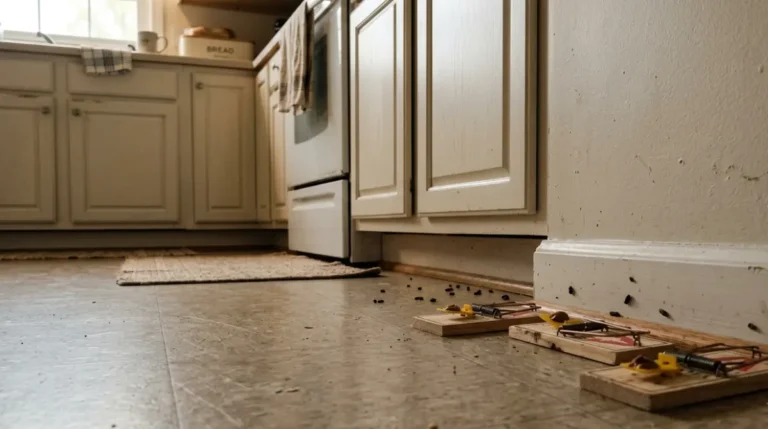
UC IPM notes that because house mice stay close to their nests, rodenticide indoors often means mice dying inside the structure, while trapping lets you dispose of the carcass. If you baited, that is very likely why you are reading this. Knowing where to place mouse traps and the rules that matter changes the outcome next time.
Sealing the way in
Mice enter through gaps as small as a quarter inch, and gnawable plugs like foam or plastic don’t hold. Sealing the gaps mice are using is the only permanent fix.
Dead mouse smell in the wall: common questions
1. How long does a dead mouse smell in a wall last?
A dead mouse smell in a wall usually lasts one to three weeks, peaking mid-way and fading as the carcass dries out.
2. Will the smell go away on its own?
Yes. The dead mouse smell fades once the carcass dries, which is why waiting is often the cheaper choice.
3. Does it get worse before it gets better?
Usually. Odour output climbs to a peak, then drops steadily, so a worsening smell in week one is expected.
4. How do I find the dead mouse in the wall?
Start at the droppings or nest, search within 30 feet, and check warm cavities, fly clusters, and outlet plates.
5. Should I cut the wall open?
Only if the odour is severe, recent, and clearly located. Wall cavities carry wiring and plumbing, so hire a qualified contractor.
6. Is the smell harmful to breathe?
The odour is unpleasant, not the main hazard. Disturbed dry droppings and nesting dust carry the real exposure risk. If anyone in the home is immunocompromised, call a licensed pest control professional.
7. How do I clean it up safely?
Ventilate 30 minutes, glove up, spray with disinfectant, soak five minutes, then double-bag. Never sweep or vacuum. For heavy infestations, contact a licensed pest control professional.
8. Do ozone machines remove dead mouse smell?
No. EPA states that at safe concentrations, ozone does little to remove indoor contaminants, including many odour-causing chemicals.
9. What if the smell comes from the vents?
Rodents in duct work need professional removal. EPA lists vermin infestation as one condition that justifies having ducts cleaned.
10. How do I stop mice dying in my walls?
Trap instead of baiting indoors, then seal entry gaps down to a quarter inch using materials mice cannot gnaw through.
What to do this week
Find the droppings, draw your 30-foot circle, and check the warm cavities inside it. If the smell is under two weeks old, waiting is usually the right call. Then fix the cause: trap rather than bait indoors, and close the gaps before the weather turns.