Deer Mouse vs House Mouse and the Overlooked Cleanup Step

Deer mouse vs house mouse comes down to the tail — but CDC’s cleanup
steps are identical for both. What changes is how far you have to escalate.
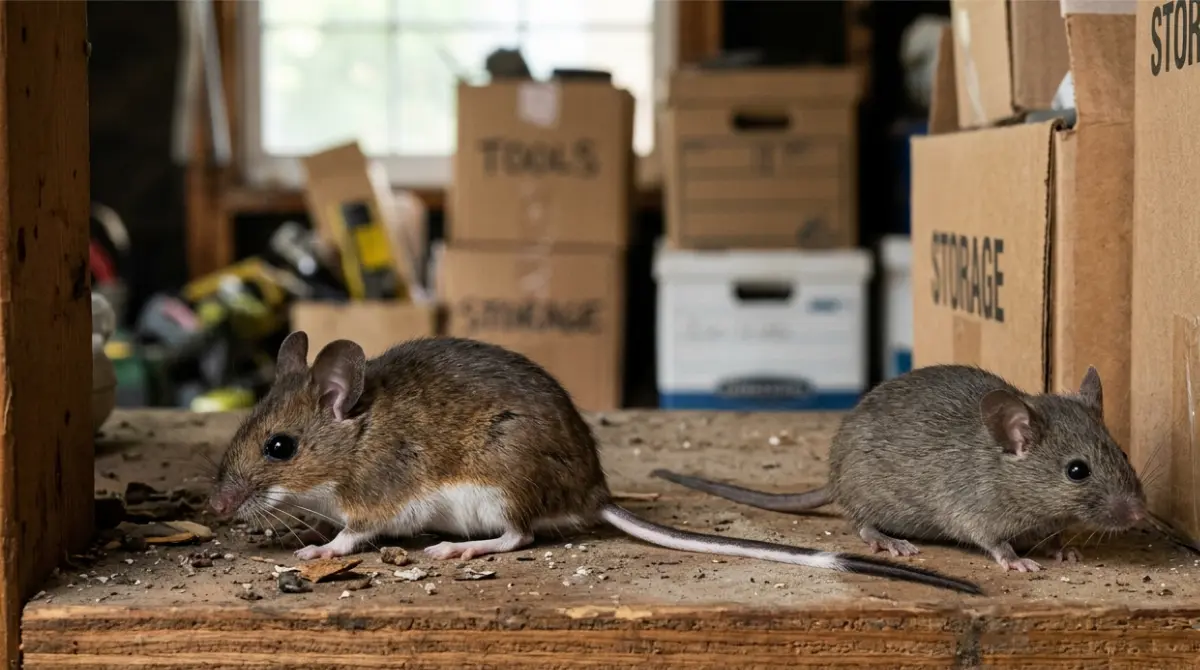
Table of Contents
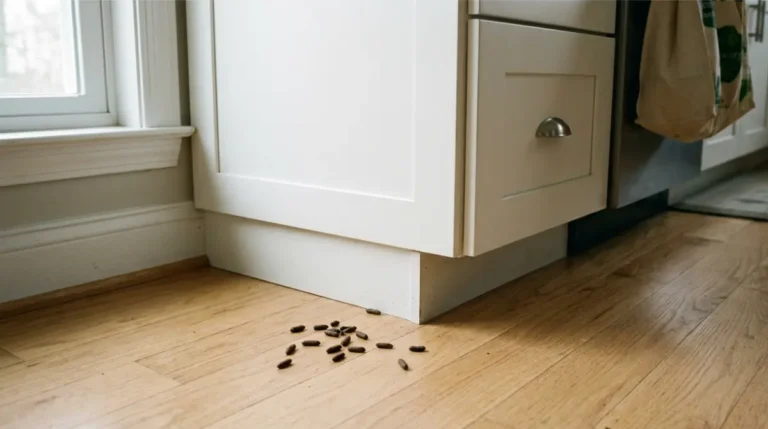
You found droppings on a garage shelf or a nest in a stored box, and your first instinct is a broom. Put it down. The CDC advises against sweeping or vacuuming rodent droppings of any kind, because it can put tiny virus-containing droplets into the air.
Where you go next depends on your situation. If you already know it’s a deer mouse, skip ahead to what changes. If you’re not sure which mouse left this, start with the tail test.
If they came back after an earlier cleanup, the real fix is sealing the gaps they came in through. The steps here are the same for both mice — what changes is how far you escalate.
ℹ️ Safety Note: Cleaning up after rodents carries a real, if uncommon, risk of airborne infection. What follows covers light, localised droppings on hard surfaces only. For a heavy infestation, contaminated insulation, or rodents in ductwork, hire a licensed pest control professional rather than following these steps.
How to tell a deer mouse from a house mouse
A deer mouse has a sharply two-toned tail — dark on top, white underneath — while a house mouse’s tail is nearly furless and one colour throughout.
| Trait | Deer mouse | House mouse | Key detail |
|---|---|---|---|
| Tail | Two-toned, furred | Nearly furless, one colour | Most reliable trait |
| Underside | White, sharp dividing line | Uniform gray-brown | Look for the line |
| Eyes and ears | Larger for the head | Smaller, less prominent | Needs a comparison |
Sourced from UC IPM Pest Notes; not tested by Gladewick.
The tail is the tell
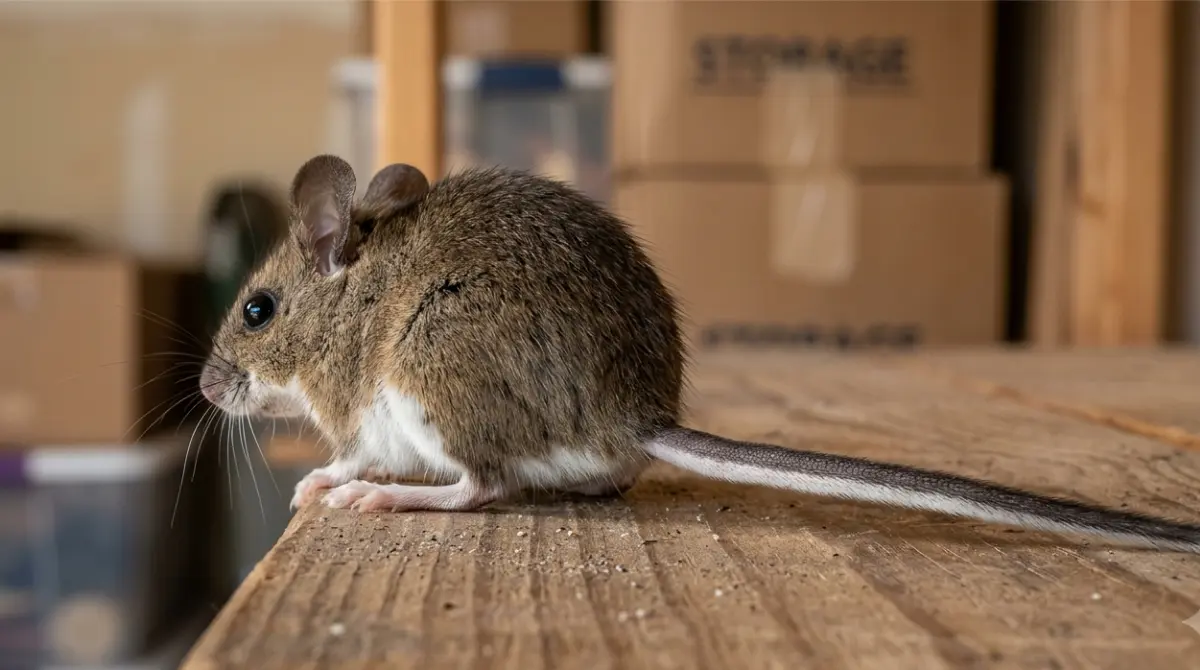
UC IPM calls the bicolored tail the easiest feature for telling a deer mouse from a house mouse, and it reads clearly even in a dim garage. See UC IPM’s deer mouse identification notes for photographs.
Belly, eyes, and ears
The deer mouse’s white underside meets its dark back at a distinct line, and its eyes are larger; the house mouse is an overall gray coat.
What size won’t tell you
An adult house mouse runs about 5 to 7 inches including a 3- to 4-inch tail — deer mice overlap that range, so body size settles nothing. If the animal looks too heavy-bodied for either, compare mice against rats first.
What if you never saw the mouse?
Most people reading this never got a look at the animal, and that’s a normal place to start rather than a failure.
What the nest tells you
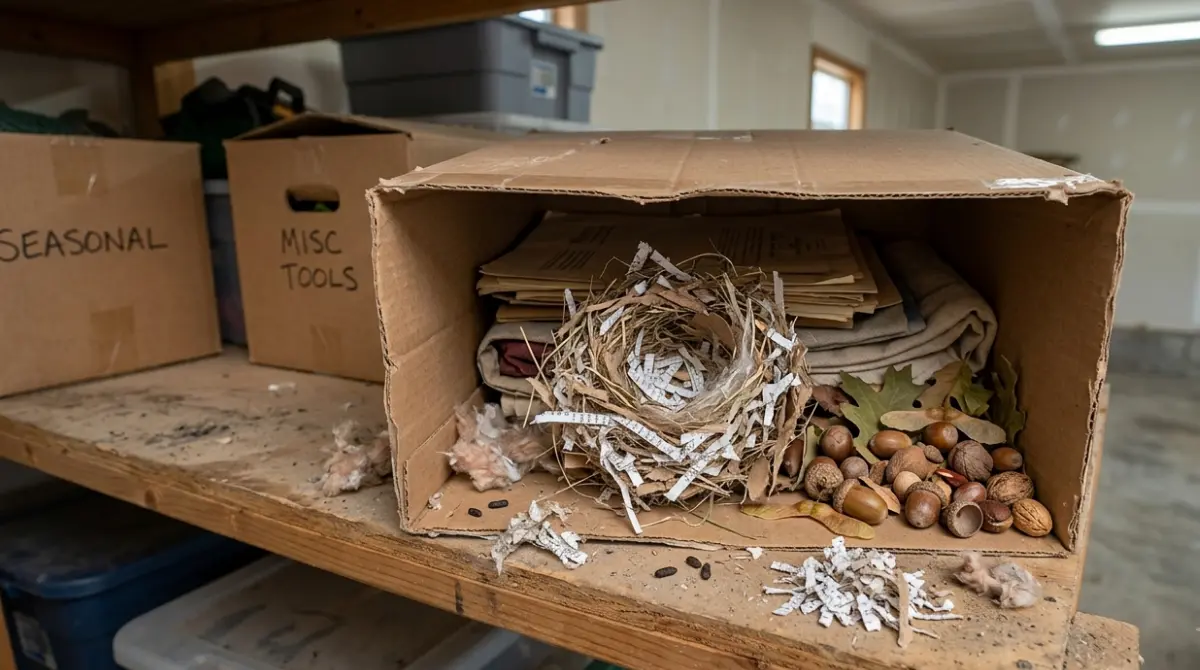
Deer mice cache seeds, acorns, and nuts far more than house mice do, which can help identify which species caused the damage. House mouse nests are built from finely shredded paper or other fibrous material.
Smell and location
A musky odour is characteristic of large or long-term house mouse infestations, and is worth trusting when you notice it. Deer mice prefer forests, grasslands, and agricultural land, and aren’t normally found in urban or residential areas unless that habitat surrounds them. Persistent scratching in the walls at night tells you the population is active, not which species it is.
Why droppings won’t settle it
Droppings are not a reliable species test for a homeowner, whatever comparison charts suggest — see what different rodent droppings look like for what they can tell you.
✅ Do This: When the signals conflict, treat it as the higher-risk species and clean accordingly. The extra caution costs you a pair of gloves.
What each mouse can actually carry
This is where the two species genuinely diverge, and where proportion matters more than alarm.
Deer mice and hantavirus
Deer mice are the principal reservoir of Sin Nombre virus, which causes hantavirus pulmonary syndrome.
📊 Sourced: CDC reports 890 cases of hantavirus disease in the US since surveillance began in 1993, with 35% of cases resulting in death and 94% occurring west of the Mississippi River. (CDC’s hantavirus case data)
Rare, and serious when it happens — which is exactly why the cleanup precautions are worth ten minutes.
House mice carry something different
An estimated 5% of house mice in the US carry and can transmit LCM virus, and house mouse urine is a major source of allergens, linked to early-onset asthma in sensitive children.
What the 2026 outbreak was, and wasn’t
The 2026 cruise-ship outbreak involved Andes virus, and no US cases resulted from it. There is no evidence that North American hantaviruses spread from person to person.
The cleanup steps that don’t change
CDC’s guidance is the same for both species. For light droppings on hard surfaces:
- Open doors and windows for 30 minutes before cleaning, and leave the area during that time.
- Put on rubber or plastic gloves.
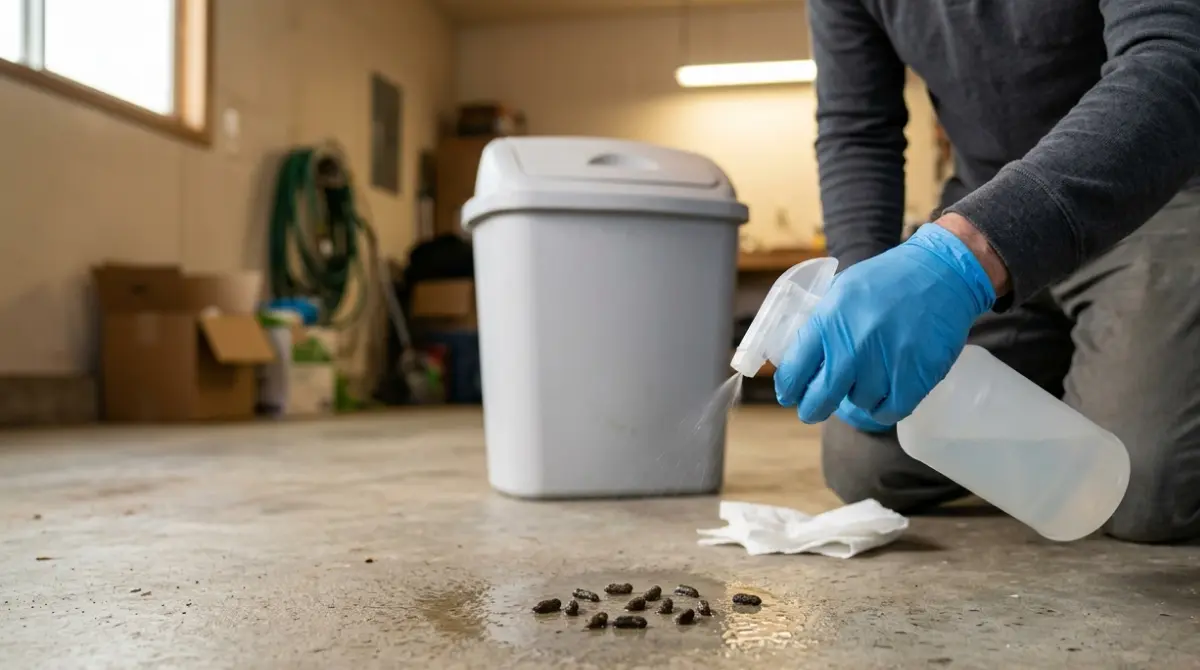
- Spray the droppings with bleach solution or an EPA-registered disinfectant until very wet, and let it soak 5 minutes or as the label directs.
- Wipe up with paper towels and put them in a covered garbage can.
- Mop or sponge the area with disinfectant, then wash your gloved hands before removing the gloves and washing again.
Air out the space first
Cross-ventilate and stay outside while it airs. This step costs nothing and does more than any product.
Wet it down, don’t sweep it up
CDC’s bleach recipe is 1.5 cups of household bleach in 1 gallon of water — one part bleach to nine — mixed fresh before use. See CDC’s step-by-step rodent cleanup guidance for surfaces beyond hard floors.
🔍 Why It Works: A disinfectant only works if the surface stays visibly wet for the entire contact time — if it dries early, reapply.
Bagging and washing up
Bleach solution can damage rugs and fabrics and irritate skin, so test fabric first or use a registered disinfectant instead.
What the cleanup kit actually costs
The gear splits into two tiers, and which tier you’re in is decided by how much contamination you’re facing, not by which mouse it is.
| Item | Sourced spec | Tier | Cost |
|---|---|---|---|
| Gloves | Rubber, latex, or vinyl | Both | |
| Disinfectant | EPA-registered, or fresh 1:9 bleach | Both | |
| Respirator | Half-mask with HEPA filter | Heavy only | |
| Goggles + coveralls | Disposable where possible | Heavy only |
When a mask isn’t enough
Only an approved respirator fitted with HEPA filters gives full respiratory protection; a cloth or paper mask offers some protection and is better than none. The same ratings appear in our mold removal safety gear checklist.
What to skip
CDC’s heavy-infestation list adds boots, goggles, and coveralls — if you’re buying all of that, read the next section first.
🛒 Our Pick: Buy to the spec, not the brand — nitrile gloves and a product on EPA’s list of registered disinfectants.
When to stop and call someone
| What you found | Likely tier | Your move |
|---|---|---|
| A few droppings, hard surface | Light | Clean per the steps above |
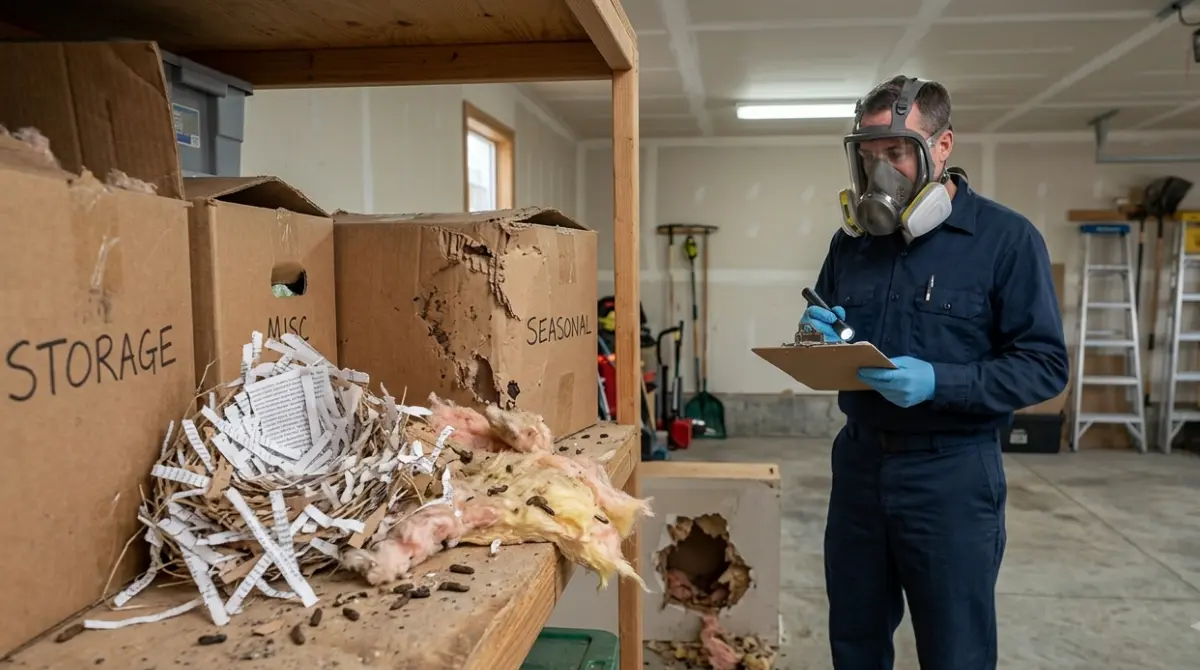
| Nest plus scattered droppings | Light–heavy | Full PPE, or hire out |
| Droppings in ductwork | Heavy | Call a professional |
| Soiled insulation, vacant cabin | Heavy | Hire a licensed pro |
Thresholds sourced from CDC; framework original to Gladewick.
Traps: what not to use
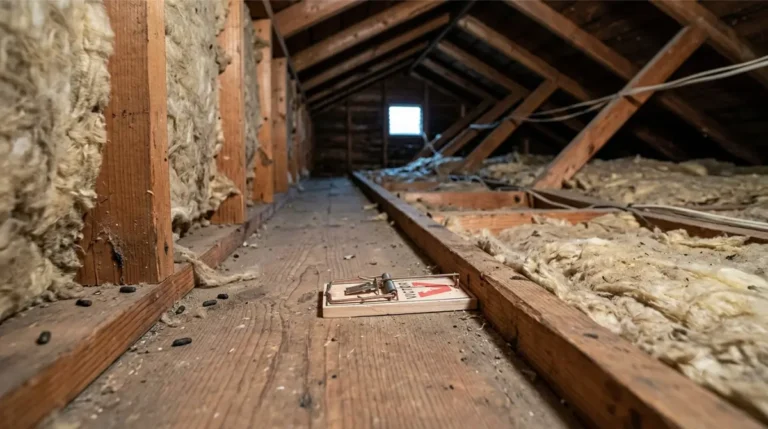
Avoid glue boards for deer mice — trapped mice urinate and defecate while struggling, greatly increasing hantavirus exposure. Multiple-catch live traps carry the same problem. Snap traps are the alternative.
⚠️ Watch Out: UC IPM notes there are no toxic baits registered for deer mice in residential settings, and that using a bait labelled only for house mice, Norway rats, and roof rats against deer mice violates the product label. Read the target species list before you buy.
Common questions about deer mice and house mice
1. Are deer mice more dangerous than house mice?
Yes — deer mice are the principal reservoir of the virus causing hantavirus pulmonary syndrome. House mice carry different pathogens entirely. Clean both the same way.
2. Do house mice carry hantavirus?
House mice are not that reservoir; roughly 5% carry LCM virus instead. Follow the same CDC cleanup steps regardless.
3. What does a deer mouse tail look like?
Two-toned and furred — dark above, white below, with a clear dividing line. A house mouse tail is nearly furless.
4. Can you vacuum mouse droppings?
No. CDC advises against vacuuming or sweeping, because it lifts virus-containing droplets into the air. Wet-clean instead.
5. How long should you air out a room first?
CDC advises opening doors and windows for 30 minutes before cleaning, and leaving the area during that time.
6. What bleach solution do you use?
CDC specifies 1.5 cups of household bleach per gallon of water, mixed fresh — one part bleach to nine parts water.
7. How long does disinfectant need to sit?
Five minutes, or longer if the label says so. The surface must stay visibly wet for the full contact time.
8. Can you identify the species from droppings alone?
Not reliably. Nest contents work better — deer mice cache seeds and nuts far more than house mice do.
9. Why avoid glue traps for deer mice?
Struggling mice urinate and defecate on the board, raising hantavirus exposure. Use snap traps and wear gloves handling them.
10. Can you use regular mouse bait on deer mice?
No residential rodenticide is registered for deer mice. Check the label’s target species list before buying anything.
What to do next
The tail tells you the species, the species tells you how far to escalate, and the cleanup method itself never changes. Wet-clean, never sweep, and step back when the contamination outgrows your gear.
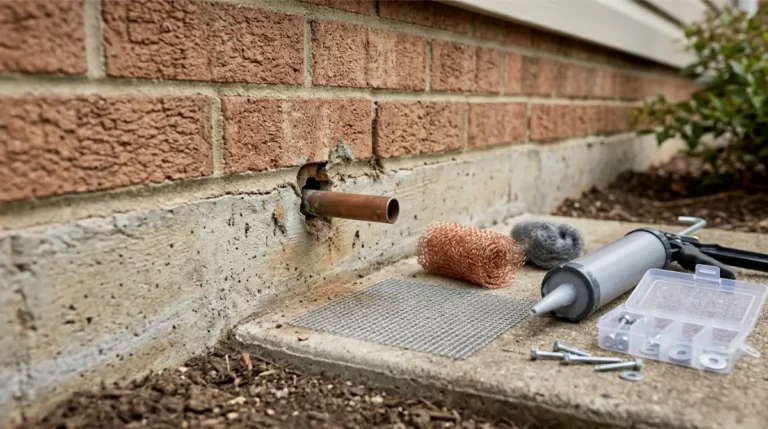
Cleaning is temporary. Sealing the entry points is what stops it happening again next autumn.