
The real limits of the best termite treatment you can buy

The best termite treatment on the shelf carries a label that rules out sole protection against termites. Here’s what each product type is actually for.
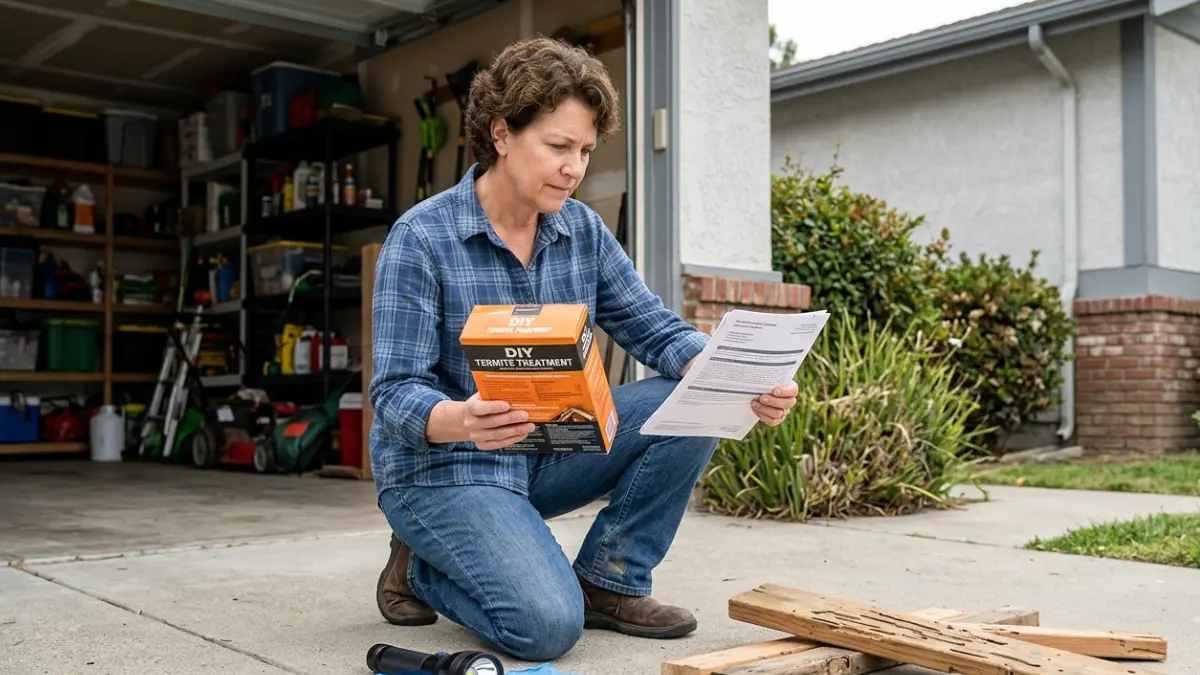
Table of Contents
Start here: which termite product question are you asking?
Most people reading this are holding two numbers — the price on a box of termite killer and a quote from a pest control company. Which of three situations is yours decides the honest answer.
You’ve confirmed termites and want to avoid the quote
Read Sections 3 and 5. The product label answers you more directly than any review.
You’ve seen something and aren’t sure yet
Start with Section 4. Monitoring is the one job consumer products genuinely do well.
Nothing’s wrong and you want to keep it that way
Sections 4 and 6. Prevention is mostly moisture and wood contact, not chemistry.
We read the current EPA-approved labels for the best-selling consumer products on the date above, and did not test them on a live infestation. If your real question is price, our pillar on what the five real termite treatments actually cost covers it.
ℹ️ Safety Note: Termite products are EPA-registered pesticides, and federal law requires using them only as their label directs. Several are restricted from sale in some states, and structural termite work is a licensed trade in most. This is general guidance for choosing, not an application guide. For an active infestation, get an inspection from an operator licensed in your state.
The five things sold as termite treatment
Five different things sit in the termite aisle, and only four are registered as capable of protecting a structure.
The EPA registers termiticides in four forms: liquid soil-applied termiticides, termite baits, termiticide-impregnated building materials, and wood treatments. The fifth thing on the shelf is a contact insecticide that kills the termites it touches — a different job entirely.
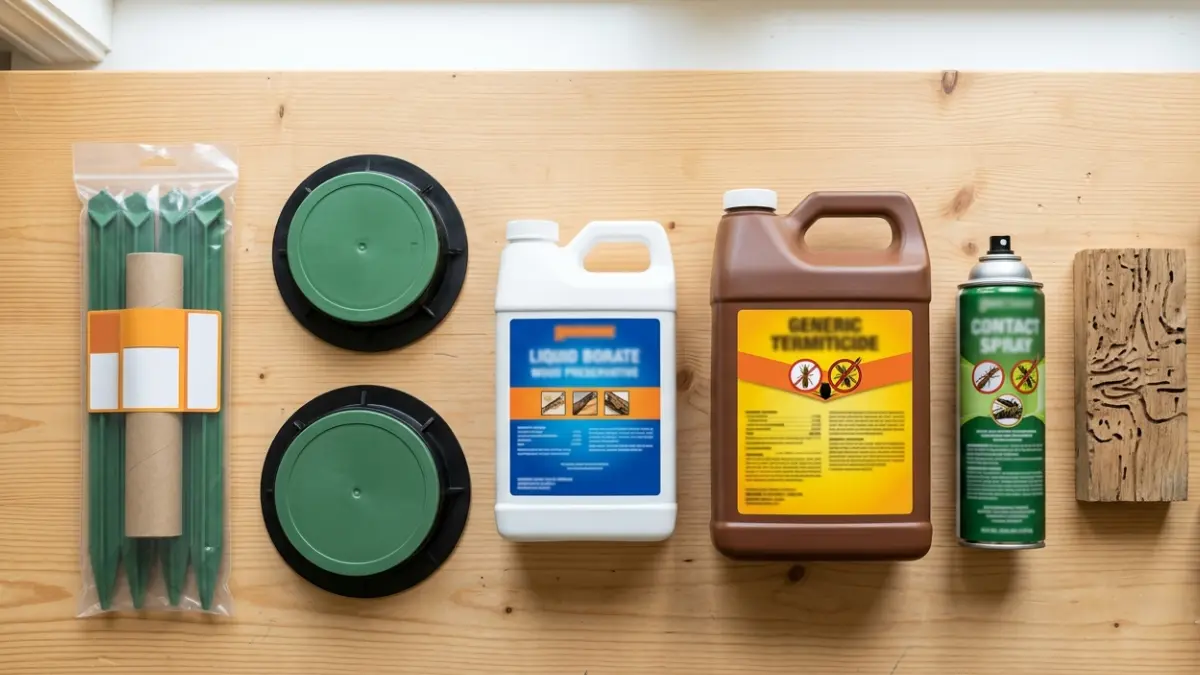
The four categories EPA registers as termite treatments
Each must demonstrate the ability to provide structural protection before it can be sold. The EPA’s categories of registered termite treatment products also note that applying one properly is, in most cases, a job for a trained professional.
The fifth category: contact killers in the termite aisle
Contact sprays and foams sit beside the registered termiticides and look like peers. They aren’t, and their own labels say so — which is Section 3.
Why your species decides which of these can work
Subterranean termites live in soil and come up; drywood termites live inside the wood. Soil treatments and in-ground baits do nothing about the second group, so tell subterranean from drywood termites first.
🔍 Why It Works: Soil-applied and in-ground products intercept termites moving between soil and structure. If the colony never touches soil, as with drywood termites, there is nothing to intercept.
What the label on the box actually says
For an active structural infestation, the labels themselves say no.
Every product below is legally sold and does what its label describes. The gap is between the front of the package and the directions on the back.
| Product | Front of package | What the label states | Key detail |
|---|---|---|---|
| Terminate Detection & Killing Stakes₂ | Detects and kills termites | Not recommended as sole protection; get a professional inspection for active infestations | Hexaflumuron 0.50%, EPA Reg. No. 9688-299-8845; replace all stakes at 12 months |
| Terminate Termite Killing Foam₂ | Kills termites indoors and out | Kills only termites present at application; supplement-only for active structural subterranean infestations; will not provide structural protection | Not to be used as sole protection |
| Terminate Termite & Carpenter Ant Killer Concentrate₃ | Home barrier treatment | Localized control only; a supplement, not a substitute for soil or foundation treatment | Not recommended as sole protection |
Sourced from each manufacturer’s published label, read 24 July 2026. Labels change without notice — check the current one before buying.
What “supplement” means legally
Supplement is not marketing softness. It means the label authorises the product alongside a stand-alone termiticide, not instead of one. Localized control means the termites in the spot you treated, not the colony.
How to read this on any product
None of it is hidden. Turn the package over and look for sole protection, supplement, and localized — those words define the product’s legal job. The University of Kentucky reaches the same conclusion: do-it-yourself products bought at retail or online will seldom eradicate an existing problem, which our piece on the realistic limits of DIY termite treatment covers in full.
What over-the-counter termite products do well
Three jobs, and they are real: early detection, protecting bare wood you can reach, and removing the moisture that invites termites in.
Monitoring: knowing early, which is worth real money
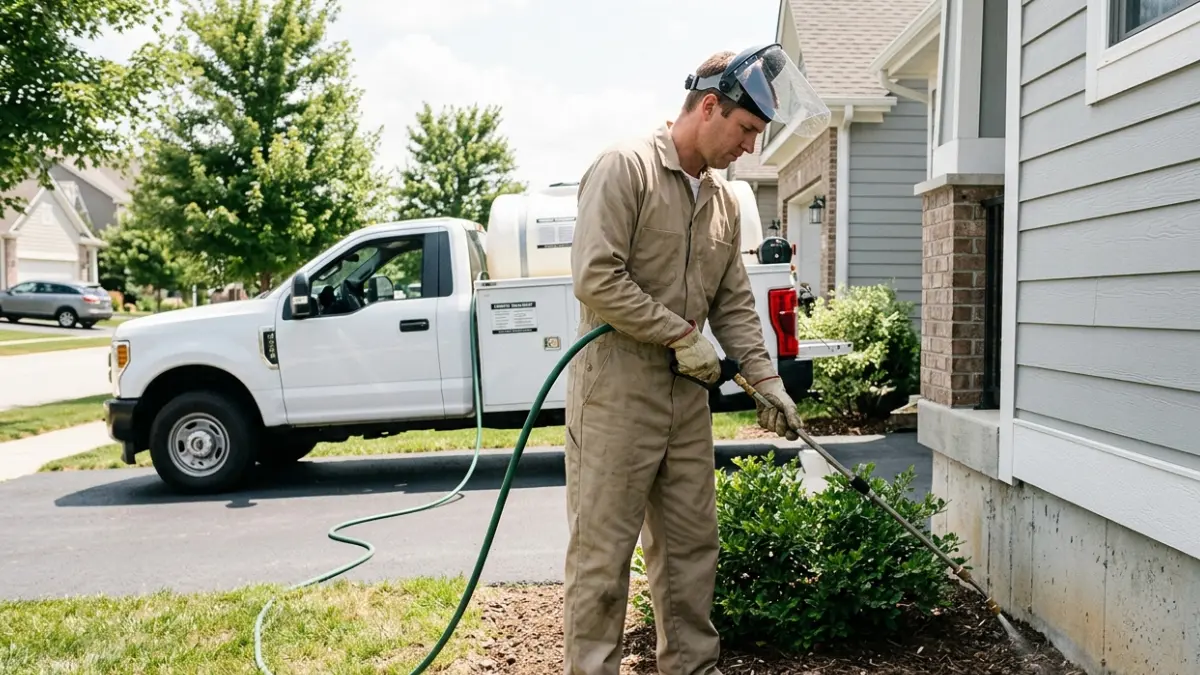
Monitoring stakes are an early-warning device, and treating them as one is the honest use. Counts scale with your home’s footprint, so work out your home’s footprint before deciding how many to buy.

- TWO TERMITE PRODUCTS IN ONE: Pop-up indicators detect termite activity, and the stakes kill foraging termites.
- REPLACEMENT STAKES: Includes 5 stakes with locator shields – designed to replace termite stakes already in use with the …
- INSTALLS IN MINUTES: Place stakes in the ground 2 to 3 feet away from your home and no more than 10 feet apart.
🛒 Our Pick — a consumer monitoring stake kit: Reasonable for early warning around a slab or crawl space. We may earn a commission, at no extra cost to you. What it won’t do: resolve an active infestation — the label says it isn’t sole protection.
Bare, exposed wood during a build or renovation
Borate wood treatments protect the wood termites eat rather than the soil they travel through, which makes them useful on exposed framing during a renovation or crawl space repair. Formulations differ more than the marketing suggests: water-carried borates need a surface that will absorb the solution, while glycol-carried products penetrate more readily.

- ELIMINATES AND PREVENTS MOLD, FUNGI, AND DECAY: Effectively eliminates existing mold and prevents future growth, protect…
- LONG-LASTING WOOD PROTECTION: Penetrates deep into wood to provide residual protection that lasts for years; prevents da…
- IDEAL FOR NEW CONSTRUCTION AND WATER DAMAGE RESTORATION: Perfect for whole-house protection in new builds or applying to…
🛒 Our Pick — a borate preservative for exposed framing: Sensible while raw structural wood is accessible. We may earn a commission, at no extra cost to you. What it won’t do: reach an infestation behind finished walls. Check the label for the surfaces it’s rated for.
Moisture: the one lever with no licence attached
Keeping wood and debris away from the structure, shrubs off the siding, and a damp crawl space dry all reduce risk with no licence and no chemical. A moisture meter and a vapour barrier do more for most homes than anything in the termite aisle.

- WOOD MOISTURE METER: Prevent water and moisture build-up with our humidity reader. It can quickly determine what level o…
- PROTECT YOUR WORK SURFACE: This tool has no pins, so it won’t mar, scratch, or damage walls. It features auto-calibratin…
- DEEP READER: It can read the levels up to 3/4″ (19mm) deep into the surface with a broad measurement range of 0 to 53% f…
What no store-bought termite product can do
Four limits, each from physics rather than opinion.
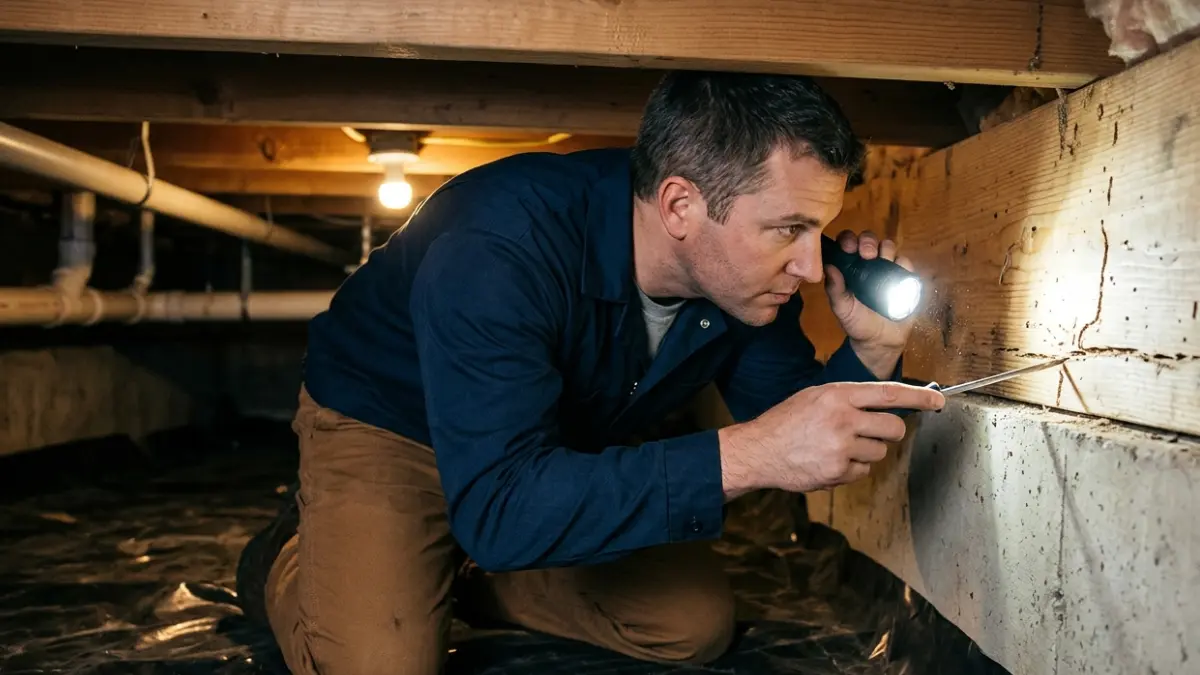
Reach a colony that lives under your slab
Subterranean colonies can run to hundreds of thousands or millions of individuals across a foraging area of up to half an acre, and the colony damaging your house may sit in a neighbour’s yard. Nothing in a 16-ounce can reaches that.
Create a continuous treated zone
A professional liquid job may involve hundreds of gallons injected along the foundation, beneath slabs and inside foundation walls. Spot treatments are a gamble by comparison, and most reputable firms won’t warrant one — see how bait systems and liquid barriers actually differ.
Find and treat a drywood infestation you can’t see
UC IPM’s assessment of drywood termite treatment options is blunt: the products needed are not available for homeowner use, localized treatments should be applied only by licensed applicators, and home-use products are not effective. Lab and field tests from two universities have also questioned the efficacy of d-limonene — worth knowing before spending on orange oil for termites.
Replace an inspection
Infestations run undetected for years behind walls and floor coverings, with damage progressing while the outer surface of the wood stays intact.
⚠️ Watch Out: The expensive failure isn’t the wasted $40. It’s four months of continued feeding behind a wall while you believe the problem is handled — which is what a product applied to an unconfirmed infestation buys you.
Why the professional version is a different animal
You can often buy the same active ingredient a professional uses. That’s true, and it’s the least important part of the comparison.
Non-repellent chemistry, and why it changed the odds
Current non-repellent termiticides — fipronil, imidacloprid and chlorantraniliprole — kill termites that tunnel into treated soil rather than turning them away, and are usually more reliable at controlling an infestation on the first attempt.
📊 Spec: All liquid termiticides are expected to control termites for at least five years when applied according to label directions. (University of Kentucky Cooperative Extension, ENTFACT-604, revised 3/2026.)
Volume, access and equipment
The variable is coverage, not chemistry — where termites return the following year, the cause is a gap in the treated zone rather than the termiticide wearing out. Baits work differently, pairing cellulose with a slow-acting growth regulator so termites die at their next molt, a delay that matters because a fast kill would teach the colony to avoid the station. How professional bait systems are installed and monitored explains why discovery alone can take weeks to months.
The licence, and the states where you can’t buy it anyway
Sale and use of professional termiticides is restricted in a number of states, and the rules differ by product and formulation. Check your state’s pesticide regulatory agency before assuming you can legally buy or apply anything.
When buying a product costs you more than it saves
Three situations where a purchase makes sense, three where it costs you time you can’t recover.
A product is a reasonable buy when:
- You want early warning and nothing has been confirmed yet.
- You have bare structural wood exposed during a renovation or repair.
- You’re reducing moisture, wood-to-soil contact, or debris at the foundation.
A product is costing you time when:
- Swarmers have appeared indoors or mud tubes are on the foundation.
- You’ve identified drywood termites, or can’t identify the species at all.
- You’re buying it instead of an inspection rather than alongside one.
✅ Do This: Get inspections from more than one company licensed by your state department of agriculture or structural pest control board, and ask each what warranty and retreatment terms apply. Decline same-day pricing pressure — termites damage wood slowly, and another week spent deciding well costs almost nothing. The National Pesticide Information Center’s termite guidance makes the same point about identifying the species first.
Termite product questions homeowners actually ask
1. What’s the best termite treatment you can buy yourself?
For prevention and detection, a borate wood treatment on exposed bare framing and a set of monitoring stakes are the two purchases with a real job to do. For an active structural infestation, no consumer product qualifies, because none is labelled as sole protection against termites.
2. Do termite stakes from the hardware store actually work?
They work as monitors. The manufacturer’s label states they are not recommended as sole protection and directs you to a professional inspection for an active infestation. Used as early warning around a slab, they earn their price. Used instead of treatment, they don’t.
3. Can termite spray or foam kill an entire colony?
No. The foam label states it kills only the termites present at the time of application, and that for an active structural subterranean infestation it may be used only to supplement a federally registered stand-alone termiticide. A colony can span half an acre.
4. Is Taurus SC or Termidor SC the same thing professionals use?
Often the same active ingredient, yes. The difference is volume, access beneath slabs and porches, the equipment needed for a continuous treated zone, and the licence. Where termites return after treatment, it’s usually a gap in that zone rather than a weakness in the chemical.
5. Can I legally buy and apply professional termite products?
It depends on your state and the formulation. Sale and use is restricted in a number of states, and rules differ by product. Check with your state’s pesticide regulatory agency before buying, and remember that federal law requires any pesticide be used consistently with its label.
6. Does borate wood treatment work on painted wood?
It depends on the formulation, so read the label. Borates work by soaking into wood, so a surface that blocks absorption blocks the treatment. Glycol-carried products penetrate more readily than water-carried ones, and each label states the surfaces it’s rated for.
7. Does orange oil kill drywood termites?
Lab and field tests from two universities have questioned the efficacy of d-limonene, the active compound in orange oil, against drywood termites. UC IPM also notes that localized treatments should be applied only by licensed applicators. Book an inspection before paying for any localized treatment.
8. How long does a professional liquid treatment last?
All liquid termiticides are expected to control termites for at least five years when applied according to label directions, per University of Kentucky extension guidance. Actual duration varies with the product used, thoroughness of application, region, local conditions and termite pressure on the property.
9. Can I treat drywood termites myself?
No. UC IPM states that the products needed are not available for homeowner use, that localized treatments should be applied only by licensed applicators, and that home-use products are not effective. Determining how far an infestation extends also takes experience. Get an inspection from a licensed operator.
10. How do I check whether a termite product is legal where I live?
Your state department of agriculture or structural pest control board holds the rules on which pesticides may be sold and who may apply them. Check there before buying, particularly for professional-grade termiticides, and read the label of anything you’re considering — it is legally binding.
What to do next, in order
If termites are confirmed, book inspections with two licensed operators before buying any product, and use Section 7’s questions on each call.
If you’ve seen something you can’t identify, set monitors and confirm the species — that decision gates every product choice afterward.
If nothing’s wrong, spend on moisture and wood contact rather than chemistry, and treat exposed bare framing while it’s still accessible.

- 【6 Mil Heavy Duty Plastic Sheeting –Thick & Tear-Resistant】 Made from premium 6 mil plastic sheeting, our heavy duty pla…
- 【Versatile Garden Plastic Sheeting – Ideal for Outdoor Use】 This durable black plastic sheeting for garden is perfect fo…
- 【Professional Vapor Barrier for Crawl Space & Moisture Protection】 Engineered as a reliable vapor barrier, this material…
You now know what these labels say, which is more than most people standing in that aisle. If price is the next question, what the five real termite treatments actually cost picks up where this leaves off.
Related Articles
 Termite Treatment
Where Termite Heat Treatment Goes Wrong, and When to Use It
July 22, 2026 Termite Treatment
The Right Way to Read the Signs of Termites You Just Found
July 14, 2026 Termite Treatment
How to Easily Tell Flying Ants From Termites
July 15, 2026 Termite Treatment
How to Identify Termite Frass and Drywood Droppings
July 15, 2026 Termite Treatment
Does mulch attract termites, and what most advice overlooks
July 31, 2026 Termite Treatment
The overlooked question behind who pays for a termite letter
July 30, 2026 Termite Treatment
How Termite Bait vs Liquid Treatment Compares
July 20, 2026 Termite Treatment
Crawl space termites and moisture share one common cause
August 1, 2026 Termite Treatment