
How to Spot the Signs of Bed Bugs Before You Ever See One

Most signs of bed bugs show up before you ever see one—learn to spot the rust-colored fecal specks and shed skins hiding in your mattress seams.
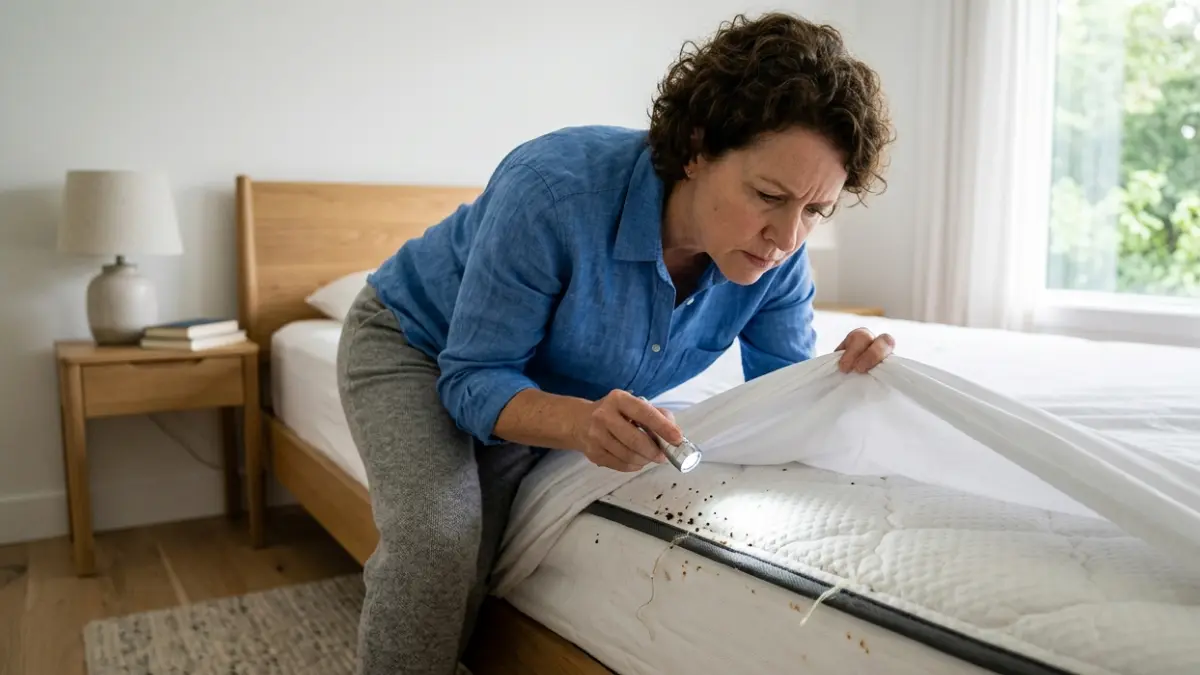
Table of Contents
You woke up with a row of itchy bumps, or you spotted a tiny dark speck on the sheet — and your stomach dropped. Take a breath. If you’re here because of mystery bites, an odd stain, or a just-in-case check after travel, you’re in the right place, and catching this early makes it far more manageable.
Here’s the reassuring part: you almost always find the signs of bed bugs before you ever see a live one. Bed bugs are nocturnal and wedge into tight hiding spots by day, so the clues they leave — stains, droppings, shed skins, eggs, even a faint odor — usually show up first.
This guide covers seven of those signs, what each actually looks like, how to tell them from harmless look-alikes, and exactly where to look to confirm. If the signs add up, our safe, step-by-step plan to get rid of bed bugs is your next stop.
ℹ️ Safety Note: This guide helps you identify the signs of bed bugs — it isn’t medical or pest-treatment advice. Bed bug bites are generally not dangerous and bed bugs are not known to spread disease, but see a healthcare provider for severe or allergic reactions. To confirm and fully clear an infestation, follow a proven plan or contact a licensed pest control professional.
Why you spot the signs before you ever see a bed bug
Bed bugs are built to stay out of sight, which is exactly why their evidence shows up before they do. They’re nocturnal, feeding at night and tucking into seams and crevices during the day.
They find you using your body heat and the carbon dioxide you exhale, feed for a few minutes, then retreat to digest — leaving traces near the bed long before you catch one in the open. Per UC IPM, research indicates about 85% of bed bugs are found in or near the bed, so that’s where evidence concentrates.
You can see adults with the naked eye, but the youngest bugs are another story.
📊 Spec (sourced): Adult bed bugs are reddish-brown, flat, oval, and wingless — roughly the size of an apple seed (5–7 mm), per the EPA. Nymphs are translucent or whitish-yellow and, if they haven’t fed, can be nearly invisible.
Not sure what you’re picturing? Our guide to what bed bugs look like breaks down each life stage.
Signs 1 and 2: itchy bites and rust-colored stains
The clue most people notice first is bite marks — but the honest catch is that bites alone don’t confirm bed bugs. According to the CDC, bed bug bites look like small, red, itchy bumps that may appear at random or in a straight line, and they often don’t surface until a day or several days later.
That delay happens because bed bugs inject a mild anesthetic as they feed, so you rarely feel it. Reactions vary widely — some people welt up, others don’t react at all — and fleas, mosquitoes, and skin conditions can all look similar. Michigan State University Extension notes bites are often the first sign, frequently with small blood smears on sheets or pillowcases.
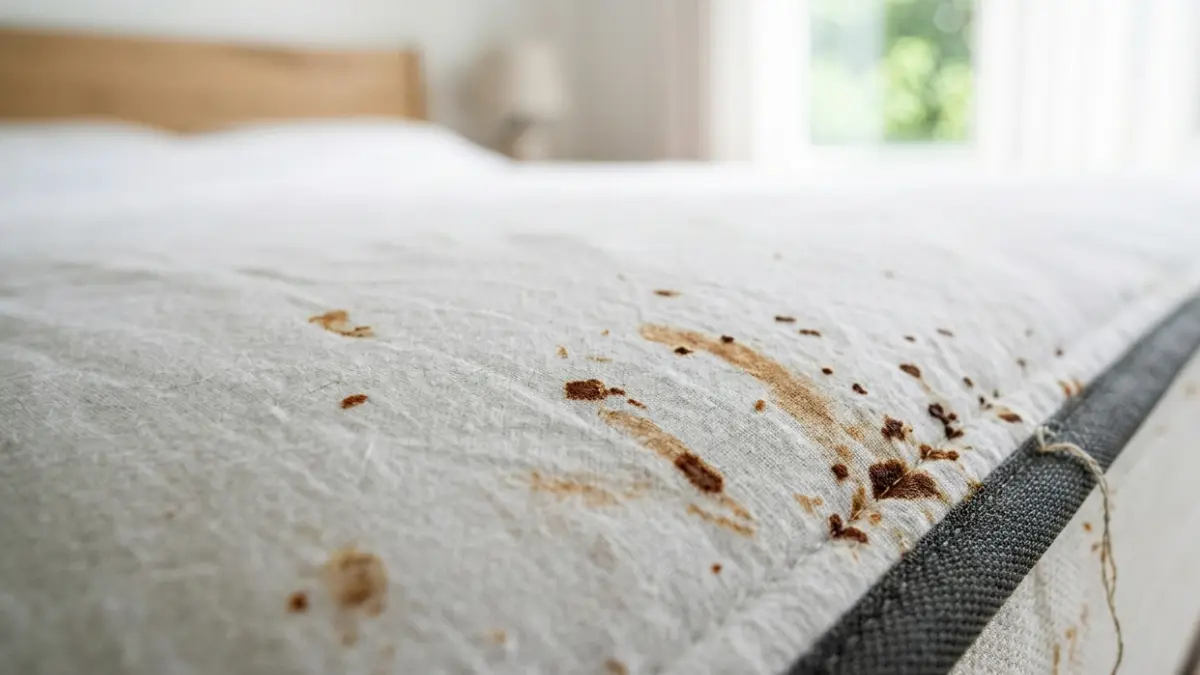
That points to sign two. Those rusty stains are crushed bed bugs — you rolled onto one after it had fed.
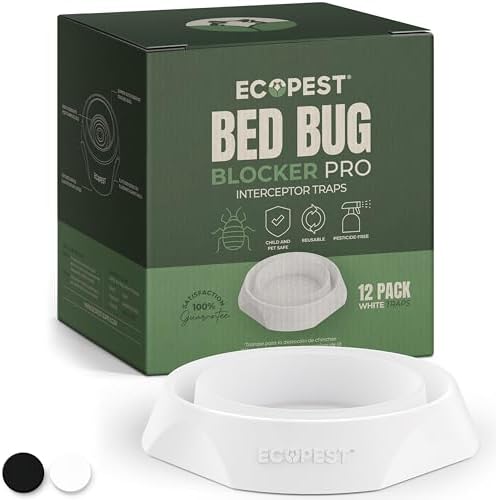
- SLEEP EASY WITH 24/7 BED BUG PROTECTION – Set it, forget it. Place one Bed Bug Blocker interceptor trap under each bed p…
- LAB-TESTED AND PROVEN TO TRAP BED BUGS – Tested by entomologists, trusted by the pros. Bed Bug Blocker interceptor traps…
- BED BUGS CLIMB IN BUT CANNOT CLIMB OUT – Simply place the traps under bed posts and furniture legs. Bed bugs cannot jump…
🔍 Why It Works: A fed bed bug is full of blood, so crushing it in your sleep leaves a small rust-colored smear — which is why these stains are a more telling clue than the bites themselves.
The CDC also notes bed bugs are not known to spread disease.
Signs 3 and 4: dark fecal spots and shed skins
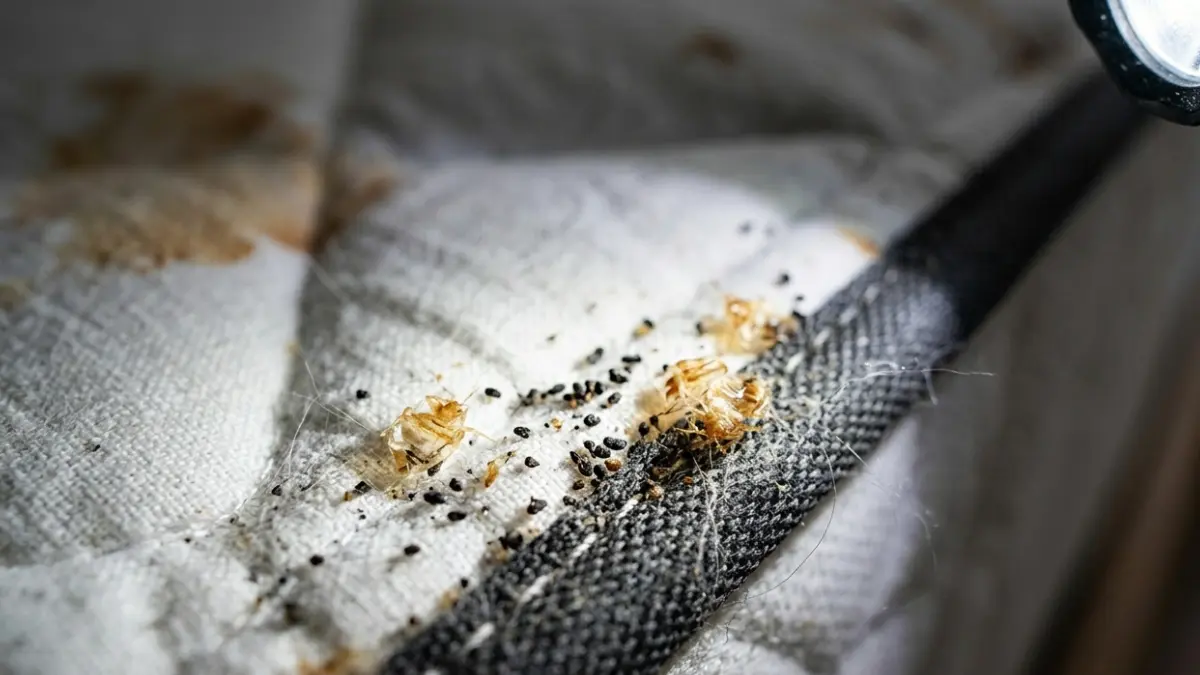
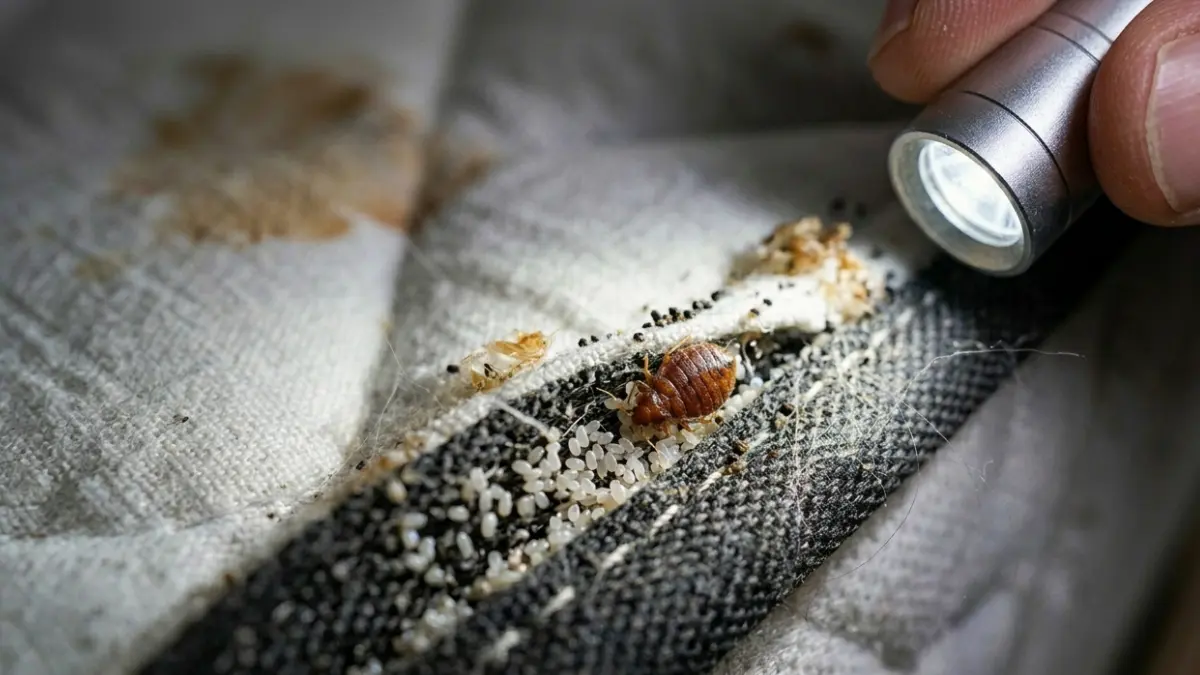
If bites raise the question, fecal spots often answer it. Bed bug droppings look like tiny dark or black dots, about the size of a marker tip, clustered along mattress seams, on sheets, or on the wall near the bed.
There’s a simple way to tell them from ordinary dirt. Dab the spot with a damp white cloth or cotton swab — because the droppings are digested blood, they smear a rusty reddish-brown, while a crumb or speck of dirt won’t. The EPA describes these dark spots as bed bug excrement that bleeds into fabric like a marker would.
✅ Do This: Run the damp-cloth test on any suspicious dark specks before you panic. A rusty smear points to bed bugs; a dry, crumbly speck usually doesn’t.
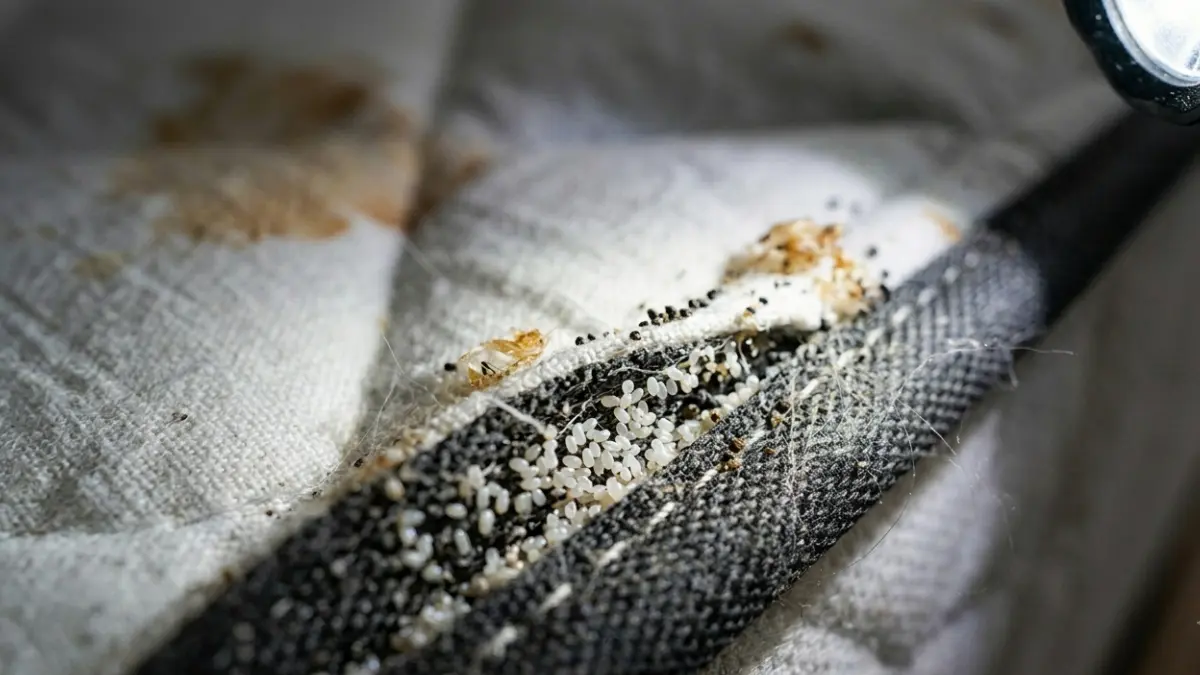
The fourth sign is shed skins. As bed bugs grow, nymphs molt five times, leaving translucent, empty casings shaped exactly like the bug.
💡 Pro Tip: In a heavier infestation, many of these cast skins collect in hiding spots — so a scatter of pale, hollow shells near a mattress seam is a strong signal, not a coincidence.
Signs 5 and 6: tiny eggs and a musty, sweet smell
The fifth sign means the population is established: bed bug eggs. According to the EPA, the eggs are tiny — about a pinhead, roughly 1 mm — pearl-white, and develop a small eye spot once they’re more than five days old.
They’re laid in clusters and glued into the same seams and crevices where the bugs hide, so they’re easy to miss unless you know the look. A magnifying glass and a bright light help.

- Box spring cover is independently lab-tested
- Stretchable 100% polyester knit fabric makes installation a breeze – includes Installation Kit
- Queen size (60” x 80”) fits box spring depths of 9″- 11″
The sixth sign is harder to put into words: a faint, musty-sweet odor. The EPA describes it as a “musty-sweetish” smell produced by glands on the underside of the bug.
🔍 Why It Works: That odor comes from the bugs’ scent glands and usually only becomes noticeable as numbers climb — so a room that smells off in a way you can’t place can point to an established infestation rather than a brand-new one.
Sign 7: finding a live bug — and exactly where to look
The seventh sign removes all doubt: a live bed bug. Since they hide so well, you’ll usually only find one by going to look — so here’s how to check, starting where they cluster.
Bed bugs hide closest to where you sleep. The EPA points to the piping, seams, and tags of the mattress and box spring, plus cracks in the bed frame and headboard; in heavier infestations they spread to couch seams, curtain folds, drawer joints, electrical outlets, under loose wallpaper, and where the wall meets the ceiling.

- [ ULTRA LONG RANGE – 3280 FT & ADJUSTABLE FOCUS ] The Esgreen ED2405B rechargeable flashlights high lumens is made of im…
- [ SINGLE 2 MODES HIGH/LOW – BRIGHTNESS ADJUSTABLE ] The Esgreen LED flashlight rechargeable USB C is single modes, only …
- [ MULTIFUNCTIONAL 2-IN-1 USB C CHARGING & DISCHARGING ] The super bright LED flashlight long range is built-in 2 USB int…
Work through it methodically:
- Strip the bed and run a flashlight slowly along the mattress piping, seams, and tags.
- Lift the mattress and check the box spring, including the fabric underside.
- Inspect the bed frame joints and the headboard, especially cracks and screw holes.
- Widen the search to nearby furniture and outlets only if you’ve already found evidence.
💡 Pro Tip: Since about 85% of bed bugs are found in or near the bed, a clean bed after a careful check is genuinely good news.
Keep in mind that unfed nymphs can be nearly invisible, so look for the other six signs alongside live bugs.
Is it really a bed bug? Common look-alikes and what to do next
Before you treat anything, make sure you’re dealing with the right pest — treating for the wrong bug wastes time and money. The EPA notes several insects resemble bed bugs, and accurate identification is a critical first step.
The usual mix-ups: carpet beetles are rounder and often patterned or hairy; cockroach nymphs are a different shape and move fast; and bat bugs look nearly identical and can take magnification to tell apart. Our breakdown of what bed bugs look like helps you compare side by side.
⚠️ Watch Out: A scatter of bites with no other evidence — no stains, droppings, skins, or eggs — often isn’t bed bugs at all. Confirm with physical signs before spending on treatment.
Once you’ve confirmed it, you have two solid paths. Follow our safe, step-by-step plan to get rid of bed bugs, or for a widespread problem or a multi-unit building, bring in a licensed pest control professional who identifies the pest before treating.
Bed bug signs: frequently asked questions
1. What are the first signs of bed bugs?
The earliest signs of bed bugs are usually itchy bites and small blood smears on your sheets, often before you see a live bug. Because reactions to bites vary and other pests bite too, confirm with physical evidence — dark fecal spots, shed skins, or eggs in the mattress seams — rather than relying on bites alone.
2. Can you see bed bugs with the naked eye?
Yes — adult bed bugs are about the size of an apple seed, roughly 5–7 mm, and visible without magnification. The youngest bed bugs, called nymphs, are different: they’re translucent or whitish-yellow and, if they haven’t recently fed, can be nearly invisible, which is why you often spot their evidence first.
3. What do bed bug droppings look like?
Bed bug droppings look like tiny dark or black dots, about the size of a marker tip, often clustered along mattress seams, on bedding, or on the wall near the bed. Because the droppings are digested blood, they smear rusty reddish-brown when you dab them with a damp white cloth — a quick way to tell them from ordinary dirt.
4. What do bed bug bites look like?
Bed bug bites typically look like small, red, itchy bumps that may appear at random or in a straight line, and they often don’t surface until a day or several days after the bite. Reactions vary widely, and some people don’t react at all — so bites point you to look closer, but they don’t confirm bed bugs on their own.
5. Do bed bugs have a smell?
They can. In heavier infestations, bed bugs give off a faint musty, sweetish odor produced by glands on the underside of the body. A light infestation usually has no noticeable smell, so an odor you can’t place tends to signal an established population rather than a brand-new one — worth a careful inspection.
6. What do bed bug eggs look like?
Bed bug eggs are tiny — about a pinhead, roughly 1 mm — and pearl-white, with a small eye spot once they’re more than five days old. They’re glued in clusters inside the same seams and crevices where the bugs hide, so they’re easy to overlook without a bright light and, ideally, a magnifying glass.
7. Where do bed bugs hide?
Bed bugs hide closest to where you sleep — start with the piping, seams, and tags of the mattress and box spring, plus cracks in the bed frame and headboard. In heavier infestations they spread to couch seams, curtain folds, drawer joints, and electrical outlets. About 85% are found in or near the bed.
8. How do I tell bed bugs from carpet beetles or other bugs?
Bed bugs are flat, oval, reddish-brown, and wingless. Carpet beetles are rounder and often patterned or hairy, cockroach nymphs are a different shape and move quickly, and bat bugs look nearly identical and may need magnification. Accurate identification matters because treating for the wrong pest wastes time and money.
9. Are bed bugs dangerous or do they spread disease?
Bed bugs are not known to spread disease to people, and their bites are generally not dangerous. They can cause itching, lost sleep, and, rarely, allergic reactions. If you have a severe reaction, painful swelling, or any reaction that worries you, see a healthcare provider rather than treating it yourself.
10. What should I do if I find signs of bed bugs?
First, confirm it with physical evidence — stains, droppings, shed skins, eggs, or a live bug — rather than bites alone. Once you’re confident it’s bed bugs, follow a proven, step-by-step removal plan, or call a licensed pest control professional for a widespread problem or a shared building where bugs travel between units.
Found the signs? Here’s your next move
Seven clues, one message: bites, rusty stains, dark fecal spots, shed skins, pearl-white eggs, a musty-sweet odor, and finally a live bug — and you’ll almost always catch the first few before you ever see one. Spotting them early is genuinely good news, because a small, fresh infestation is far easier to handle than one that’s had months to spread.
So do the quick checks: run the damp-cloth test on any dark specks, and give your mattress seams and box spring a careful look with a flashlight. If the signs add up, our safe, step-by-step plan to get rid of bed bugs walks you through what to do — and if the problem is widespread, a licensed pro can take it from here.
Related Articles
 Bed Bugs Treatment
Before You Throw Away a Mattress With Bed Bugs, Read This
July 6, 2026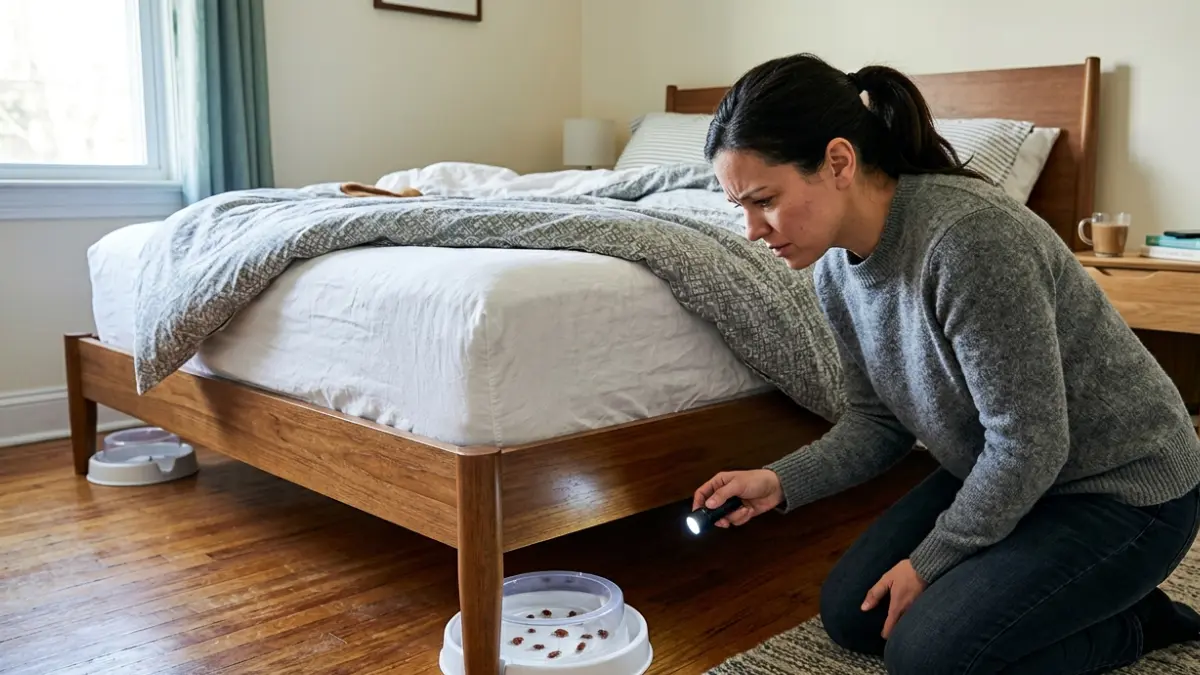 Bed Bugs Treatment
How the Right Bed Bug Interceptors Catch the Most Bugs
June 29, 2026 Bed Bugs Treatment
How Heat Kills Bed Bugs, and Where It Falls Short
July 1, 2026 Bed Bugs Treatment
Getting Rid of Bed Bugs in Clothes, Step by Step
July 3, 2026 Bed Bugs Treatment
What Bed Bug Bites Look Like, and How to Be Sure
June 23, 2026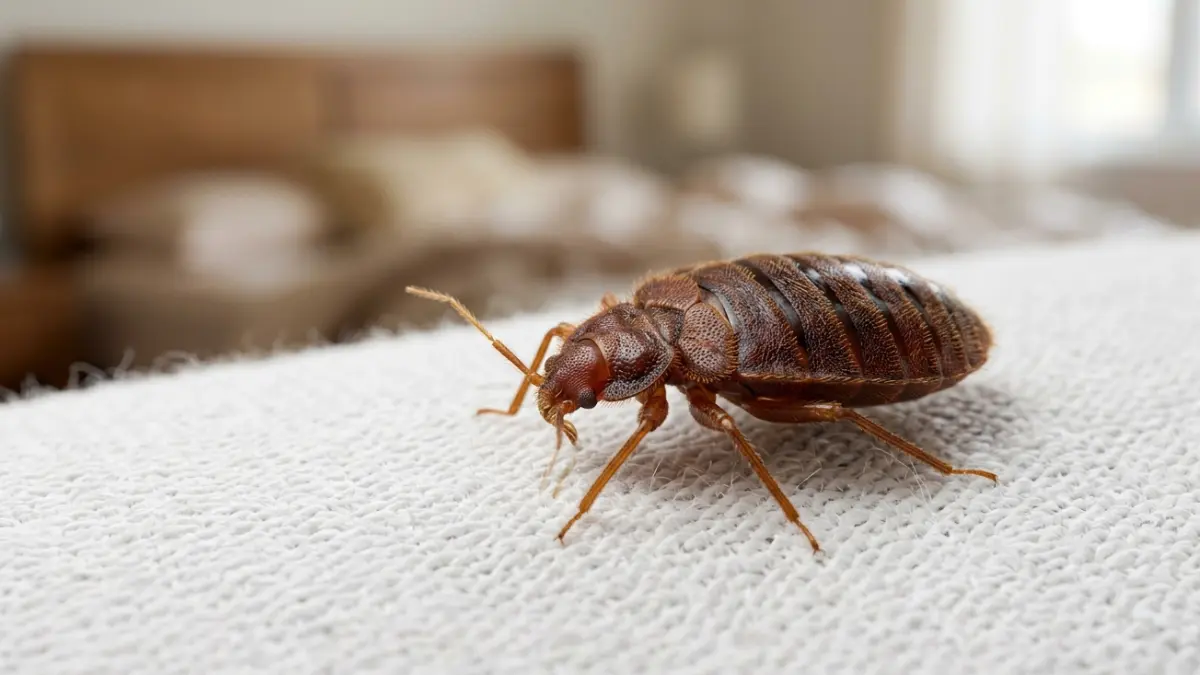 Bed Bugs Treatment
What Do Bed Bugs Look Like at Every Stage?
June 20, 2026 Bed Bugs Treatment
Getting Rid of Bed Bugs at Home Without the Risk
June 20, 2026 Bed Bugs Treatment
Clearing Bed Bugs From a Couch You Want to Keep
July 3, 2026 Bed Bugs Treatment