Your Climate Zone Decides the Heat Pump vs Furnace Bill

Heat pump vs furnace math: against propane a heat pump needs only a 1.84 COP, against gas 3.92. Your zone and utility rates decide which side you’re on.
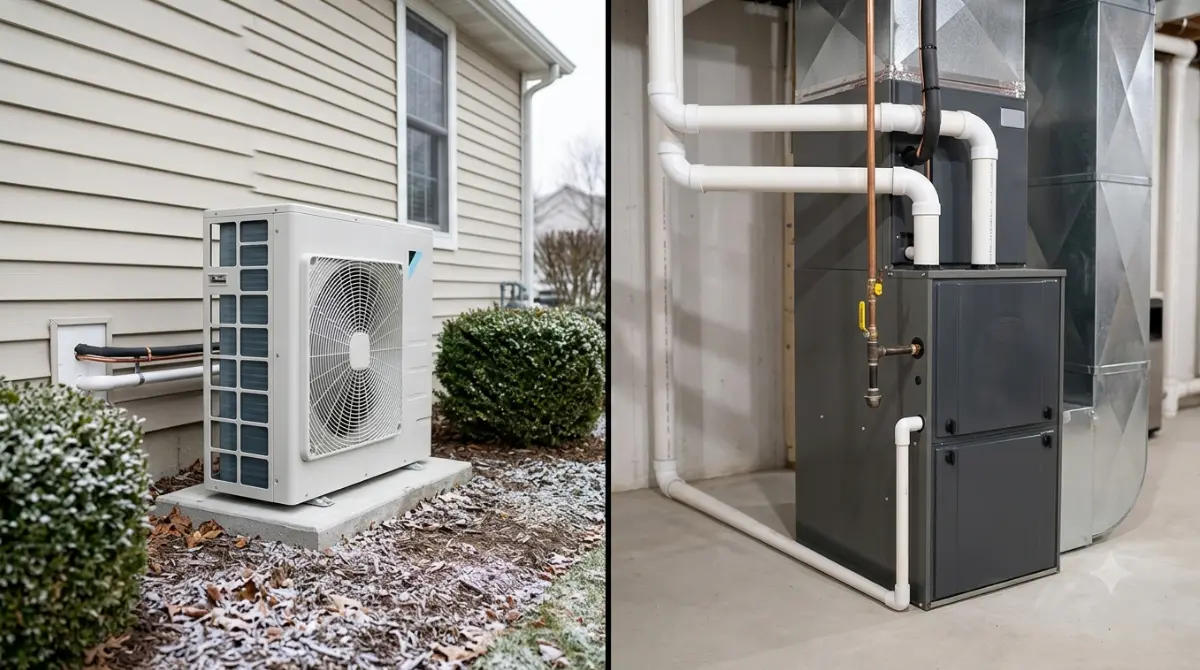
Table of Contents
Which costs less to heat your home: a heat pump or a furnace?
A heat pump costs less to run than a gas furnace only when its efficiency beats a breakeven set by your energy rates. Against propane, oil, or baseboard heat it usually wins; against gas, often not.
The short answer depends on two numbers on your bills
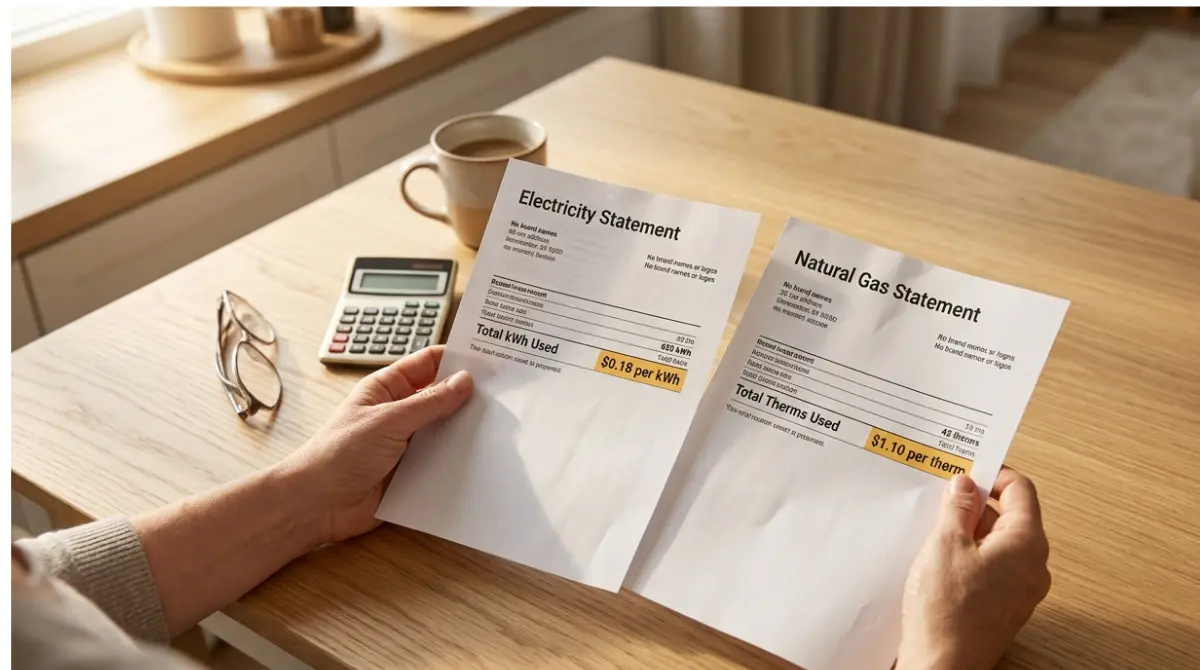
Your price per kWh and gas price decide it. EIA’s forecast for this winter’s heating bills puts US averages at 18.23¢ per kWh and $13.44 per thousand cubic feet of gas.
Start here: gas, propane, oil, or electric heat?
- Propane, oil, or baseboard: check the cost table.
- Natural gas: read the zone section first.
- Aging AC too: see upfront costs, or how the main HVAC system types compare.
ℹ️ Safety Note: Gas furnaces carry carbon monoxide and fire risk; heat pumps need electrical capacity and certified refrigerant handling. Leave installation, gas, venting, and electrical work to a licensed HVAC contractor or electrician, following local code.
COP vs AFUE: how each system turns energy into heat
The two efficiency labels measure different things. A furnace’s AFUE is the share of fuel energy that becomes heat, typically 80% or 95% for gas.
Why a heat pump can deliver more heat than the energy it uses
🔍 Why It Works: A heat pump moves heat from outdoor air indoors instead of making it, so its coefficient of performance (COP), heat out per unit of electricity in, can exceed 1.
Converting HSPF2 to a seasonal COP
ENERGY STAR defines HSPF2 as seasonal heating Btu per watt-hour in a DOE reference climate. Divide by 3.412 for a rough seasonal COP: 7.8 ≈ 2.3, 8.1 ≈ 2.4.
What a million Btu of heat costs with each system
Converting every fuel to one unit makes the comparison fair.
Cost per million Btu at today’s national averages
| System | Cost per million Btu | Key Detail |
|---|---|---|
| Gas furnace, 95% AFUE | $13.64 | Condensing |
| Gas furnace, 80% AFUE | $16.20 | Older homes |
| Heat pump, COP 3.0 | $17.81 | Mild weather |
| Heat pump, COP 2.4 | $22.26 | ≈ HSPF2 8.1 |
| Propane furnace, 95% | $28.99 | $2.52/gal |
| Heat pump, COP 1.75 | $30.53 | Cold-climate floor at 5°F |
| Oil furnace, 85% | $44.68 | $5.26/gal |
| Electric baseboard | $53.43 | COP 1 |
Gladewick calculation from EIA Winter Fuels Outlook 2026–27 US averages. 1 million Btu = 293.07 kWh; gas 1.037 million Btu per thousand cubic feet; propane 91,500 and oil 138,500 Btu/gal.
Your breakeven COP: plug in your own rates
📊 Tested / Spec: Breakeven COP = (293.07 × $/kWh) ÷ (gas $ per thousand cubic feet ÷ 1.037 ÷ AFUE). At EIA’s winter averages: 3.92 versus a 95% furnace, 3.30 versus 80%.
A heat pump must average your breakeven COP to match the furnace; compare your state’s average residential electricity price.
Where propane, oil and electric baseboard land
Breakeven drops to 1.84 against 95% propane and 1.2 against oil, which most modern heat pumps clear.
Heat pump vs furnace in every climate zone, 1 to 8
Your climate zone shapes the COP a heat pump actually reaches, so look up your county’s climate zone.
| IECC zones | Gas home | Propane, oil, or electric home |
|---|---|---|
| 1–3 | Close call; also replaces AC | Heat pump |
| 4 | Run your breakeven | Heat pump |
| 5–6 | Gas usually cheaper; consider dual fuel | Cold-climate heat pump |
| 7–8 | Furnace or dual fuel | Cold-climate heat pump plus backup |
Gladewick framework. Breakeven versus a 95% gas furnace at EIA winter regional prices: South 3.22, West 3.91, Midwest and Northeast 4.69.
Zones 1–3: mild winters, high cooling need
The South’s 3.22 breakeven is the lowest, and mild winters help efficient units approach it.
Zone 4: a rate-driven tossup
State rates vary widely, so use your own bill.
Zones 5–6: cold-climate models or dual fuel
Check ENERGY STAR’s cold-climate requirements: a COP of at least 1.75 and 70% capacity at 5°F.
Zones 7–8: plan for backup heat
Building America classes Zone 7 as very cold, so plan contractor-sized backup heat.
Upfront cost, your AC, and incentives left in 2026
A heat pump heats and cools, so compare it with a furnace plus new AC.
One heat pump vs a furnace plus AC
Get both quoted; ductwork and electrical work move prices. NREL’s national heat pump study found minimum-efficiency units could raise bills in 39% of homes, versus 5% with higher-efficiency equipment. Homes without existing AC are likelier to see bills rise.
The federal credit is gone: what’s left
The 25C tax credit (30%, up to $2,000) ended for heat pumps placed in service after December 31, 2025. Check state and utility rebates; this isn’t tax advice.
Dual fuel, the furnace rule, and refrigerant changes
One hybrid option and two rule changes can reshape a 2026 quote.
How a dual-fuel system uses your breakeven temperature
A dual-fuel system pairs a heat pump with a gas furnace, switching to gas when cold drops COP below breakeven. It needs a thermostat built for heat pump systems.
Is the 95% furnace rule still happening?
DOE requires new gas furnaces made after December 18, 2028 to reach 95% AFUE. The rule stands while courts re-review it and DOE weighs a delay to 2030.
R-410A vs new refrigerants
EPA now allows installing R-410A equipment made before 2025, except in New York.
⚠️ Watch Out: Only a licensed HVAC contractor should set switchover controls or alter furnace venting. Refrigerant work requires an EPA Section 608–certified technician.
Questions to ask before you sign an HVAC quote
Three questions protect you from a mis-sized or unsafe install.
Sizing, ducts and electrical capacity
Request a Manual J load calculation and ask whether your ducts and panel can handle a heat pump.
✅ Do This: Have a licensed HVAC contractor quote both a heat pump and dual fuel, and a licensed electrician confirm panel capacity. Vet the contractor first.
Gas safety if you keep a furnace
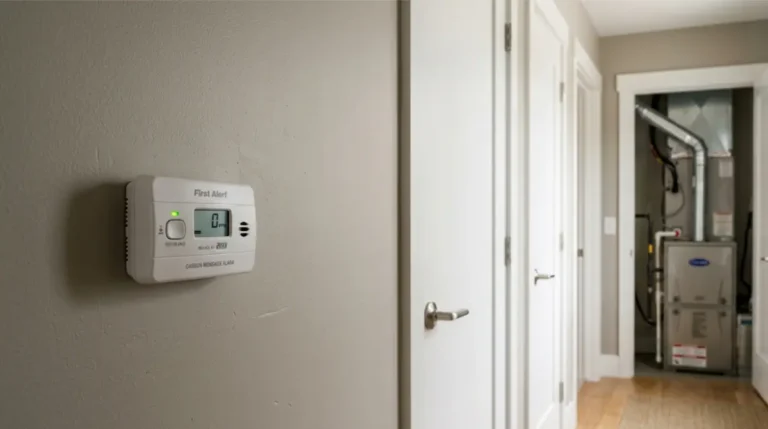
CPSC advises CO alarms on every level and outside sleeping areas; see CO detectors for gas furnace homes.
Frequently asked questions
1. Is a heat pump cheaper to run than a gas furnace?
A heat pump is cheaper only if its seasonal COP beats your breakeven: about 3.9 versus a 95% gas furnace.
2. Do heat pumps work below freezing?
Yes. ENERGY STAR cold-climate heat pumps must reach a COP of at least 1.75 and 70% capacity at 5°F.
3. What is a dual-fuel system?
A dual-fuel system pairs a heat pump with a gas furnace, which takes over when deep cold lowers efficiency.
4. Is there a heat pump tax credit in 2026?
No federal heat pump tax credit remains; 25C ended for systems placed in service after December 31, 2025.
5. What climate zone am I in?
PNNL’s county guide lists the IECC climate zone for every US county, which shapes heat pump winter efficiency.
6. Will gas furnaces be banned?
No. DOE’s rule would require new gas furnaces made after December 2028 to reach 95% AFUE; courts are re-reviewing it. Confirm options with a licensed HVAC contractor.
7. Is a heat pump cheaper than a propane furnace?
Usually. A heat pump needs only about 1.8 seasonal COP to beat a 95% propane furnace at US averages.
8. Does a heat pump replace my AC?
Yes. A heat pump heats and cools, so price it against a furnace plus a new AC.
9. What COP does a heat pump need to beat gas?
A heat pump needs about 3.9 versus a 95% gas furnace and 3.3 versus an 80% model, at US averages.
10. Can I still install an R-410A heat pump?
Yes, if the R-410A heat pump was made before 2025, except in New York, under EPA’s 2026 rule. Confirm with a licensed HVAC contractor.
Run your numbers, then get two quotes
Plug your rates into the breakeven formula and compare the result with each quote’s seasonal COP. If the heat pump clears it, it wins on running cost; if not, price dual fuel too. For a printable breakeven worksheet, email hello@gladewick.com.