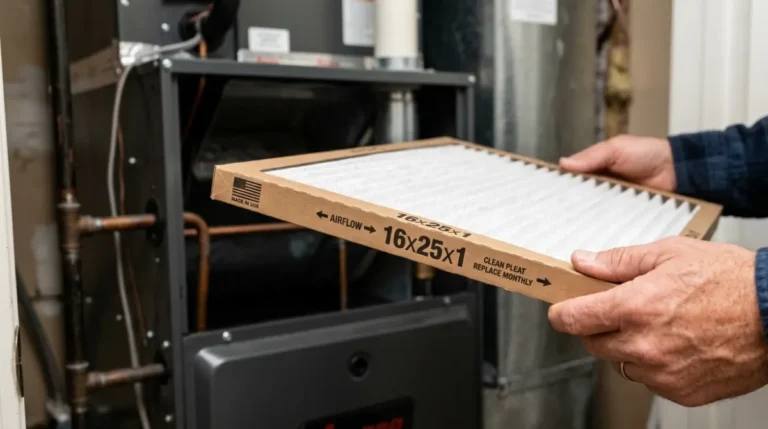
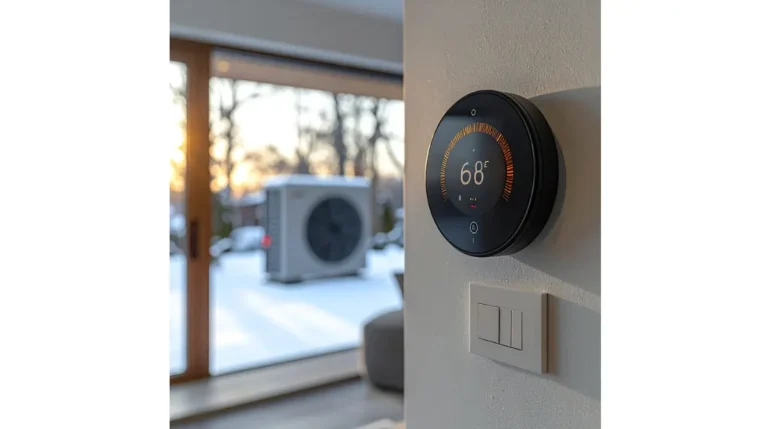
Smart Picks for the Best CO Detector in a Gas Furnace Home

A CO detector for a gas furnace home belongs on every level and outside each sleeping area. Here’s which alarm fits each spot, and which to avoid.
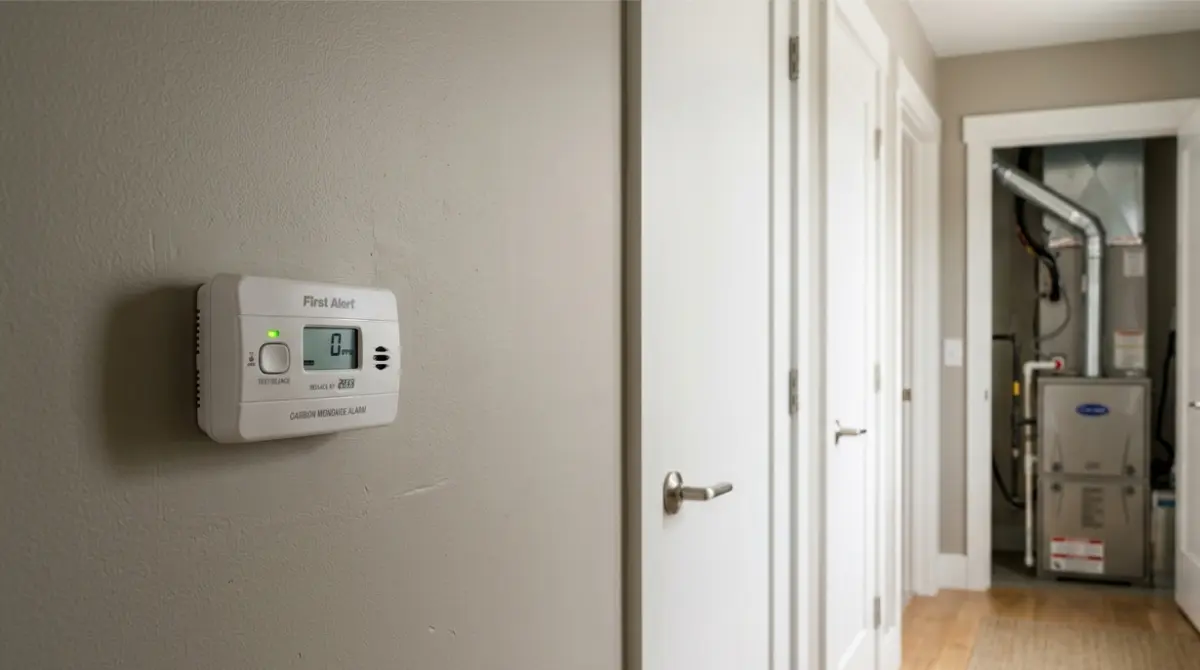
Table of Contents
Which CO detector does a gas furnace home need?
Buy a UL 2034-listed CO alarm with battery power or battery backup, and place one outside every sleeping area and on every level. That’s CPSC’s rule.
Jump to your situation
- First alarm: start with what to look for.
- Old or cheap alarm: check the CPSC warning.
- Renting: the plug-in and sealed-battery picks need no wiring.
- Alarm sounding now: skip to the last section.
ℹ️ Safety Note: This guide is general information. If a CO alarm sounds, get everyone outside, call 911, and have a licensed HVAC technician inspect the furnace before it runs again.
Why a gas furnace makes a CO alarm essential
The CDC lists gas furnaces among the household items that can produce carbon monoxide.
How a furnace can leak CO
CO forms when fuel burns incompletely; faulty venting can let it build up indoors.
📊 Tested / Spec: Each year, more than 400 Americans die from unintentional non-fire CO poisoning and more than 100,000 visit an emergency department, per the CDC’s carbon monoxide basics.
The yearly check that prevents it
The CDC says to have your heating system serviced by a qualified technician every year. Check how old your furnace is, and see our guide to choosing and maintaining an HVAC system.
What to look for in a CO detector
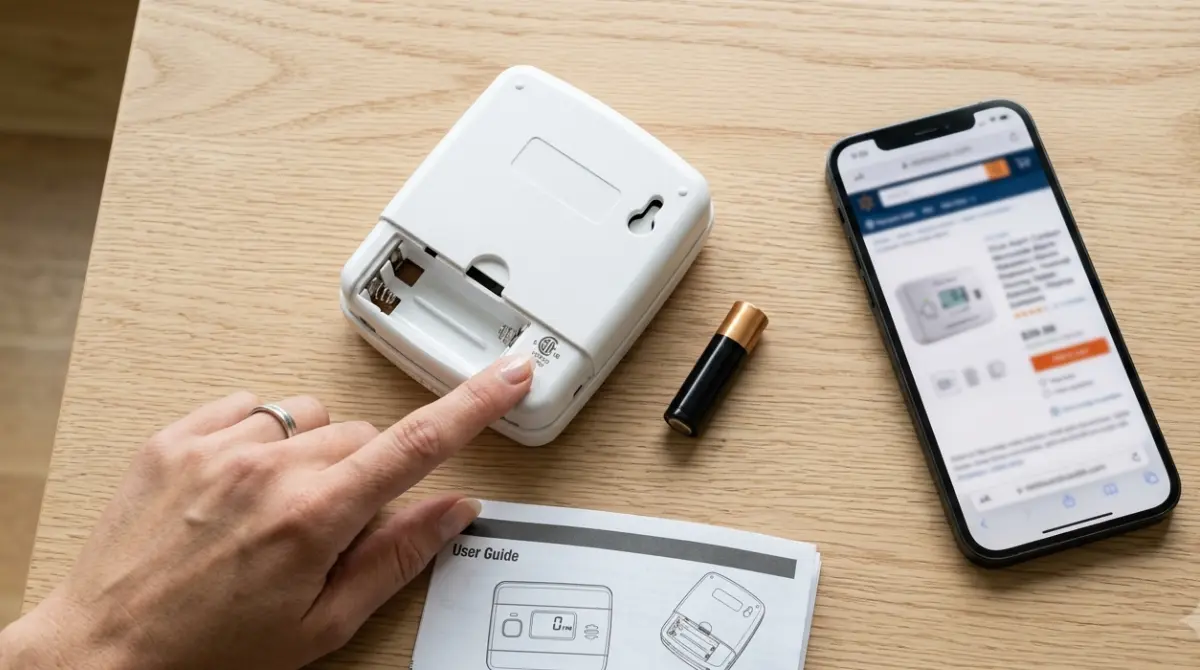
Four features matter.
UL 2034 listing (non-negotiable)
CPSC says to buy only UL 2034 CO detectors. Check the back label.
📊 Tested / Spec: UL 2034 alarms must sound within 4–15 minutes at 400 ppm and 60–240 minutes at 70 ppm, and are designed to ignore a steady 30 ppm, per First Alert’s standard summary.
Power and battery backup
Plug-in, sealed battery or hardwired all work, with battery power or backup.
Digital display and peak memory
The CDC suggests a digital readout, which can show the highest CO level recorded.
Replace-by date
Replace per the manufacturer or every 5 years, the CDC says.
Best CO detectors for gas furnace homes, by job
None of these appeared in a CPSC recall when we checked on October 16, 2026.
| Job | Model | Power | Key Detail |
|---|---|---|---|
| Bedroom hallway | Kidde COPD | Plug-in, AA backup | Backlit display |
| No outlet | First Alert CO9B10D | 10-year sealed battery | Peak-level memory |
| Near gas appliances | Kidde KN-COEG-3 | Plug-in, battery backup | Senses natural gas and propane |
| Whole-home, smart | First Alert SC5 Hardwire | Hardwired, lithium backup | Interconnects |
Spec-sheet data, not lab tests.
Near gas appliances
🛒 Our Pick: The Kidde KN-COEG-3 adds natural gas and propane sensing.
Whole-home and smart
🛒 Our Pick: The First Alert SC5 Hardwire interconnects and replaces Nest Protect. It was out of stock at First Alert when we checked; have a licensed electrician install it.
Cheap CO detectors the CPSC says to stop using
On August 20, 2026, CPSC told consumers to stop using KH158 gas and CO detectors, because they can fail to sound.
The August 2026 KH158 warning
It covers 376,974 units sold under 18 brand names on Amazon, eBay and other sites. CPSC knows of 91 failures to alarm, and the maker hasn’t agreed to a recall. CPSC’s KH158 warning lists every brand.
How to check your own alarm
✅ Do This: Find the model number and “UL 2034” on the back label, then search the model on CPSC’s recall site. If it matches, dispose of it and install a UL 2034 alarm the same day.
Where to put CO detectors with a gas furnace
Placement decides whether an alarm wakes you.
Every level and outside sleeping areas
CPSC says to put CO alarms on each level and outside separate sleeping areas. The CDC notes that sleeping people can die from CO before symptoms appear.
How far from the furnace
First Alert’s manuals suggest an extra alarm at least 15 feet from the furnace where possible, since closer can cause nuisance alarms. Follow your manual and First Alert’s placement guide.
Interconnect if you can
NFPA recommends interconnected alarms, so when one sounds, they all sound.
What to do if your CO alarm goes off
Treat every CO alarm as real.
Get out, then call
- Get everyone outside to fresh air.
- Call 911 or the fire department from outside.
- Stay out until firefighters say it’s safe, per NFPA’s CO alarm guide.
Before anyone runs the furnace again
⚠️ Watch Out: Don’t restart the furnace until the fire department clears the home. Then have a licensed HVAC contractor you’ve vetted inspect combustion and venting, with findings in writing.
Common questions about CO detectors
1. Do I need a CO detector with a gas furnace?
Yes. A gas furnace can produce carbon monoxide, so CPSC advises a UL 2034 CO detector.
2. How many CO detectors do I need?
Put one CO detector on each level and outside each separate sleeping area, per CPSC.
3. How far from the furnace?
First Alert’s manuals suggest an extra CO detector at least 15 feet from the furnace.
4. Plug-in or battery?
Either CO detector works if UL 2034 listed; a plug-in needs battery backup for outages.
5. How long do CO detectors last?
Replace a CO detector per the manufacturer’s instructions or every 5 years, the CDC says.
6. Are cheap Amazon CO detectors safe?
Not all. CPSC warned in August 2026 that KH158 CO detectors can fail to alarm.
7. What ppm sets off a CO alarm?
A UL 2034 CO alarm must sound within 4–15 minutes at 400 ppm and 60–240 minutes at 70 ppm.
8. Should it show a reading?
The CDC suggests a CO detector with a digital readout showing the highest level recorded.
9. Is a smoke and CO combo enough?
Yes, if the combo CO detector is UL 2034 listed and placed on every level.
10. What if my CO alarm goes off?
Get everyone outside to fresh air when the CO alarm sounds. Then call 911 or the fire department.
Your next step before heating season
Check the “UL 2034” label and replace-by date on your current alarm, and run the CPSC check. Book your furnace’s yearly service before the first cold night. Then add an alarm to any level or bedroom hallway that’s missing one.