A Smart Way to Request a Manual J Load Calculation

A Manual J load calculation uses your home’s real numbers. ACCA’s 8th Edition is the ANSI-recognized standard; here’s how to request one.
Table of Contents
Why ask for a Manual J load calculation at all?
A Manual J load calculation estimates how many Btu per hour your home needs for heating and cooling.
The cost of sizing by square footage
The Department of Energy warns that rule-of-thumb sizing often produces oversized systems, which cost more, waste energy, and switch on and off too often.
Which situation is yours?
Replacing a worn-out unit, adding a room, or holding a quote with a tonnage and no math? Each starts the same way: one written request, sent before you sign. Equipment choice comes next, as covered in our guide to choosing the right HVAC system for your home. Below: what to ask for, what a real report shows, and what to do if a contractor balks.
ℹ️ Safety Note: This guide is general information, not engineering or legal advice. Code requirements and enforcement vary by city and state, so confirm what applies with your local building department, and leave equipment sizing and installation to a licensed HVAC contractor.
What a Manual J load calculation actually measures

A Manual J load calculation is the ANSI-recognized method for estimating a home’s heating and cooling loads in Btu per hour; it doesn’t choose the equipment. ACCA’s 8th Edition covers single-family homes, small multi-unit buildings, condos, townhouses, and manufactured homes, and weighs insulation, windows, air leakage, and duct losses.
Manual J vs. Manual S vs. Manual D
Manual J finds the loads. Manual S then selects equipment based on those loads, and Manual D sizes the ducts. Manual J alone doesn’t tell you which system is best.
Why rules of thumb and BTU calculators fall short
A quick BTU calculator suits one window unit; a whole-house system needs your home’s real numbers.
🔍 Why It Works: An oversized air conditioner shuts off before removing much moisture, so rooms feel cool but clammy, a Building America guide hosted by DOE explains.
How to ask for a Manual J, step by step

Ask in writing, before you accept any quote.
Steps to request it
- Ask for the load calculation, the software name, and loads by room.
- Ask for the Manual S equipment selection for the model quoted.
- Compare the Btu-per-hour numbers before you compare prices.
The Building America guide (last updated 2010) advises requiring Manual J and S calculations in bid requests, and looking elsewhere if a contractor is unwilling. Replacing a unit? Have its model and age ready; here’s how to find the age on the data plate.
A script you can paste
✅ Do This: Paste this into your email:
“Please include a written Manual J load calculation (software named, loads by room) and the Manual S selection for your quoted system. If you use another approved method, please name it and share results.”
What a real Manual J report should show
A real report lists:
- Inputs: design weather location, floor area, insulation, windows and orientation, occupants.
- Results: heating and cooling loads in Btu per hour, cooling split into sensible and latent, and room-by-room figures.
- The approved software that produced it.
Inputs you can check yourself
Check what you know: do the window count and square footage match your house?
💡 Pro Tip: ACCA’s occupancy guideline, quoted in the Building America guide, designs for full-time occupants, not your largest party. If unknown, count two in the primary bedroom and one per additional bedroom.
Software and edition
Ask which program produced it. ACCA says only software on its approved list complies with its standards, and its Speed-Sheets don’t replace that software, so let your contractor run the numbers.
Who runs a Manual J and what it costs
The simplest route is making the calculation part of each contractor’s bid, as the Building America guide advises.
Contractor-run or independent
Ask whether they’ll accept a calculation from an independent professional you hire.
Questions to ask about cost
We couldn’t verify a standard US price for a Manual J, and published figures vary widely, so treat any single number with caution. Ask each contractor:
- Is the calculation included in the bid?
- Is it itemized, and what do I pay if I don’t hire you?
- Will you give me the full report either way?
Is a Manual J required by code where you live?
The International Residential Code has long required heating and cooling equipment to be sized per ACCA Manual S, based on loads from Manual J or another approved method, and the energy code carries similar wording.
What the model codes say
Read the model text in IRC Chapter 14, then check which edition your state adopted.
Why local rules and enforcement differ
ACCA says a proper load calculation is required by national building codes and most state and local jurisdictions, but the details are set locally. Whether a replacement permit asks for the paperwork depends on your building department.
✅ Do This: Ask your building department, “What sizing documentation do you require for an HVAC replacement permit?” Note who answered.
What to do if a contractor says they don’t need one
Pushback is common, and a calm question is your best reply.
Common pushback and a calm reply
“We’ve always sized it this way.” Ask to see the calculation for your house. The Building America guide says some contractors add capacity hoping to avoid callbacks, though sealing ducts would serve better.
“The code doesn’t require it here.” Possibly true locally, and codes allow other approved methods, so ask which method they use and to see the results in writing.
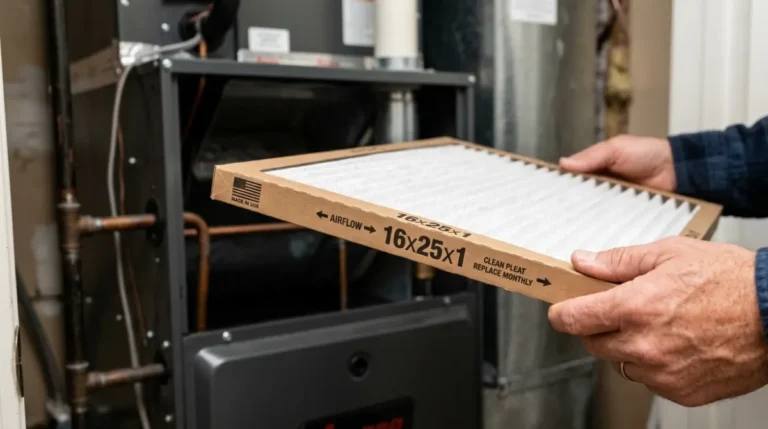
Before blaming size, check the basics: the guide says comfort problems are seldom caused by undersized equipment, and names dirty filters and leaky ducts. Start with your HVAC filter size and replacement.
When to get another quote
The guide says to look elsewhere if a contractor is unwilling to do these calculations, however low the bid.
Manual J load calculation FAQ
1. What is a Manual J load calculation?
A Manual J load calculation estimates your home’s design heating and cooling loads in Btu per hour, so equipment can be sized to match.
2. Is a Manual J load calculation required by code?
Model codes call for equipment sized from a Manual J load calculation or another approved method; requirements vary locally. Confirm with your building department.
3. How much does a Manual J load calculation cost?
We couldn’t verify a standard price for a Manual J load calculation, so ask whether it’s included in the bid or billed separately.
4. Can I do a Manual J load calculation myself?
Not realistically: spreadsheet tools don’t replace ACCA-approved software, so let your contractor run the Manual J load calculation and check their report.
5. Does a Manual J load calculation pick my equipment?
No. A Manual J load calculation finds the loads; Manual S then selects equipment and Manual D designs the ducts.
6. What software should a Manual J load calculation use?
ACCA says only software on its approved list complies with its standards, so ask which approved program produced your Manual J load calculation.
7. Why does a Manual J load calculation matter for oversizing?
DOE says rule-of-thumb sizing often oversizes equipment, raising cost and wasting energy; a Manual J load calculation replaces the guess.
8. Do I need a new Manual J load calculation for an AC replacement?
Requirements for a Manual J load calculation on replacements vary locally, so ask your building department what your permit needs.
9. What should a Manual J load calculation report show?
Expect your home’s inputs, heating and cooling loads in Btu per hour, room-by-room figures, and the approved software used for the Manual J load calculation.
10. What if my contractor refuses a Manual J load calculation?
A DOE-hosted guide says to look elsewhere if a contractor won’t provide a Manual J load calculation, however low the bid.
Send the written request to every bidder before you sign, then compare the Btu-per-hour numbers before the prices. A contractor who shares the load calculation, the equipment-selection sheet, and the method used is showing their work; one who won’t has told you something useful too.