Flush AC Drain Line Before a Clog Stops Your Cooling

Flush AC drain line steps vary by brand: Carrier says one cup of vinegar, Lennox says dilute it and soak 30+ minutes. See where they differ.
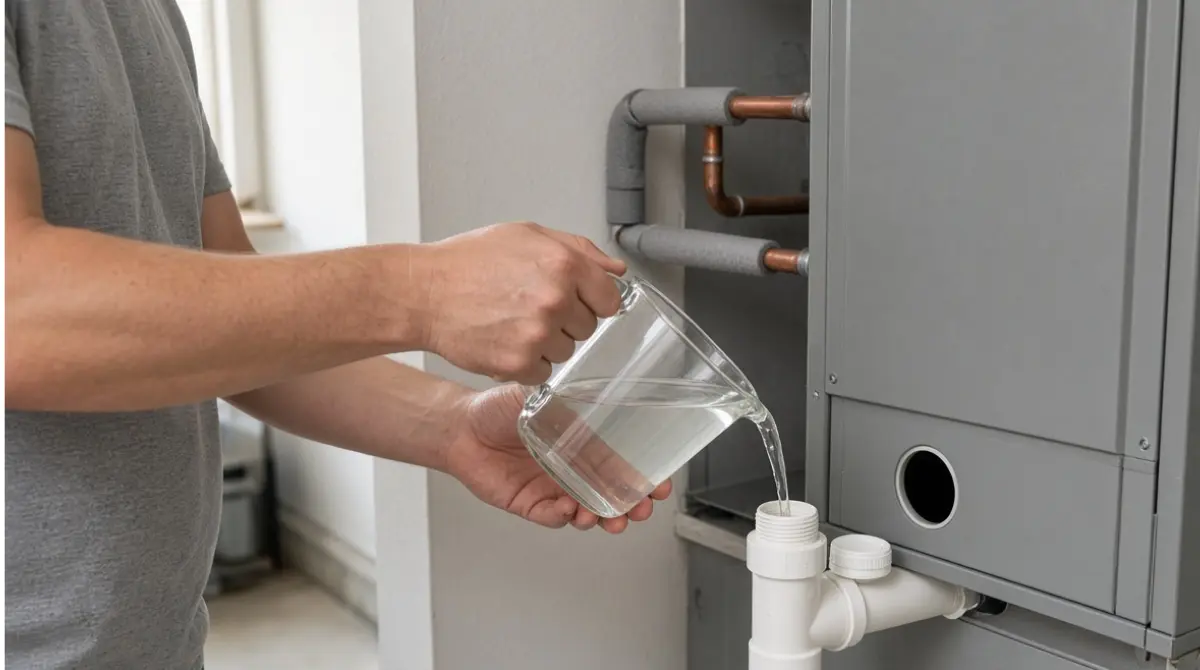
Table of Contents
Why your AC drain line needs flushing
A clogged AC drain line can shut your air conditioner off and send water toward floors and ceilings. Part of our guide to HVAC systems and what they cost.
Want the steps? Go to the step-by-step section. Already seeing water? Jump to troubleshooting. Unsure what to pour in? Read the cleaner comparison.
What a clogged drain line does
🔍 Why It Works: Your coil pulls moisture from warm air into a pan, then out through the drain line. Dust mixed with that moisture forms sludge that can block it, Carrier explains.
Signs yours needs attention
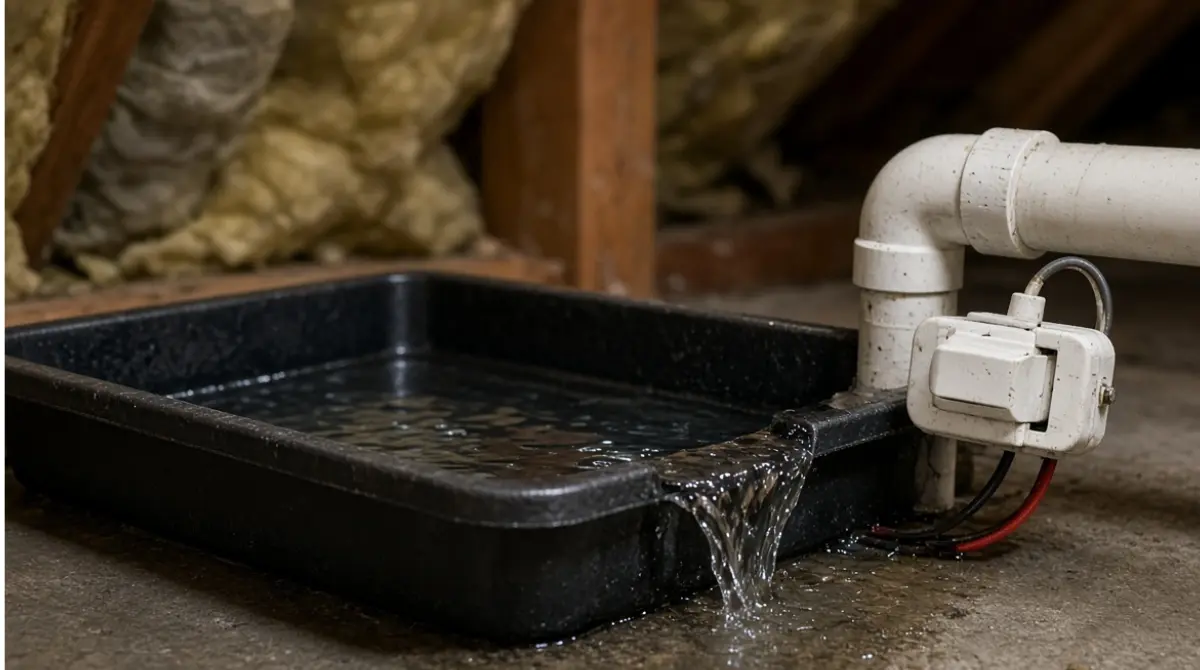
Carrier lists a musty smell, standing water, water damage, weak cooling, and an AC that shuts off or won’t restart.
ℹ️ Safety Note: This job involves electricity, water, and cleaners that can release toxic gas when mixed. This is general information; if unsure, hire a licensed HVAC technician and follow your owner’s manual and local code.
Where is the AC condensate drain line?
The AC drain line is typically a ¾-inch PVC pipe that carries water from the indoor coil to a drain outside, per Carrier.
Primary line, cleanout and outdoor exit
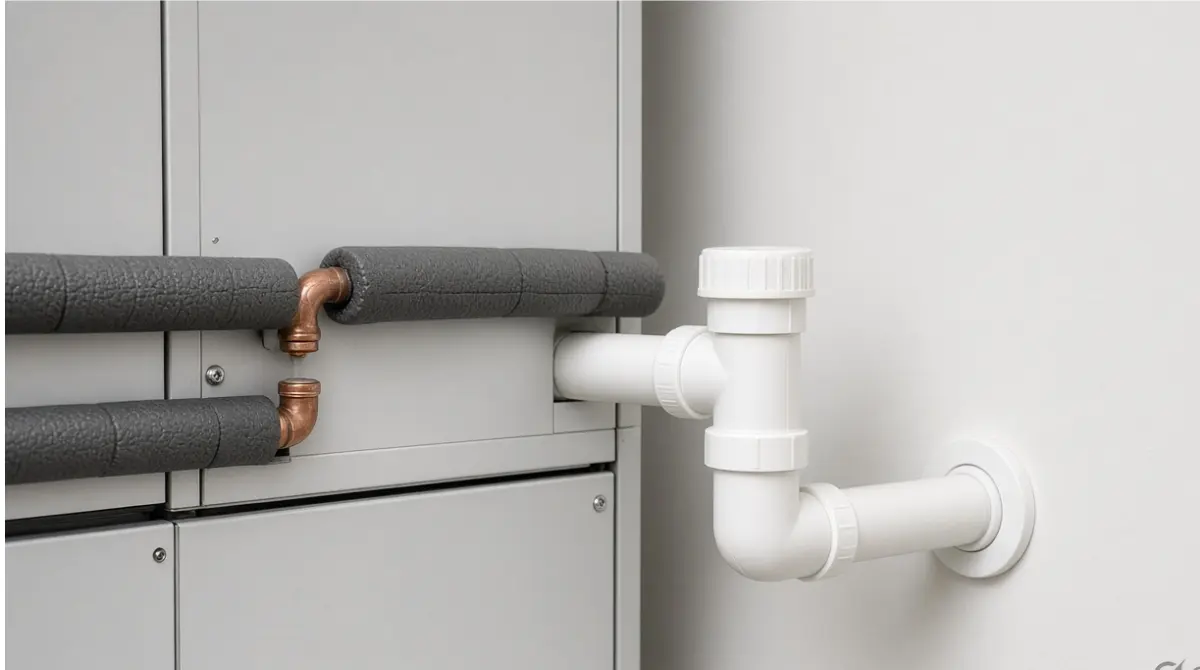
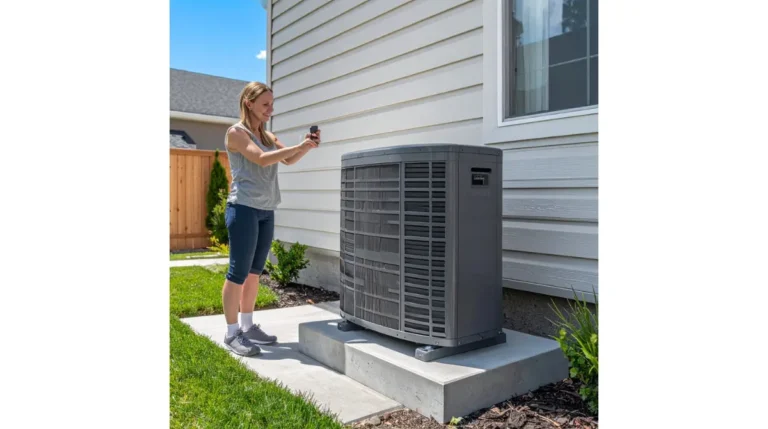
Look for the access point near the indoor unit, then follow the pipe to its outdoor exit.
Secondary line and drain pan
Many systems add a backup line, usually draining above a door or window, plus a secondary pan, Lennox says. Water from that line usually signals a problem with the main one.
Float switches
Some units have a float switch that stops the system when water backs up, but not every air handler has one, as Trane explains for overflow switches.
How to flush an AC drain line step by step
To flush an AC drain line, turn off power at the breaker, clear the outdoor exit with a wet/dry vacuum, flush with hot water or distilled vinegar, then pour clean water through to confirm it drains. Steps follow Carrier’s drain line guide and Lennox’s step-by-step list.
Turn off power and find the cleanout
Switch the system off at the breaker or disconnect box, then remove the access cap and look inside with a flashlight.
Clear the outdoor exit with a wet/dry vac
Hold a wet/dry vacuum at the outdoor exit to pull the clog out, as both manufacturers describe.
Flush with hot water or distilled vinegar
Carrier says hot, not boiling, water can dissolve minor buildup, and suggests one cup of distilled vinegar. Lennox says diluted vinegar or a PVC-approved cleaner should sit 30+ minutes, then get flushed with water. Amounts differ, so follow your owner’s manual.
Confirm it drains and restore power
Pour clean water through and check it runs out the exit, then restore power and confirm the system cools and drains properly, per Carrier.
⚠️ Watch Out: Never bypass a tripped float switch. For a clog the vacuum won’t clear, call a licensed HVAC technician.
Vinegar, hot water or bleach: what’s safe to pour in?
Carrier and Lennox both name distilled vinegar, Carrier adds hot water, and neither recommends bleach.
Vinegar, hot water or a PVC-safe cleaner
| Source | Vinegar | Hot water | Bleach | Key Detail |
|---|---|---|---|---|
| Carrier | One cup, distilled | Hot, not boiling | Not recommended | Dealer says vinegar or bleach may miss debris clogs |
| Lennox | Diluted, 30+ minutes | Not addressed | Not addressed | PVC-approved cleaner also named |
| CDC | Not addressed | Not addressed | Never mix with other cleaners | Poison Help: 1-800-222-1222 |
Why we don’t recommend bleach
The CDC warns against mixing household cleaners with bleach because it can release chlorine gas, and a separate CDC report names vinegar among the mixes that can generate chlorine and chloramine gases.
✅ Do This: Check your owner’s manual for approved cleaners, or ask a licensed HVAC technician which suits your unit.
AC drain line still clogged after flushing?
A line that won’t take liquid, a dead AC, or water near the unit each need a different next step.
Water won’t go down the cleanout
Lennox says water sitting in the drain pan means drainage isn’t working properly.
AC shut off or won’t restart
A tripped float switch can explain an AC that stops or won’t restart, per Carrier. Trane says it stops the compressor and fans, so don’t bypass it.
Water in the pan or a leak
If the AC runs but nothing drips outside, Carrier lists a clogged line, frozen coil or disconnected pipe. For water already on floors or walls, see what to do in the first hour after water damage.
✅ Do This: For recurring clogs or a frozen coil, call a licensed HVAC technician and ask whether your unit has an overflow switch.
How often to flush an AC drain line
Lennox says to flush the drain line every few months, and Trane says to schedule professional AC maintenance every spring.
How often to flush
Lennox gives no fixed date, so a reminder at the start of cooling season is a simple anchor.
Spring and yearly checks
Trane says technicians check the drain line and pan for clogs or cracks, and Carrier says tune-ups clear debris. A fresh filter also keeps dust off the coil, so find your HVAC filter size first.
What to log
Note the date and whether water reached the outdoor exit.
When to stop and call an HVAC pro
Some problems are past a homeowner flush.
Signs this isn’t a DIY job
Lennox lists recurring clogs, water damage or rust, musty odors, an unreachable clog, and odd noises or shutoffs.
Mold and your HVAC system
EPA says mold patches under about 10 square feet can often be cleaned by a homeowner, but if you suspect mold in your HVAC system, don’t run it. See EPA’s mold cleanup guidance and our guide to mold in air ducts.
If you smell chlorine
If a cleaner mix gives off a bleach-like smell indoors, the CDC says leave, get fresh air, open windows and doors, and call Poison Help at 1-800-222-1222 or 911.
✅ Do This: If you suspect mold inside the system, stop the AC and call a licensed HVAC technician.
AC drain line FAQs
1. How do you flush an AC drain line?
To flush an AC drain line, cut power, vacuum the outdoor exit, pour in hot water or distilled vinegar, then rinse.
2. How often should you flush an AC drain line?
Lennox says to flush an AC drain line every few months, and Trane recommends professional AC maintenance every spring.
3. Can you use vinegar to flush an AC drain line?
Yes. Carrier names one cup of distilled vinegar and Lennox says diluted vinegar; check your owner’s manual before you flush.
4. Can you pour hot water down an AC drain line?
Carrier says hot, not boiling, water can dissolve minor buildup when you flush an AC drain line. Turn the power off first.
5. Is bleach safe in an AC drain line?
We don’t recommend bleach to flush an AC drain line; the CDC warns it can release chlorine gas when mixed with other cleaners.
6. How do I know my AC drain line is clogged?
Carrier lists a musty smell, standing water, water damage, weak cooling, or an AC that shuts off as signs.
7. Why did my AC shut off?
A clogged AC drain line can trip a float switch that stops the system. Never bypass it; call a licensed HVAC technician.
8. Where is the AC drain line cleanout?
The access point you use to flush an AC drain line is usually near the indoor unit, with the exit outdoors, per Carrier.
9. Can a clogged AC drain line cause mold?
Trane says clogs can lead to water damage and mold growth, so flush your AC drain line on schedule.
10. When should I call a pro instead of flushing again?
If clogs recur, water damage or musty odors appear, or you can’t reach the clog, stop flushing your AC drain line and call a technician.
Your next step
Turn off the power, clear the outdoor exit, flush with hot water or distilled vinegar, and confirm water runs out. Put the next flush on your calendar for the start of cooling season.