Best Downspout Extension Choices for Your Foundation Type

Downspout extensions can stop at 2 ft for slab homes, but guidance says 6 ft for basements. Pick, fit or bury one inside.
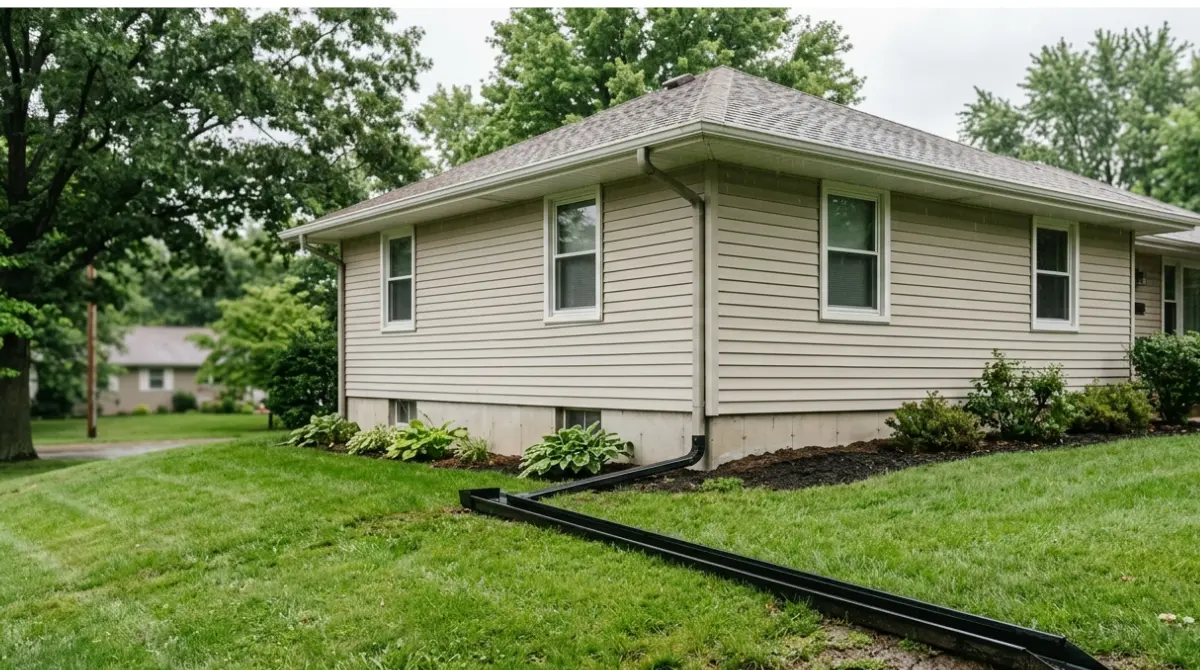
Table of Contents
How far should a downspout extension reach?
Send roof water at least 6 feet from a basement wall, or 2 feet from a slab or crawl space.
| Foundation | Minimum distance |
|---|---|
| Basement | 6 ft |
| Slab or crawl space | 2 ft |
📊 Spec: NC State’s downspout disconnection guide sets these distances, citing Portland’s brochure. It’s stormwater guidance, not a building code, so check local rules.
Basement homes: at least 6 feet
Flexible pieces list up to 67 inches, so a basement usually needs two chained or a buried line.
Slab or crawl space: at least 2 feet
Two feet works if the ground slopes away.
Is a 3-foot extension enough?
Yes for a slab or crawl space; not for a basement.
When to go farther
Bob Vila calls 4 feet standard; flat or inward-tilting yards need more. See how grade, gutters and downspouts work together.
Flexible, flip-up or buried: which type fits your yard?
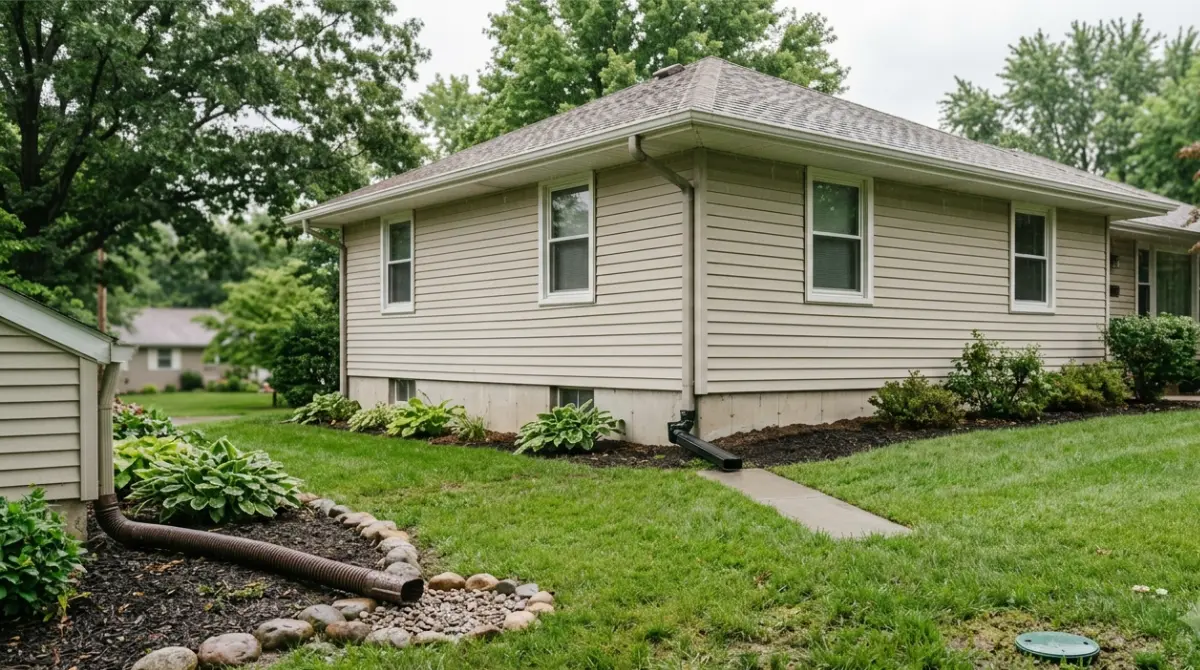
Match the type to what happens on top of it.
| Type | Best for | Watch out |
|---|---|---|
| Flexible tube | Bending around plants | Thin walls crush |
| Flip-up, enclosed | Mowing lanes | Open troughs |
| Buried pipe, emitter | Long reach, clear lawn | Digging |
| Splash block | Limiting erosion | Not a full extension |
Type notes come from Portland’s brochure.
Flexible and roll-out tubes
Portland’s city brochure advises against roll-out hose, corrugated black plastic and open troughs, citing durability.
Flip-up hinge for the mowing lane
The same brochure suggests a hinged elbow with an enclosed extension that flips up for mowing.
Buried line with a pop-up emitter
Best for long reach and a clear lawn, but it means digging, covered below.
Splash block alone
A splash block limits erosion; Portland places it at the end of an extension.
Best downspout extensions, picked by situation
We did not test these. This shortlist draws on listed specs and Bob Vila’s published tests.
Best for reach
The Gutterlix lists 21 to 67 inches, the longest in Bob Vila’s test, rated 5/5 but holding only about 10 pounds.
A lighter-duty option, and what you give up
The Amerimax Flex-A-Spout lists 21 to 55 inches. Bob Vila’s tester found it crushed easily and its seams split.
Best for a lawn you mow
The Amerimax StealthFlow flat kit lists 24 to 43 inches. Bob Vila’s tester mowed over it; the narrow channel could clog.
What they cost and how we checked recalls
Confirm prices and check CPSC’s recall list first.
How to install a downspout extension that drains away
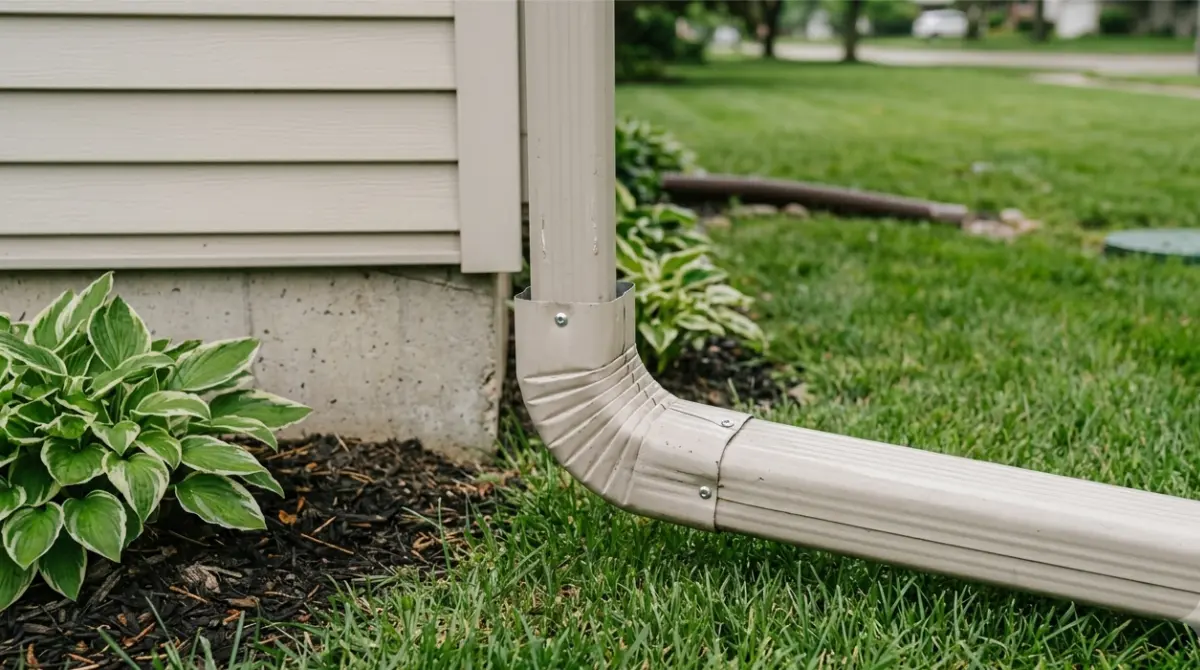
You need a tape measure, a hacksaw, a drill and sheet-metal screws.
Measure the downspout and the setback
Measure the downspout (usually 2×3 or 3×4 inches), then your target distance.
Fit the elbow and extension
Cut the downspout to leave room for an elbow, then screw every joint.
⚠️ Watch Out: Never reverse the fit: the elbow goes over the downspout, the extension over the elbow. Portland’s brochure specifies this order.
Check the slope with a hose test
Run a garden hose through it and watch every joint. The outlet ground must slope away, and a clogged gutter defeats any extension, so clear the gutters first.
Walkways, property lines and splash blocks
Never cross a walkway, patio or driveway. Portland keeps outlets 5 feet from property lines, a local rule, so check yours. A splash block is optional.
When to bury it: drain pipe and pop-up emitters
A buried line reaches farther than any above-ground tube, but it is a digging job.
When above-ground won’t reach
If a basement needs the full 6 feet and the lawn must stay clear, bury a pipe with a continuous downward slope to an outlet, often a pop-up emitter.
Where the water can end up
Aim for a lawn or garden that slopes away, never a neighbor’s property or a hard surface. EPA’s downspout redirection page says this may not suit every location. The outlet needs grading that slopes away from the foundation.
Before you dig
Call 811 before any digging and check local discharge rules.
✅ Do This: Hire a licensed drainage or landscape contractor. Ask where the outlet discharges, how utilities will be located, and which local rules apply.
When a downspout extension isn’t enough
An extension fixes where roof water lands, not structural damage.
Signs the extension isn’t the problem
If the outlet sits on ground that slopes toward the house, the extension only moves the problem a few feet. If water still reaches the wall or basement once the outlet drains away, the cause may lie elsewhere.
Who to call first
✅ Do This: Call a licensed foundation contractor or a structural engineer. Ask whether drainage is the cause before any repair is quoted.
Our guide to what foundation repair costs and who to call first explains the next steps.
Downspout extension questions, answered
1. How far should a downspout extension be from the foundation?
A downspout extension should end at least 6 feet from a basement wall, or 2 feet from a slab or crawl space.
2. Is a 3-foot downspout extension long enough?
A 3-foot downspout extension suits only a slab or crawl space with ground sloping away. Basements need 6 feet.
3. Do flexible downspout extensions work?
Yes, if the flexible downspout extension reaches your target distance, stays screwed on and slopes away. Thin walls can crush.
4. Can a downspout extension run across a walkway or driveway?
Avoid it, because a downspout extension across a walkway or driveway is a tripping hazard. Route around it, or bury the line.
5. Do I need a splash block with a downspout extension?
No, it is optional. A splash block at the end of a downspout extension limits erosion.
6. What downspout extension works if I mow the lawn?
A hinged flip-up downspout extension, a flat low-profile style, or a buried line. One tester mowed over a flat one.
7. Should I bury my downspout extension?
Only when above-ground tubes won’t reach. Next step: call 811, check local rules, and hire a licensed contractor.
8. Will a downspout extension fix a wet basement?
It fixes where roof water lands, not structural problems. Next step: if water persists, see a foundation contractor or structural engineer.
9. How much does a downspout extension cost?
Prices change, so confirm each listing before buying.
10. What size downspout extension do I need?
Downspouts are usually 2×3 or 3×4 inches. Measure yours, then choose a downspout extension with the matching adapter.
Your next step
Measure your setback, pick the type that reaches it, and run a hose through before you walk away. If water still pools at the wall after the outlet drains away, the downspout may not be the problem. Bring your findings to the right professional, and recheck after the next heavy rain, when a weak joint or flat outlet shows itself.