Smart Spacing for Trees Near Foundation Walls, New or Old

Trees near foundation walls: roots can reach 1.5 times the crown diameter or more. Which distance rule fits your yard, and why do they disagree?
Table of Contents
How close is too close for trees near a foundation?
The short answer by tree size
Plant small trees at least 8–10 feet from a wall, medium trees 15 feet, and large trees 20 feet, based on Arbor Day Foundation and Mississippi State Extension guidance. Where expansive clay soil swells and shrinks, Colorado State Extension advises keeping trees at least 15 feet away.
Planting new, or worried about one you have?
Planting? Use the table below. Own a tree already? See what to check before you cut. Seeing cracks? Start with the signs section.
ℹ️ Safety Note: Tree removal, root cutting, and digging near a foundation or buried lines can cause injury and major damage. This is general information, not an arborist or engineering evaluation. Hire an ISA Certified Arborist and a licensed structural engineer, call 811 before digging, and follow local code and permit rules.
Can tree roots really damage a foundation?
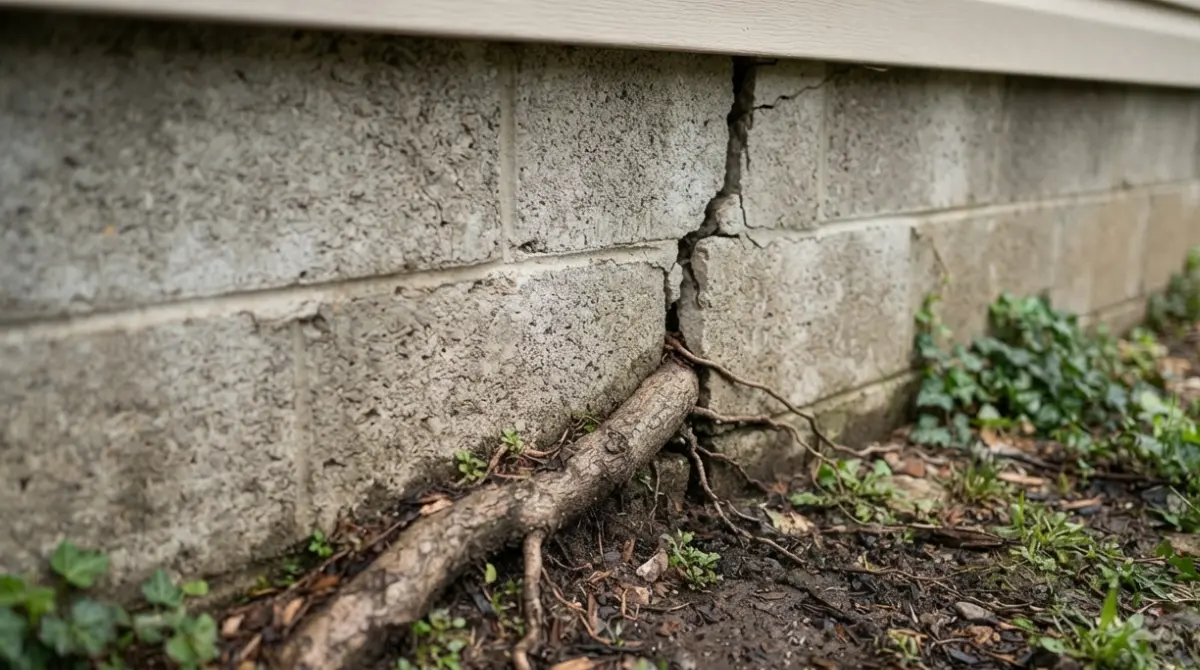
Yes, tree roots can damage a foundation, but mostly by exploiting weak spots rather than brute force. Roots grow where soil is easiest to penetrate, solid surfaces usually redirect them, and nearby cracks or voids give them a way in.
Moisture, not muscle
Clay soil swells when wet and shrinks when dry, and roots draw water from it.
🔍 Why It Works: When clay under part of a house shrinks, that part loses support; when it swells, it can push up. Uneven moisture is the problem.
How far roots actually reach
Roots reach at least 1.5 times the crown diameter, and up to 5 times in dry areas, per Mississippi State Extension’s rule of thumb on root spread.
Roots find cracks and loose backfill
Purdue Extension’s answer on roots and foundations says a nearby crack or void invites roots in. Sources differ on force against sound concrete.
Safe tree distance from a foundation, by size and soil
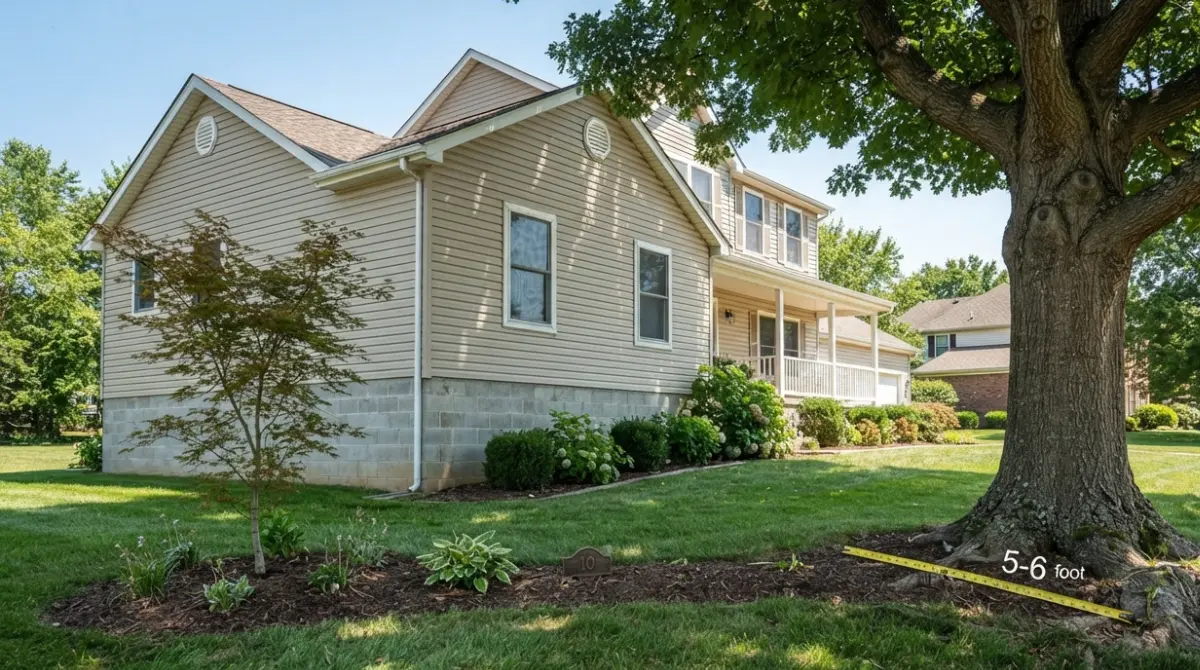
Published distances run from half a tree’s height to 60 feet because they answer different questions.
| Rule | Who says it | Key detail |
|---|---|---|
| 8–10 / 15 / 20 ft | Arbor Day Foundation; Mississippi State Extension | Small, medium, large, from a wall |
| 15 ft, all trees | Colorado State Extension | Swelling soil; Colorado guidance |
| Equal to mature height | Nashville Tree Conservation Corps | Nonprofit rule of thumb |
| Half the mature height | Pree’s Tree | Tree-company rule |
| 50–60 ft | Falk Nurseries | Cottonwoods, poplars, elms, large willows, maples |
📊 Tested / Spec: Sourced, not tested by us. Arbor Day also lists corner distances: 6–8 feet for small trees, 12 for medium, 15 for large.
The baseline by mature height
The Arbor Day Foundation’s tree-placement distances call trees up to 25 feet small, up to 40 medium, and taller large.
Why other sites say 20, 30 or 50 feet
Some rules target root and branch conflict, others soil moisture or aggressive species. Editorial take: treat the extension baseline as a minimum; go 15 feet or more in swelling clay.
Measure from the wall at mature size
Use mature height from the plant tag, not pot size, and measure to the wall.
Planting near a house: soil, water and buried lines
Water and buried lines matter as much as distance.
Clay soil: go farther, keep moisture steady
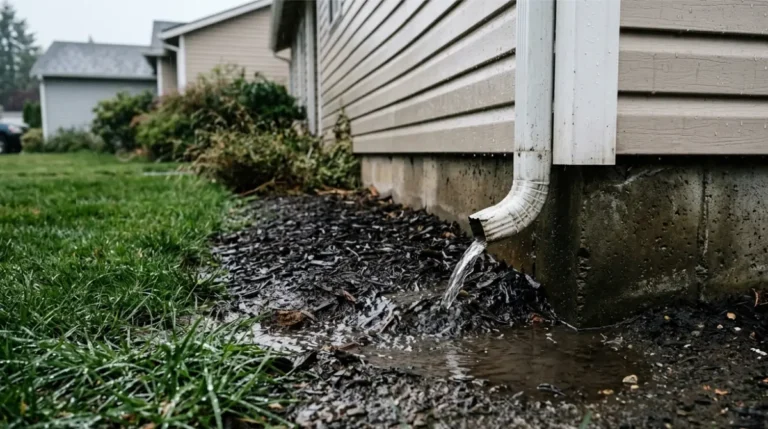
Colorado State Extension’s guidance for swelling soils says to keep trees 15 feet and sprinklers 5 feet from the foundation, and to leave downspout extensions in place. That is Colorado guidance, so ask your county extension office about local soil. Related: waterproofing in clay soil and how to regrade around your foundation.
Stay clear of pipes and lines
Arbor Day says to stay 5 feet from buried lines and 10 feet or more over sewer lines. Roots don’t break sound pipes, but they find existing cracks.
✅ Do This: Call 811 before digging a planting hole. Locators usually mark utilities within a week but skip irrigation lines, so mark those yourself.
Pick a tree that fits the space
Mississippi State Extension names redbud and flowering dogwood (small), hawthorn and magnolia (medium), and maples and oaks (large).
Already have a tree too close? Check before you cut
Distance alone doesn’t prove damage, and cutting a big tree isn’t automatically the fix.
Healthy tree, no damage: monitor
If the house looks fine, photograph cracks with a ruler in frame and recheck through a wet and a dry stretch.
Why removal isn’t automatically the fix
Taking out a large tree can change how much water the soil holds, so ask an arborist, and a structural engineer if you see cracks, before deciding. Purdue notes cutting problem roots can require digging beside the foundation, which is professional work.
⚠️ Watch Out: Don’t remove a risky tree or large limbs yourself. Mississippi State Extension says to call an ISA Certified Arborist.
What an arborist checks
Mississippi State lists eight defect categories, including dead wood, weak branch unions, cankers, and root decay.
✅ Do This: Ask whether the arborist will assess roots before any cutting, and whether they carry insurance.
Signs a tree may be affecting your foundation
No single sign names the cause.
What to look for
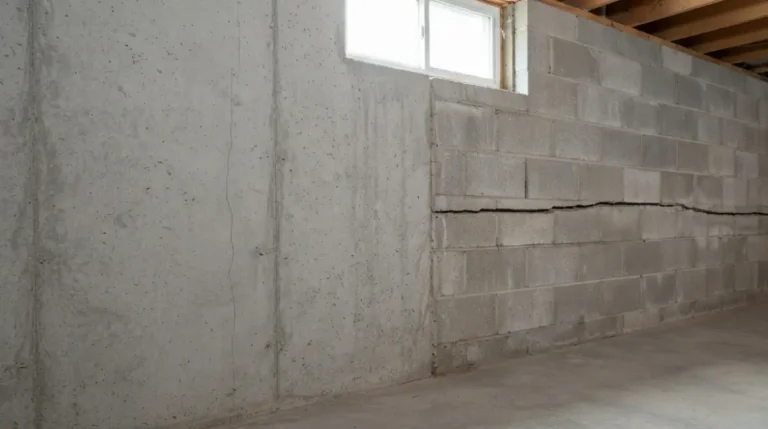
Colorado State Extension says swelling soils cause damage from cracked driveways and sidewalks to severe structural deformation. Indoors, sticking doors and sloping floors can also signal foundation movement.
Why no single sign proves it
Soil, water, and settling can cause similar symptoms, so a nearby tree is a clue, not a verdict. See how drought, water and clay cause foundation cracks.
Log it before you call anyone
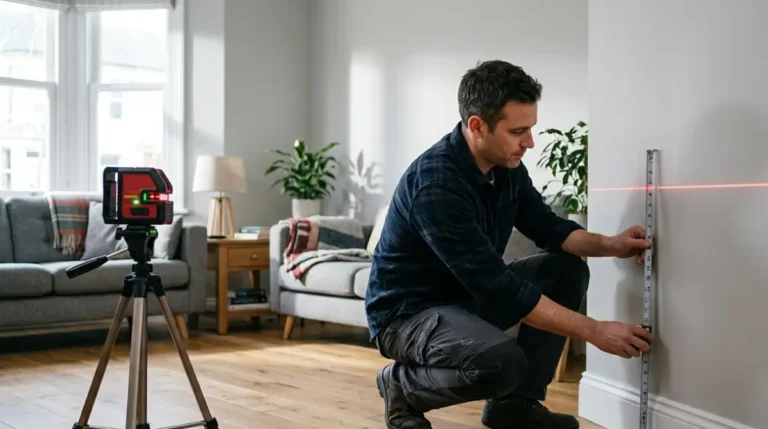
Photograph the crack with a ruler in frame, measure its width at two or three points, and recheck every three to six months.
✅ Do This: If a crack is horizontal, growing, offset, or leaking, book an independent licensed structural engineer and ask whether the firm also sells repairs. Our guide to foundation repair cost ranges and who to call first explains the choice.
Who to call: arborist, engineer or 811
Each problem needs a different professional.
Arborist for the tree
An ISA Certified Arborist assesses tree health, risk, and removal; find or verify one in ISA’s directory of certified arborists.
Structural engineer for the foundation
An independent licensed engineer diagnoses cracks without selling the repair.
811 before any digging
Call 811 before planting or digging; locators usually take a week or less and don’t mark irrigation lines.
Trees near foundation questions, answered quickly
1. How far should trees near a foundation be planted?
Extension guidance says 8–10 feet from a wall for small trees, 15 feet for medium, and 20 feet for large; swelling clay calls for more.
2. Can tree roots break through a concrete foundation?
Per Purdue Extension, roots mainly exploit existing cracks and voids; sources differ on force, so have any cracks assessed.
3. How far do tree roots spread from trees near a foundation?
At least 1.5 times the crown diameter, and up to 5 times in dry areas, according to Mississippi State Extension.
4. How close can you plant a small tree to a house?
Small trees under 25 feet at maturity can go 8–10 feet from a wall and 6–8 feet from a corner.
5. Is 10 feet far enough for large trees near a foundation?
No. Large trees, over 40 feet at maturity, need at least 20 feet from a wall and 15 from a corner.
6. Should trees near a foundation go farther away on clay soil?
In swelling soils, Colorado State Extension advises trees no closer than 15 feet; check your local extension office.
7. Can tree roots damage a sewer line near a foundation?
Roots don’t break sound pipes but find existing cracks. Keep trees 10 feet or more from sewer lines.
8. Should I cut down a tree that is too close to my foundation?
Distance alone doesn’t prove damage, and removal can change soil moisture. Don’t cut it yourself; ask an ISA Certified Arborist first.
9. Who do I call about tree roots and a cracked foundation?
An independent licensed structural engineer for the crack, and an ISA Certified Arborist for the tree.
10. Do I need to call 811 before planting trees near a foundation?
Yes. Arbor Day says to call before planting; locators usually respond within a week but don’t mark irrigation lines.