How to Read Foundation Cracks and Make the Right First Call

Foundation cracks can let radon in, and only a test shows your level. See how to read each pattern and when an engineer should look.
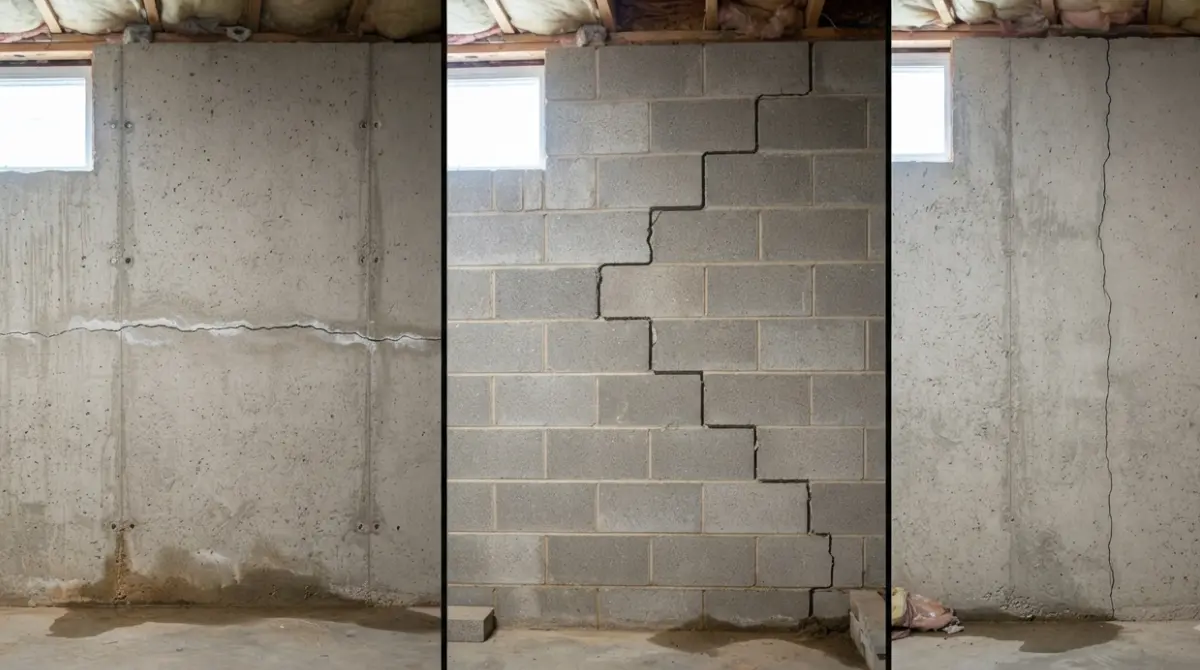
Table of Contents
Start here: match your crack to its pattern
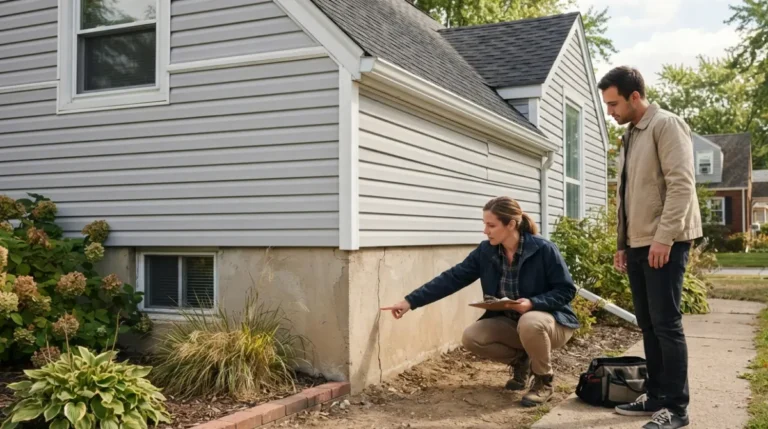
Foundation cracks run from harmless to serious, and you want to know which one you have. Direction is a useful clue, but wall type and movement over time matter just as much.
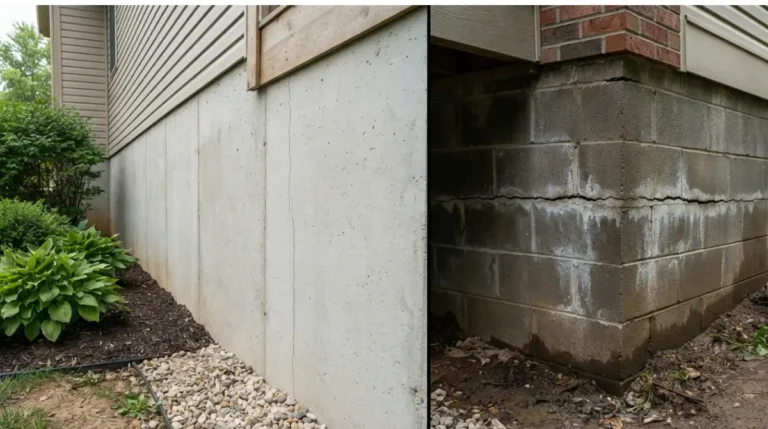
Check your wall type first
Look for rows of mortar joints. Concrete block and brick walls have them; poured concrete walls don’t, which changes which crack patterns you can get.
Three patterns, three next steps
- Sideways crack: go to the horizontal section.
- Zigzag along mortar joints: go to the stair-step section.
- Up-and-down crack: go to the vertical section.
Whichever you have, the same plan applies: measure it, log it, and know when an engineer should look first.
ℹ️ Safety Note: Foundation cracks can signal structural movement, water entry, or radon pathways. This guide is general information, not an engineering diagnosis. If any red flag below applies to you, hire a licensed structural engineer and follow local code and permit requirements; don’t attempt structural repairs yourself.
Horizontal cracks: the pattern to take seriously
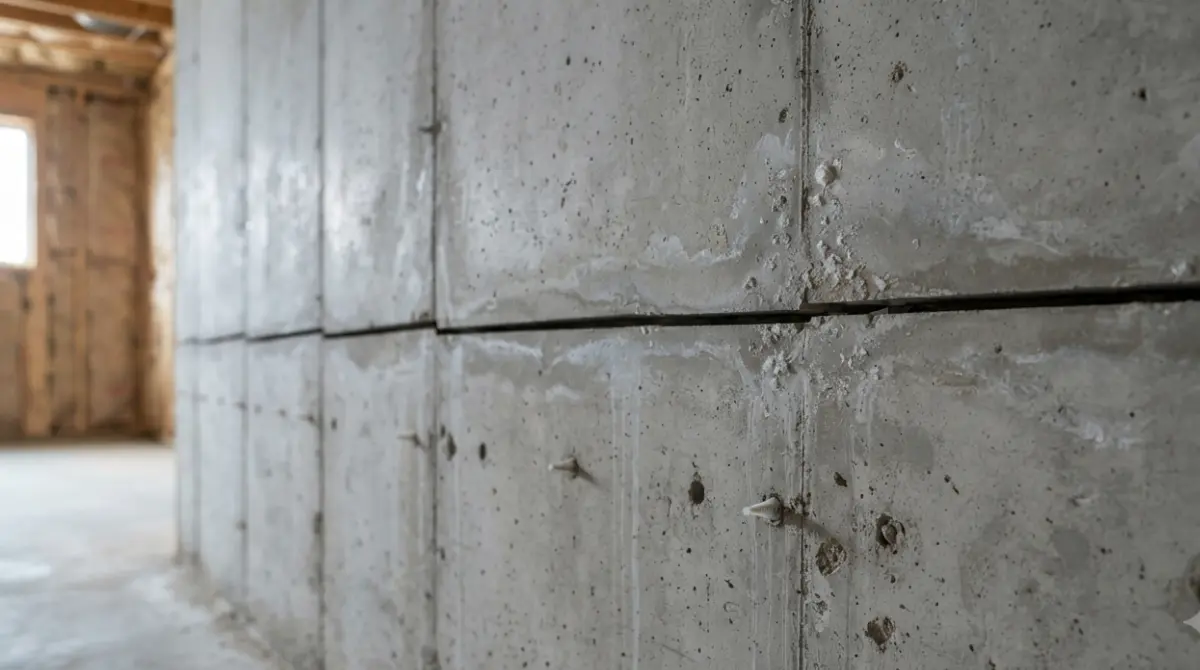
A horizontal foundation crack usually means soil or water outside is pushing the wall inward, so treat it as structural until an engineer says otherwise.
Why soil and water push walls inward
🔍 Why It Works: Soil and water press on a wall from outside. When the push exceeds the wall’s strength, it bows inward, and a U.S. Army Corps of Engineers foundation study notes cracks often end in a long horizontal fracture about two-thirds up.
📊 Tested / Spec: Water around a basement wall adds 0.43 pounds per square inch for each foot of depth, per the Missouri Department of Natural Resources.
Bowing, offset and other companion signs
Check for bowing, offset (one side of the crack sitting proud), and sticking doors. If storms make it worse, see water in a basement after rain.
Stair-step cracks: settlement or wall pressure?
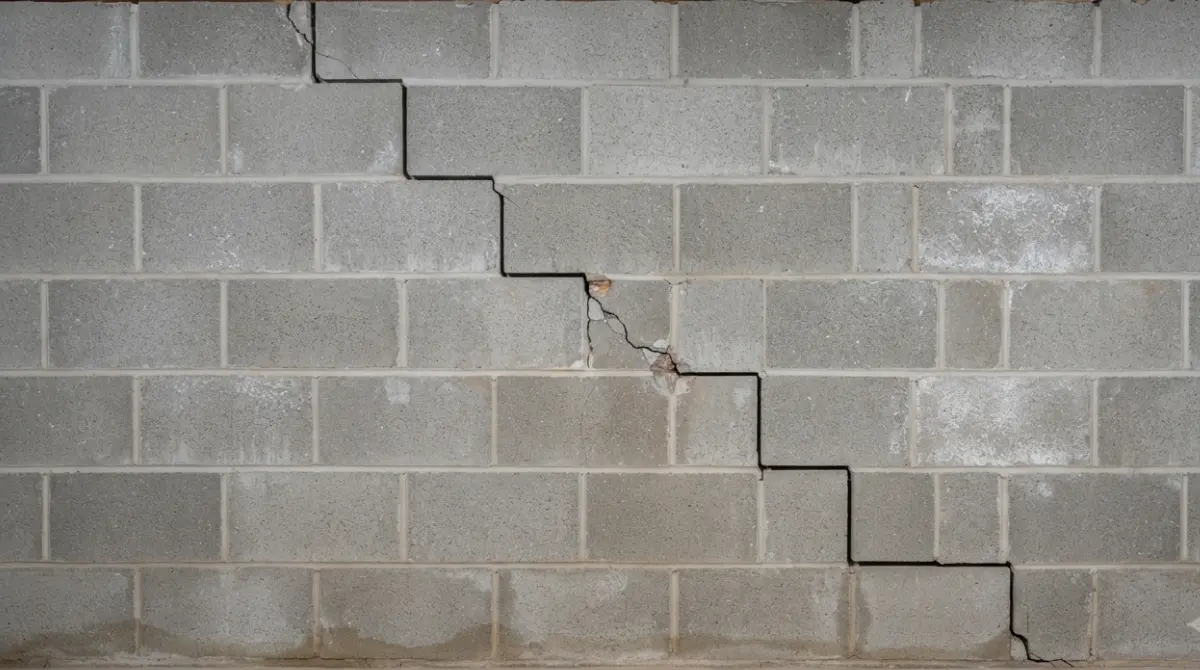
Stair-step cracks follow the mortar joints in block or brick walls and can signal either settlement or sideways pressure on the wall.
Where they show up: block and brick walls
Two causes leave this zigzag:
- Settlement, which masonry industry guidance says typically cracks masonry along the mortar joints in the settled area.
- Sideways soil or water pressure, which the Army Corps study saw producing the same pattern in block walls.
The study adds that the two are hard to tell apart, which is an engineer’s job.
Stair-step plus a horizontal crack
A stair-step crack that meets a horizontal crack or bowing suggests the wall itself is moving. For help separating settling from real problems, see signs of foundation problems versus normal settling.
Vertical cracks: usually the mildest, with exceptions
Vertical cracks are usually less severe than horizontal ones, and University of Minnesota Extension notes that concrete and block foundations usually develop some cracks.
Shrinkage vs settlement cracks
Concrete shrinks slightly as it cures, so thin vertical cracks can simply be leftovers from curing. Settlement can also produce near-vertical cracks, and those tend to run through the full thickness of the wall.
When a vertical crack stops being “normal”
A vertical crack deserves an engineer’s look if it is growing, shows offset, or leaks. Near the middle of a wall, the Army Corps study also links vertical cracks to sideways pressure.
✅ Do This: If a vertical crack leaks, ask a licensed structural engineer whether it is shrinkage or movement before anyone seals it.
How to measure and track a foundation crack
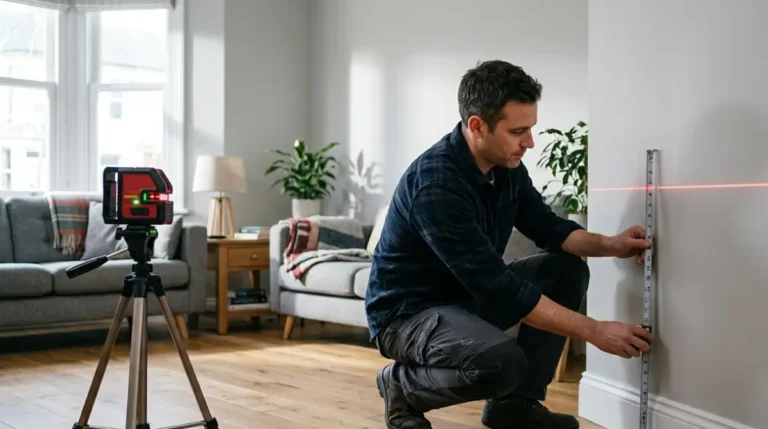
A dated log turns a scary foundation crack into information an engineer can use.
What to record: width, length, offset, date
- Mark both ends of the crack with a pencil and date them.
- Measure the widest point with a ruler or crack gauge.
- Note whether one side sits proud of the other.
- Photograph it with a ruler in frame.
- Repeat at the same spot, the same way, on a schedule you set.
Red flags that end the “watch it” plan
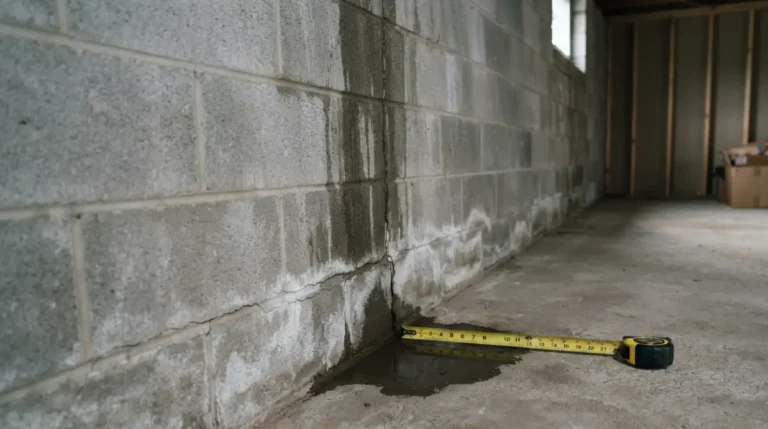
Stop monitoring and call an engineer if the wall visibly bows, the crack shows offset, it keeps widening, or water comes through. Common rules of thumb flag cracks about 1/4 inch wide, but movement matters more. Read how to tell if a basement wall crack is structural.
Cracks, leaks and radon: what sealing does (and doesn’t)
Cracks are pathways for water, humid air, and radon.
Water and humid air through cracks
🔍 Why It Works: Warm air rises and leaves the house, which lowers pressure in the basement and draws air in through cracks and other openings.
Radon entry: why to test
Radon can enter through visible and hidden cracks in any foundation type, and University of Nevada, Reno Extension says testing is the only way to know your level. The EPA, CDC and Surgeon General recommend acting at 4.0 picocuries per liter or higher.
What a surface patch can’t fix
Sealing treats the opening, not the reason it formed. If you’re weighing a patch, see sealing a basement wall crack with hydraulic cement, and ask an engineer first if the crack is horizontal, offset, or growing.
When to call a structural engineer first
Call a licensed structural engineer first if you see a horizontal crack, bowing, offset, a crack that keeps widening, or water coming through the wall.
Red flags that mean call now
An engineer can tell whether the wall is moving, and why.
Engineer or repair company: who first?
Many repair companies employ or partner with an engineer, so ask whether yours is independent of the sales team. Our foundation repair costs and who to call first guide walks through the choice.
✅ Do This: Ask for a written report that names the cause and lists repair options, and confirm the engineer’s license with your state board.
Frequently asked questions
1. Are horizontal foundation cracks always serious?
Treat horizontal foundation cracks as structural until an engineer says otherwise, because they usually reflect soil or water pushing the wall inward. Call a licensed structural engineer.
2. Are stair-step foundation cracks serious?
In block or brick walls, stair-step foundation cracks can signal either settlement or sideways pressure on the wall. Measure and log it; call an engineer if it widens.
3. Are vertical foundation cracks normal?
Vertical foundation cracks are usually less severe than horizontal ones, but growing, offset, or leaking cracks need an engineer’s look.
4. How wide can foundation cracks be before there’s a problem?
A common rule of thumb flags foundation cracks near 1/4 inch wide, but movement matters more than any single number. Log the width and call an engineer if it grows.
5. How do I know if foundation cracks are getting worse?
Measure the same spot the same way on a schedule you set, and keep dated photos with a ruler, to catch changes in foundation cracks.
6. Can foundation cracks let radon in?
Yes. Radon can enter through visible and hidden foundation cracks, and testing is the only way to know your level. Test your home’s air.
7. Can I seal foundation cracks myself?
Sealing treats the opening, not the cause, so horizontal, offset, or growing foundation cracks need an engineer’s evaluation before any patch.
8. What causes foundation cracks in block walls?
Sideways soil or water pressure and settlement are two common causes of foundation cracks in block walls, and telling them apart takes an engineer.
9. Should I call an engineer or a foundation repair company first?
Call an independent structural engineer first for serious foundation cracks, since many repair companies employ or partner with their own engineer.
10. Do foundation cracks mean my house is unsafe?
Not necessarily. Many foundation cracks are minor, and the red flags above, not the crack alone, tell you when to call a professional. When in doubt, call a licensed structural engineer.
Your next step
Whichever pattern you found, take today’s photo, measure the widest point, and start your log. If the crack is horizontal, offset, widening, or letting water in, book a licensed structural engineer before you spend money on repairs. A documented crack is far easier for anyone to evaluate than a mystery.