
Your Attic Mold Removal Guide: Costs, Causes, Safe Fixes

Attic mold removal costs $1,000–$4,000 — but the 10 sq ft DIY rule determines whether you fix it yourself or call a pro. Here’s exactly where that line falls.
Table of Contents
What to know before tackling attic mold
You climbed into your attic and spotted dark staining on the rafters — or maybe your home inspector flagged it on the report. Either way, you need two things fast: a real cost number and a clear plan.
Attic mold removal costs between $1,000 and $4,000 for most US homeowners, and whether that money comes out of your pocket or a contractor’s invoice depends entirely on what you find up there. This guide covers current 2025–2026 pricing, exactly what’s causing the problem, how to remove it safely, and how to stop it from coming back.
ℹ️ Disclaimer: This article covers general guidance for typical residential attic mold situations. For large infestations (over 10 square feet), mold involving HVAC systems, or any situation involving family members with respiratory conditions, consult a certified mold remediation professional before taking action.
For a broader understanding of how mold spreads through your home and what a full remediation plan looks like, our mold remediation diagnostic plan is the best place to start.
Attic mold removal cost: full 2025–2026 breakdown
Attic mold removal costs between $1,000 and $4,000 for most US homeowners in 2025–2026, with professionals charging $3.50 to $7.50 per square foot depending on attic size, mold severity, regional labor rates, and whether insulation must be replaced. Small surface jobs on accessible rafters sit at the low end; large infestations with contaminated insulation and structural involvement can push past $6,000.
Cost by attic size
The square footage of affected surface area — not the attic’s total floor space — drives the quote. Here’s what to expect:
| Attic Size | Affected Area (Approx.) | Cost Range | Typical Duration |
|---|---|---|---|
| Small | Under 50 sq ft | $1,000–$1,800 | 1–2 days |
| Medium | 50–150 sq ft | $1,800–$3,200 | 2–3 days |
| Large | 150–300 sq ft | $3,200–$5,500 | 3–5 days |
| Severe/Full Attic | 300+ sq ft | $5,500–$9,000+ | 5–7+ days |
Source: Angi 2025 mold remediation cost data; This Old House 2026 national pricing guide.
Cost per square foot by mold severity
Severity matters as much as size. A light surface bloom on dry lumber costs far less to treat than active, wet growth on insulation-soaked sheathing.
| Severity Level | Per Sq Ft Cost | What Drives the Price Up |
|---|---|---|
| Light (surface only) | $3.50–$5.00 | Basic fungicide + scrubbing only |
| Moderate | $5.00–$7.50 | Containment, HEPA scrubbing, encapsulant |
| Severe | $7.50–$12.00 | Full containment, insulation removal, clearance test |
| Black mold (Stachybotrys) | $10.00–$25.00 | Hazmat protocols, certified disposal, air sampling |
Source: Modernize 2025 mold removal cost data.
Additional cost factors: inspection, insulation, repairs
A mold inspection adds $200–$600 before work begins — and it’s worth it. Air quality testing runs $300–$800. Post-remediation clearance testing costs $150–$500 and is non-negotiable if you’re selling the home. Insulation replacement adds $1,500–$3,500 depending on the attic’s square footage and insulation type.
Does homeowners insurance cover attic mold?
Insurance covers attic mold only when it results from a sudden, covered peril — a burst pipe or storm-damaged roof, for instance. Slow leaks, condensation buildup, and poor ventilation are almost always excluded. For the full picture on what your policy likely does and doesn’t cover, read our guide to when homeowners insurance covers mold remediation.
💡 Expert Note: Call your insurer before scheduling remediation. If coverage applies, starting work without pre-authorization can void your claim entirely.
What causes mold to grow in your attic
Mold doesn’t appear randomly. If it’s in your attic, one of four moisture problems is feeding it — and fixing the mold without fixing the source means it comes back within a season.
Poor attic ventilation and trapped moisture
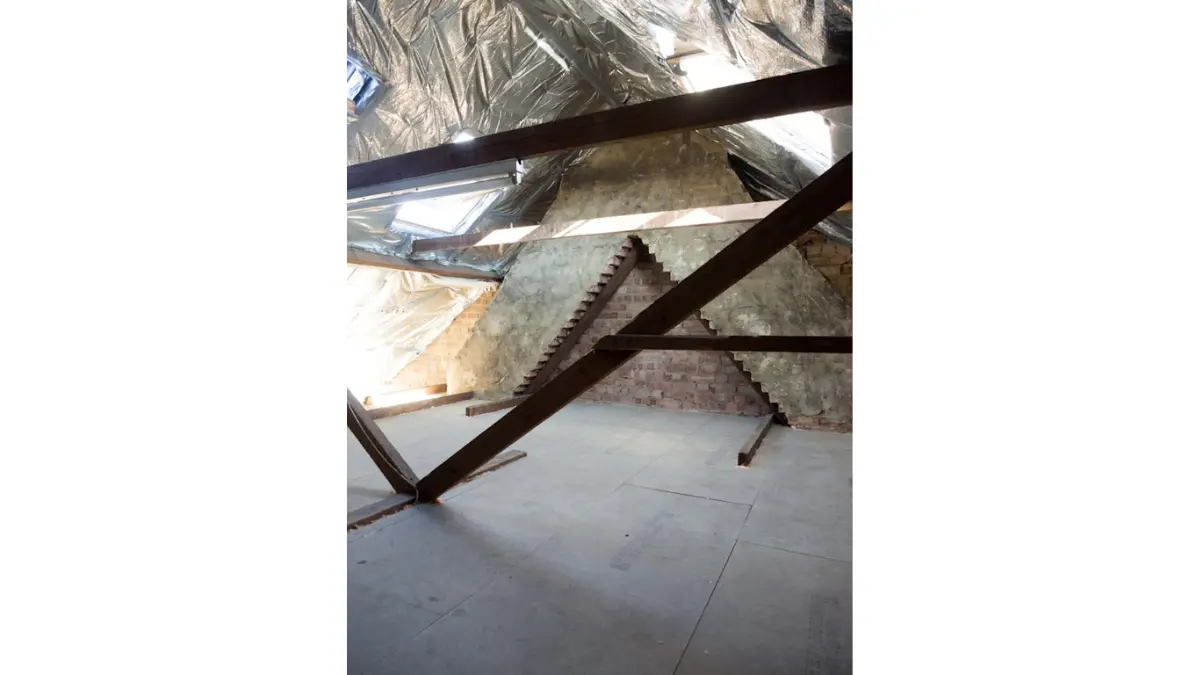
Poor attic ventilation is the leading cause of attic mold in US homes, and it’s the one most homeowners never suspect. Warm, humid air from your living space rises continuously through ceiling gaps, recessed light fixtures, and attic hatches. When that air hits cold roof sheathing in winter, it condenses — and wood that stays above 19% moisture content will grow mold within days.
A properly ventilated attic needs 1 square foot of net free air for every 300 square feet of floor space, split evenly between intake (soffit vents) and exhaust (ridge or gable vents). Homes with plenty of ridge vents but blocked soffits are the most common mold culprits. If your staining is concentrated along the ridge or upper sheathing, ventilation imbalance — not a roof leak — is almost certainly your problem.
Roof leaks, ice dams, and flashing failures
Staining that follows a single rafter run or clusters near a valley or chimney almost always points to a roof leak. Flashing failures around chimneys, skylights, and dormers allow water to drip onto sheathing and pool — creating a perfect, enclosed environment for mold. Ice dams in northern climates force snowmelt under shingles through the same mechanism. If you’re seeing concentrated staining near the eaves, check our guide on signs you need a new roof before spending money on remediation alone.
Improperly vented bathroom and kitchen exhaust fans
This is the cause that surprises homeowners the most. Bathroom and kitchen exhaust fans vented directly into the attic — instead of through the roof — dump warm, humid air right where you don’t want it. A single bathroom fan venting into the attic can raise localized humidity by 15–20%. If the staining is directly above a bathroom, this is your cause.
How to tell if your attic already has mold
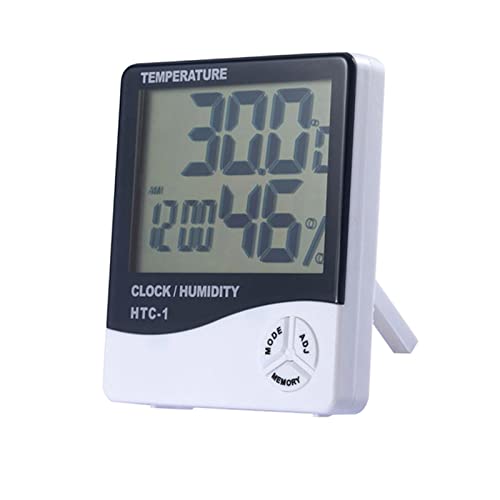
- 【Multi Function】Accurate hygrometer digital thermometer displays high and low temperature & humidity;At the same time, r…
- 【Easy to Use and Install】This indoor room thermometer features a kickstand and hanging hole, can be placed in vertical o…
- 【12/24 Hour, °F/°C Selector】12/24 hour display switching function; ℃ /℉ switching function. Measuring Temperature Range:…
Use a flashlight to check these specific locations:
- Roof sheathing (the underside of the roof deck) — look for dark gray, black, or greenish staining; fuzzy texture means active growth
- Rafter edges and ridge board — consistent staining along the length indicates ventilation-driven condensation
- Insulation surface near the attic hatch — check for discoloration, which indicates humid air drafting in through the hatch seal
- Around any exhaust fan duct penetration — concentrated staining in a 2–3 foot radius indicates the fan is dumping into the attic✅ Pro Tip: A $20 digital hygrometer placed in your attic will tell you within 24 hours whether you have a moisture problem. Readings above 60% RH consistently indicate an active moisture source that will grow mold even after remediation.
How to remove attic mold: step-by-step process

- NIOSH APPROVED: For at least 95 percent filtration efficiency against certain non-oil based particles
- COMPATIBLE: With a variety of protective eyewear and hearing protection
- ADJUSTABLE NOSECLIP: Reduces potential for eyewear fogging and helps provide a custom and secure seal
⚠️ Warning: The steps below apply only to surface mold covering less than 10 square feet on non-porous materials. For larger areas, black mold (Stachybotrys), or mold involving contaminated insulation, stop here and call an IICRC-certified remediation contractor. Proceeding without containment on large jobs spreads spores to your living area — which turns a $2,000 attic job into a $15,000+ whole-house problem.
To remove attic mold safely, begin by identifying and stopping the moisture source first — skipping this step means the mold will return within months regardless of what products you use.
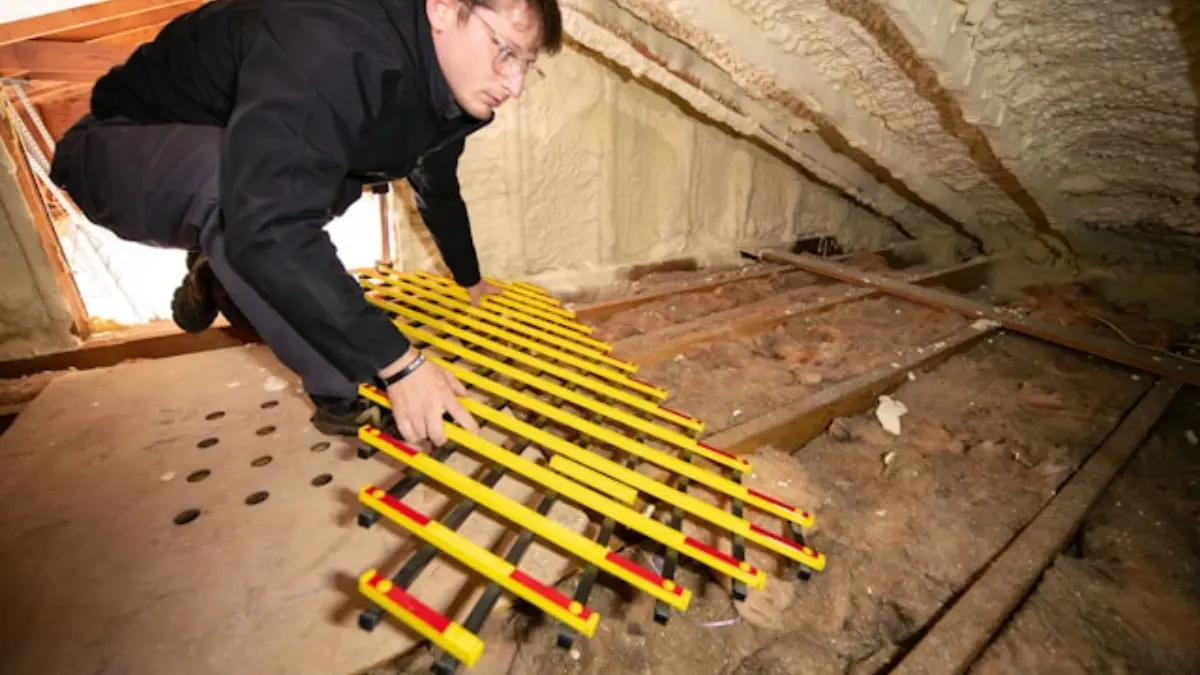
- Fix the moisture source. Repair any roof leak, redirect any bath fan duct, or improve soffit/ridge ventilation before touching the mold. Any contractor who skips this step is taking your money without solving your problem.
- Gather your safety gear. You need an N95 or P100 respirator (not a dust mask), nitrile gloves, safety goggles, and a disposable Tyvek coverall. Wear old clothes underneath — bag them with the contaminated materials when done.
- Set up containment. Seal the attic hatch with 6-mil plastic sheeting and tape. Turn off your HVAC system and cover any ducts near the work area. Place a box fan in an attic vent opening to exhaust air out — not recirculate it through the house. Tape plywood over the opening edges so spores can’t blow back in.
- Wet the surface before scrubbing. Mist the moldy area with water from a garden sprayer to suppress airborne spores before disturbing growth. Dry scrubbing launches spores into the air where they travel everywhere.
- Apply an EPA-registered fungicide. Spray the affected surface with an EPA-registered mold killer — RMR-86 and Concrobium Mold Control are two products used by professional remediation crews for exactly this application. Let the product dwell for the manufacturer-specified time (typically 5–10 minutes for RMR-86, 10–15 for Concrobium) before scrubbing with a stiff-bristle brush. For black mold staining on wood, RMR-86 will bleach the stain in under 60 seconds — the surface appearance change is dramatic and immediate.
- Bag all contaminated materials immediately. Wipe residue into doubled 6-mil garbage bags, seal with tape, and label as mold debris. Insulation that has visible growth cannot be remediated — it must be bagged and disposed of. Your local waste management authority determines disposal requirements.
- Apply encapsulant and verify. After the surface dries completely (24–48 hours minimum), apply a mold encapsulant — a sealer that bonds to wood and prevents any residual spores from reactivating. For attic wood, oil-based encapsulants perform significantly better than water-based in humid conditions.

- [8 x 26 FT Supply Farm Plastic]: With its generous 8ft x 26ft size, this greenhouse plastic sheeting can easily cover la…
- [Quality Greenhouse Plastic Covering]: This 6 mil thick greenhouse plastic sheeting is made from tough, tear-resistant p…
- [Optimum Light Transmission for Nice Crop Growth]: The transparent plastic film allows for excellent light transmission,…

- Total Indoor & Outdoor Stain Solution System: Tackle stubborn mold and mildew stains anywhere with 2 targeted, pro-stren…
- Rapid Restore & Refresh Kit: Eliminate new and deeply embedded stains in as little as 15 seconds with ready-to-use spray…
- Ready to Revive Every Surface: Tough on discoloration yet gentle on grout, tile, and most building materials, this kit r…
What professionals do differently
A certified professional adds three steps the DIY process lacks: negative air pressure containment (an industrial air scrubber with HEPA filtration keeps the work zone at lower pressure than the rest of the house, so spores can’t migrate), soda blasting or dry ice blasting for large surface areas, and a post-remediation clearance air sample to confirm the job is complete. For a detailed breakdown of how professionals approach the mold removal process for specific surface types, that guide covers each material separately.
DIY vs. professional attic mold removal: how to decide
The EPA’s rule is clear, and it draws the line at a specific measurement — not a vague sense of severity.
The EPA recommends DIY mold removal only for areas under 10 square feet on non-porous surfaces. Beyond that threshold, the risk of spreading spores without proper negative air pressure containment typically exceeds any money saved. Homeowners who DIY jobs over 10 square feet and fail clearance testing end up paying full professional rates on top of the materials they already spent.
The EPA’s 10 sq ft rule explained
Ten square feet is roughly the size of a standard interior door. If the visible mold on your attic sheathing is larger than that, or if it has spread to insulation, look-up lumber, or the back of your roof deck across more than two rafter bays, you’re past the DIY threshold. Here’s exactly when DIY mold removal is the right call — including the surface-by-surface breakdown of what you can and can’t safely handle yourself.
Situations where DIY almost always fails
| Situation | Why DIY Fails | Call a Pro? |
|---|---|---|
| Mold on insulation batts | Insulation must be removed, not treated | ✅ Yes |
| Active roof leak not yet repaired | Mold returns within 60 days | ✅ Yes — fix leak first |
| Black mold (Stachybotrys) | Requires hazmat-level PPE and disposal | ✅ Yes |
| Anyone in home has asthma/allergies | Spore exposure risk too high during process | ✅ Yes |
| More than 2 rafter bays affected | Containment is not achievable without equipment | ✅ Yes |
| Post-remediation clearance test needed | DIY has no path to certified clearance | ✅ Yes |
What to look for in a certified contractor
Ask every contractor these five questions before signing anything:
- Are you IICRC-certified as an Applied Microbial Remediation Technician (AMRT)?
- Will you provide a written scope of work before starting?
- Do you use negative air pressure containment?
- Will you provide a post-remediation clearance air sample report?
- Does your work carry a written warranty?
Any contractor who hesitates on question 3 or 4 is not performing remediation to industry standard. For a full contractor vetting checklist, our guide on how to find a mold remediation company you can actually trust covers every red flag to watch for.
Is attic mold dangerous? Health risks explained
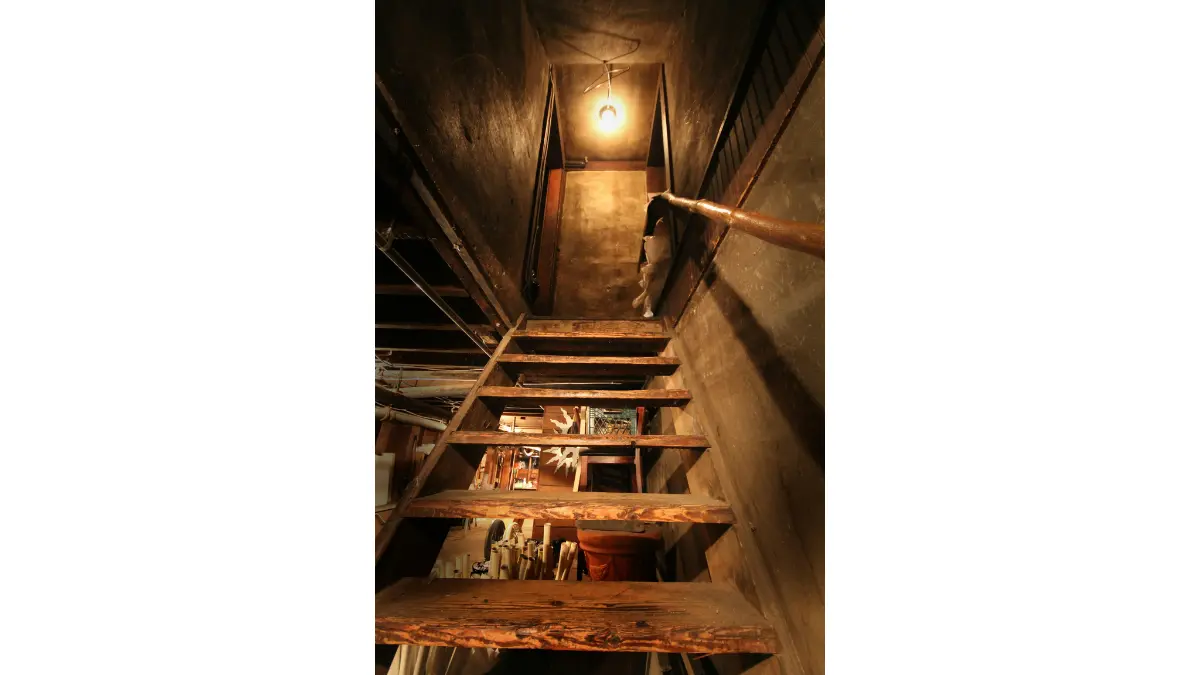
Attic mold is dangerous even when it’s completely hidden from daily view. Mold spores migrate through ceiling gaps, recessed lighting fixtures, and HVAC ductwork into the living areas below, where they can trigger respiratory problems, aggravate asthma, and cause chronic allergy symptoms in otherwise healthy adults.
Common attic mold species and their health effects
| Species | Appearance | Health Risk |
|---|---|---|
| Cladosporium | Olive-green to black, powdery | Low–Moderate: nasal irritation, eye irritation |
| Aspergillus | White, yellow, or green, velvety | Moderate–High: respiratory infection risk, especially in immunocompromised individuals |
| Penicillium | Blue-green, spreads rapidly | Moderate: chronic allergy symptoms, sinus issues |
| Stachybotrys (black mold) | Black, slimy when wet | High: mycotoxin production, severe respiratory effects |
According to the CDC’s guidance on mold and respiratory health, people with asthma, chronic lung conditions, or weakened immune systems face heightened risk from indoor mold exposure — and should not be present in the home during any remediation work.
How mold travels from the attic into living spaces
The stack effect — warm air rising from living spaces through every gap in your ceiling — doesn’t just carry moisture up into the attic. It creates airflow paths that carry mold spores back down. Recessed lights, plumbing chases, and unsealed attic hatches are the primary migration routes. Once spores enter your HVAC return air, they distribute through every room in the house within hours.
⚠️ Warning: If any family member is experiencing unexplained respiratory symptoms, chronic headaches, or persistent fatigue that has no obvious cause, mold exposure may be a contributing factor. Consult a physician and schedule a professional mold inspection before attempting any remediation.
Attic mold and your home’s resale value
An active mold disclosure can reduce offers on a home sale by 10–20%, and in some states, undisclosed known mold is grounds for rescission of a sale contract. Buyers’ inspectors are specifically trained to check attics. Addressing attic mold remediation before listing — and obtaining a clearance report — converts a liability into a selling point. Controlling indoor humidity levels throughout your home is also a factor buyers increasingly evaluate during inspections.
How to prevent attic mold from coming back
Fixing the mold without fixing the conditions that created it is the most expensive mistake attic homeowners make.
💡 Expert Note: “The most common reason attic mold returns is that homeowners treat the visible growth but never address the airflow. Proper ventilation is the real cure — the mold treatment is just the cleanup.” — Patricia Walsh, Indoor Air Quality & Home Health Consultant
Fix attic ventilation: soffit, ridge, and exhaust fans
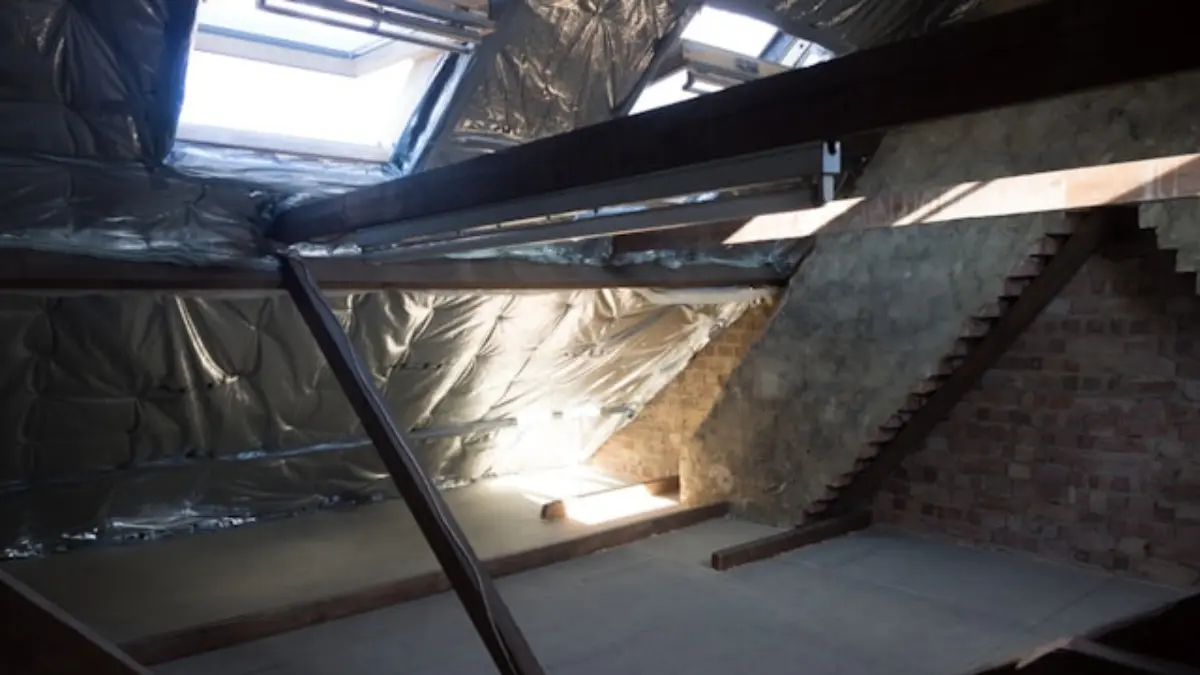
Soffit-to-ridge ventilation is the gold standard for attic moisture control. Every 300 square feet of attic floor space needs 1 square foot of net free air, split evenly between intake at the soffits and exhaust at the ridge. If your soffits are blocked with insulation pushed too close to the eaves — a common installation mistake — mold will return regardless of what you spray on it.
A solar-powered attic exhaust fan adds active ventilation on top of passive flow, reducing peak humidity spikes by up to 15% during humid summer months. For a room-by-room look at how remediation costs scale with the extent of moisture damage, our mold remediation cost by room guide is a useful planning reference. For a deeper look at the ventilation upgrades that make the biggest difference, see our full guide to improving attic airflow.
Keep attic humidity below 50% year-round
According to the EPA’s mold prevention guidelines, keeping indoor relative humidity between 30% and 50% and repairing water damage within 24–48 hours of occurrence prevents mold colonies from establishing. A digital hygrometer mounted in your attic (aim for the center of the space, away from any vent openings) gives you a real-time baseline. Readings consistently above 60% RH mean your moisture source is still active — even if you can’t see it yet.
Annual attic inspection checklist (fall and spring)
Run through this checklist every October and every April:
- Check all soffit vents for blockage from insulation or debris
- Inspect ridge vent for wasp nests, debris, or compression damage
- Confirm all bathroom and kitchen exhaust fan ducts terminate outside the roof — not into the attic
- Look for fresh water stains on sheathing after the first heavy rain of the season
- Check attic hatch seal — weatherstripping should compress evenly with no visible gaps
- Verify hygrometer reading — any sustained reading above 55% RH triggers a ventilation inspection
When to consider re-insulation as a prevention strategy
Old insulation — particularly fiberglass batts that have absorbed moisture repeatedly — holds mold spores in the fibers even after remediation. If your remediation contractor found mold growing on the insulation surface or beneath it, replacing that insulation is not optional. Spray foam air sealing at the attic floor combined with new blown-in insulation is the most durable long-term solution, because it eliminates the air leakage paths that carry humid air into the attic in the first place.
Attic mold removal: frequently asked questions
1. How much does attic mold removal cost?
Attic mold removal costs between $1,000 and $4,000 for most homeowners, with a national average of $3.50 to $7.50 per square foot. Small surface jobs on accessible rafters can run as low as $500 to $1,500. Severe infestations involving contaminated insulation, full containment, and post-remediation clearance testing can exceed $6,000.
2. How much does attic mold remediation cost per square foot?
Mold remediation costs $3.50 to $7.50 per square foot for typical attic work, rising to $10 to $25 per square foot for black mold (Stachybotrys). Light surface treatment on dry lumber sits at the low end; jobs requiring insulation removal, HEPA scrubbing, and certified air sampling clearance push the per-square-foot cost toward the high range.
3. Is attic mold covered by homeowners insurance?
Homeowners insurance covers attic mold only when it results from a sudden, covered event — like a storm-damaged roof or burst pipe. Mold caused by slow leaks, condensation buildup, or ventilation failure is almost always excluded as a maintenance issue. Review your policy carefully and call your insurer before starting any remediation work to preserve any potential coverage.
4. Can I remove attic mold myself?
The EPA recommends DIY mold removal only for affected areas under 10 square feet on non-porous materials. If your attic mold covers more than one or two rafter bays, has spread to insulation, or appears black and slimy, hire a certified professional. Failed DIY attempts on larger jobs almost always result in paying full professional rates on top of wasted materials.
5. How do you get rid of mold in the attic?
To get rid of mold in the attic, fix the moisture source first, then set up plastic containment over the attic hatch, put on an N95 respirator and full PPE, wet the surface to suppress spores, apply an EPA-registered fungicide like RMR-86 or Concrobium, scrub with a stiff brush, bag all debris, and apply an encapsulant after the surface dries for 24–48 hours.
6. What causes mold in the attic?
Attic mold is most commonly caused by inadequate soffit-to-ridge ventilation, bathroom or kitchen exhaust fans venting directly into the attic rather than through the roof, and active roof leaks around flashing, valleys, or skylights. The condensation mechanism — warm interior air hitting cold roof sheathing in winter — is the underlying driver in the vast majority of residential cases.
7. Is attic mold dangerous to your health?
Attic mold is dangerous even when hidden, because spores travel through ceiling gaps, recessed lights, and HVAC ducts into living areas. According to the CDC, people with asthma, chronic lung disease, or compromised immune systems face heightened respiratory risk. Stachybotrys (black mold) produces mycotoxins that pose serious health risks and require certified professional remediation, not DIY treatment.
8. How long does attic mold remediation take?
Attic mold remediation takes one to two days for small jobs under 50 square feet, two to three days for medium infestations, and three to seven days or more for large or severe cases involving full attic containment, insulation removal, and soda blasting. Post-remediation clearance testing adds one to two additional days before the area can be considered fully cleared.
9. What kills mold in an attic?
EPA-registered fungicides are the correct choice for killing attic mold. RMR-86 is an instant mold stain remover effective on wood sheathing; Concrobium Mold Control kills and prevents regrowth with no bleach. Both are used by professional remediation crews. For ongoing prevention, a mold encapsulant applied after treatment seals any residual spores and significantly reduces the chance of recurrence.
10. How do I know if my attic has mold?
Signs of mold growth in the attic include dark gray, green, or black staining on roof sheathing or rafters, a persistent musty odor strongest near the attic hatch, fuzzy surface texture on wood, and visible water stains on insulation. A digital hygrometer reading consistently above 60% RH in the attic is a strong indicator of active moisture conditions that will produce mold if not addressed.
11. What type of mold is commonly found in attics?
Cladosporium is the most common attic mold species in US homes, appearing as olive-green to black powdery growth on wood sheathing. Aspergillus and Penicillium are also frequent, especially in homes with recurring moisture issues. Stachybotrys chartarum (black mold) is less common but the most serious — it grows only on consistently wet cellulose materials and produces mycotoxins that require professional remediation.
12. Does attic mold affect home resale value?
Attic mold can reduce home sale offers by 10% to 20%, and in many states, known mold must be disclosed to buyers under residential property disclosure laws. Buyers’ inspectors specifically check attics. Completing remediation before listing and obtaining a certified clearance report converts a material defect into a non-issue — and is far less costly than a price reduction negotiated at closing.
13. How do I prevent mold from coming back in my attic?
To prevent attic mold from returning, fix the underlying moisture source first, ensure soffit-to-ridge ventilation meets the 1-square-foot-per-300-square-feet standard, confirm all exhaust fans vent through the roof exterior, keep attic humidity below 50% year-round, and run an inspection checklist every fall and spring. Insulation that grew mold should be replaced — it cannot be reliably remediated in place.
14. Do I need a mold inspection before remediation?
A mold inspection ($200–$600) is not legally required before remediation, but it is strongly recommended for any situation where the extent of growth is unclear, where mold is suspected behind insulation, or where you plan to submit an insurance claim. An inspector’s written report documents the scope of the problem, identifies the species involved, and provides the scope of work a contractor must address.
15. How do professionals remove attic mold step by step?
Professional attic mold remediation follows a certified process: (1) inspect and document the affected area, (2) set up negative air pressure containment with HEPA air scrubbers, (3) remove and bag contaminated insulation, (4) apply EPA-registered biocide and scrub or blast surfaces, (5) apply encapsulant, (6) restore containment barriers, and (7) conduct a post-remediation clearance air sample. The clearance test is what separates professional remediation from DIY treatment.
16. What is the difference between mold removal and mold remediation?
Mold removal refers to cleaning visible mold off a surface — the physical act of scrubbing or treating growth you can see. Mold remediation is a complete process: it identifies the moisture source, removes contaminated materials, treats affected surfaces, applies encapsulant, and verifies the result through clearance testing. Removal addresses the symptom; remediation addresses the system. For a related topic, see our guide to bathroom mold removal for grout, caulk, and walls.
17. When should I call a professional for attic mold?
Call a professional for attic mold removal when the affected area exceeds 10 square feet, when insulation is visibly contaminated, when any household member has a respiratory condition, when the mold appears black and slimy (Stachybotrys), when you’ve already tried DIY treatment and the mold returned, or when you need a written clearance report for a home sale. For complex multi-room situations, our guide on crawl space mold removal costs and safe next steps addresses similar professional decision points.
Your attic mold action plan
You now have everything you need to handle this the right way.
Act within 48 hours: your checklist
The EPA recommends addressing water damage within 24–48 hours to prevent mold from establishing. Use this to move immediately:
- Identify the moisture source — ventilation, roof leak, or misdirected exhaust fan
- Measure the affected surface area with a tape measure
- Under 10 sq ft on dry wood? Proceed with DIY using proper PPE
- Over 10 sq ft, or insulation involved? Get three quotes from IICRC-certified contractors
When professional help is non-negotiable
If any household member has respiratory issues, if the growth is black and slimy, or if you’ve already treated this attic once and the mold came back — stop and call a certified professional. Our guide on what to expect when hiring a mold remediation company will help you ask the right questions and avoid overpaying.
Related Articles
 Mold Remediation
Your Realistic Mold Remediation Timeline, Day by Day
June 19, 2026 Mold Remediation
If You’ve Spotted Garage Mold, Here’s Your Fix
June 16, 2026 Mold Remediation
Bathroom Mold Removal: Grout, Caulk, and Walls Fixed
May 13, 2026 Mold Remediation
Black Mold Removal: Steps for Each Surface Type
May 7, 2026 Mold Remediation
The Safe Way to Remove Mold from Wood and Studs
May 23, 2026 Mold Remediation
Found Mold After Flooding? Here’s Exactly What to Do Now
June 15, 2026 Mold Remediation
What DIY Mold Removal Really Costs—and When to Call a Pro
June 18, 2026 Mold Remediation
Your Real Mold Remediation Cost Room by Room
May 5, 2026 Mold Remediation