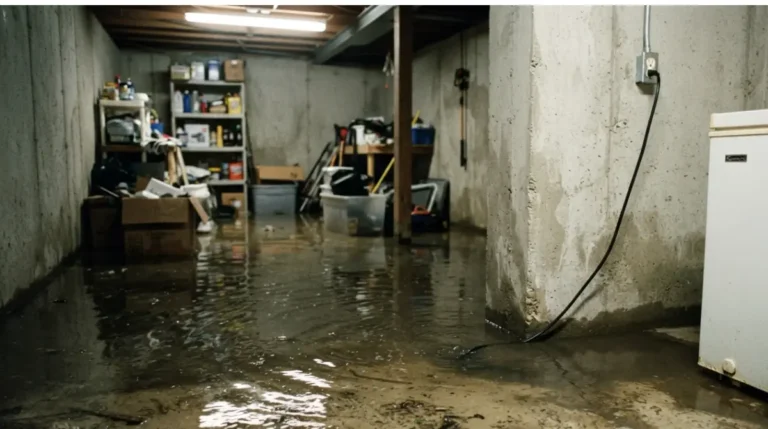
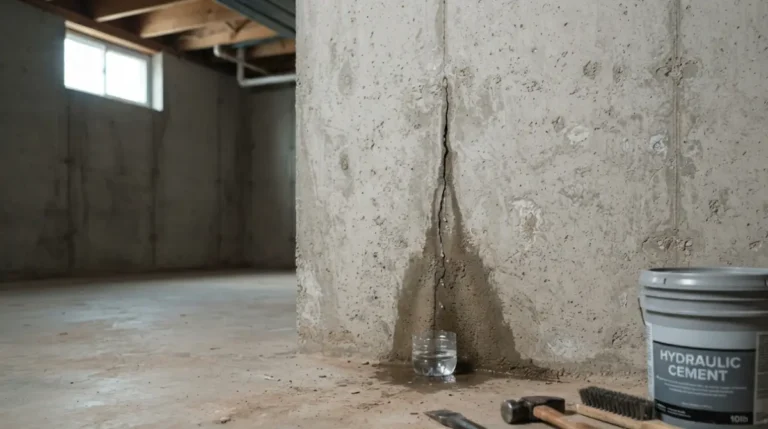
The Right Way to Hold the Ideal Basement Humidity Level

Basement humidity reads higher than upstairs because cool air holds less moisture. Here’s the 30–50% target and why winter calls for less.
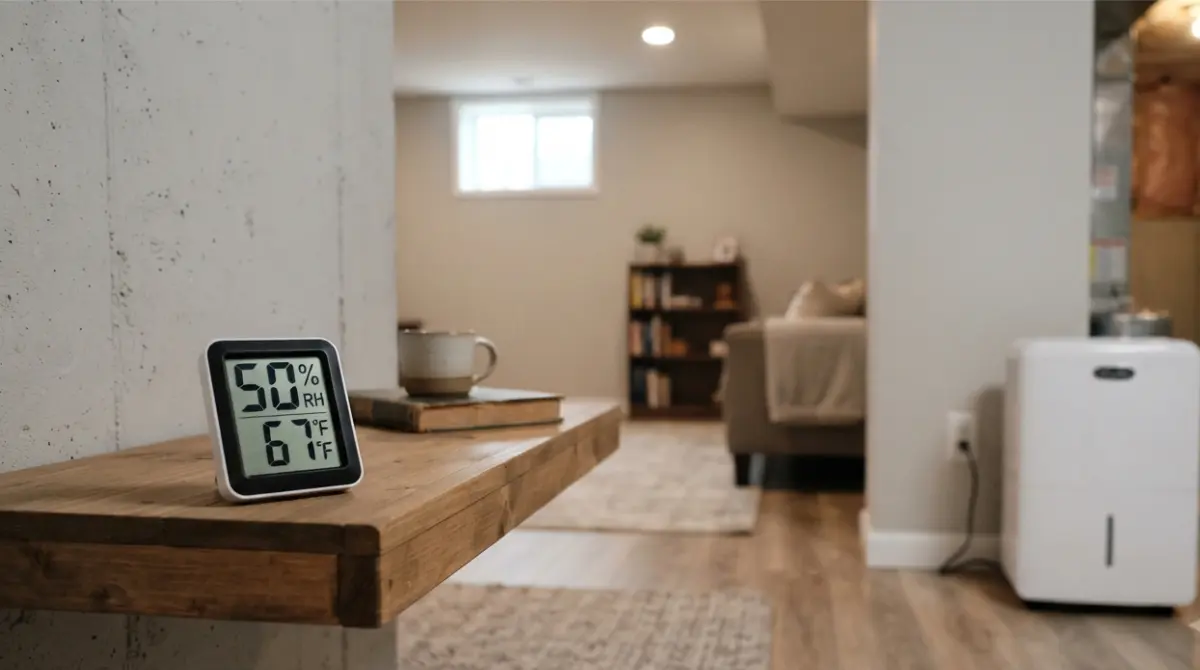
Table of Contents
What humidity should a basement be? The short answer
Keep basement humidity between 30% and 50%, and never let it sit above 60%. That range comes from EPA’s mold and moisture guidance, which applies to every indoor space. Basements are simply where it’s hardest to hold.
The 30–50% target and the 60% line
Treat 50% as your ceiling and 60% as the point where moisture problems become likely. Below 30%, the air is too dry, so “under 50%” never means “as low as possible.”
Which section answers your reading
- Just bought a hygrometer? Start with how to measure it properly.
- Already have a number? Jump to the reading table.
- Dehumidifier running nonstop and the number won’t drop? Go straight to the final section, because that’s usually a water problem, not an air problem.
ℹ️ Safety Note: Persistent high humidity can support mold growth, which may affect people with allergies or asthma. This guide covers monitoring and prevention only. For visible mold, active seepage, or electrical concerns, hire a certified mold remediation professional, a waterproofing contractor, or a licensed electrician, and check any dehumidifier against current CPSC recalls.
Why your basement reads more humid than upstairs
Your basement often holds similar moisture to the rest of the house, just in cooler air.
Cool air, same moisture, higher RH
🔍 Why It Works: Relative humidity compares the water vapor in the air to the most that air can hold at its temperature. Cooler air holds less, so the same moisture reads as a higher percentage below grade. When humid air touches a cold foundation wall or pipe, it can condense, the same reason a cold glass sweats.
Where the extra moisture comes from
Humid outdoor air, indoor laundry drying, unvented dryers, and water seeping through walls or floors all add to the load. If the space also smells stale, here’s what that musty basement smell usually means.
How to measure basement humidity so the number is real
A cheap digital hygrometer gives you a truer answer than your nose.
Where to put the hygrometer
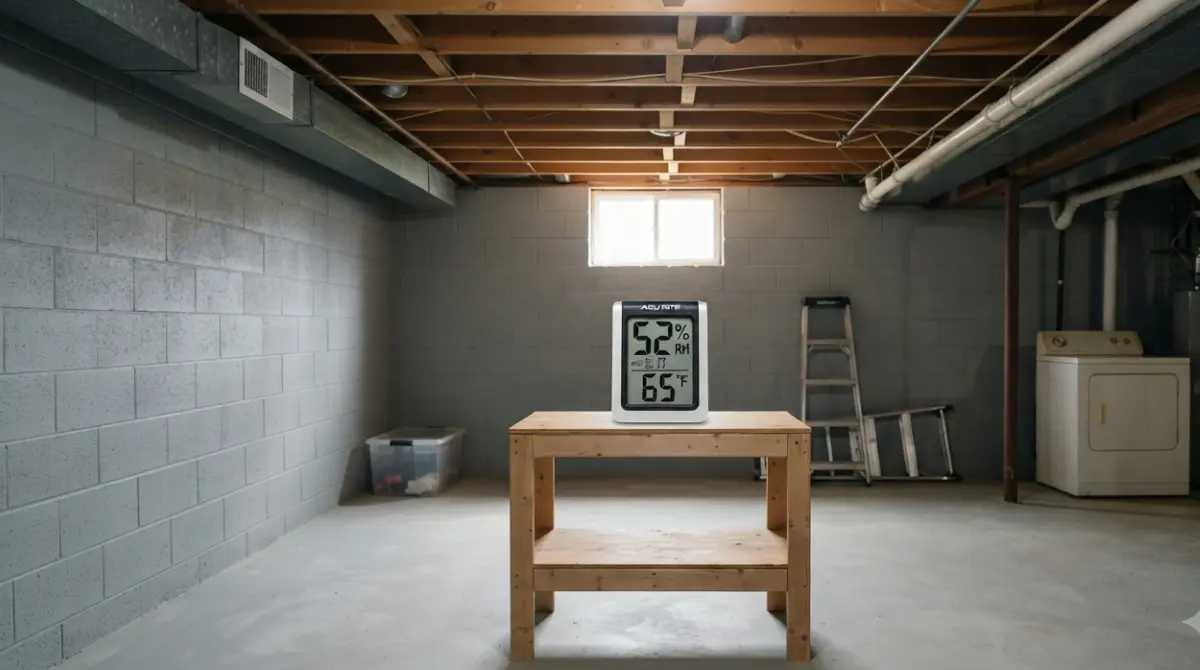
- Buy a hygrometer. EPA notes these meters typically cost $10–$50 at hardware stores.
- Place it near the middle of the basement, away from vents, windows, and the dryer.
- Let it adjust to the room before you trust the first reading.
If your dehumidifier’s humidistat doesn’t show an actual RH number, ENERGY STAR recommends buying a separate hygrometer to monitor it.
How long to watch it before deciding
Log a morning and an evening reading for a week, plus one after heavy rain. One reading tells you the moment; a week tells you the pattern.
What your basement humidity reading means (and what to do)
Match your week of readings to the band below, then take that row’s action.
| Reading (RH) | What it means | What to do | Key Detail |
|---|---|---|---|
| Under 30% | Too dry | Turn off or raise the dehumidifier | Below EPA’s ideal range |
| 30–50% | On target | Keep monitoring | EPA’s ideal range |
| 50–60% | Drifting high | Lower the setting; close windows | Still under EPA’s 60% line |
| Over 60% | Problems likely | Dehumidify and find the source | EPA: condensation likely |
| 75%+ sustained | Very damp | Check unit sizing, then find the water | ENERGY STAR’s “very damp” band |
Under 30%: too dry
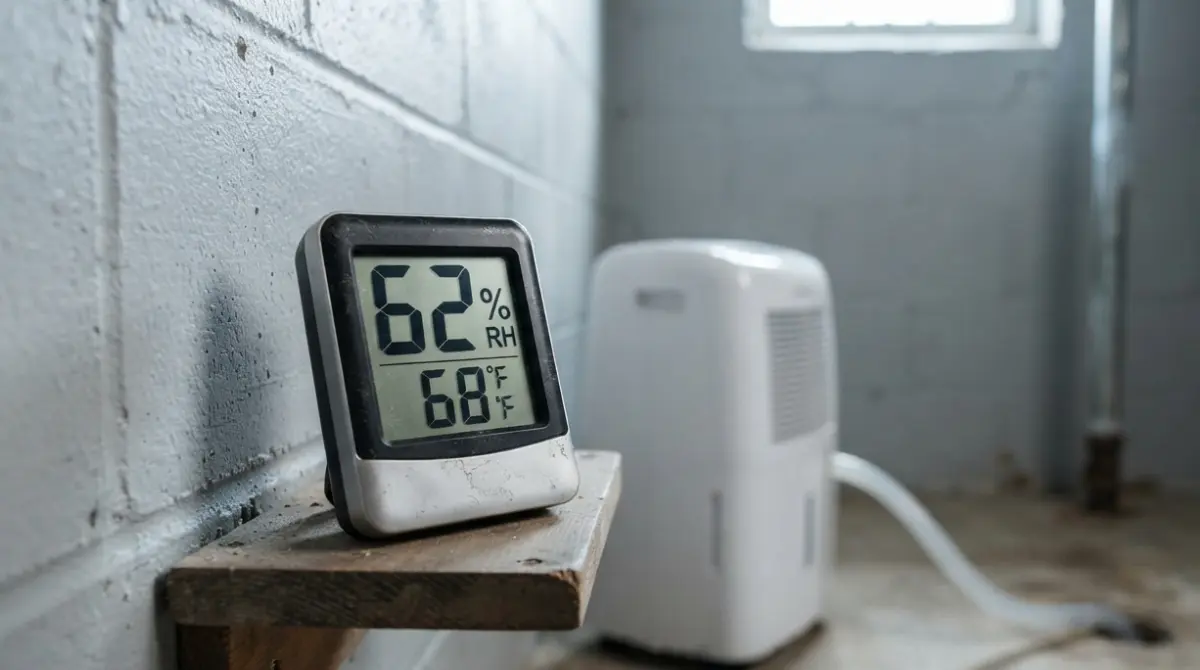
Stop dehumidifying, because you’re below the range EPA considers ideal.
30–50%: hold steady
EPA notes that low humidity also discourages dust mites and cockroaches.
50–60%: tighten up
Drop your setting a few points and keep doors and windows closed while the unit runs.
Over 60%: act now
EPA’s mold guidance for buildings says humidity above 60% is likely to cause condensation, which can lead to mold.
Summer vs. winter: adjusting your basement target
The right dehumidifier setting shifts with the season.
Summer: set it at 50% or a bit lower
Set the humidistat at or just below 50%, keep windows closed while it runs, and confirm your hygrometer follows. If it doesn’t, sizing or a water source is the problem.
Winter: watch windows, not just the dial
For colder climates during heating season, ENERGY STAR recommends 30–40% RH to prevent window condensation. Water beading on windows or pipes means it’s still too high. If wetness on a wall has you guessing, run the condensation-versus-seepage test.
⚠️ Watch Out: Below 65°F, frost can form on a dehumidifier’s coils and stop it from removing moisture. ENERGY STAR suggests choosing a model rated for lower temperatures or one with an anti-frost sensor.
Choosing a dehumidifier that can actually hold 50%
Most units that “can’t keep up” are undersized for how damp the space is.
Size by square footage and dampness
📊 Tested / Spec: ENERGY STAR’s dehumidifier sizing chart recommends minimum capacities in pints per day:
| Condition | RH before dehumidifying | Under 2,000 sq ft | Over 2,000 sq ft |
|---|---|---|---|
| Slightly to moderately damp | 50–75% | 20–30 | 30+ |
| Very damp | 75–90% | 25–40 | 40+ |
| Wet (sweating walls, seepage) | 90–100% | 30–50 | 50+ |
Source: ENERGY STAR buying guidance.
ENERGY STAR advises oversizing rather than undersizing. Capacity ratings have also changed, so compare current labels against this chart rather than against an old unit’s number.
Drain hose, pump, and the recall check
Run a hose to a floor drain or sump if you can. If the drain sits higher than the unit, look for a built-in pump. Plug into a properly grounded outlet and keep hoses away from cords.
⚠️ Watch Out: CPSC warns of continued fire risk from recalled Gree-made dehumidifiers, which were sold under several brand names. Check older units against CPSC’s dehumidifier recall list; if yours is listed, unplug it and contact the manufacturer.
For what a dehumidifier can and can’t do about mold, see how a dehumidifier prevents mold without killing it.
When 50% won’t hold: it’s water, not air
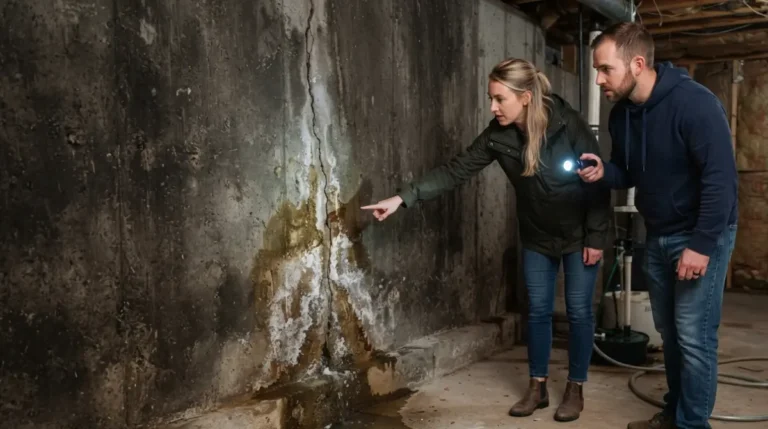
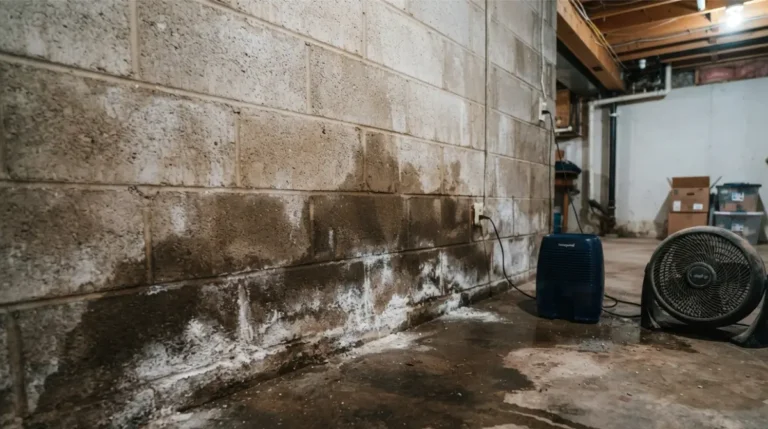
If a correctly sized unit runs constantly and readings stay above 60%, moisture is entering faster than it can be removed.
Signs moisture is coming through the structure
- Damp spots on walls or floors that return after drying
- Readings that spike after rain
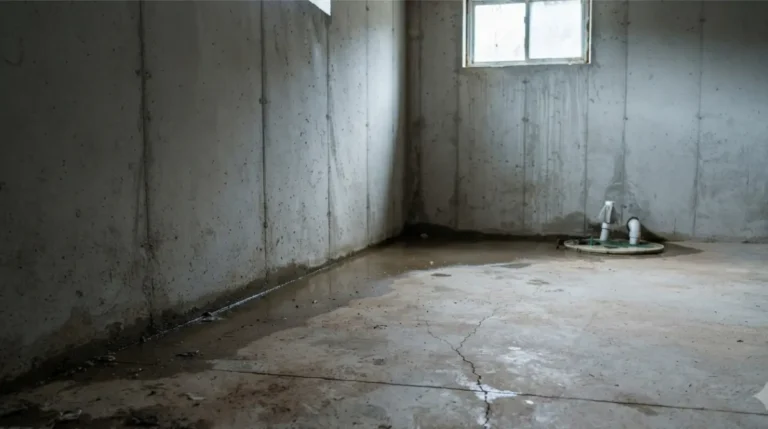
- Pooling near the foundation
ENERGY STAR notes that extending downspouts and sloping soil away from the foundation can lower basement humidity.
When to call a pro
✅ Do This: Call a waterproofing contractor if water enters after rain or through walls, and ask for the moisture source diagnosis in writing before any quote. For mold spreading beyond a small patch, call a certified mold remediation professional. Before you sign, learn how to read a basement waterproofing quote line by line and what interior French drains actually cost.
Basement humidity FAQ
1. Is 60% humidity too high for a basement?
Yes. EPA treats 60% as the point where condensation and mold become likely, so keep basement humidity at 50% or below.
2. Is 70% humidity in a basement bad?
Yes. At 70%, basement humidity is well above EPA’s 60% line, so run a dehumidifier and look for the moisture source. If it won’t drop, have a waterproofing contractor check for seepage.
3. What should I set my basement dehumidifier to?
Set your basement dehumidifier at or slightly below 50% in summer, then confirm with a separate hygrometer that the room follows.
4. Should I run a basement dehumidifier in winter?
Only if readings stay high. ENERGY STAR recommends 30–40% in cold climates during heating season; below 30%, switch it off.
5. How do I measure basement humidity?
Place a digital hygrometer near the basement’s center, away from vents and windows, and log morning and evening readings for a week.
6. Why is my basement so humid?
Cool basement air reads higher relative humidity, and outdoor air, laundry, and moisture through foundation walls add to the load.
7. What size dehumidifier do I need for a basement?
ENERGY STAR sizes by dampness: under 2,000 square feet, 20–30 pints/day for slightly damp spaces and 30–50 for wet ones.
8. Can basement humidity be too low?
Yes. Basement humidity below 30% falls under EPA’s ideal range, so turn off the dehumidifier or raise its setting.
9. Why won’t my basement humidity go down?
If a properly sized dehumidifier can’t bring basement humidity below 60%, water is likely entering through walls, floor, or poor drainage. Have a waterproofing contractor diagnose the source.
10. Does high basement humidity cause mold?
Sustained basement humidity above 60% makes condensation and mold growth more likely, according to EPA. If you already see mold, call a certified remediation professional.
Your next step
Hold basement humidity between 30% and 50%, and treat 60% as the line you don’t cross. Measure for a week, set your dehumidifier to 50%, and lower your target in winter. If the number still won’t move, stop shopping for a bigger machine and find the water.