What a Musty Smell in Basement Air Tells You to Fix First

Musty basement smell? Damp materials dried within 24–48 hours usually won’t grow mold. Here’s how to find what’s staying wet.
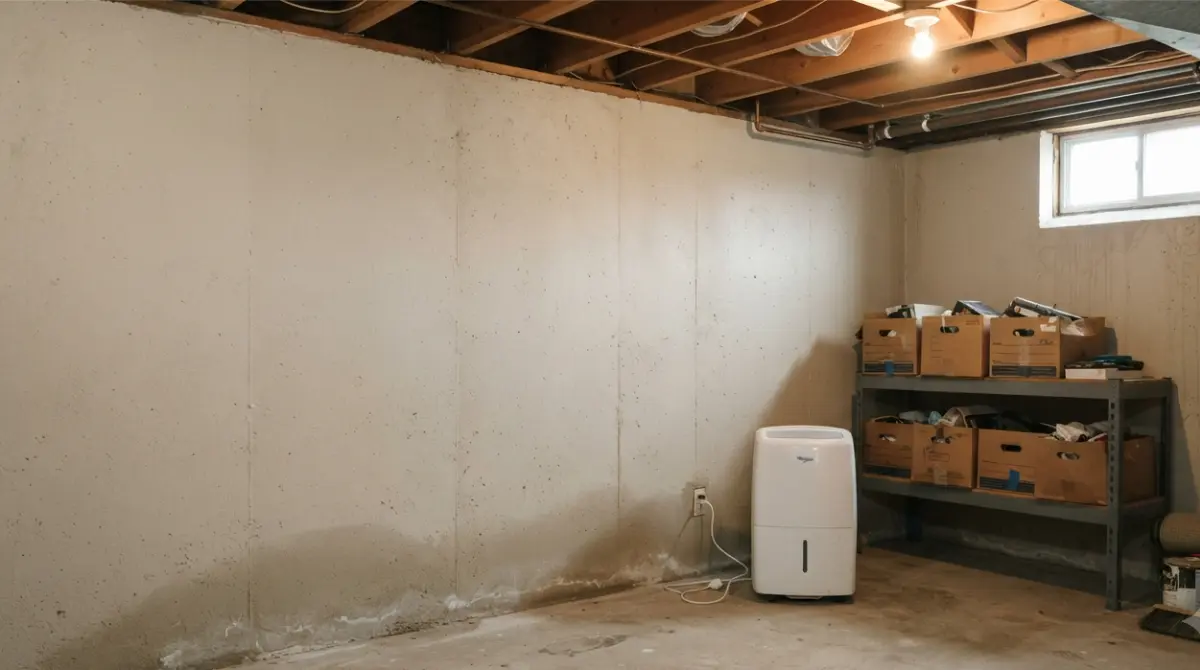
Table of Contents
What a musty smell in your basement usually means
A musty smell in basement air is almost always a moisture signal: mold or mildew growing on something that stays damp. The CDC lists a musty, earthy odor as one way people recognize mold, often before any growth is visible.
If you only smell it
Go to the one-weekend test below. It tells you whether the moisture comes from humid air or from water pushing through your walls.
If you can see growth or water
If you see fuzzy or dark patches, read the mold-versus-efflorescence section, then the 10-square-foot rule. Standing water, or damage from a sewage backup, means skipping DIY and calling a professional.
ℹ️ Safety Note: Mold can affect people with asthma, allergies, or weakened immune systems more severely. This article is general information. If anyone at home has symptoms, talk to a health professional, and hire a qualified mold remediator for large or sewage-related problems.
Where basement mustiness comes from
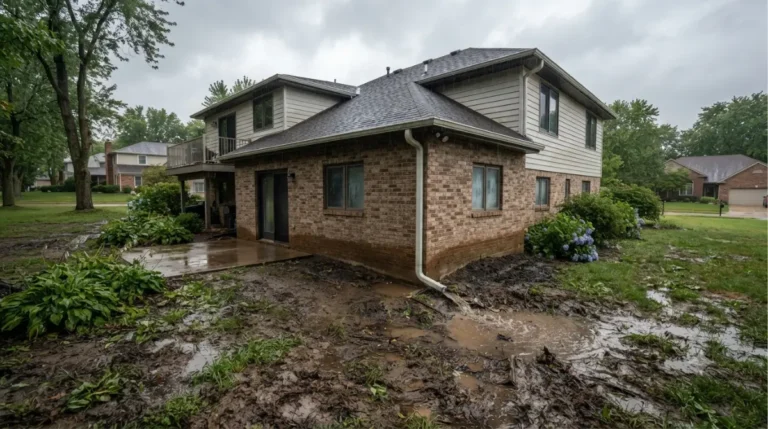
Nearly every musty basement traces back to water arriving from outside, water produced inside, or wet belongings.
Moisture from outside
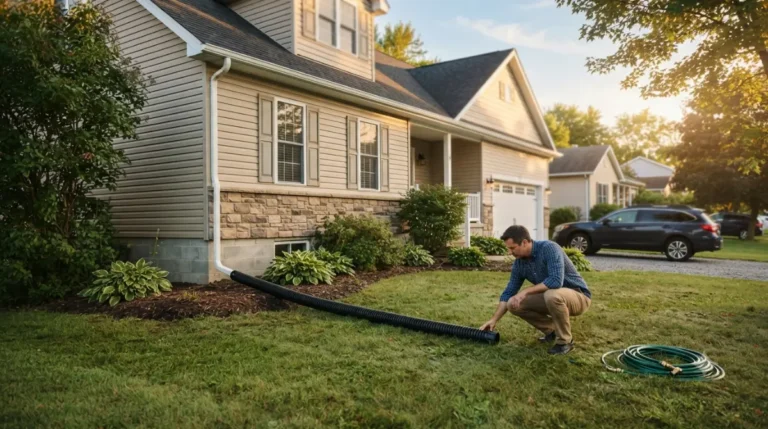
Soil sloping toward the house and clogged gutters both send rain straight at the foundation. The EPA advises keeping gutters clean and the ground sloping away so water can’t collect there.
Moisture from inside
Condensation forms when humid air meets cool concrete walls and cold pipes. The EPA explains how cooking and showering raise indoor humidity, and a clogged AC drip pan or slow plumbing leak adds more.
Damp stored stuff
Cardboard boxes, old carpet, and stored fabrics soak up moisture and hold the smell long after the air dries.
🔍 Why It Works: Mold spores are already in every home’s air and dust, and the EPA says removing them all is impossible. They only grow where moisture is present. That’s why damp materials dried within 24–48 hours usually stay mold-free.
How to find the source in one weekend
You can usually pin down the source in 48 hours with a humidity meter, plastic wrap, and tape.
Step 1: read the humidity
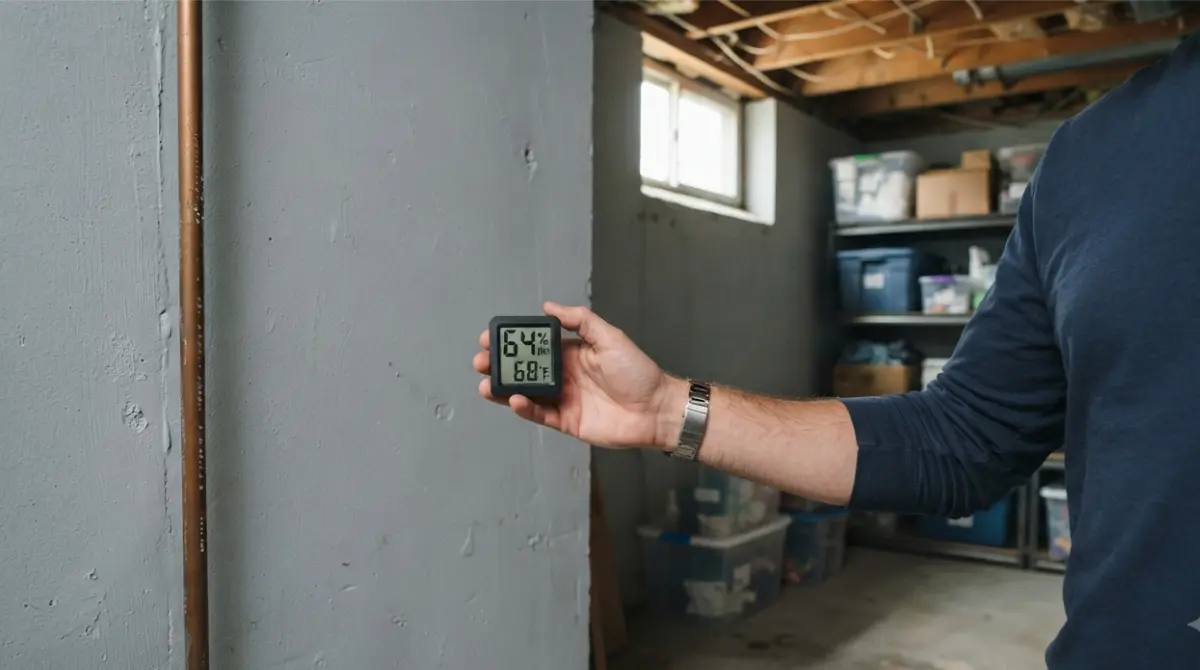
Place a hygrometer in the basement. The EPA notes these small meters cost about $10–$50 at hardware stores. Check it morning and evening for two days.
Step 2: the plastic-sheet test
- Wipe a patch of bare concrete wall dry.
- Tape a roughly 12-inch square of clear plastic over it, sealing all four edges.
- Check it after 24–48 hours. Moisture on the room side points to condensation. Moisture trapped against the wall points to seepage.
If both sides are wet, our step-by-step condensation vs. seepage test walks through what to do.
Step 3: sniff-map and check stored items
Note where the smell is strongest, then open any boxes or rolled rugs stored there.
What humidity your basement should stay at
Keep indoor humidity below 60 percent, ideally between 30 and 50 percent, according to EPA’s mold and moisture guidance.
The number to aim for
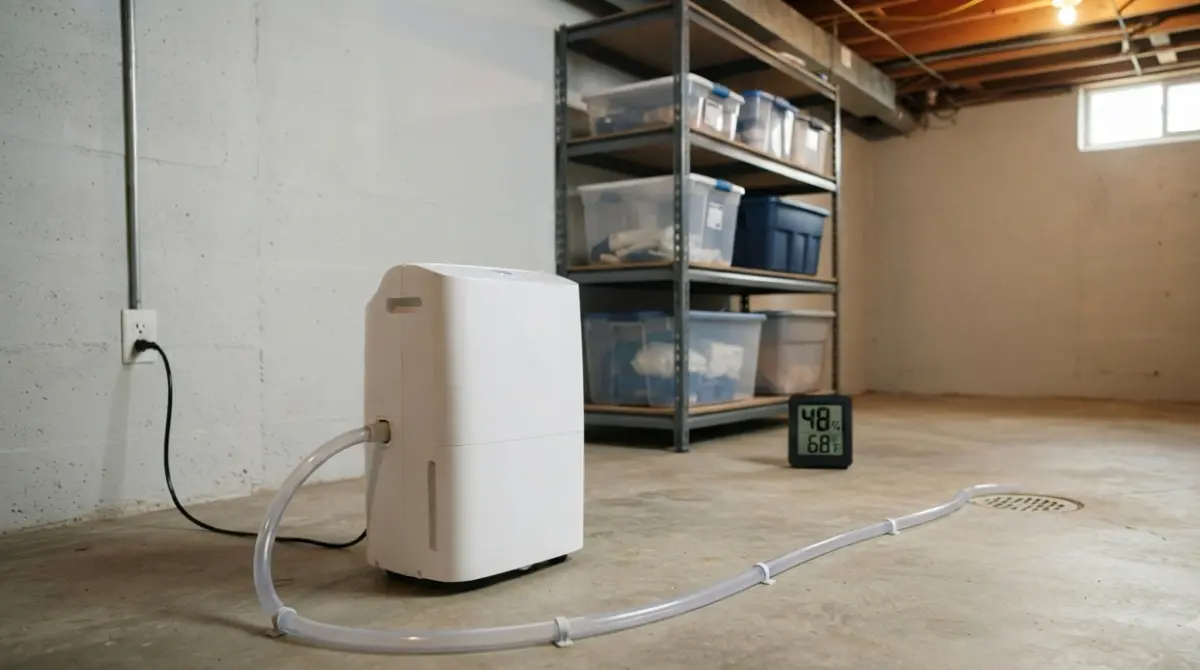
If readings sit above 60 percent and your plastic test showed condensation, a basement dehumidifier is the right tool. It removes moisture from the air, so it won’t stop water entering through a wall. Here’s how a dehumidifier prevents mold without killing it.
Choosing a basement dehumidifier (and checking recalls)
⚠️ Watch Out: Millions of dehumidifiers have been recalled for overheating and fire risk. Check your model against CPSC’s dehumidifier recall list before running an older or secondhand unit.
Mold, mildew, or efflorescence: what you’re seeing
A white or dark patch on a basement wall isn’t automatically mold, but either one points to moisture.
How efflorescence differs from mold
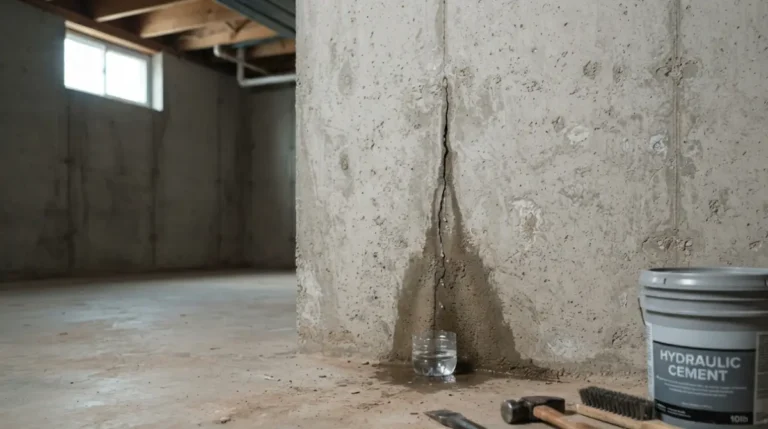
Efflorescence is a white, powdery mineral deposit left behind as water moves through masonry and evaporates. It isn’t mold, but it shows water is getting through that spot. For fuzzy growth, our guide to telling mold from mildew helps you sort it out.
Do you need a mold test?
Usually not. The CDC doesn’t recommend mold testing and says the type doesn’t matter: if it’s growing, clean it up and fix the moisture. CDC’s overview of mold health effects notes sensitive people may get a stuffy nose, coughing or wheezing, burning eyes, or a rash.
✅ Do This: If anyone at home has asthma, mold allergies, or symptoms, talk to a doctor before any cleanup starts.
When the smell points to a waterproofing fix
If the plastic sheet was wet on the wall side, you have a water-entry problem, and a dehumidifier alone won’t fix it.
Signs it’s beyond a dehumidifier
- Moisture trapped behind the test sheet
- Damp spots or puddles that show up after rain
- White mineral deposits forming on the walls
Cheap outside fixes to try first
Clean gutters, extend downspouts, and correct grading that slopes toward the house. The EPA warns that cleaning mold without fixing the water problem means it will most likely come back.
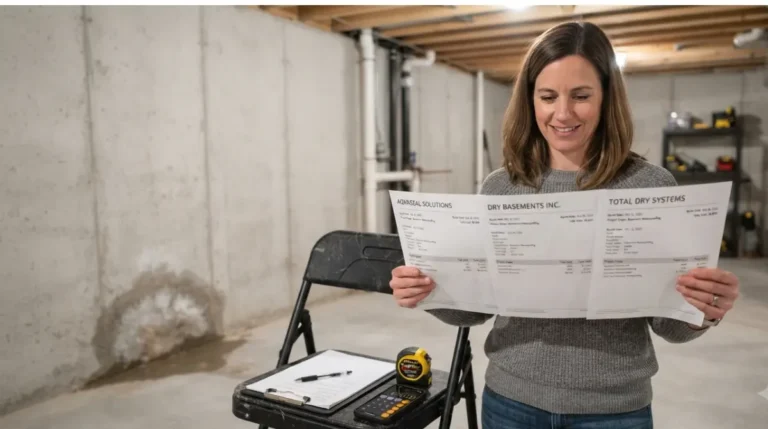
If outside fixes don’t stop it, get quotes, and learn how to read a waterproofing quote line by line before you sign.
✅ Do This: Hire an experienced waterproofing contractor (check your state’s licensing rules). Ask them to name the water source in writing and itemize every repair.
Clean it yourself or call a pro: the 10-square-foot line
The EPA draws a practical line at about 10 square feet of mold, roughly a 3-by-3-foot patch.
Under about 10 square feet
In most cases, the EPA says an area this small is one a homeowner can handle, as long as the moisture source gets fixed too. Our basement mold removal method covers the approach.
When to hire a remediator
- Growth larger than about 10 square feet, or heavy water damage
- Damage caused by sewage or other contaminated water
- Anyone at home with health concerns
⚠️ Watch Out: Never mix bleach with ammonia or other cleaners. The CDC warns this creates a poisonous gas. Wear rubber gloves and goggles for any cleanup.
✅ Do This: Hire a contractor experienced in mold cleanup, check references, and ask them to follow the EPA’s mold remediation guidance.
Musty basement smell: quick answers
1. Is a musty smell in a basement always mold?
Not always, but a musty basement smell usually means moisture is feeding mold or mildew on damp walls, carpet, or stored cardboard.
2. Can a musty basement make you sick?
Mold in a musty basement can cause a stuffy nose, coughing, wheezing, burning eyes, or rash in sensitive people. See a doctor if symptoms appear.
3. Will a dehumidifier get rid of a musty basement smell?
A dehumidifier helps when humid air or condensation causes the musty smell, but it won’t stop water leaking through walls.
4. What humidity stops basement mold?
The EPA recommends keeping basement humidity below 60 percent, ideally 30–50 percent, checked with an inexpensive hygrometer.
5. Should I test my musty basement for mold?
Usually no. The CDC doesn’t recommend mold testing; if basement mold is growing, clean it and fix the moisture source.
6. How fast does mold grow after a basement leak?
The EPA says materials dried within 24–48 hours after a basement leak usually won’t grow mold, so dry them quickly.
7. Why does my basement smell musty in summer?
Humid air condenses on cool basement walls and cold pipes, adding enough moisture for mold and mildew to cause that musty smell.
8. Can I clean basement mold myself?
The EPA says basement mold under about 10 square feet can usually be handled yourself; sewage-related or larger growth needs a professional. When in doubt, get a remediator’s assessment.
9. Does baking soda fix a musty basement smell?
Masking a musty basement smell doesn’t solve it; the EPA says mold usually returns unless the water problem is fixed.
10. When does a musty basement need waterproofing?
A musty basement needs waterproofing when the plastic-sheet test shows moisture against the wall or water appears after rain.
Your next step this week
Get a hygrometer and tape a plastic square to your basement wall this weekend. Those two checks tell you whether you need a dehumidifier, outside drainage fixes, or a waterproofing quote. If you find more than about 10 square feet of mold, or anyone at home has symptoms, bring in a professional before cleaning.