
Basement Mold Is Treatable — Here’s the Proven Method

Mold in your basement spreads in 24 to 48 hours — and bleach won’t stop it on concrete. Here’s what actually eliminates it, safely.
Table of Contents
Mold in your basement is more common than you think
The EPA estimates mold affects roughly 70% of US homes at some point — and the basement is almost always where it starts. Mold in basement spaces spreads faster than most homeowners expect, and what looks like a surface stain is often the visible edge of a colony growing deep behind your walls.
Why basements are mold’s favorite place in your home
Basements supply everything mold growth requires: limited airflow, cool damp surfaces, moisture-wicking concrete, and the humidity that builds from groundwater, plumbing leaks, and inadequate foundation drainage. A single unchecked moisture source — a slow pipe drip, a cracked foundation block, or a failed sump pump — gives mold spores the conditions to colonize surfaces within 24 to 48 hours.
What this guide will help you do
This guide covers identification, safe removal, product selection, health risks, and a clear DIY vs. professional decision — everything in one place. For a complete overview of mold situations throughout your home, start with Gladewick’s complete mold remediation guide.
How to identify mold in your basement
Basement mold appears as fuzzy or powdery patches in shades of black, green, gray, or white — almost always paired with a persistent musty, earthy odor that intensifies near the affected wall or floor. An odor that returns within days of ventilating the space is one of the most reliable early indicators of hidden growth behind drywall or beneath flooring.
The three most common basement mold types (and how to spot them)
Three mold species account for the majority of basement infestations in US homes.
- Cladosporium — Olive-green to black; grows on wood, carpet, and drywall in cooler, damp areas; a frequent allergy trigger with low mycotoxin risk
- Aspergillus — Green, gray, or white with a powdery texture; spreads quickly across walls and insulation; found in basements with general humidity problems
- Stachybotrys chartarum — Slimy, greenish-black; requires sustained long-term moisture to establish; the highest-risk species for mycotoxins; demands strict containment before any removal attempt
Visual identification alone cannot confirm species — a home test kit with lab analysis is the only reliable method.
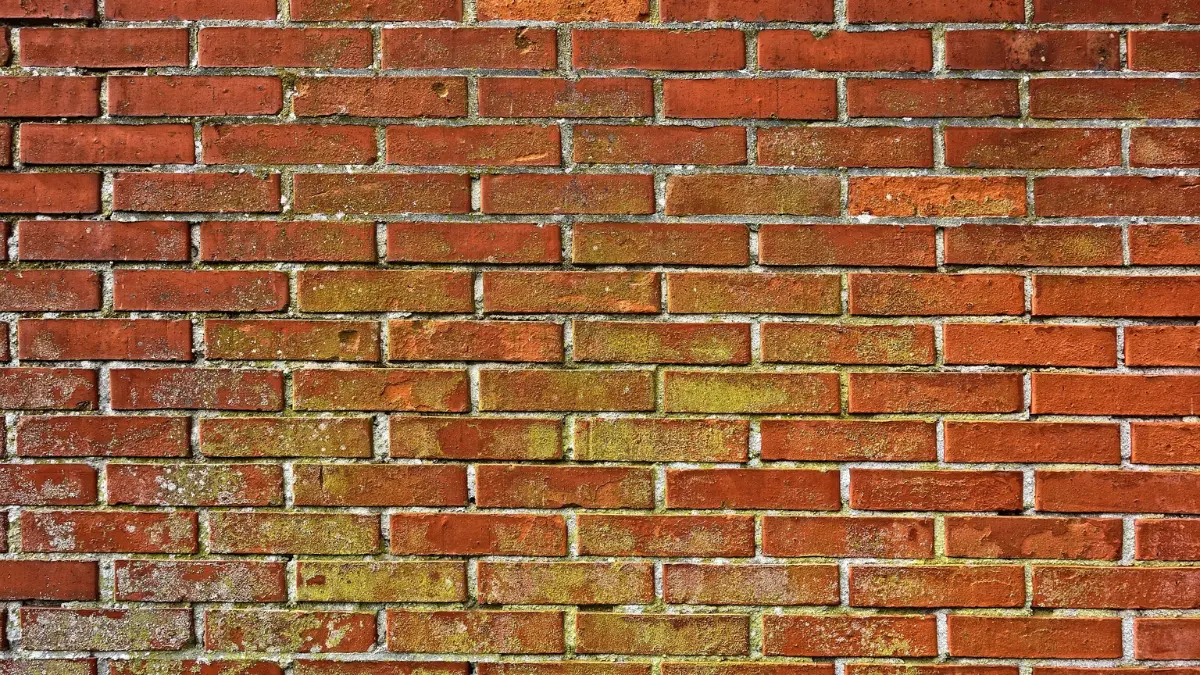
Visual and smell-based signs you have a mold problem
Check wall corners, pipe penetrations, and the base of foundation walls for discolored patches — especially after rain or snowmelt where moisture problem indicators first appear. A musty smell that returns after cleaning, even with ventilation running, is a strong indicator of growth you cannot yet see.
How to test for mold at home before you start removing it
Hardware-store mold inspection kits confirm mold presence and include lab analysis to identify species — a step worth taking before you choose a removal product or approach. If black mold is likely, review our step-by-step black mold removal guide by surface type before proceeding — species determines containment requirements.
How to remove mold from your basement step by step
⚠️ Warning: Never begin mold removal without containment and PPE in place. Disturbing mold in an unsealed area spreads spores through your HVAC system and into every room — turning a contained basement problem into a whole-house situation.
Safety equipment you need before you touch anything

- NIOSH-APPROVED N95 for at least 95 percent filtration efficiency against certain non-oil-based particles and aerosols
- 3M COOL FLOW EXHALATION VALVE helps direct exhaled air downward and allows for easy breathing
- UP TO 50% EASIER BREATHING. Compared to non-valved 3M 8200 Testing
Gather this equipment before entering the work area — skipping any item is a real risk, not a formality.
- N95 respirator (3M 8511 or equivalent) — standard dust masks do not filter mold spores
- Nitrile gloves and non-vented safety goggles
- Tyvek coveralls to keep spores off the clothing you’ll wear outside the space
- Plastic sheeting and painter’s tape to seal all doorways leading into the work area
The step-by-step mold removal process
To remove basement mold safely, follow these steps in order — skipping containment is the most common and costliest DIY mistake.
- Seal all doorways with plastic sheeting; direct a box fan outward through a window to create negative air pressure inside the work area
- Put on all PPE before entering — do not suit up inside the contaminated space
- Apply your mold-killing solution and allow the full dwell time — minimum 10 minutes for EPA-registered biocides
- Scrub with a stiff-bristled brush; never dry-wipe, which scatters live spores into the air
- Double-bag all waste immediately and seal bags before removing them from the space
- HEPA-vacuum all treated surfaces and the surrounding floor
- Run a HEPA filter air purifier for 48 to 72 hours after work is complete
These steps follow the EPA’s mold cleanup guidelines for homeowners — the established standard for residential DIY removal.
Cleaning mold off different surfaces: concrete, drywall, and wood
Surface mold on concrete requires a minimum 15-minute dwell time after product application — the porous material does not release embedded growth with a quick spray and wipe. Mold that has penetrated the paper face of drywall means the panel must be cut out and replaced entirely; no topical treatment reaches growth inside the gypsum layer.
For the full decision walkthrough on scope and approach, see our guide on exactly when DIY mold removal is the right call.
Best products to kill mold in a basement
The most effective products for killing basement mold penetrate porous surfaces to reach the fungal root structure — unlike bleach, which only oxidizes the surface pigment and leaves live growth embedded below. Surface type and growth depth should drive every product decision you make here.
Top mold-killing sprays and solutions for DIY removal
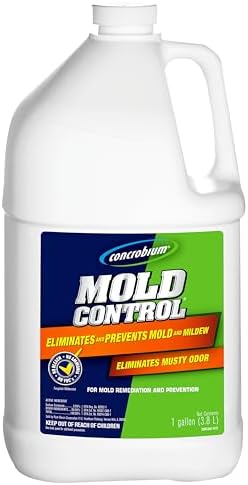
- Use to eliminate mold, mildew, musty odors and prevent regrowth
- EPA-registered formula crushes mold spores as it dries and leaves an invisible barrier
- Odorless solution cleans between 800-1,600 sq. ft. per gallon

- Total Indoor & Outdoor Stain Solution System: Tackle stubborn mold and mildew stains anywhere with 2 targeted, pro-stren…
- Rapid Restore & Refresh Kit: Eliminate new and deeply embedded stains in as little as 15 seconds with ready-to-use spray…
- Ready to Revive Every Surface: Tough on discoloration yet gentle on grout, tile, and most building materials, this kit r…
These EPA-registered options produce reliable results on basement surfaces.
- RMR-86 Instant Mold & Mildew Stain Remover — fastest-acting option for concrete and non-porous tile; visible results within 15 seconds; requires strong ventilation; not safe for drywall
- Concrobium Mold Control — penetrates and encapsulates; safe for wood, drywall, and concrete; no harsh fumes; the better choice in homes with children or respiratory sensitivities
- WD-40 Specialist Mold & Mildew Remover — targeted spot-treatment spray for walls and framing; good option for small isolated patches
Encapsulants and sealers: locking mold out after treatment
After killing active mold growth, coat the surface with an encapsulant such as Zinsser Mold Killing Primer to block regrowth from spores still embedded in the substrate. On concrete basement walls — where moisture wicking continuously restores ideal conditions — skipping this step is the primary reason homeowners deal with recurring infestations within the same season.
What not to buy: why bleach alone isn’t enough
Sodium hypochlorite (household bleach) cannot kill mold on porous materials like concrete or wood — it bleaches surface pigment and makes the mold appear eliminated while leaving live hyphae fully intact beneath. The same surface-specific logic applies throughout your home; for mold in other wet areas, see our guide to bathroom mold removal on grout, caulk, and walls.
Health risks of basement mold: what you need to know
Can basement mold make you sick? Yes — severity depends on species, how long exposure has occurred, and the health of every person living in your home. Even Cladosporium and Aspergillus — the less alarming species — cause eye irritation, nasal congestion, and skin rashes in otherwise healthy adults after sustained exposure.
Short-term symptoms of mold exposure to watch for
Common short-term health symptoms from mold exposure include persistent sneezing, coughing, watery eyes, nasal congestion, and skin rashes. A reliable early pattern: symptoms worsen when entering the basement and clear within an hour of leaving — this points to active mold exposure rather than seasonal illness.
Long-term risks and who is most vulnerable
Mycotoxins produced by Stachybotrys chartarum can cause serious respiratory damage with repeated long-term exposure. Children, elderly adults, and people with asthma, COPD, or compromised immune systems face the greatest danger — the CDC’s guidance on mold and indoor air quality identifies these groups specifically and recommends professional remediation in high-risk households.
ℹ️ Disclaimer: If anyone in your home is experiencing persistent coughing, wheezing, or unexplained respiratory symptoms, see a physician before attempting mold removal — and inform your doctor that mold is present in the home.
How to protect yourself and your family during and after removal
Run a HEPA-rated air purifier sized for your basement’s square footage during the job and for 72 hours after to capture airborne mold spores before they resettle on surfaces. Anyone in a high-risk group should not attempt DIY removal — professional remediation is the appropriate path for those households, full stop.
DIY vs. professional mold removal: how to decide
You should call a certified mold remediation company if the mold-affected area exceeds 10 square feet, if mold has penetrated behind drywall or into structural lumber, or if anyone in the home is experiencing symptoms. Below that threshold, on non-porous surfaces in good structural condition, DIY removal with the right PPE and products is generally the appropriate approach.
When DIY mold removal is safe and appropriate (EPA thresholds)
Per the EPA’s mold cleanup guidelines, DIY mold removal is appropriate for affected areas under 10 square feet on non-porous surfaces with no signs of structural damage. If mold has reached wood framing or spread behind drywall panels, the safe threshold drops regardless of total square footage — get a professional assessment before proceeding.
When you must call a certified mold remediation company
Any contractor you hire should follow the IICRC S520 mold remediation standard — the industry benchmark for containment, removal, and post-remediation clearance testing. For vetted guidance on choosing the right contractor, see our guide to finding a mold remediation company you can actually trust.
What professional remediation costs and what to expect
Professional mold remediation costs range from $1,100 to $3,400 for typical residential jobs, with severe infestations exceeding $10,000 based on national contractor data. See our mold remediation cost breakdown by room and check our article on whether homeowners insurance covers mold remediation costs before paying anything out of pocket.
How to keep your basement mold-free for good
The single most effective prevention step is keeping your basement’s relative humidity below 50% year-round — mold cannot establish on consistently dry surfaces. A properly sized dehumidifier combined with sealed foundation cracks and functional gutters addresses the three most common moisture entry points in one coordinated approach.
The three habits that prevent basement mold from returning
These three practices eliminate the conditions mold depends on.

- Maintain the Right Room Temperature and Humidity Levels: This wireless indoor thermometer/hygrometer combination is perf…
- Simple, Easy-to-Read Display Monitor: View current temperature and humidity at a glance with this indoor thermometer gau…
- Daily High and Low Indoor Temperature and Humidity Levels: Easily understand your range of conditions in any room with t…
- Keep basement humidity below 50% RH continuously — use a $15 digital hygrometer to monitor; check it monthly and after any heavy rain event
- Inspect gutters and downspouts twice yearly and ensure water flows at least six feet away from the foundation rather than pooling against it
- Apply a vapor barrier — a 6-mil polyethylene sheet — over bare concrete floors to significantly reduce moisture migration from the slab into the living space
Your next steps after mold removal
Schedule a follow-up mold inspection 30 to 60 days after removal to confirm the treatment held and no new growth has started in adjacent areas. A digital hygrometer left in the basement year-round is the cheapest and most reliable insurance against a repeat infestation — if humidity spikes above 60%, you’ll know before mold does.
Frequently asked questions about basement mold
1. What causes mold in basements?
Basement mold grows when relative humidity rises above 60%, giving airborne mold spores the moisture they need to colonize porous surfaces. Common causes include plumbing leaks, groundwater seepage, poor foundation drainage, condensation on cold pipes, and inadequate ventilation that traps humid air in an enclosed space for extended periods.
2. Is basement mold dangerous?
Yes. All mold types can trigger respiratory irritation, eye inflammation, and skin rashes. Stachybotrys chartarum produces mycotoxins associated with more serious health effects. People with asthma, COPD, allergies, or compromised immune systems face the greatest risk from any basement mold species, regardless of whether it is the black variety.
3. How do I get rid of mold in my basement?
Seal the work area, put on an N95 respirator, gloves, and coveralls, then apply an EPA-registered biocide with at least a 10-minute dwell time. Scrub, HEPA-vacuum, and run an air purifier for 72 hours. Finish with an encapsulant primer to block regrowth from spores still embedded in the substrate.
4. What kills mold permanently?
EPA-registered biocides — including Concrobium Mold Control and RMR-86 — penetrate porous surfaces and reach the fungal hyphae, killing growth at its source. An encapsulant primer applied after treatment blocks regrowth. No product eliminates future risk permanently unless the underlying moisture problem is also corrected.
5. Can I remove basement mold myself?
Yes, if the affected area is under 10 square feet on non-porous surfaces with no structural material involved. Wear an N95 respirator, gloves, and coveralls, and seal the work area before starting. If mold covers more than 10 square feet or has reached wood framing or drywall backing, hire a certified remediation professional.
6. How much does basement mold removal cost?
Professional basement mold remediation typically costs between $1,100 and $3,400, with severe infestations exceeding $10,000. DIY removal with products and protective equipment costs $50 to $300 for most contained situations. Check your homeowners insurance policy before paying — coverage varies significantly by policy type and the documented cause of the mold.
7. What does basement mold look like?
Basement mold appears as fuzzy or powdery patches in black, green, gray, or white. Cladosporium is olive-green to black; Aspergillus shows as green or white powder; Stachybotrys chartarum is slimy and dark greenish-black. All mold types are accompanied by a persistent musty odor that intensifies in humid or sealed conditions.
8. How long does mold removal take in a basement?
A small DIY job under 10 square feet takes four to six hours, including containment setup, product application, dwell time, scrubbing, and cleanup. Large professional jobs require one to three days on-site. The HEPA air purifier stage adds 48 to 72 hours of passive treatment time after active removal work is complete.
9. Does bleach kill basement mold?
Not effectively on porous surfaces. Bleach oxidizes surface pigment and makes mold appear gone, but it cannot penetrate concrete, wood, or drywall to reach embedded hyphae. On non-porous surfaces like tile, diluted bleach provides marginal results. EPA-registered biocides penetrate porous materials and produce significantly more complete results on basement surfaces.
10. What types of mold are most common in basements?
The three most common types are Cladosporium, Aspergillus, and Stachybotrys chartarum. Cladosporium and Aspergillus thrive in generally damp basements with moderate humidity. Stachybotrys chartarum — the species associated with the most serious health risks — requires sustained long-term moisture and is most often found in basements with active water intrusion or a chronic flooding history.
11. How do I stop mold from coming back in my basement?
Keep relative humidity below 50% RH using a properly sized dehumidifier monitored with a digital hygrometer. Seal foundation cracks, direct gutters and downspouts away from the foundation, and install a vapor barrier on concrete floors. Schedule a follow-up mold inspection 30 to 60 days after removal to confirm the treatment held.
12. What humidity level prevents basement mold?
Maintain relative humidity below 50% to prevent mold growth in most basements. In spaces with a history of flooding or persistent dampness, target below 45% RH. Humidity above 60% for 24 to 48 hours is sufficient for airborne spores to colonize most surfaces — a digital hygrometer is the simplest way to catch dangerous humidity spikes early.
13. Can basement mold make you sick?
Yes. Basement mold causes sneezing, coughing, eye irritation, nasal congestion, and skin rashes in healthy adults. Symptoms typically worsen while inside the basement and improve after leaving — a pattern that distinguishes mold exposure from seasonal allergies. Stachybotrys chartarum produces mycotoxins linked to more serious respiratory effects with prolonged repeated exposure.
14. Do I need to leave my home during professional mold remediation?
Not always — it depends on the scope of work and the contractor’s containment methods. For large-scale remediation involving full-room containment and HEPA air scrubbers, most contractors recommend leaving for one to three days. Ask your contractor directly before the job begins; requirements vary significantly by affected area size and remediation approach.
15. How do I test for mold in my basement?
Start with a home mold test kit available at hardware stores for $10 to $50, which includes surface or air sampling and lab analysis for species identification. For suspected black mold or a large affected area, hire a certified mold inspector for a professional air quality assessment before attempting any removal.
16. What is the best dehumidifier for preventing basement mold?
Choose a unit rated for your basement’s square footage: models rated for 1,500 square feet handle average-sized basements, while larger spaces need 2,500- to 4,500-square-foot capacity models. Prioritize an integrated pump for continuous drainage, auto-restart after power outages, and an Energy Star rating to manage year-round operating costs.
17. Does painting over basement mold work?
No. Painting over active mold — even with mold-resistant paint — does not kill the underlying growth. Mold continues spreading beneath the paint layer and typically breaks through the surface within weeks. Kill active mold with an EPA-registered biocide, apply an encapsulant primer, and apply finish paint only after confirming complete removal.
Related Articles
 Mold Remediation
Here’s How to Remove Mold from Drywall Without It Coming Back
May 22, 2026 Mold Remediation
What a Mold Inspection Really Costs for Your Home
June 2, 2026 Mold Remediation
How to Tell Mold From Mildew and What to Do Next
June 14, 2026 Mold Remediation
If You’ve Spotted Garage Mold, Here’s Your Fix
June 16, 2026 Mold Remediation
Find the Right Mold Removal Products for Your Surface
June 6, 2026 Mold Remediation
Here’s Exactly When DIY Mold Removal Is the Right Call
May 8, 2026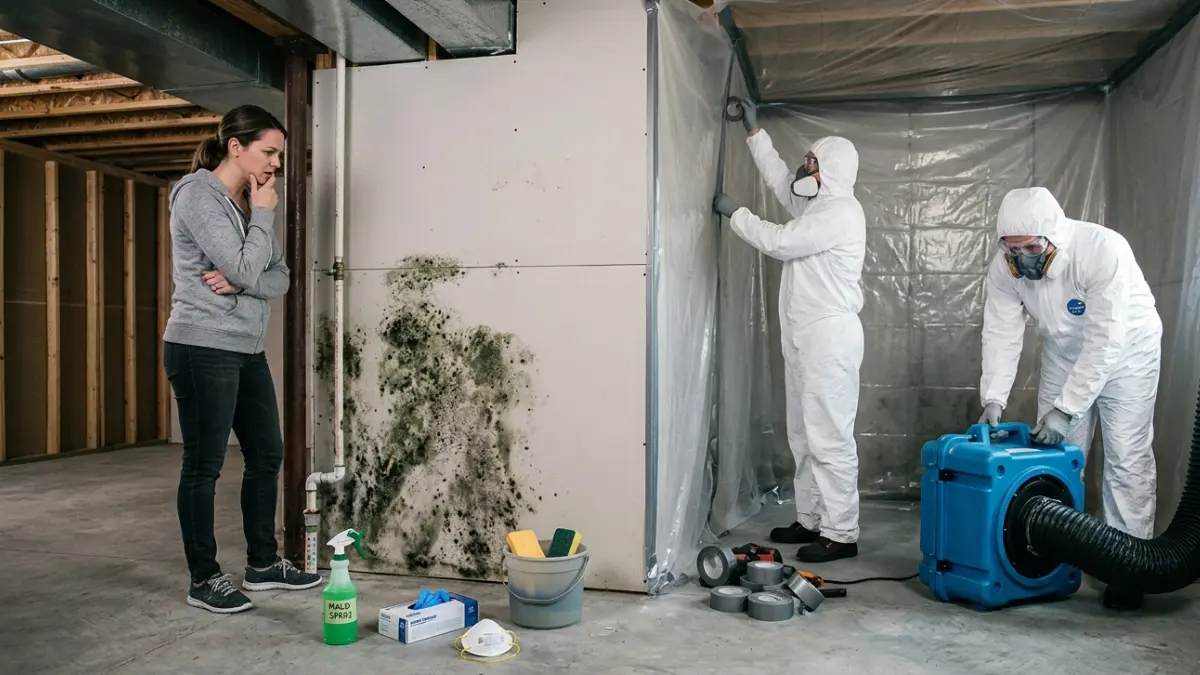 Mold Remediation
What DIY Mold Removal Really Costs—and When to Call a Pro
June 18, 2026 Mold Remediation
Using Vinegar for Mold Removal Without the Guesswork
June 10, 2026 Mold Remediation