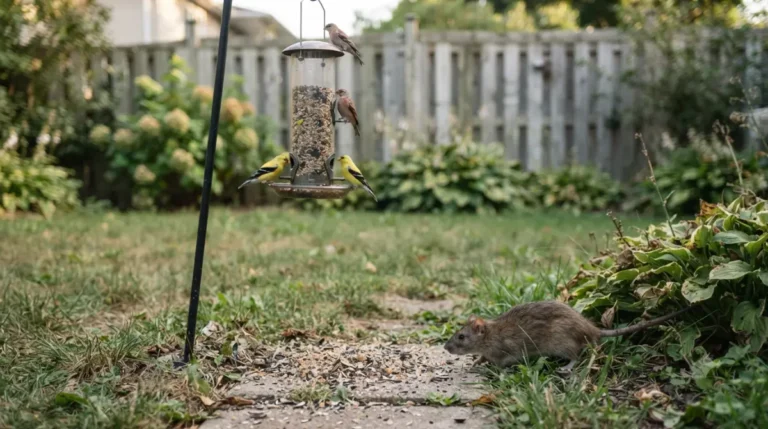
Find the right week to start proofing your house for winter

Proofing a house for winter starts with a date you look up, not a season you guess. NOAA sets the first freeze at 32°F — your schedule follows
it.
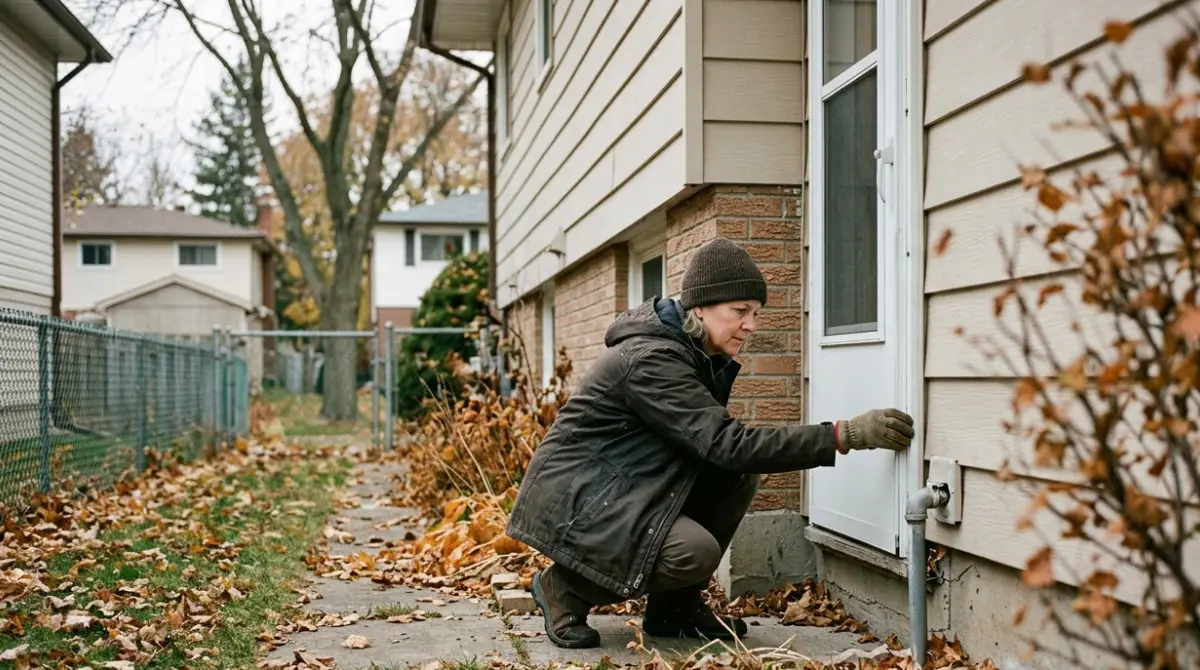
Table of Contents
Every guide says to start proofing your house for winter in autumn. None of them say what autumn means at your address, and that is the part that decides whether you are early or late. The deadline is a temperature, not a month.
If nothing is sealed yet, start with the next section and get your own date.
If you have your date and want the order, go to the four-week countdown.
If your work is at the roofline or in the attic, read what you should not seal in autumn before you climb anything.
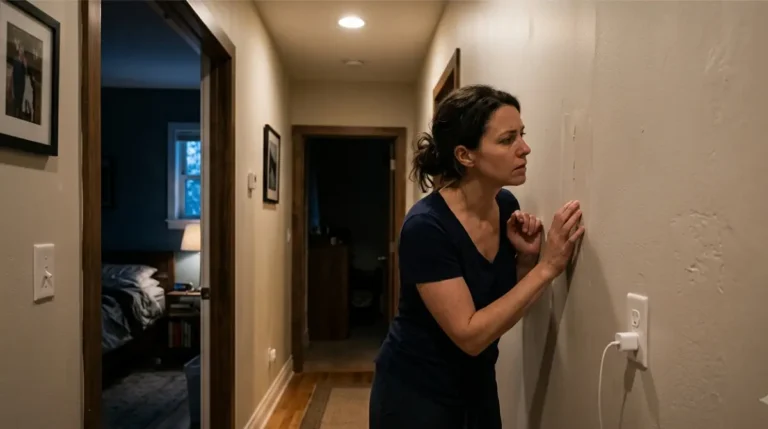
If you can already hear something in the walls, skip to the last section — your sequence has changed.
ℹ️ Safety Note: This work involves real hazards: falls when sealing at the roofline, confined-space risk in attics and crawl spaces, disease exposure when handling droppings or nesting material, and fire risk where dryer venting or gnawed wiring is involved. Treat everything here as general understanding. For work above ladder height, structural repair, or any attic that may hold wildlife, hire a licensed pest control operator or contractor and follow your local code.
The deadline is a temperature, not a month
Proofing a house for winter is timed to temperature, not to a month: mice move indoors as autumn nights cool, so your deadline follows your own first freeze date.
Why autumn is when they come in
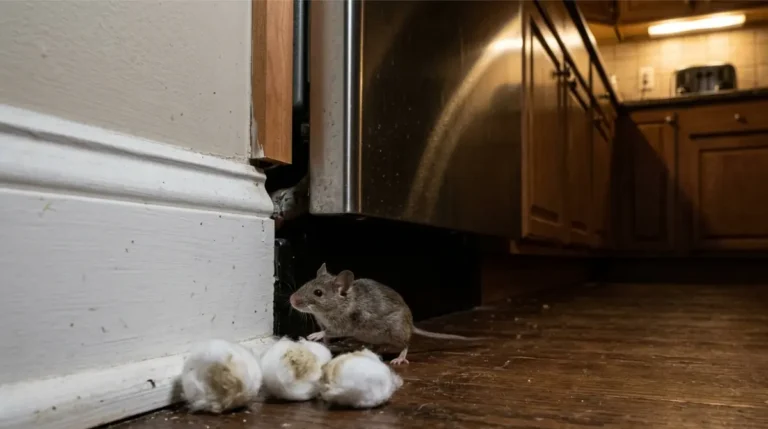
UC IPM’s Pest Notes on the house mouse reports that where outdoor populations exist, house mice frequently enter homes in autumn when nighttime temperatures become colder.
That is behaviour, not a threshold. No authority publishes a temperature at which mice decide to move in, so your first-freeze date is the closest usable proxy — and any article that hands you a number has invented it.
How to find your own date
NOAA’s first-fall-freeze normals define a freeze as surface air temperature at or below 32°F across a widespread area, drawn from the 1991–2020 U.S. Climate Normals.
Find the average date nearest you, then count back four weeks. Our frost date and planting calendar gives you the same window in a single lookup.
The four weeks before your first freeze
Once you have the date, the work has an order, and the order matters more than the effort.

| Week | What you do | Done when |
|---|---|---|
| 4 weeks out | Walk the perimeter twice — ground level, then looking up — marking every opening | Nothing sealed yet, everything marked |
| 3 weeks out | Order materials; set traps where you found droppings | Traps running |
| 2 weeks out | Close ground-level penetrations, thresholds and door edges | No daylight under any door |
| 1 week out | Address or hire out anything above ladder height | Roofline handled, captures monitored |
This countdown is Gladewick’s own sequencing framework, built from the timing sources cited above. It is not extension guidance, and no hands-on testing was performed for it.
Why the walk comes first
Marking before buying stops you from sealing the easy gaps and running out of attention at the hard ones.
Why traps run alongside
UC IPM pairs exclusion with population reduction. Anything already inside will not leave because you closed the door behind it.
Five openings a summer inspection walks past
Some openings only start mattering when the weather turns, and one of them is routinely sealed the wrong way.
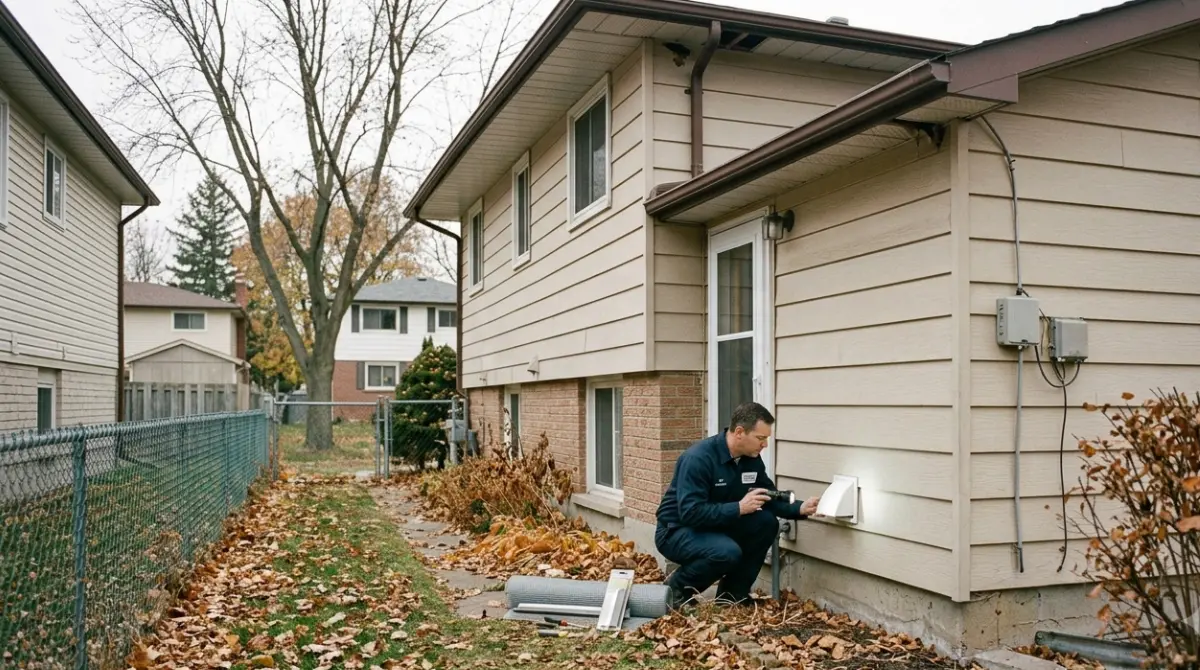
The dryer vent, and why a screen is the wrong fix
No, you should not screen a dryer vent to keep rodents out. Residential mechanical code (IRC M1502.3, also IMC 504.4) requires the termination to carry a backdraft damper and states that screens shall not be installed there.
⚠️ Watch Out: A mesh screen over a dryer termination collects lint within a few loads. NFPA’s clothes dryer safety guidance is that the exhaust must stay unrestricted and the outdoor flap must open while the dryer runs. Code adoption varies — confirm with your local building department.
🛒 Our Pick: A termination cap with an integral backdraft damper and no screen.
Thresholds, door edges and weep holes
UC IPM measures the gap that matters: mice squeeze under quarter-inch gaps and through three-eighths-inch openings. The full anatomy of where rodents get in covers each opening in turn.
Rooflines, soffits and gable vents
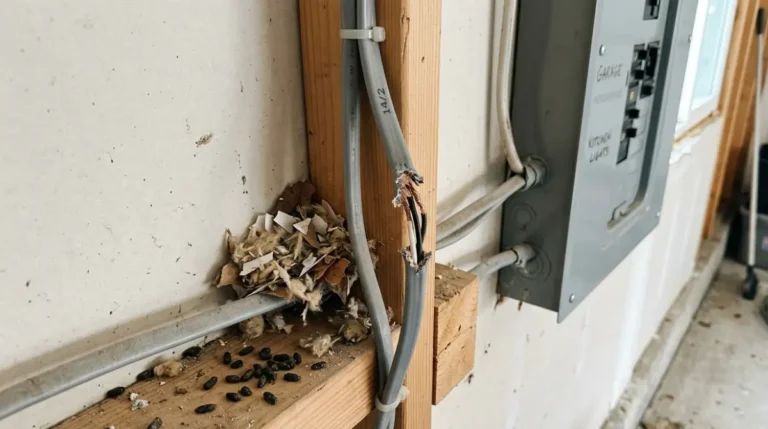
Mice run up rough vertical surfaces, travel along wire cables and jump 12 inches onto a flat surface, per UC IPM. Whether you are dealing with roof rats or Norway rats changes how much of your search belongs overhead.
What you should not seal in autumn
Autumn is the sealing window for rodents and, in much of the country, the wrong moment to close a roofline without checking what is behind it.
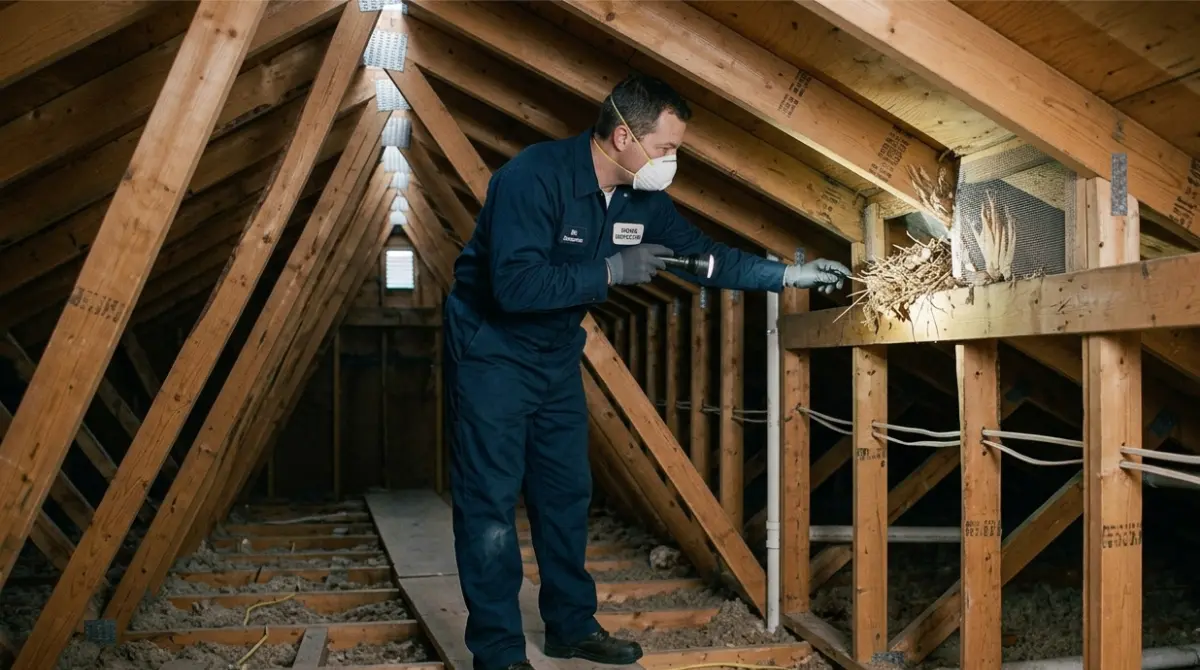
If anything is living in the attic
Penn State Extension’s month-by-month bat-proofing timing places August to October as one-way-door season and May to August as do-not-seal season, with sealing appropriate once bats have left.
That is regional guidance, not a national rule. Sealing a roost with animals inside is restricted in many states, and the dates differ.
✅ Do This: Before touching any roofline or attic opening, call your state wildlife agency and confirm what is permitted this month. If something is up there, hire a wildlife control operator and ask three things: are you licensed in this state, will you install one-way devices rather than sealing directly, and is the work warrantied?
If you find droppings during the walk
Do not sweep or vacuum them. The CDC’s cleanup protocol is to ventilate, then wet the material with disinfectant before wiping. Knowing whether you are looking at deer mouse or house mouse droppings changes how carefully you handle them.
What to have on hand before the first cold night
Ordering in week three only works if you order the right category, and the most common failure is a material choice rather than a missed gap.
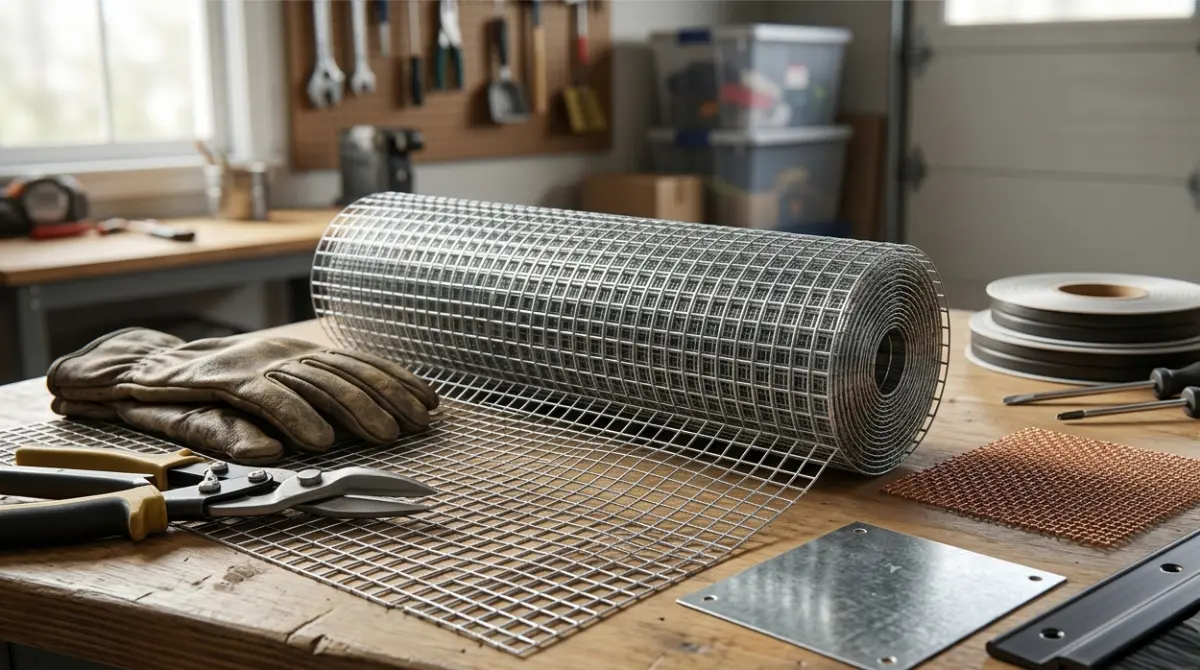
Metal first, sealant second
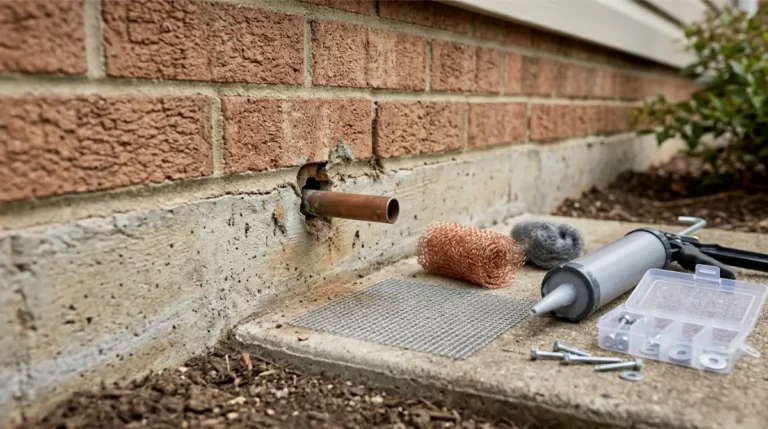
- Quarter-inch galvanised hardware cloth for vents and larger openings
- Copper or stainless mesh for packing awkward penetrations
- Sheet metal where door or window edges are being gnawed
- A door sweep and a garage threshold seal for ground level
UC IPM specifies metal or concrete for foundation cracks and for openings around pipes, vents and utility cables, and notes that steel wool scouring pads work as plugs but may rust over time.
🔍 Why It Works: A rodent’s incisors need an edge to bite into. Metal denies them one; anything compressible gives them one on contact.
What to skip
Expanding foam. UC IPM lists insulating foam, rubber, vinyl, wood and plastic screening as ineffective for plugging holes used by house mice.
🛒 Our Pick: Quarter-inch galvanised hardware cloth as the default exclusion material.
If it’s already cold and you’ve heard something
No, it is not too late — but the order changes, and sealing is no longer your first move.
Why sealing alone is now the wrong first move
UC IPM notes that house mice seldom venture more than 30 feet from the nest, so traps belong no more than about 10 feet apart in active areas, and traps with a wide trigger plate catch better.
Run trapping and sealing together. If you are trying to work out what the scratching in the wall actually is, identify it before you close anything.
Winter rodent-proofing questions people actually ask
1. When should I start proofing my house for winter?
About four weeks before your area’s average first freeze date, which NOAA publishes from the 1991–2020 climate normals.
2. Do mice actually come indoors when it gets cold?
Yes. UC IPM reports that where outdoor populations exist, house mice frequently enter homes in autumn as nighttime temperatures become colder.
3. What temperature sends mice indoors?
No authority publishes one. UC IPM ties entry to autumn nights cooling, so use your local first-freeze date as the working threshold.
4. How small a gap can a mouse fit through?
UC IPM measures it: house mice squeeze under quarter-inch gaps and through three-eighths-inch openings. Anything at or above that needs closing.
5. Should I screen my dryer vent to keep mice out?
No. Residential code requires a backdraft damper and prohibits screens at dryer terminations, because trapped lint becomes a fire risk. Confirm local adoption with your building department.
6. Is it too late to seal once it’s already freezing?
No, but the order changes. Trap alongside sealing rather than after it, or you close animals inside your walls.
7. Can I seal my attic in autumn if I’ve heard scratching?
Not until you know what is up there. Penn State Extension places August to October in one-way-door season for bats, not sealing season. Contact your state wildlife agency first.
8. Does expanding foam work for winter rodent proofing?
No. UC IPM lists insulating foam, rubber, vinyl, wood and plastic screening as ineffective for plugging holes used by house mice.
9. Is autumn sealing ever illegal?
It can be. Sealing a roost while bats are inside is restricted in many states, and the rules differ by jurisdiction. Check with your state wildlife agency.
10. Do I still need traps if I seal everything?
Usually yes. UC IPM pairs exclusion with population reduction, because mice already inside will not leave once the openings close.
Your next step
Look up the average first freeze date for your location, then put the perimeter walk on the calendar four weeks before it. That single date turns a vague autumn intention into a weekend with an end point. And before anything at the roofline: find out what is already living up there.