Seal Mouse Entry Points Without the Mistake Most People Make

Sealing mouse entry points is a 1/4-inch problem, and the material you pack
in decides whether the hole is still shut a year from now.
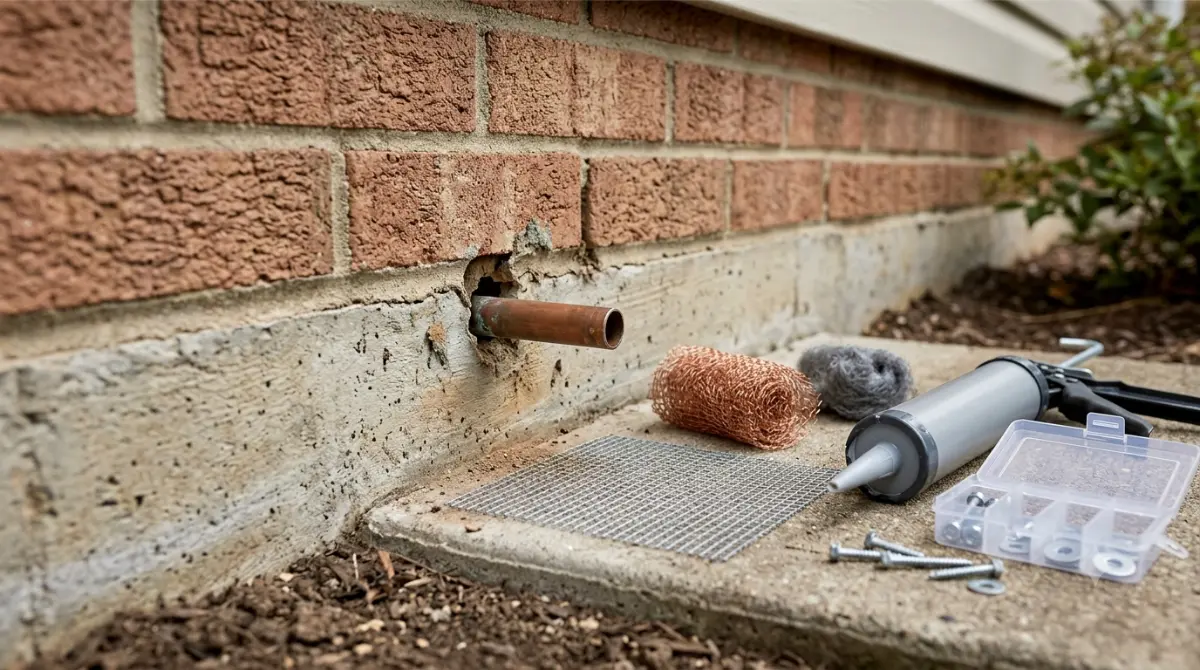
Table of Contents
Most guides say pack the hole with steel wool and move on. The harder question is which repairs are still closed a year later, because rodent exclusion fails in ways almost nobody publishes.
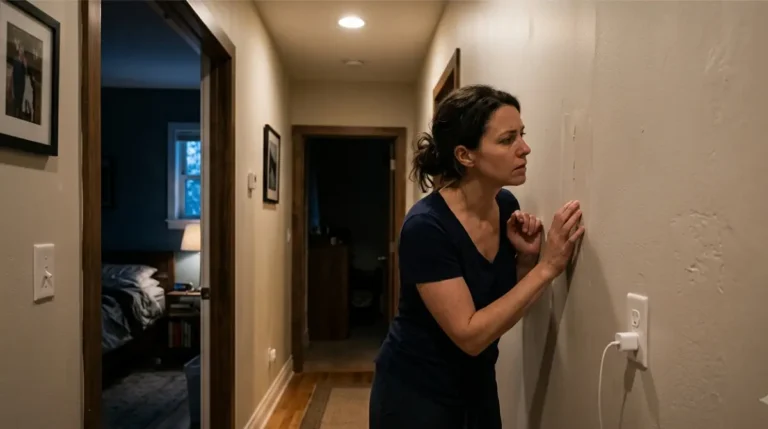
Three situations bring people here. Found a gap and want the right material? Start with the size rule below. Chasing the scratching you’ve been hearing at night without having found an opening? Confirm the problem first. Patched something last season and the mice came back? Skip to the failure section.
This guide ranks six materials by how each one gives out, using federal and university guidance rather than our own trials.
ℹ️ Safety Note: Rodent droppings and nesting material can carry disease, and sealing work often means ladders, attics and cut metal edges. This is general guidance. If the infestation is heavy, if rodents have reached ductwork or voids you cannot clean, or if the repair needs roof access, hire a licensed pest management professional and follow your local code.
The quarter-inch rule most guides get wrong
A house mouse passes through a gap of about a quarter inch — roughly 6 mm, the width of a pencil.
How small a gap can a mouse fit through?
The CDC’s seal-up guidance gives that as a measurement, which matters, because the pages ranking for this question disagree with each other: a dime, a nickel, or a quarter inch. A mouse has no collarbone, so once the head fits, the body follows.
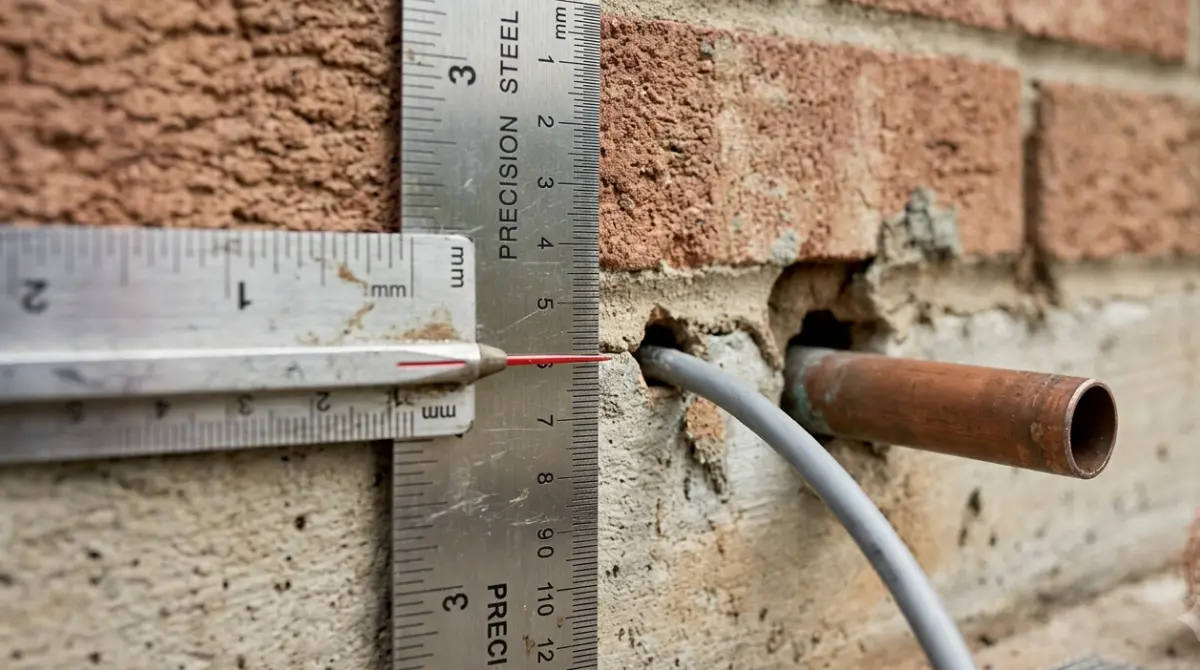
University of California’s IPM guidance adds the part that should change your inspection. Mice gnaw to enlarge openings they can already reach, so too small today is not permanently too small.
Where the gaps usually are
Outside: the roofline at rafters, gables, eaves and soffits, doors and windows without weather stripping, the foundation-to-ground seam, and attic and crawl space vents. Inside: behind appliances, under sinks, around water heater and furnace pipes, and at floor and dryer vents.
For the full sequence, work through the complete rodent-proofing walk-around.
The six materials people actually use
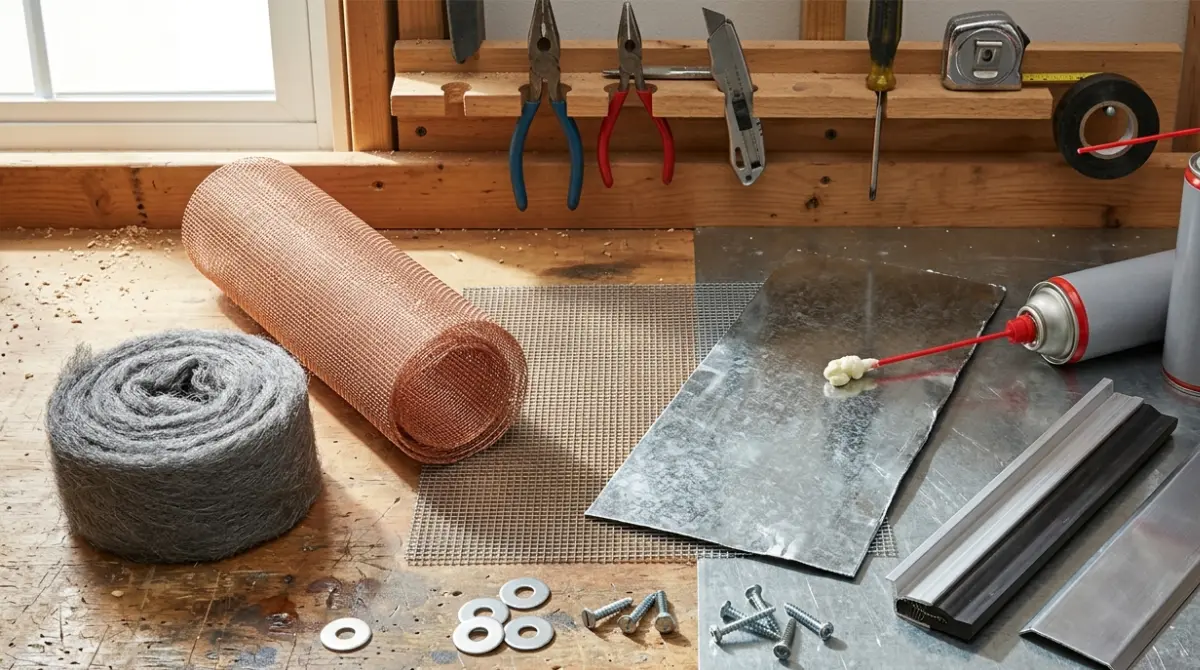
Six materials cover nearly every gap a homeowner finds, and they behave very differently once installed.
Packed fillers
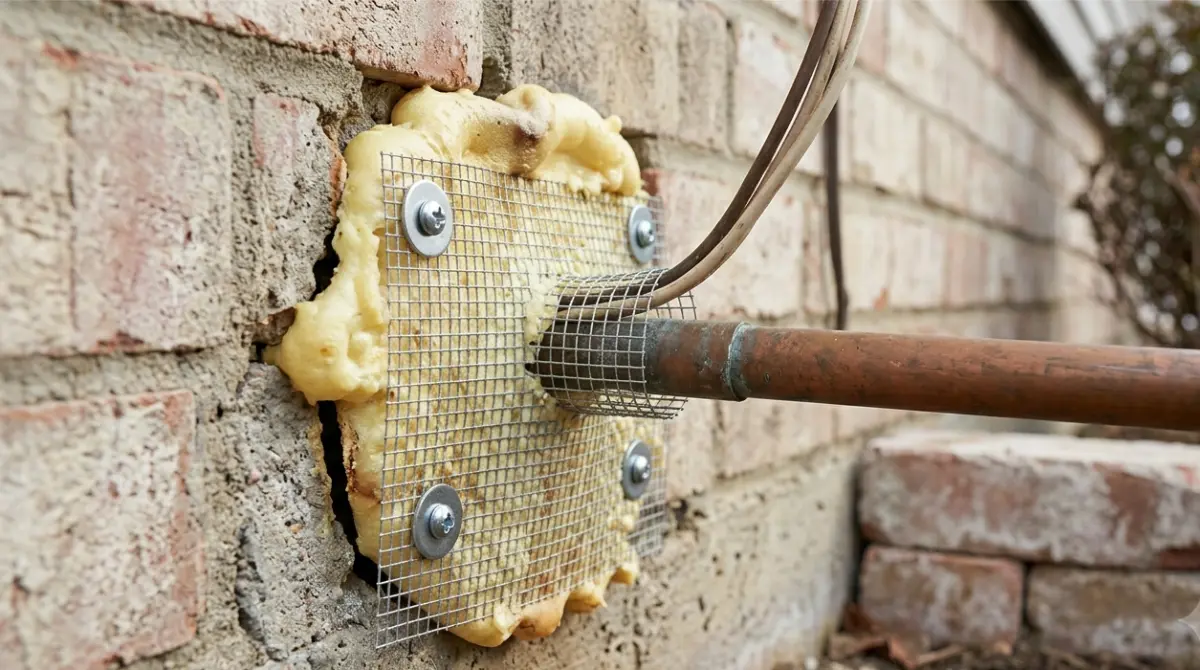
Steel wool is what the CDC names for small holes, with a condition attached: caulk around it, or use spray foam, to hold it in place. Loose packing is not a repair. Copper mesh is the same idea in non-ferrous form, specified in the National Park Service’s exclusion manual for utility-line gaps.
Screens and plates
For larger openings the CDC lists lath, cement, hardware cloth, or metal sheeting cut to fit around pipes. Cornell’s pest exclusion guidance notes quarter-inch mesh is the size suited to mice. The Park Service manual specifies 16 to 19 gauge for that mesh, and 24-gauge or heavier sheet metal for plating chewed edges.
Thresholds and foam
Door sweeps and kick plates hold the gap under exterior doors below a quarter inch. Expanding foam seals air, not rodents.
Not surveyed the structure yet? Start with the entry points worth checking first.
Which materials hold, and which don’t
Ranked by how each gives out, the durable choices are metal and the fragile ones are everything else.
| Material | Where it fits | How it fails | Best for |
|---|---|---|---|
| Copper mesh | Gaps around pipes and utility lines | Works loose if not capped with sealant | Damp spots, weep holes |
| ¼-inch hardware cloth, 16–19 gauge | Vents, crawl space screens | Zinc coating gives eventually; fine mesh cuts airflow, clogs, freezes | Permanent screening |
| Galvanized sheet metal, 24-gauge+ | Plating holes and gnawed edges | Fasteners loosen; aluminum gets chewed through | Edges mice already worked on |
| Steel wool | Small, dry interior holes | Plain steel is not corrosion-resistant; unanchored plugs pull apart | Interior gaps out of the wet |
| Door sweep or kick plate | Under exterior doors | Wears with use; needs frequent repair | Thresholds |
| Expanding foam | Air-sealing behind metal | Embrittles under UV; no barrier alone | Never as the only material |
Failure modes drawn from CDC seal-up guidance, Cornell IPM, UC IPM, and the National Park Service exclusion manual. Gladewick has run no durability trials of its own on these materials.
📊 Spec: In a National Park Service and CDC study of park buildings, one-time repair of identified access points cut rodent infestations by more than 90% against similar structures left unrepaired.
Federal guidance is blunt about the limit: exclusion is never permanent, because weather, settling and ordinary building work keep reopening the envelope. Inspect exteriors twice a year, spring and fall.
How sealed holes fail
Three patterns account for most reopened repairs.
Foam alone is a filler, not a barrier
The Park Service manual documents a utility gap partly filled with expanding foam that still left an opening adequate for entry. Foam also turns brittle under sunlight, which is why the same guidance says to trim and paint it once cured.
🔍 Why It Works: Metal stops a mouse because incisors get no purchase on it. Foam stops air. Foam behind metal gives you both; foam alone gives you neither.
Anything unanchored gets worked loose
A packed plug with slack in it hands a mouse something to pull. That is why the CDC’s instruction is steel wool plus caulk or foam, never steel wool by itself.
Wet and sunlit spots fail first
Corrosion resistance varies by material, and Cornell notes stainless mesh will never rust where galvanized eventually can. Weep holes and crawl space penetrations are wet by design, so use copper or stainless there.
If a patch looks intact but you find fresh droppings beside the seal, the opening is still live nearby.
What to buy, and what to skip
Buy on specification, because the words “rodent proof” on packaging carry no standard.
The specs that matter
- Mesh size: quarter-inch. Half-inch stops rats but leaves gaps a mouse uses.
- Gauge: 16 to 19 for hardware cloth, 24 or heavier for sheet metal.
- Metal: galvanized as the baseline, copper or stainless anywhere damp.
- Fixings: screws with fender washers, or a staple gun, so screening cannot be peeled back.
🛒 Our Pick: Quarter-inch galvanized hardware cloth in 16–19 gauge, with a roll of copper mesh for pipe gaps. This rests on the published specifications cited above, not on our own testing.
What isn’t worth buying
Aluminum screening gets gnawed through. Felt and foam compression seals are not gnaw-resistant. Ultrasonic devices and scent repellents seal nothing.
✅ Do This: Buy one roll of mesh rather than a patch kit per hole. A roll covers many openings, and the leftovers cover next spring’s inspection.
When to stop and call a professional
Two parts of this job are not DIY decisions.
Cleaning droppings without stirring up dust
Never sweep or vacuum rodent droppings, urine or nesting material, because the risk comes from breathing contaminated dust. The CDC’s cleanup protocol is to ventilate for 30 minutes, wear gloves, spray until wet with disinfectant, let it soak, wipe with paper towels, and double-bag the waste. Species affects how carefully you work, so check which species you’re cleaning up after first.
Don’t seal mice inside
Trap first, then seal. Sealing an occupied wall leaves rodents dying inside it.
⚠️ Watch Out: Call a licensed pest management professional if rodents have reached ductwork or any void you cannot clean. Ask for the current state applicator licence number, whether the quote covers exclusion or only trapping, and whether entry points will be documented. The EPA’s guidance on hiring a rodent control professional covers what else to verify.
Common questions about sealing mouse entry points
1. How small a hole can a mouse get through?
About a quarter inch, roughly 6 mm or the width of a pencil. Once the head fits, the body follows.
2. Does steel wool stop mice?
Yes, when packed tight and anchored with caulk or spray foam. Loose steel wool can be pulled apart or worked free.
3. Is copper mesh better than steel wool?
Copper does not rust, making it the safer choice in damp spots such as weep holes and pipe penetrations.
4. Will mice chew through expanding foam?
Foam alone will not keep mice out. Federal guidance treats it as a sealant belonging behind metal, never as the barrier.
5. What size hardware cloth keeps mice out?
Quarter-inch mesh at 16 to 19 gauge. Half-inch excludes rats but still leaves openings a mouse passes through.
6. Can I seal a hole with mice still inside?
No. Trap first, then seal, or you close rodents into your walls. If unsure the structure is clear, have a licensed pest management professional inspect before sealing.
7. Does sealing entry points actually work?
Yes. A National Park Service study found one-time repairs cut rodent infestations by more than 90% against unrepaired buildings.
8. Where do mice get into a house most often?
Around pipe and utility penetrations, under doors, along the foundation line, and at roofline gaps in eaves, soffits and vents.
9. How often should I re-check sealed entry points?
Twice a year. Federal guidance recommends exterior inspections in spring and again in fall, before rodents move indoors.
10. Is it safe to clean up mouse droppings myself?
Often yes, provided you never sweep or vacuum. Ventilate 30 minutes, wet everything with disinfectant, then wipe with paper towels. For heavy infestations or droppings in ductwork, call a professional.
Your next 20 minutes
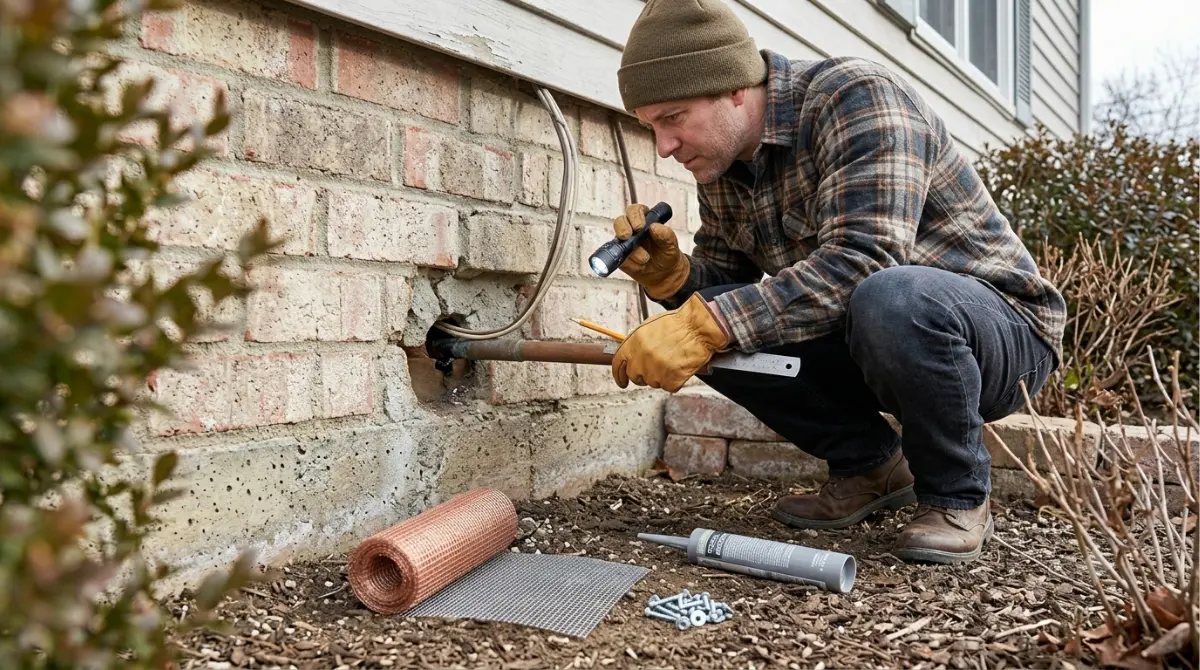
Take a flashlight and a pencil around the outside of the house. Any gap the pencil enters is a gap a mouse can use, so mark it, then close it with metal first and sealant second.
Put the next check on the calendar for spring. Sealing is maintenance, not a one-time repair.