Rodent droppings identification starts with one real measurement

Rodent droppings identification comes down to a ruler — or a penny, which is exactly 0.75 inch wide. Here’s what size, shape, and age really tell you.
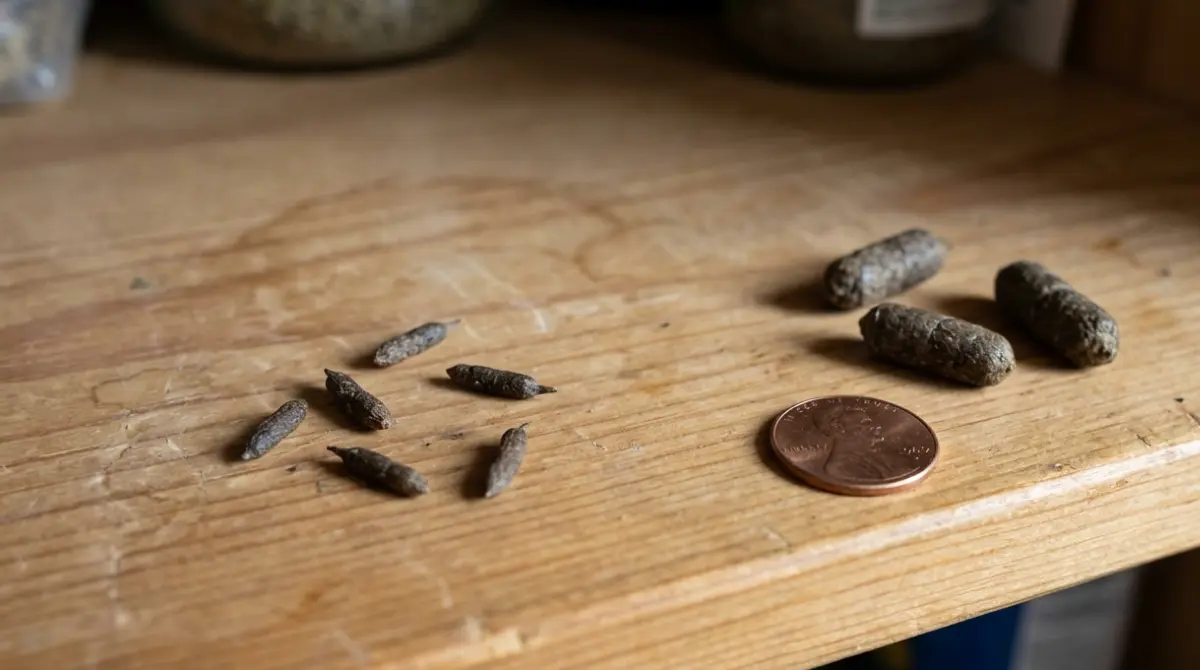
Table of Contents
Mouse droppings run 1/8 to 1/4 inch with pointed ends. Rat droppings are two to three times that — up to 3/4 inch — and usually blunt. That single measurement settles most rodent droppings identification questions.
To confirm the species, use the size test below. Unsure it came from a rodent at all? Start with the look-alikes. To learn whether the problem is still live, jump to the age section.
If you have already reached for a broom, read the cleanup steps first — then seal the gaps rodents are using.
ℹ️ Safety Note: Rodent droppings and urine can carry disease-causing organisms, and disturbing them dry puts contaminated particles into the air. This guidance is general and follows published CDC recommendations. Hire a licensed pest professional for heavy infestations, contaminated insulation, or rodents in ducts.
Mouse or rat droppings: the size and shape test
Length and end shape separate the species more reliably than color or quantity.
| Rodent | Length | End shape | Key detail — where they turn up |
|---|---|---|---|
| House mouse | 1/8–1/4 in | Pointed | Scattered — drawers, sinks, baseboards |
| Norway rat | Up to 3/4 in | Blunt, capsule-like | Low — basements, crawl spaces |
| Roof rat | About 1/2 in | Tapered, spindle | High — attics, rafters, cabinets |
Sources: Nebraska Extension (mouse), UC IPM (rats). Not tested by us.
How big are mouse droppings?
Small enough to pass for a dark grain of rice, with one or both ends narrowing to a point.
What rat droppings look like
Norway rat droppings are thick and blunt. Roof rat droppings are smaller and taper at both ends — which is why they get mistaken for mouse droppings.
The coin trick: measuring without a ruler
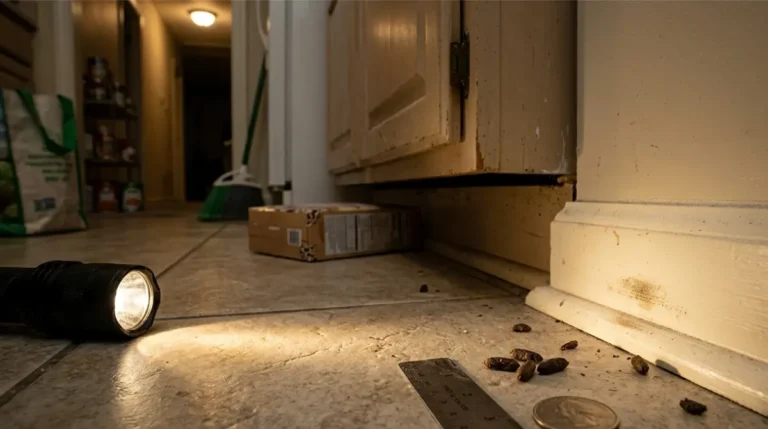
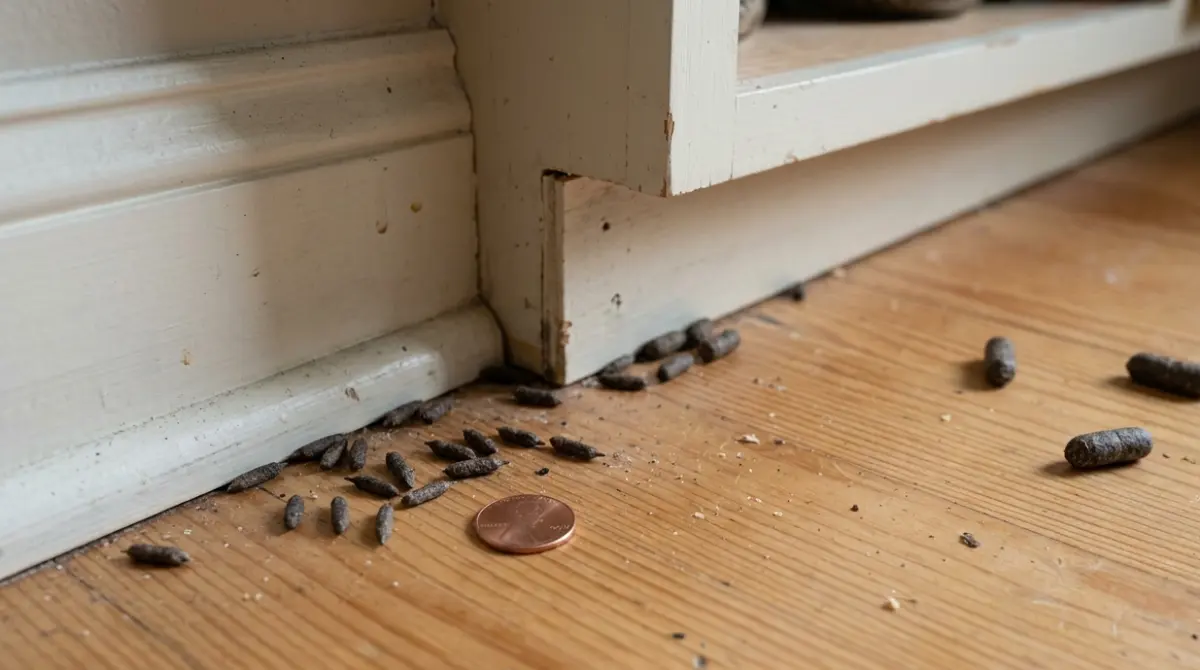
You have a scale reference in your pocket: under federal coinage law a US penny is exactly 0.75 inch across. A mouse dropping covers a sixth to a third of that width; a Norway rat dropping runs nearly the full width.
📊 Sourced: One house mouse leaves 50–75 pellets a day (Nebraska Extension). A dozen droppings does not mean a dozen mice.
When it isn’t a rodent: three look-alikes
Before treating for mice, confirm you have mice.
Cockroach droppings vs mouse droppings
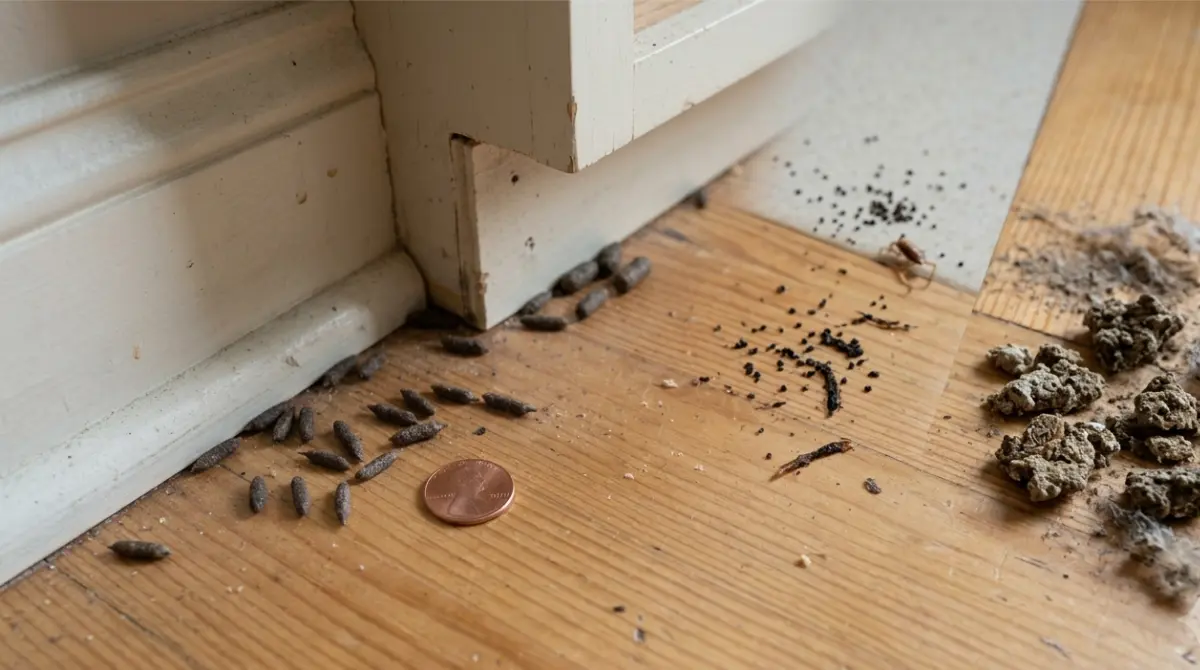
Cornell’s IPM programme notes that cockroach droppings carry visible ridges, while rodent droppings are smooth, tapered, and often contain swallowed hair.
Squirrel and vole droppings
Both are rounder and more barrel-shaped, and squirrel droppings turn up along roof lines, not in kitchens.
Bat guano — stop here
Bat droppings crumble into a glittery dust of insect fragments. Accumulations can support a fungus linked to respiratory illness.
✅ Do This: Never sweep, vacuum, or bag accumulated bat droppings. Call a bat-exclusion specialist, not a general pest company, and ask whether exclusion is seasonally restricted in your state.
Can you tell how old rodent droppings are?
Not reliably by looking. The familiar rule — shiny means fresh, gray and crumbly means old — leads people to a dangerous conclusion.
Why color and texture don’t date droppings
🔍 Why It Works: Color tracks diet, not age, as Nebraska Extension states directly. Drying speed varies too — droppings in a damp crawl space stay soft far longer than those on a warm floor.
The 48-hour clean-and-recheck method
The CDC’s position is that droppings alone make active presence hard to judge, and that cleaning the area and watching for new ones is how to be sure.
Clean one defined spot using the wet method below, note the date, and recheck it 48 hours later. New droppings mean an active infestation.
If you are also hearing scratching in the walls at night, you already have your answer.
Are old droppings still dangerous?
Treat every dropping as potentially infectious regardless of apparent age. The CDC sets no age after which untreated droppings become safe to handle.
What the species tells you about risk
Identification matters — but not because the cleanup changes. It never does.
Do house mice carry hantavirus?
In the US the deer mouse is the primary reservoir of the hantavirus causing hantavirus pulmonary syndrome, alongside the white-footed mouse in the Northeast and cotton and rice rats in the Southeast. House mice and both rat species are not known carriers — but that is not permission to relax, because rodents carry other disease organisms and droppings cannot confirm species.
Where you found them matters more
Norway rats stay low and burrow; roof rats climb and leave sign overhead, per UC IPM. Attic droppings point to different entry points than droppings behind a dishwasher.
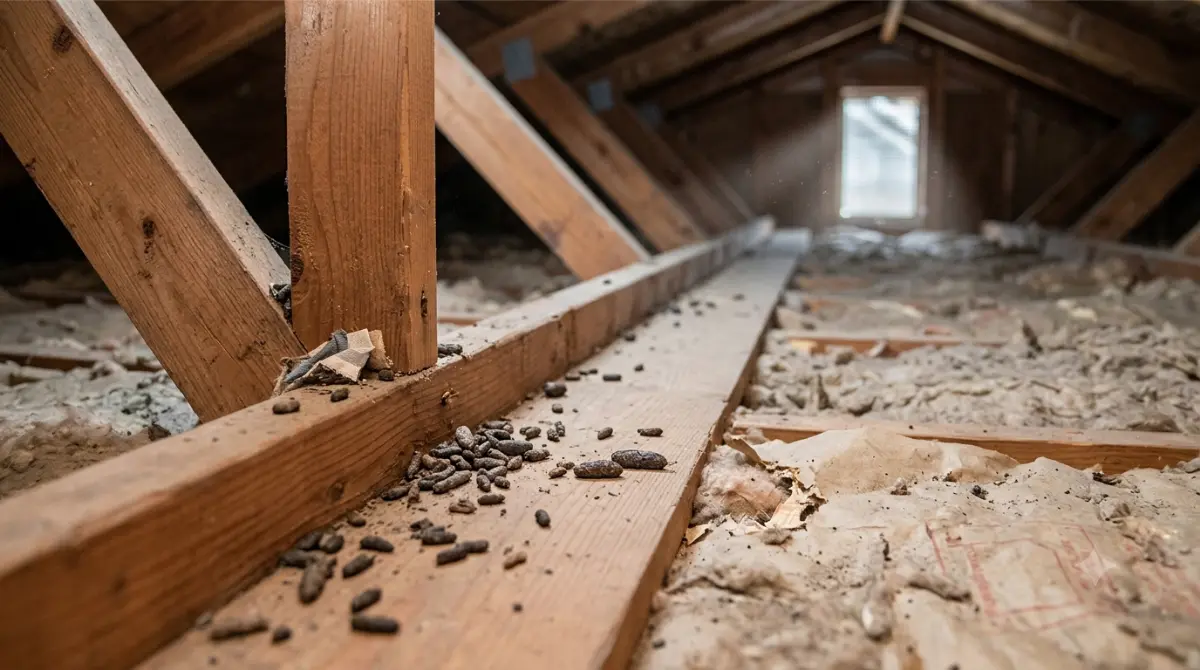
How to clean up rodent droppings safely
Do not sweep or vacuum first.
Never sweep or vacuum first
⚠️ Watch Out: The CDC advises against vacuuming or sweeping rodent urine, droppings, or nesting material, because it puts contaminated droplets into the air you breathe. Already vacuumed? Follow the same steps below.
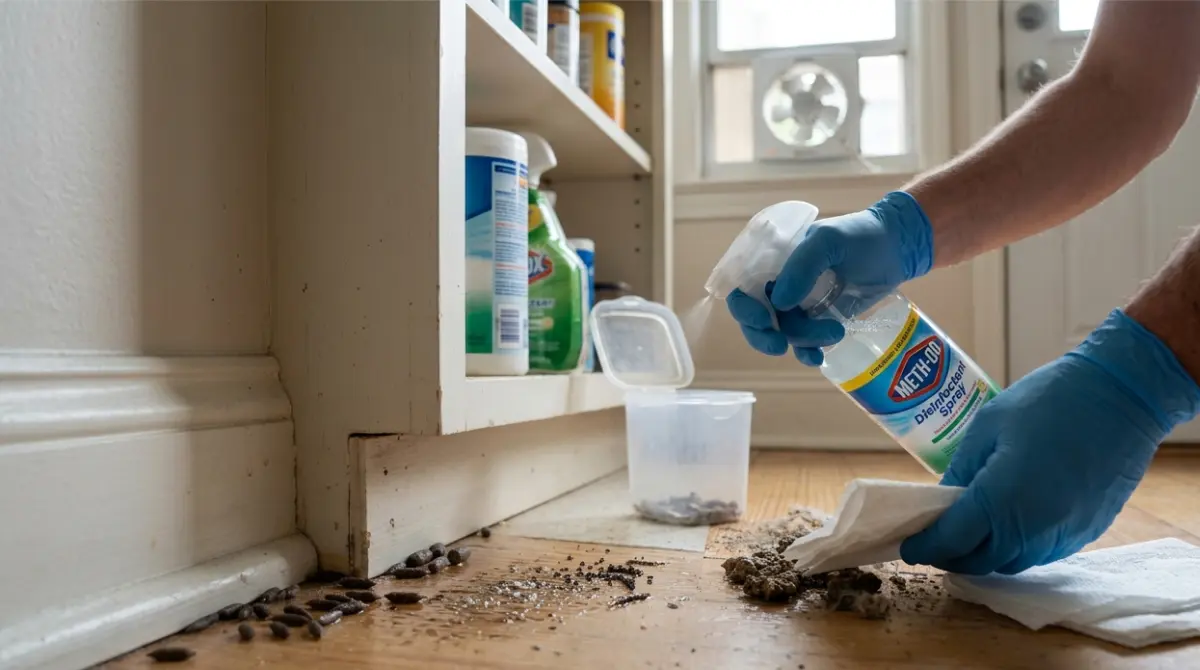
The wet cleaning steps
These follow the CDC’s guidance for cleaning up after rodents:
- Ventilate 30 minutes with doors and windows open, and leave the area.
- Put on rubber or plastic gloves.
- Spray until very wet with a product labelled “disinfectant,” or fresh bleach at 1.5 cups per gallon — the current CDC ratio, not the weaker one still circulating.
- Soak 5 minutes, or as the label specifies.
- Wipe up with paper towels and bin them in a covered container.
- Mop with disinfectant, then wash your hands before and after removing gloves.
When to stop and call a professional
✅ Do This: Hire a licensed pest control operator for heavy infestations, contaminated insulation, or rodents in HVAC ducts. Verify their state licence, and ask whether the quote covers sealing entry points or just trapping.
What to keep on hand
The list comes from CDC guidance rather than anything we tested.
The three items that matter
Rubber or plastic gloves, a product labelled “disinfectant” or plain household bleach, and paper towels.
What a mask doesn’t buy you
For heavy infestations the CDC lists coveralls, goggles, and respiratory protection — a signal to stop, not a shopping list that qualifies you to continue. Same logic as protective gear for contaminated cleanups.
Rodent droppings identification: quick answers
1. How do I tell mouse droppings from rat droppings?
Mouse droppings are 1/8 to 1/4 inch and pointed; rat droppings reach 3/4 inch and blunt.
2. How big are mouse droppings?
About 1/8 to 1/4 inch, tapered at one or both ends, scattered rather than piled.
3. What do rat droppings look like?
Around 1/2 to 3/4 inch. Norway rat droppings are blunt-ended, roof rat droppings smaller and pointed.
4. Can you tell how old rodent droppings are?
Not reliably from color or texture, since color follows diet. Clean one spot, recheck 48 hours later.
5. Are old rodent droppings still dangerous?
Treat all rodent droppings as potentially infectious regardless of apparent age; appearance cannot establish safety. Follow the CDC steps above.
6. Can I vacuum up mouse droppings?
No — sweeping or vacuuming sends contaminated droplets into the air you breathe. If you already vacuumed, follow the same steps.
7. What disinfects rodent droppings?
A product labelled “disinfectant,” or fresh bleach at 1.5 cups per gallon, soaked five minutes. Follow the label’s contact time.
8. Do house mice carry hantavirus?
The deer mouse is the primary US reservoir, not the house mouse. Precautions do not change either way.
9. How do I tell cockroach droppings from mouse droppings?
Cockroach droppings show visible ridges; rodent droppings are smooth, tapered, and often contain hair.
10. When should I call a pest professional?
For heavy infestations, contaminated insulation, or rodents in heating and cooling ducts. Verify their state licence.
What to do next
Measure one dropping against a penny and you have your species. Clean one marked spot, recheck it in 48 hours, and you know whether it is still active.
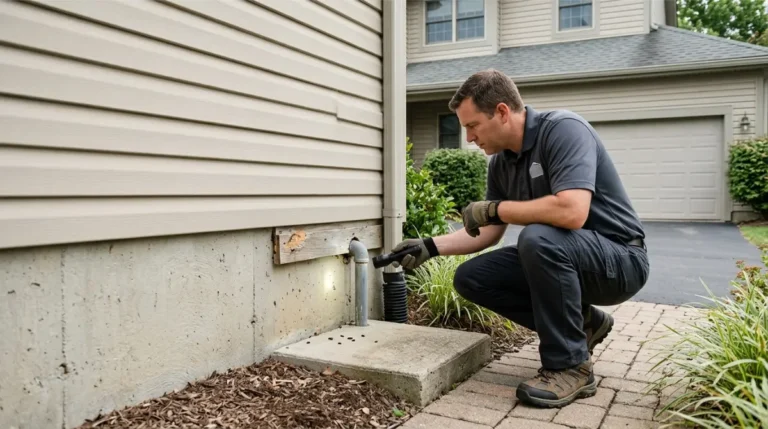
Droppings return until the entry points close — which is what rodent-proofing your house covers.