
How to Prepare for Termite Fumigation and Avoid Costly Risks

Termite fumigation runs $2,000–$8,000 and needs a clearance test before re-entry — get the 11-step prep checklist and 3 risks brochures skip.
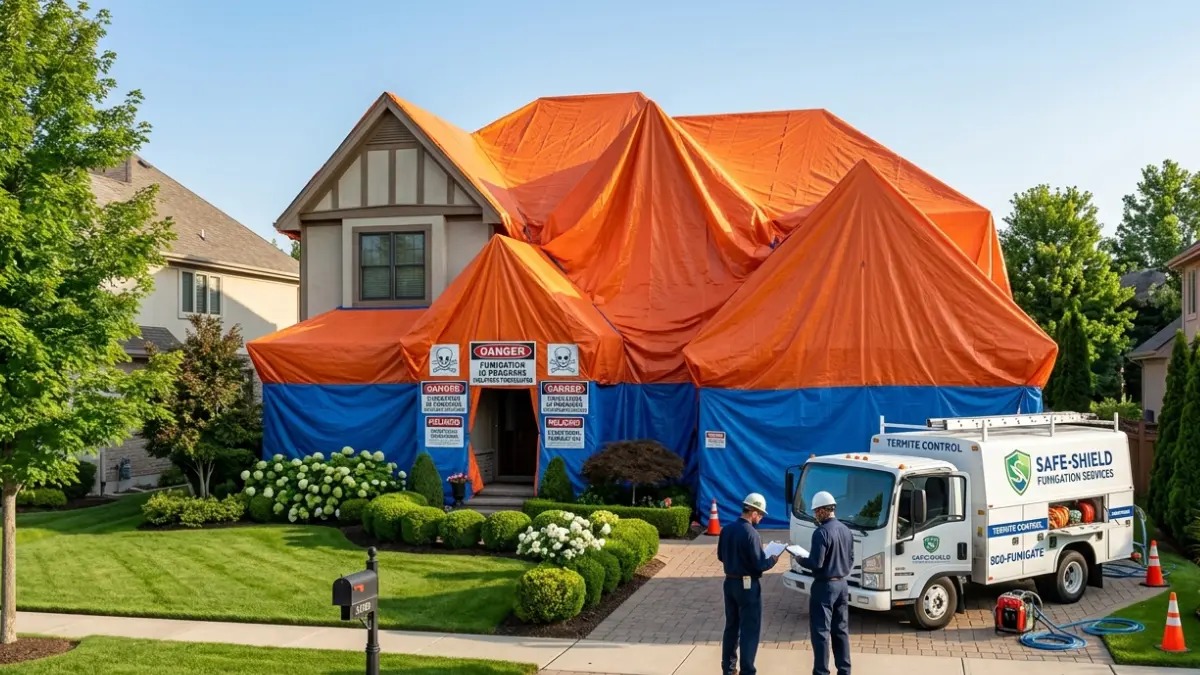
Table of Contents
If your home is already scheduled for termite fumigation, you’re probably staring down a mountain of prep — every box of cereal to bag, pets to rehome for a few nights, a tent going over your whole house. This guide gives you the full prep checklist, then the honest trade-offs most companies skip.
If you’re still deciding whether to tent at all, jump to the cost and risk sections — and compare all five termite treatments and their real costs on our main guide first. Renters: coordinate early with your landlord, since fumigation needs whole-building access.
Fumigation targets drywood termites living deep inside your framing, and it’s genuinely effective. It also has three real downsides worth knowing before the tent goes up.
ℹ️ Safety Note: Termite fumigation uses sulfuryl fluoride, a restricted-use pesticide that only a licensed, certified applicator may handle. Everything here is general homeowner guidance, not do-it-yourself instructions — no one may enter a fumigated home until the licensed fumigator certifies it safe with a clearance device. Always hire a licensed structural fumigator and follow every posted warning and local regulation.
How termite tenting actually works
Termite tenting seals your entire home under tarps and fills it with sulfuryl fluoride gas (sold as Vikane) at a lethal concentration, reaching termites no spot treatment can touch. The gas penetrates drywall, paint, and the dense pores of structural wood, then dissipates fully during aeration.
Because sulfuryl fluoride is colorless and odorless, fumigators typically release a small amount of chloropicrin — tear gas — as a warning agent, so any lingering sharp smell tells you gas is still present.
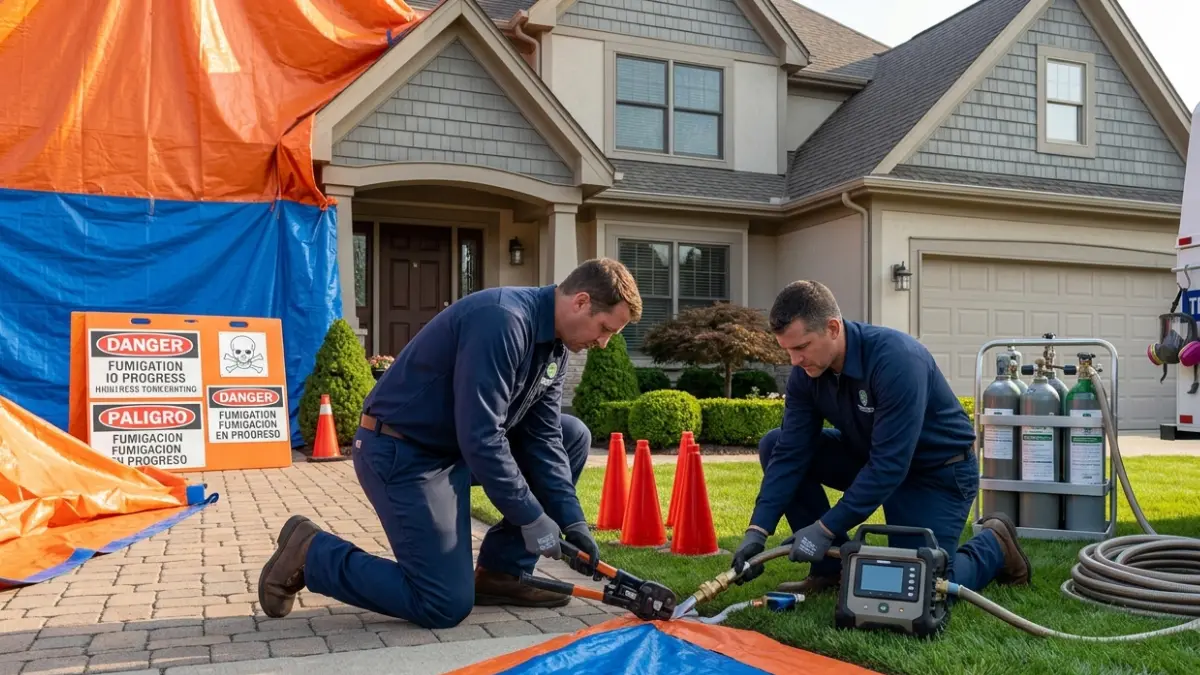
🔍 Why It Works: Sulfuryl fluoride is a tiny molecule that spreads into every air space and soaks into wood, then breaks down to fluoride inside the insect and disrupts its energy metabolism. Because it fills the whole sealed structure, it kills termites in every life stage at once — eggs through adults — according to NPIC’s fact sheet on how sulfuryl fluoride works.
Why it’s only for drywood termites. Drywood colonies live entirely inside wood with no soil contact, so soil treatments can’t reach them — see the difference in our guide to subterranean versus drywood termites. Whole-structure fumigation is the reliable way to hit multiple hidden colonies together. If you’re finding small piles of pellets, that’s likely drywood termite frass, a classic sign.
What it does not do. Sulfuryl fluoride leaves no residue, which means it leaves no protective barrier. Once the gas clears, nothing stops new termites from entering — a point we return to in the risks below.
The 11-step termite fumigation prep checklist
Preparing for termite fumigation takes 11 homeowner steps, and each one exists to keep the job effective and your household safe:
Steps 1–4: People, pets, food, and medications
- Arrange lodging for all people and pets for the full window — usually two nights, sometimes three for weekend jobs.
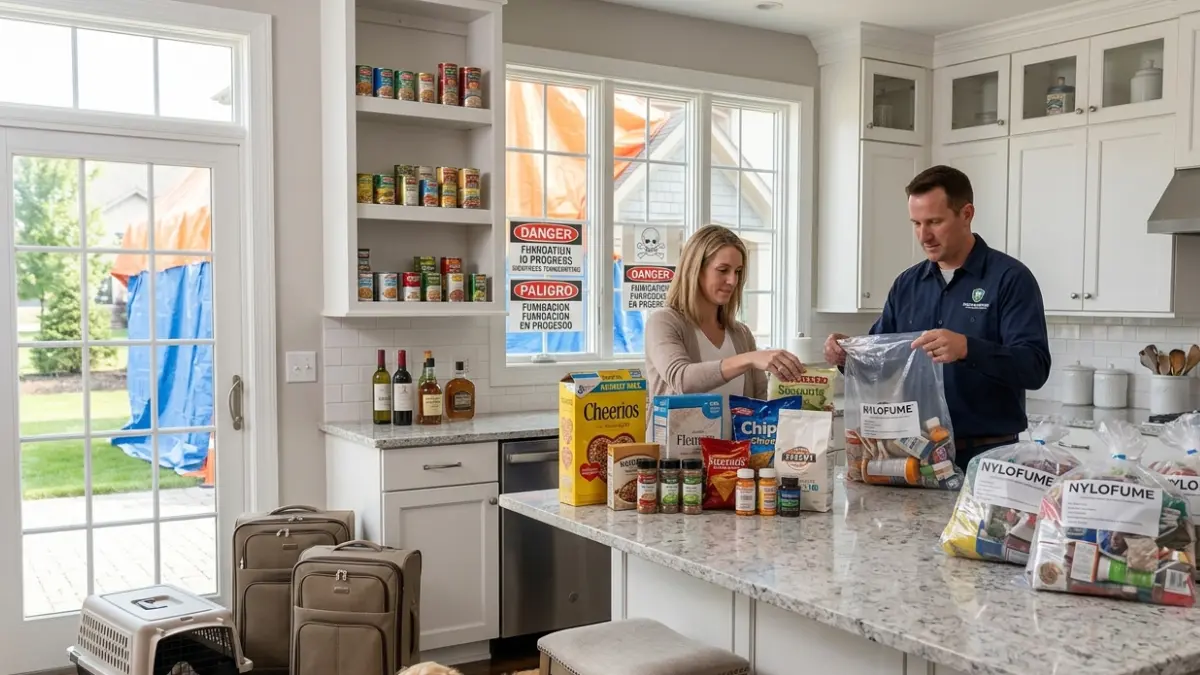
- Remove or double-bag all food, feed, medications, tobacco, and spices that aren’t in a factory-sealed glass, plastic, or metal container — using the Nylofume bags your fumigator provides. Even unopened cereal, chips, and rice boxes need bagging.
- Remove every plant from inside the home and anywhere under the tent, including patios and attached decks.
- Remove fish from the property; the tank water can stay, but the fish cannot.

- 【Holds Its Shape, No Matter How Your Pet Moves】:Engineered with a built-in 5mm steel wire frame, a solid base board, and…
- 【Spacious Comfort & Car Travel Ready】:This versatile cat carrier soft offers more room than standard handbags. Your pet …
- 【360° Ventilation & Multiple Entrances】:With multiple scratch-resistant nylon mesh windows, this breathable cat carrier …
Steps 5–8: Plants, gas, appliances, and the roof
- Cut back shrubs, foliage, and tree limbs about 12–18 inches from the walls, and trim any branches over the roof so the tarp can drop and seal freely.
- Water the soil around the foundation the day before, roughly six inches deep, which protects outside plants and helps seal the tent’s base.
- Arrange for the gas utility to shut off service the day before; you’re responsible for restoring service and relighting pilot lights afterward.
- Power down HVAC and unplug heat-generating appliances and electronics as your fumigator directs.
Steps 9–11: Access, security, and weather
- Lower or remove rooftop antennas, weathervanes, and awnings that could be damaged or block the tent.
- Provide keys or unlock as instructed — the company posts warning signs and adds secondary locks but provides no on-site security, so take valuables and needed prescriptions with you.
- Watch the forecast: strong wind or rain reschedules the job, so confirm the date holds.
⚠️ Watch Out: Improper food bagging is the most common prep failure. If a consumable isn’t in its original factory seal, it goes in a Nylofume bag — no exceptions — or you risk contamination and a voided job.
How long you’re out — and how to know it’s safe to return

- Wellness Indicator: This humidity meter with humidity level icon indicates air conditions – DRY/COMFORT/WET, allowing th…
- High Accuracy & Quick Refresh Rate: This inside thermometer features a high accuracy of +/-2 to 3%RH and +/-1°F, making …
- High & Low Records: This hygrometer digital thermometer displays high/low temperature and humidity levels to allow you t…
Plan to be out of the home for 24 to 72 hours. You may re-enter only after the fumigator’s clearance test confirms the gas has dropped to a safe level — the process decides your return, never the clock.
The full sequence runs prep, exposure, then aeration and clearance, typically spanning about three days and two nights. The gas is held for roughly a day, then fans and vents air the structure for hours before testing.

- Hard sided pet carrier with 2 doors for front and top entry; suitable for cat or medium size dog weighing 12 – 20 pounds
- Durable plastic construction with steel wire doors; screws keep the top and bottom sections securely connected
- Spring load latches ensure easy one-handed door opening and closing; top door swings open to the left or right and inclu…
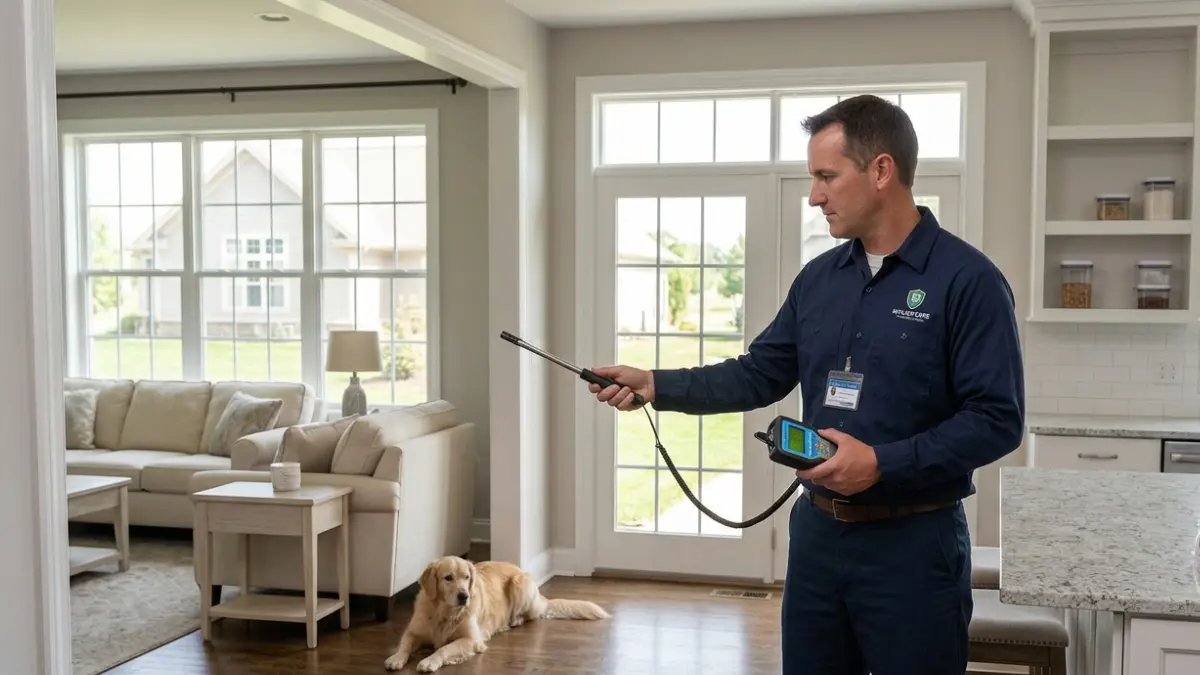
📊 Spec: The EPA requires sulfuryl fluoride to reach 1 part per million or below before anyone re-enters, measured with a calibrated clearance device by the licensed fumigator — see the EPA’s re-entry and clearance requirements for sulfuryl fluoride.
Before you left, the crew posted no-entry warning signs and added secondary locks that only they can open. Re-entry happens when they certify it — not when you decide the time feels right.
✅ Do This: Ask your licensed fumigator for the written clearance certificate showing the readings, timestamps, and locations tested, and keep it. It’s your proof for warranty, resale, and insurance.
⚠️ Watch Out: If you notice any sharp, irritating smell after returning, that’s the chloropicrin warning agent — a sign aeration may be incomplete. Leave and call your fumigator; don’t try to air it out yourself.
On the day you return, restore gas service and have pilot lights relit, and wipe kitchen counters and food-prep surfaces as a simple precaution even though the gas leaves no surface residue.
What termite fumigation costs — and the hidden line items
Structural fumigation runs about $1 to $4 per square foot, or roughly $2,000 to $8,000 for an average home, based on national cost data from home-services marketplaces. Price tracks the cubic volume of enclosed space, so two-story and vaulted-ceiling homes cost more per square foot than a single-story ranch.
| Home size | Typical total | Key detail |
|---|---|---|
| Under 1,500 sq ft | ~$1,000–$2,500 | Single-story clears fastest |
| 1,500–2,500 sq ft | ~$2,000–$5,000 | Most common range |
| Over 2,500 sq ft | ~$4,000–$8,000+ | Multi-story raises cubic volume |
Ranges reflect national cost data cross-referenced across home-services marketplaces (2026); confirm local quotes before budgeting.
Why California and Florida run higher. Strict state regulations and heavy drywood termite pressure push rates up, and those two states account for the bulk of U.S. residential fumigations. If your problem is actually subterranean termites, you likely don’t need a tent at all — those are treated with soil or bait systems, as our guide to termite bait versus liquid treatment explains. Not sure of your home’s size? Our square footage calculator gives you a quick estimate to sanity-check a quote.
The hidden costs. Budget beyond the quote for lodging, pet boarding, food replacement, and possible roof-tile or landscape repair. And note this: standard homeowners insurance does not cover termite damage or fumigation — a pest warranty or service contract is your only protection.
3 real risks nobody puts in the brochure
Fumigation works, but three real risks rarely make the sales pitch. Each has a clear way to manage it.
Risk 1 — Gas can linger after “clearance”
Sulfuryl fluoride can get trapped in wall sockets, cabinets, crawl spaces, and air mattresses, and the California Department of Public Health notes it has been measured in homes up to 48 hours after clearance. At high levels the gas can cause nausea, vomiting, seizures, or worse, and federal reviewers have documented health incidents after homes were cleared.
⚠️ Watch Out: “Cleared for re-entry” does not always mean zero exposure. Insist on written clearance, ventilate hard for the first day, and keep infants, older adults, and pets out longer — guidance echoed in California’s public-health guide to fumigation exposure.
Risk 2 — You pay thousands for zero lasting protection
Because the gas leaves no lasting protection, your $2,000-to-$8,000 tent buys no barrier against the next infestation. Drywood swarmers can fly in and start fresh colonies, and fumigation neither repairs existing damage nor fixes what attracted termites. Start a prevention and monitoring plan afterward, and watch for termite swarmers appearing indoors or other signs of termites returning.
Risk 3 — Roof, landscape, and empty-home exposure
Crews walk your roof to tent it, and older tile, shake, or composition can crack — and pest companies generally disclaim liability for roof and landscape damage. Plants left inside the tent die, and because the home sits empty for days with no security provided, break-ins do occasionally happen.
✅ Do This: Ask your fumigation company in writing what they cover, consider tile-damage protection, remove plants beforehand, and arrange your own security if theft is a concern.
Is fumigation the right call — or is there a better option?
Whole-house tent fumigation isn’t automatically the answer; it’s the answer for a specific situation.
When whole-house tenting is worth it
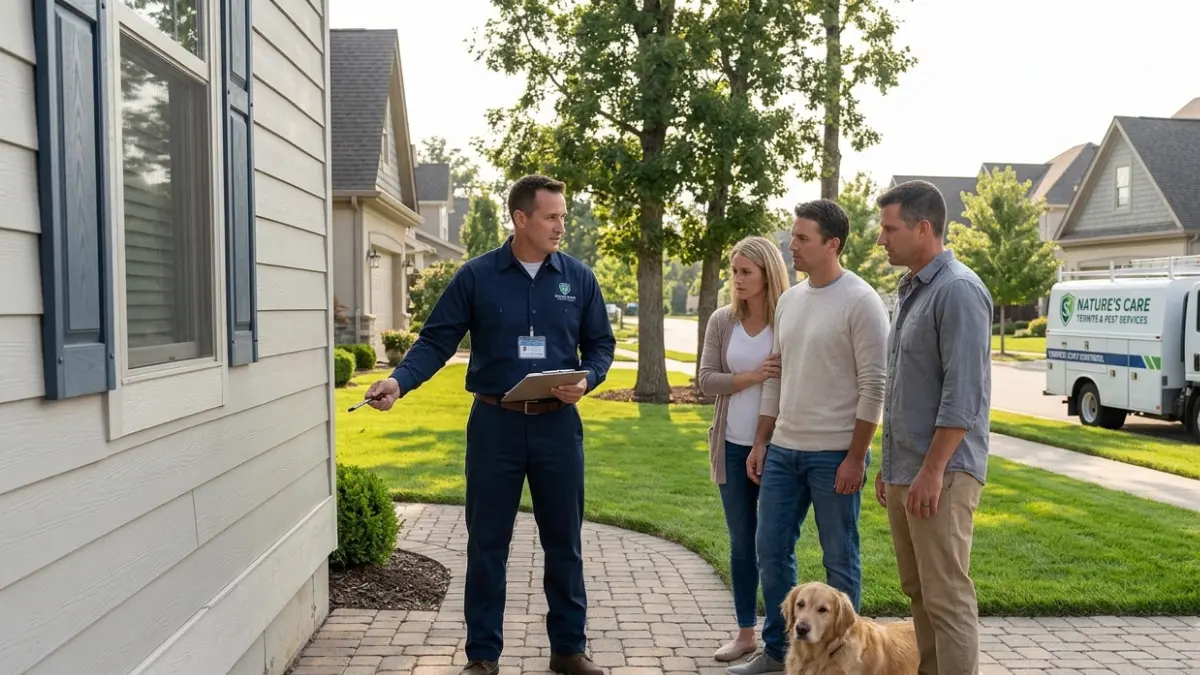
Tenting earns its cost when drywood activity is confirmed in more than one spot or inside framing a technician can’t reach directly. For widespread or hidden colonies, treating the whole structure at once is the most reliable option — and often cheaper than years of spreading damage.
When a spot or heat treatment makes more sense
For a single, accessible colony, a localized spot treatment costs a fraction of a tent and skips the three-day displacement. Heat treatment is a chemical-free whole-structure alternative worth pricing too. To weigh all of these side by side, compare the five main termite treatments and get a licensed inspection to confirm how far the infestation actually spreads.
Termite fumigation: frequently asked questions
1. Is termite fumigation safe?
Termite fumigation is safe once a licensed fumigator certifies the home with a clearance device reading 1 ppm or below. The gas can linger in trapped spaces for up to 48 hours, so get written clearance and keep infants, older adults, and pets out longer before settling back in.
2. How long does the whole process take?
Termite fumigation usually takes about three days and two nights from prep through clearance. The tent stays up roughly 24 to 72 hours, covering the exposure period plus aeration. Your exact timeline depends on home size and layout, and re-entry happens only when the fumigator certifies it.
3. Do I really have to bag all my food?
Yes. For termite fumigation, remove or double-bag all food, medications, feed, and spices that aren’t sealed in original factory glass, plastic, or metal. Use the Nylofume bags your fumigator supplies. Even unopened boxes of cereal, chips, or rice need bagging, since the gas penetrates ordinary packaging.
4. Can termites come back after fumigation?
Yes. Termite fumigation leaves no residue and no protective barrier, so drywood swarmers can re-enter and start new colonies afterward. Fumigation clears the current infestation but doesn’t prevent the next one, which is why a prevention and monitoring plan matters once the tent comes off.
5. How much does termite fumigation cost?
Termite fumigation typically costs $1 to $4 per square foot, or about $2,000 to $8,000 for an average home. Price tracks the cubic volume of your home, so multi-story houses run higher. California and Florida sit above the national average, and lodging and food replacement add to the total.
6. What chemical is used in termite fumigation?
Termite fumigation uses sulfuryl fluoride gas, sold under the brand name Vikane. Because it’s colorless and odorless, fumigators typically add a small amount of chloropicrin as a warning agent. Sulfuryl fluoride is a restricted-use pesticide, so only a licensed, certified applicator may handle it.
7. Do I need to wash everything after fumigation?
No deep cleaning is required after termite fumigation, since sulfuryl fluoride leaves no surface residue. As a simple precaution, wipe kitchen counters and food-prep surfaces when you return. If you notice any sharp chemical smell, leave and call your fumigator, as that can signal incomplete aeration.
8. Will fumigation damage my roof or plants?
It can. Crews walk your roof to tent it, so older tile or shake may crack, and most companies disclaim liability for roof and landscape damage. Plants left inside the tent will die. Remove plants beforehand, cut back foliage, and ask in writing what damage the fumigation company covers.
9. Is it safe to sleep in the house the first night back?
It’s safe to sleep in the home the first night only after the fumigator certifies clearance at 1 ppm or below and there’s no chemical odor. Ventilate well and keep sensitive family members out a little longer. If you smell anything sharp, leave and call the fumigator immediately.
10. Does homeowners insurance cover fumigation?
No. Standard homeowners insurance does not cover termite damage or termite fumigation, because termites are considered a preventable maintenance issue. A pest control warranty or service contract is the protection available. Keep your clearance certificate and any contract for warranty and resale purposes.
Your next step
Handled right, termite fumigation is manageable: prep thoroughly, hire a licensed structural fumigator, and don’t re-enter until they certify the home at 1 ppm or below. Go in clear-eyed about the honest reality — a tent clears today’s colonies but buys no protection against tomorrow’s, so a prevention plan is the real finish line.
Work through the 11-step checklist above before your date so nothing gets missed, and if you’re still weighing your options, compare all five termite treatments and their real costs before you commit to tenting.
Related Articles
 Termite Treatment
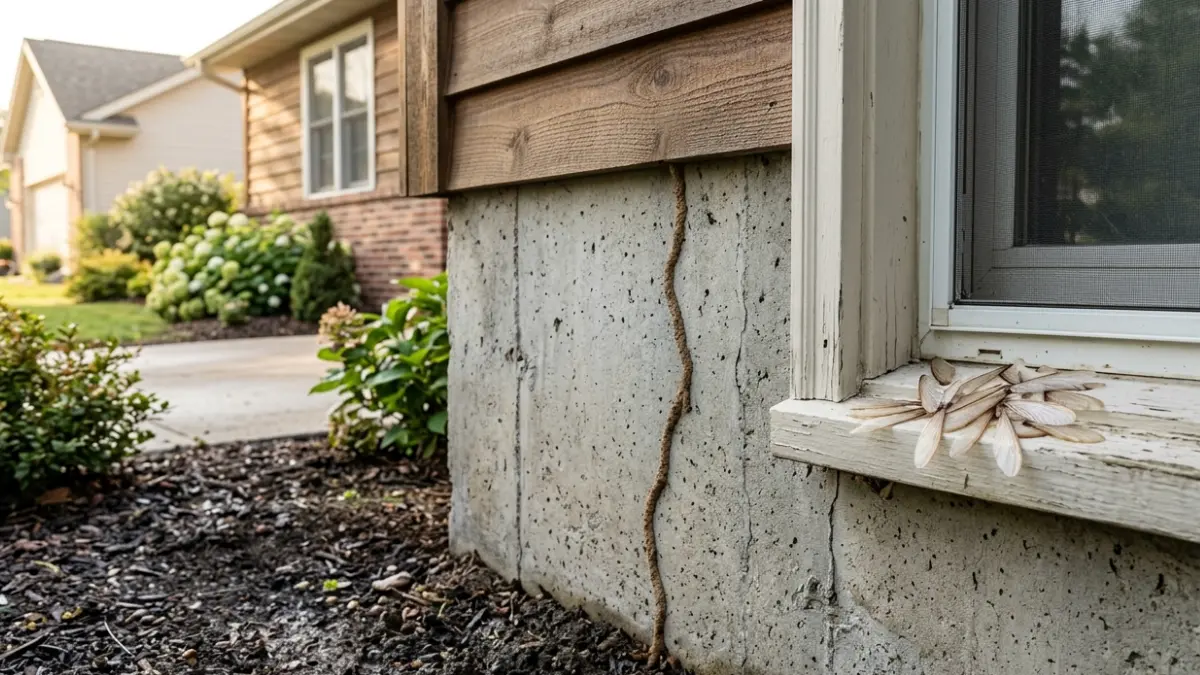
The Right Way to Read the Signs of Termites You Just Found
July 14, 2026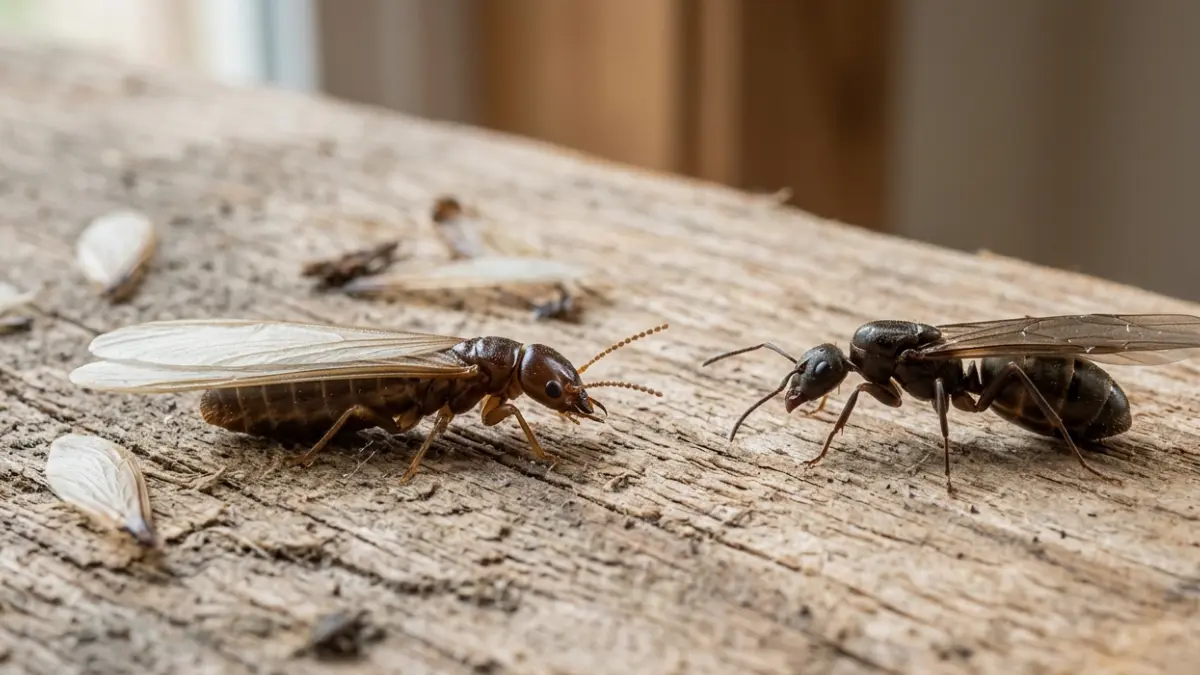 Termite Treatment
How to Easily Tell Flying Ants From Termites
July 15, 2026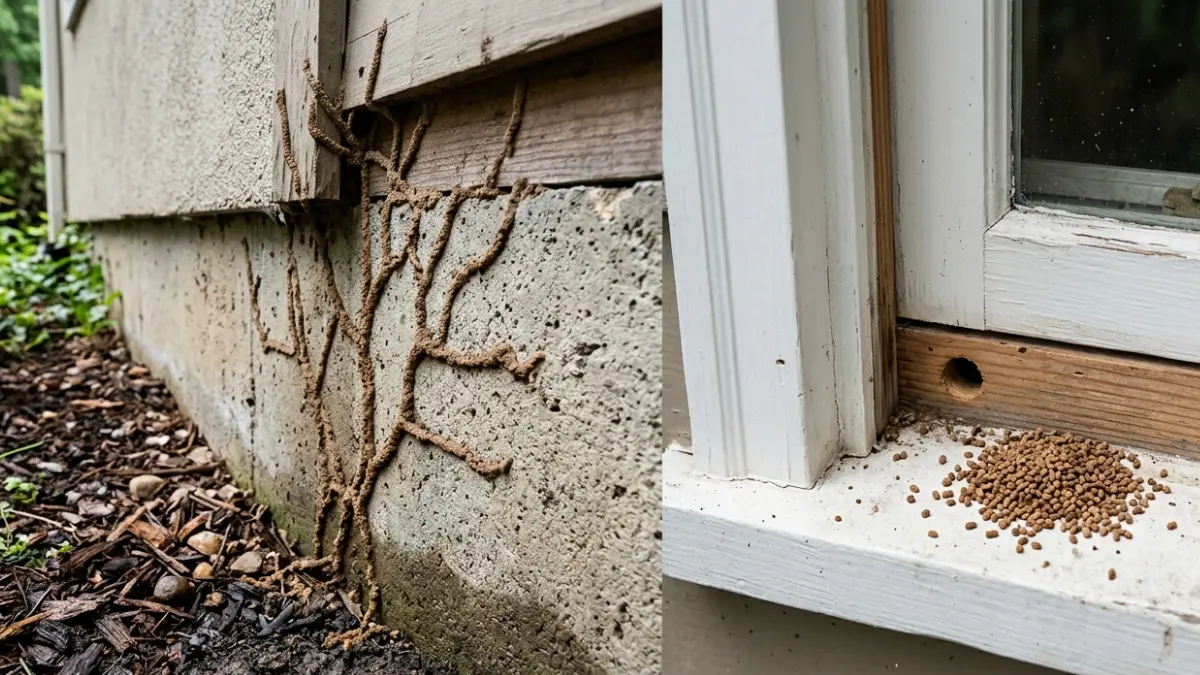 Termite Treatment
Subterranean vs Drywood Termites and the Real Cost to Fix Each
July 18, 2026 Termite Treatment
The real test with termites in rental property is who caused it
August 5, 2026 Termite Treatment
How long does termite treatment take, from fast results to months
July 23, 2026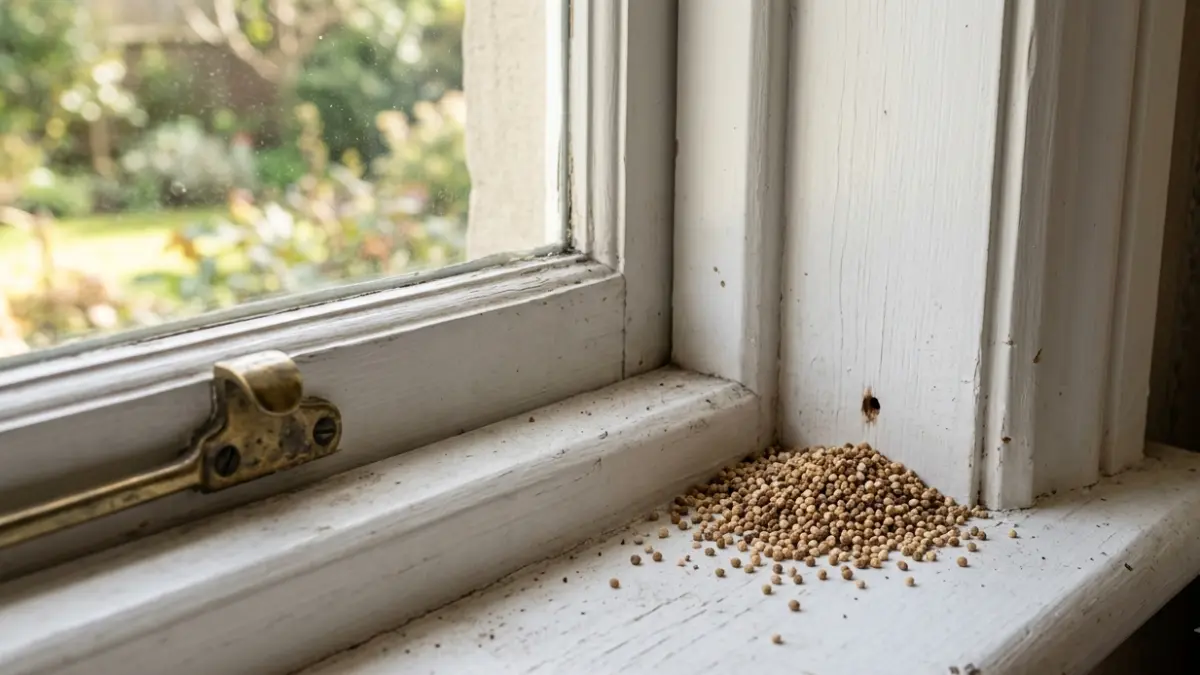 Termite Treatment
How to Identify Termite Frass and Drywood Droppings
July 15, 2026 Termite Treatment
Crawl space termites and moisture share one common cause
August 1, 2026 Termite Treatment
The common termite prevention list is really three lists
August 1, 2026 Termite Treatment