A Smart Way to Find the Age of an HVAC Unit From Its Plate

Finding your HVAC unit’s age starts with the data plate. Goodman’s own FAQ says where its serial number sits and who should help you reach it.
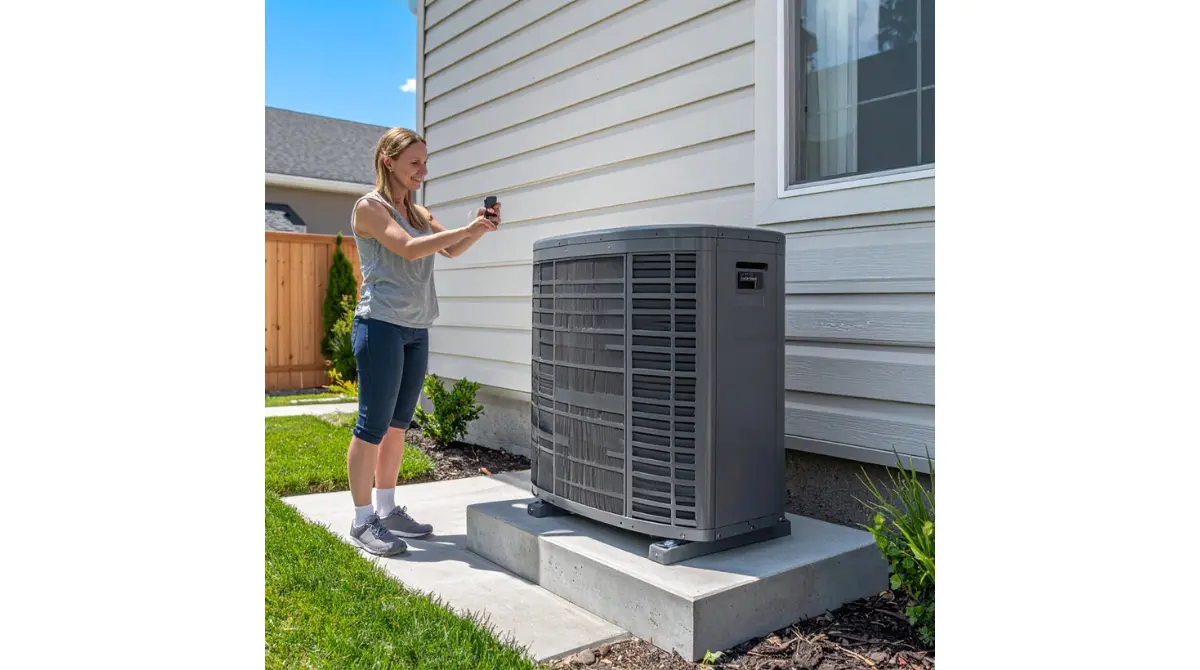
Table of Contents
How to find the age of your HVAC unit
To find the age of your HVAC unit, locate its data plate, read the serial number, and check it against the manufacturer’s own guide, because serial formats differ by brand. Buying a home, reading a repair quote or planning a replacement? Start with the plate. This guide is part of our HVAC systems guide.
Know which unit you’re looking at
Most systems pair an outdoor condenser or heat pump with an indoor furnace or air handler, each with its own plate. Check both; they can be different ages.
What you’ll have when you’re done
The model number, serial number, manufacture date and refrigerant type: what any technician or replacement quote will ask for.
ℹ️ Safety Note: Opening furnace panels, working near gas or electrical connections and handling refrigerant carry shock, fire and injury risk. This guide covers reading labels only; if a plate is behind a panel or you’re unsure, hire a licensed HVAC contractor and follow local code.
What the data plate tells you (and what it doesn’t)
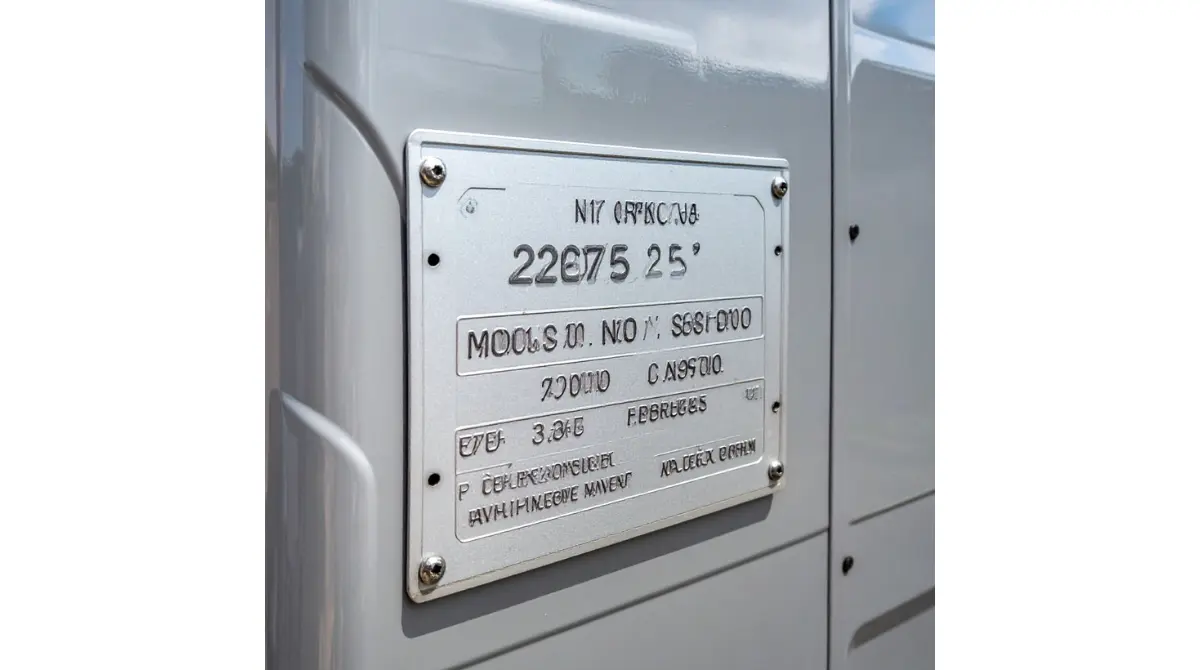
An HVAC data plate, also called a rating plate, lists a unit’s model number, serial number and electrical ratings. Many plates also name the refrigerant, a clue to the unit’s generation: EPA’s Technology Transitions program limits refrigerant global warming potential in new residential air conditioners and heat pumps from 2025.
Model number vs serial number
The model number names the configuration; the serial number is unique to your unit. Goodman says its ten-digit serial helps identify when the unit was produced.
Manufacture date isn’t install date
The plate shows when the unit was built, not installed. Equipment can sit in inventory first, so installer paperwork is the proof of install.
Where to find the label on your furnace, AC or heat pump
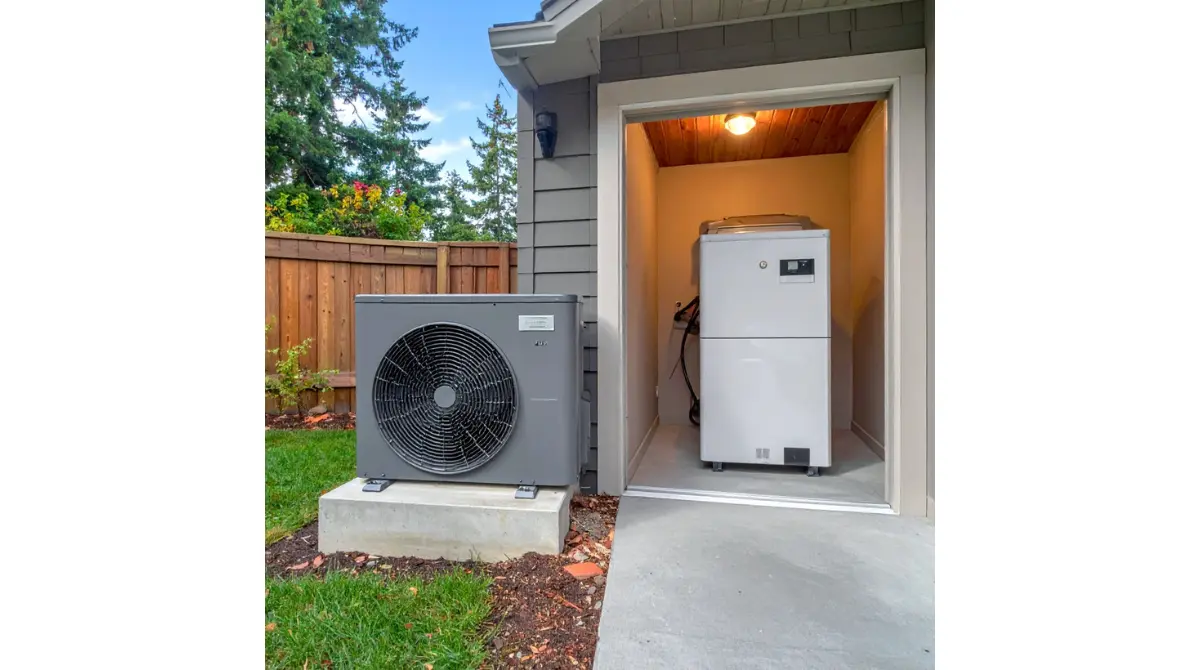
Start with what you can see from outside.
- Check the outdoor unit’s outer panels for a metal or foil label.
- Check the outside of the furnace or air handler cabinet.
- Look in your installation paperwork for the shipping box’s “traveler label.”
- If the plate is inside the unit, ask a licensed technician to read it.
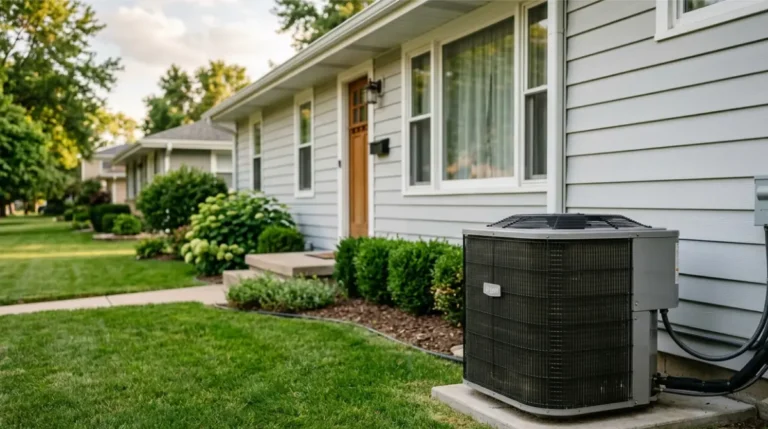
Outdoor condenser and heat pump
Brands place labels differently, so check every accessible side before concluding it’s missing.
Furnace and indoor air handler
Goodman puts both numbers on the rating plate on the inner wall and says a dealer should be involved in accessing the serial number. Other brands vary.
✅ Do This: Ask a licensed HVAC contractor to record the model number, serial number, manufacture date and refrigerant on your next invoice.
How to read an HVAC serial number
Every maker codes its serial number differently, so no single rule dates every unit.
Why every brand codes dates differently
Formats vary by brand and production era, so a rule that works on one plate can misdate another. Look for a printed manufacture date first.
Brand-by-brand serial format table
| Brand | Where the maker says to look | What the maker says the serial holds | Confirm with |
|---|---|---|---|
| Goodman | Rating plate, inner wall of furnace or air handler | Ten-digit code that helps identify production time | Goodman dealer |
| Lennox |
We list only what makers publish. For other brands, send the maker a photo of the plate and ask for the build date.
What to do if the label is missing or unreadable
A missing label isn’t a dead end.
Paperwork that shows the install date
Check your purchase file, inspection report, installer invoices and warranty registration. Goodman notes many dealers attach the traveler label to the homeowner’s paperwork. Your building department may hold permit records; availability varies.
Ask the manufacturer or a technician
Send the maker a photo of any remaining label and ask for the build date. A technician can estimate age from condition, but that’s a rough range, not a date.
What your unit’s age means for repair or replacement
ENERGY STAR says to consider replacing a heat pump or air conditioner over 10 years old, or a furnace or boiler over 15.
ENERGY STAR’s age benchmarks
ENERGY STAR’s replacement guidance treats age as one input beside repair history and energy bills, not a verdict.
If your plate says R-22
EPA’s R-22 phaseout schedule ended new R-22 production and import in 2020 and keeps a servicing use for existing equipment. With no new production, servicing relies on existing and reclaimed supply.
✅ Do This: Never add or remove refrigerant yourself. It’s regulated under EPA’s Section 608 program, so ask a licensed HVAC contractor whether they hold the required certification.
When to call a licensed HVAC pro
Reading a label is a homeowner job; panels, refrigerant, gas and wiring are not.
Jobs to leave to a licensed technician
- Reaching a plate inside a furnace or air handler.
- Handling refrigerant; EPA’s Section 608 program prohibits venting it during servicing.
- Anything touching gas or electrical connections.
What to ask for on the invoice
✅ Do This: Ask the technician to write the model number, serial number, manufacture date, refrigerant and install date on your invoice, and file it.
HVAC unit age and model number FAQs
1. Where is the model number on an HVAC unit?
On the data plate of the outdoor unit and of the furnace or air handler. For an interior plate, ask a licensed technician.
2. Where is the serial number on an AC unit?
On the same data plate as the model number.
3. How do I read an HVAC serial number?
Formats differ by brand. Check the plate for a printed manufacture date, then use the maker’s guide or send a photo.
4. Is the manufacture date the same as the install date?
No. Equipment can sit in inventory before installation, so the dates can differ.
5. How do I find HVAC unit age with no label?
Check installer invoices and warranty records, or send the manufacturer a photo of any remaining label.
4. How do I know if my AC uses R-22?
Read the refrigerant field on the data plate; if unreadable, have a licensed technician confirm it.
5. Can R-22 systems still be serviced?
Yes. EPA ended new R-22 production and import in 2020, but existing equipment can still be serviced.
6. When should I replace my AC by age?
ENERGY STAR says to consider replacing a heat pump or air conditioner over 10 years old, or a furnace or boiler over 15.
7. What does HVAC unit age mean for refrigerant?
Much older units may use R-22; newer ones follow EPA’s lower-GWP rules. The plate’s refrigerant field is the proof.
8. Do I need a pro to read the plate?
Not for labels visible outside. For interior plates, hire a licensed HVAC contractor.
Next steps: record it and plan ahead
Photograph each plate and record the model number, serial number, manufacture date, refrigerant and install date in one place. While you’re at it, find your HVAC filter size and flush your AC drain line.