An Easy Yearly Basement Maintenance Checklist for Water

Basement maintenance, six tasks a year: hold humidity under 60%, test the sump before storms, and start a dated crack photo log you can show an inspector.
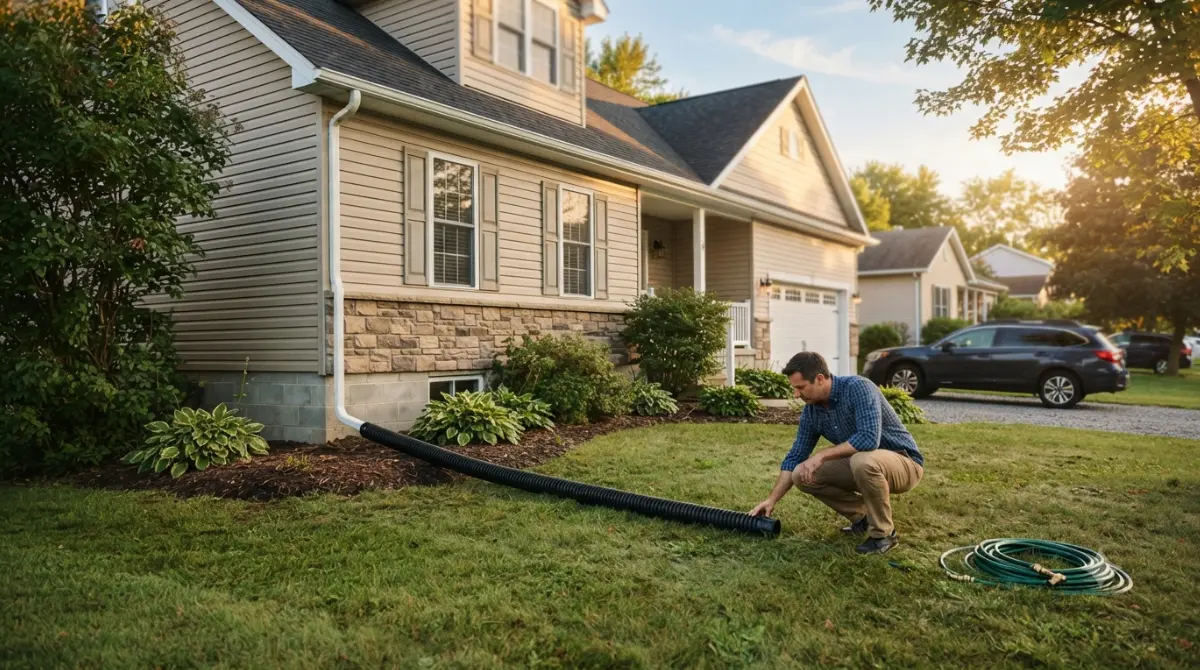
Table of Contents
Why six tasks a year keep most basements dry
Most basement water starts outside the house, so most prevention is routine upkeep, not a big contract. Six tasks spread across spring, summer, and fall cover the places water usually gets in.
Start where you are:
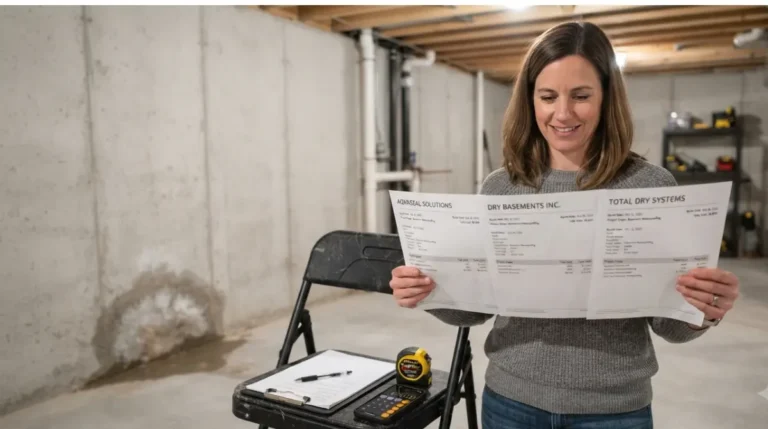
- Just got a waterproofing quote? Run this checklist first, since some quoted problems trace back to gutters or grading.
- Dry but musty? Jump to the humidity check in task 4.
- Seeing damp spots or cracks now? Go to the walkthrough and the who-to-call section.
- New to basements? Start with the calendar and work down.
Each task ends with a clear sign that tells you when to stop and bring in a professional.
ℹ️ Safety Note: Some of these tasks involve ladders, electrical equipment near water, possible mold, and foundation cracks. The information here is for general understanding. If you’re not fully confident, hire a licensed professional for that task and follow your local code.
Your basement dryness calendar at a glance
A basement maintenance checklist for water covers six tasks: gutters and downspouts, grading, the sump pump, humidity, an interior walkthrough, and window wells.
| Task | When | What You Need | Key Detail |
|---|---|---|---|
| 1. Gutters & downspouts | Spring + fall | Hose; ladder or gutter service | Water exits well away from the wall |
| 2. Grading check | Spring, after thaw | Level, straight board, tape | 6 in. drop over first 10 ft (IRC R401.3) |
| 3. Sump pump test | Before spring rains + before winter | Bucket of water, flashlight | Pump starts, empties pit, stops |
| 4. Humidity check | Mid-summer | Hygrometer | Below 60%, ideally 30–50% (EPA) |
| 5. Walkthrough + photo log | Fall | Phone, tape measure, marker | Same spots, dated photos |
| 6. Window wells | Fall | Gloves, trash bag | Debris out, drain clear |
Thresholds sourced to the International Residential Code and the U.S. EPA.
Spring tasks (after thaw)
Snowmelt and spring rain test drainage hardest, so tasks 1, 2, and 3 come first.
Fall tasks (before freeze)
Fall repeats the gutters and pump test, then adds the walkthrough and window wells before leaves pile up.
Gutters, downspouts, and grading: stop water outside
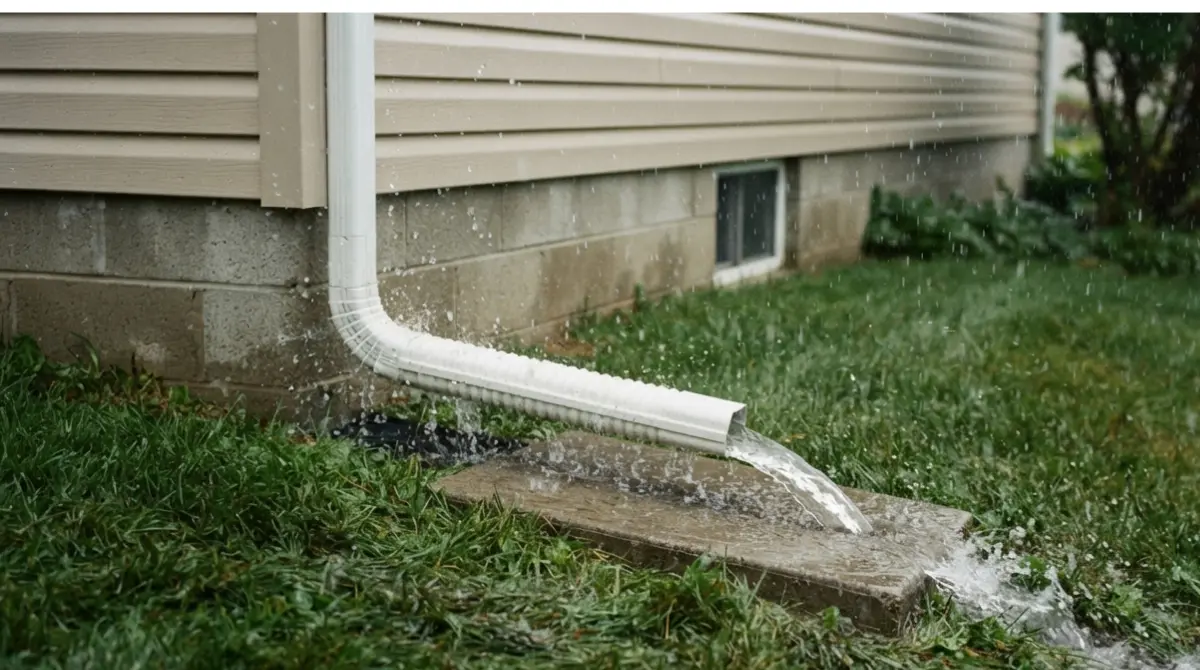
Roof and yard water is the source you control most, and you can check most of it from the ground.
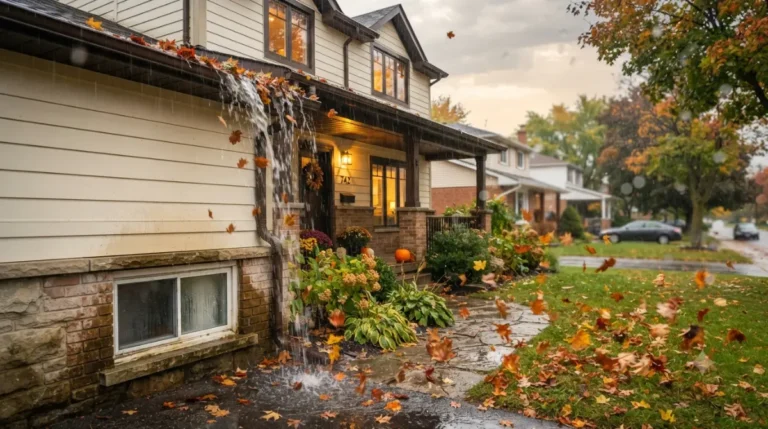
Watch your downspouts during rain
During a steady rain, walk the house and see where each downspout empties. Guidance from drainage contractors and home inspectors ranges from about 4 feet out on well-sloped lots to 10 feet or more on clay soil or flat ground. Overflowing gutters usually mean a clog, and a gutter service can clear them if ladder work isn’t for you.
Check the slope with a level and a board
Lay a straight board on the soil against the foundation, level it, and measure the gap to the ground at the far end.
📊 Spec: The International Residential Code (Section R401.3) requires ground to fall at least 6 inches within the first 10 feet of the foundation. Your local building department may enforce a different edition, so confirm locally.
⚠️ Watch Out: Mulch beds and settled backfill often slope toward the wall without anyone noticing. Before any regrading that involves digging, have underground utilities marked.
How to check your sump pump before it matters
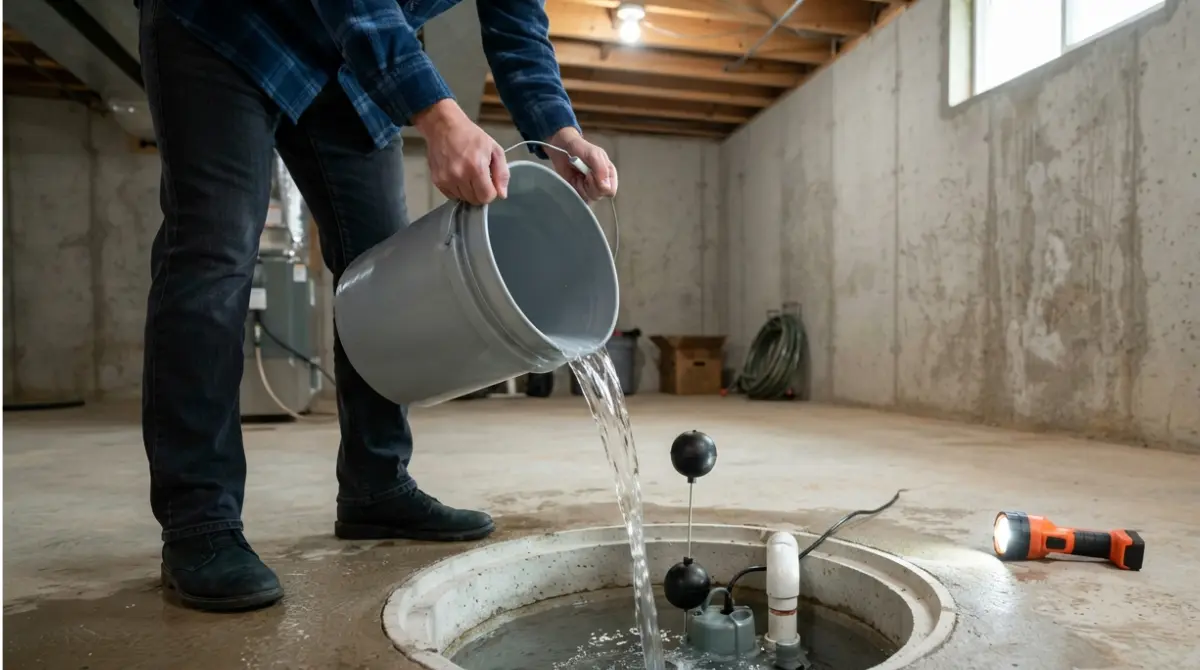
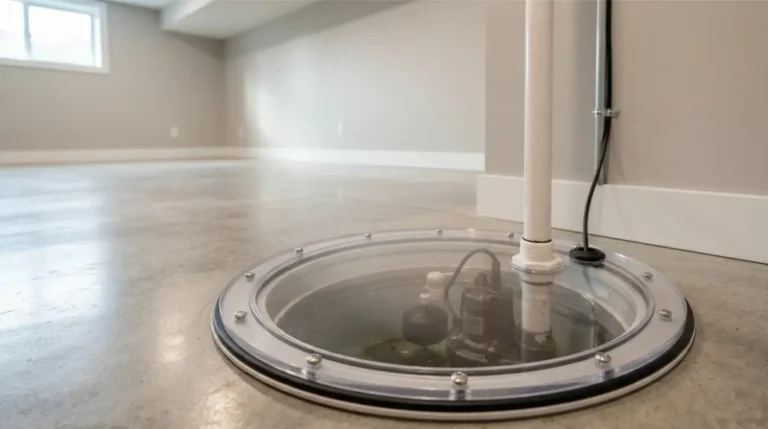
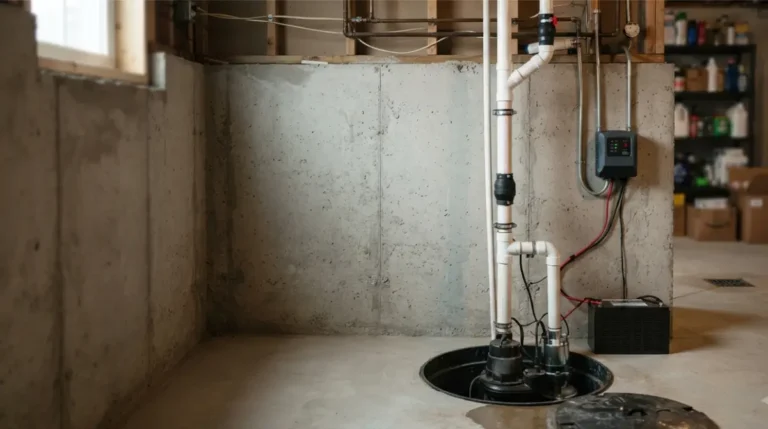
A sump pump matters on the worst day of the year, so test it on a calm one. The University of Minnesota Extension’s guide to moisture in basements and its causes notes that sump pumps can fail, and that the drain pipes feeding them can clog or collapse.
The bucket test
- Shine a flashlight into the pit and note any debris or silt.
- Slowly pour a bucket of water in until the float switch rises.
- Confirm the pump starts, lowers the water, and shuts off on its own.
Check where the discharge goes
Outside, confirm water leaves the discharge line and flows away from the house. If you’re weighing backup power for outages, see our recall-checked battery backup sump pump picks.
⚠️ Watch Out: Never reach into the pit or handle the pump while it’s plugged in. Take questions about the outlet, circuit, or backup wiring to a licensed electrician. A pump that hums without moving water goes to a plumber.
What humidity your basement should hold (and how to check)
The EPA advises keeping indoor humidity below 60%, ideally between 30% and 50%, as explained in its brief guide to mold, moisture, and your home.
🔍 Why It Works: Cool air holds less water than warm air. When humid summer air meets cool concrete, humidity near the walls climbs, and damp surfaces give mold what it needs.
Reading a hygrometer
A hygrometer is a small meter that the EPA says typically costs $10–$50 at hardware stores. Check it on a humid summer day. If it stays above 60%, moisture is building faster than it leaves.
Dehumidifier upkeep
If you run a dehumidifier, check the bucket or drain hose, clean the filter as the manual directs, and set it inside the 30–50% range. ENERGY STAR certified dehumidifiers are the efficiency benchmark, and our basement dehumidifier guide compares models.
The fall walkthrough: cracks, stains, smells, window wells
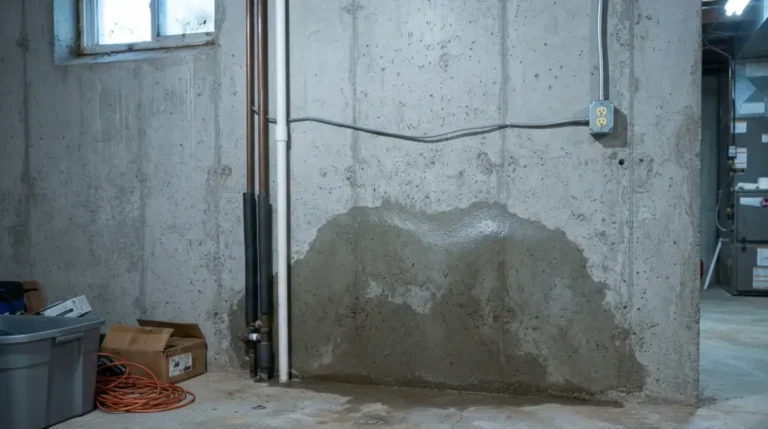
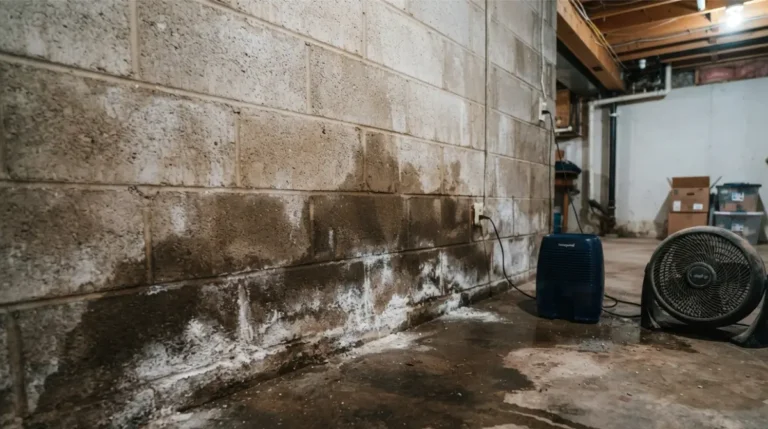
Once a year, walk the basement slowly with a flashlight. Look for damp spots, water stains, a musty smell, and efflorescence, the white, chalky mineral deposit water leaves behind as it moves through concrete.
Start a dated crack photo log
Photograph each crack from the same spot, with a tape measure in frame and the date written beside it in marker. Next fall, shoot the same spots and compare. The log turns “is it getting worse?” into evidence you can hand an inspector.
Window wells and covers
Clear leaves from each window well and make sure its drain isn’t blocked, since standing water can leak through the window.
✅ Do This: If a crack is wider than last year, leaks, or the wall looks bowed, have a structural engineer or independent inspector assess it before paying for repairs. Our guide to telling cosmetic cracks from structural ones explains what they check.
Found water or mold? Who to call and what to ask
If the checklist turns up water, speed matters more than the fix.
Dry within 24–48 hours
The EPA says wet materials dried within 24–48 hours usually won’t grow mold, so start drying the same day. According to EPA’s home mold cleanup guidance, mold covering more than about 10 square feet (roughly a 3-by-3-foot patch) calls for more than routine DIY cleanup. See our basement mold removal guide for next steps.
Match the problem to the pro
- Active seepage: a basement waterproofing contractor.
- Widening cracks or bowed walls: a structural engineer.
- Mold over 10 square feet: a mold remediation professional.
- Sump outlet or circuit questions: a licensed electrician.
Before signing a large contract, get a second opinion and learn how to read a waterproofing quote line by line.
FAQ
1. How often should I test my sump pump?
Test your sump pump twice a year, before spring rains and before winter, by pouring water into the pit and watching it cycle.
2. What humidity is too high for a basement?
The EPA advises keeping basement humidity below 60 percent, ideally 30–50 percent. Readings that stay above 60 percent mean moisture is building.
3. How far should downspouts drain from the foundation?
Downspout guidance from contractors and inspectors ranges from about 4 feet on well-sloped lots to 10 feet or more on clay or flat ground.
4. Is efflorescence a sign of basement water?
Yes. Efflorescence, the white chalky deposit on basement concrete, shows water has moved through the wall and left minerals behind.
5. Are basement wall cracks normal?
Many basement wall cracks stay stable, but one that widens between dated photos, leaks, or appears with a bowed wall needs attention. Have a structural engineer assess it.
6. When should I clean gutters to prevent basement water?
Clean gutters in spring and fall, and watch downspouts during rain to confirm basement water exits well away from the foundation.
7. Do basement window wells need maintenance?
Yes. Clear leaves from basement window wells each fall and check the drain, because standing water can leak through the window.
8. What causes a musty basement smell?
A musty basement smell usually signals excess moisture. Check humidity with a hygrometer and look for damp spots, stains, or efflorescence.
9. How fast can mold grow after basement water?
The EPA says wet materials dried within 24–48 hours usually won’t grow mold, so start drying basement water the same day. For mold over about 10 square feet, call a remediation professional.
10. Who should I call for a wet basement?
Call a waterproofing contractor for wet basement seepage, a structural engineer for widening cracks, and a licensed electrician for sump circuit questions.
Put the six tasks on your calendar
Six checks a year won’t make a basement waterproof, but they catch problems while they’re small and cheaper to fix. Add the dates to your calendar now, starting with this fall’s walkthrough and pump test.