The Right Checks Before Buying a House With a Wet Basement

Wet basement in a house you love? Before you offer, learn the five signs to read, why the EPA says to test radon too, and when to walk away.
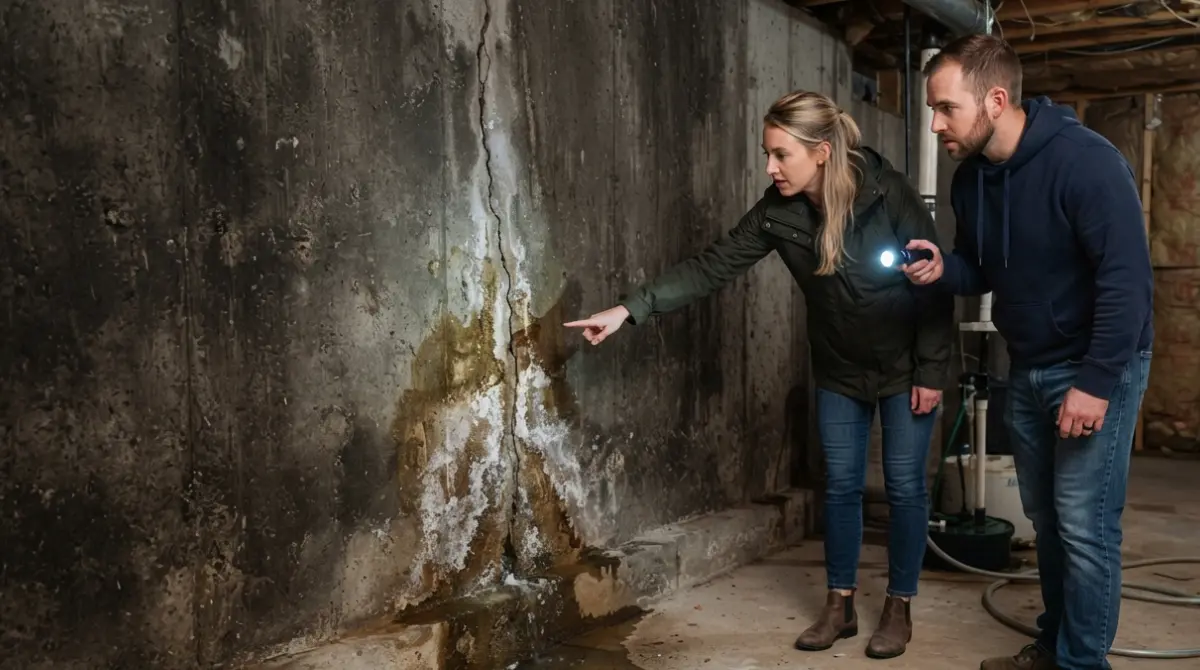
Table of Contents
Found water in the basement of a house you want?
A wet basement isn’t automatically a deal-breaker. What decides it is where the water comes from. A clogged gutter and a shifting foundation can leave the same stain on a wall.
If you’re still touring homes
Use the checklist below at your next showing, before you write an offer. All you need is a flashlight and a few minutes downstairs.
If you’re inside your inspection window
Your leverage has a deadline. Skip ahead to the inspection and negotiation sections, and book specialists now, before your inspection contingency expires.
Gladewick doesn’t sell waterproofing or earn anything from the contractors you call, so this guide has no fix to push.
ℹ️ Safety Note: Basement water can involve mold exposure and foundation damage. This article is general guidance for buyers, not a diagnosis. Hire a licensed home inspector, a structural engineer for any wall movement, and an experienced mold professional where mold is present, and follow your local code.
Damp, seeping, or flooding: what the water is telling you
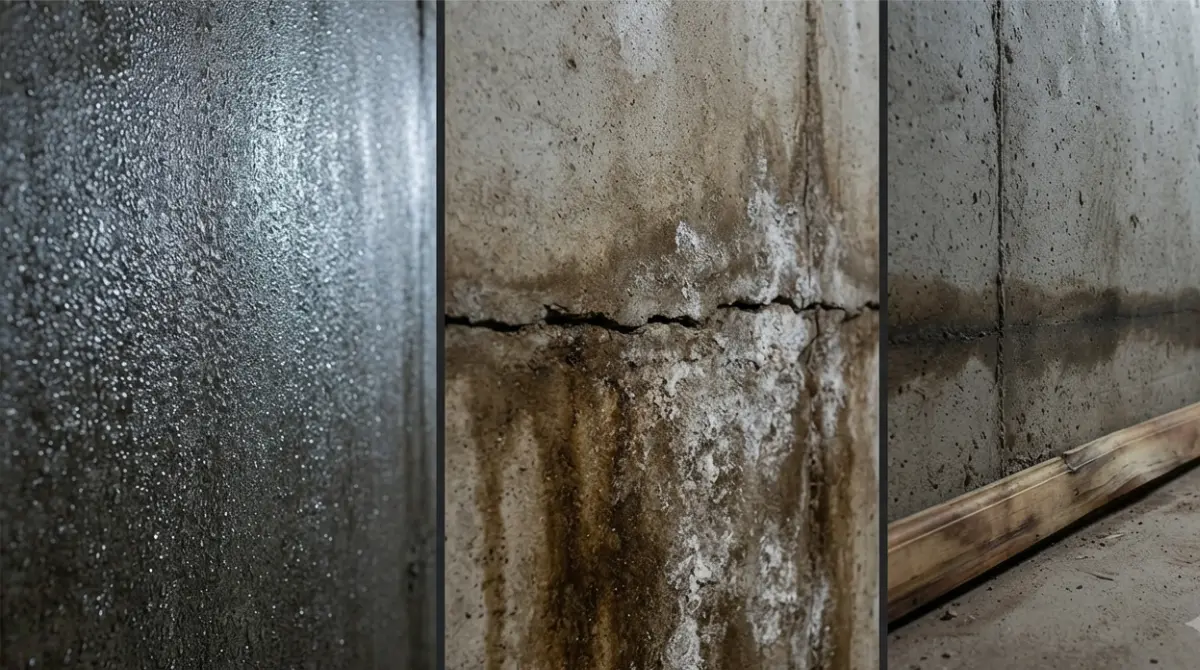
Basement water usually falls into one of three patterns, and each points to a different fix.
Condensation: moisture from the air
Condensation forms when humid air meets cool concrete, so the wall “sweats” evenly. The EPA treats condensation as a sign of high humidity. It recommends keeping indoor humidity below 60 percent, ideally between 30 and 50 percent. To tell condensation apart from seepage, try this simple condensation vs. seepage test.
Seepage through walls or the floor joint
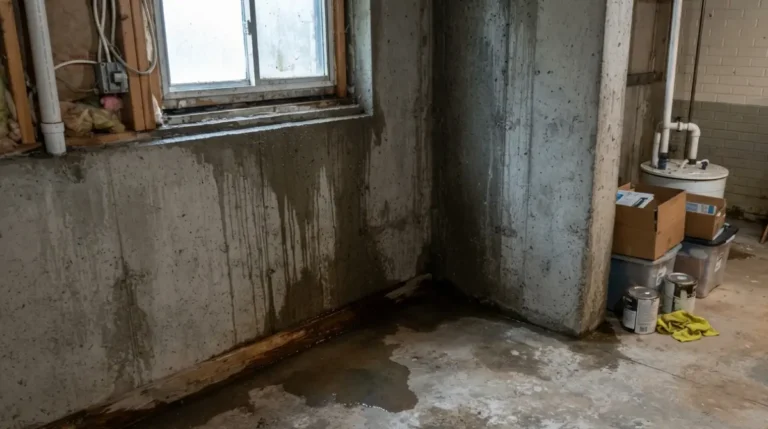
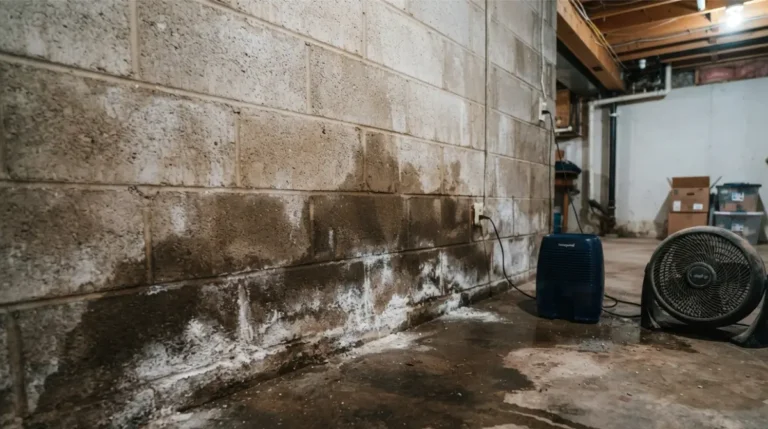
Seepage is groundwater pushing in, usually at cracks or where the wall meets the floor. A white, chalky crust called efflorescence is the mineral residue that water leaves behind as it evaporates.
Standing water or flood lines
Tide lines on walls, rusted appliance legs, or warped paneling suggest water has pooled. This pattern most needs a professional explanation.
🔍 Why It Works: Water in saturated soil presses against the foundation and finds the weakest path in: cracks, joints, and pipe openings. That’s why seepage shows up in predictable spots, while condensation spreads across any cold surface.
What to check in the basement before you make an offer
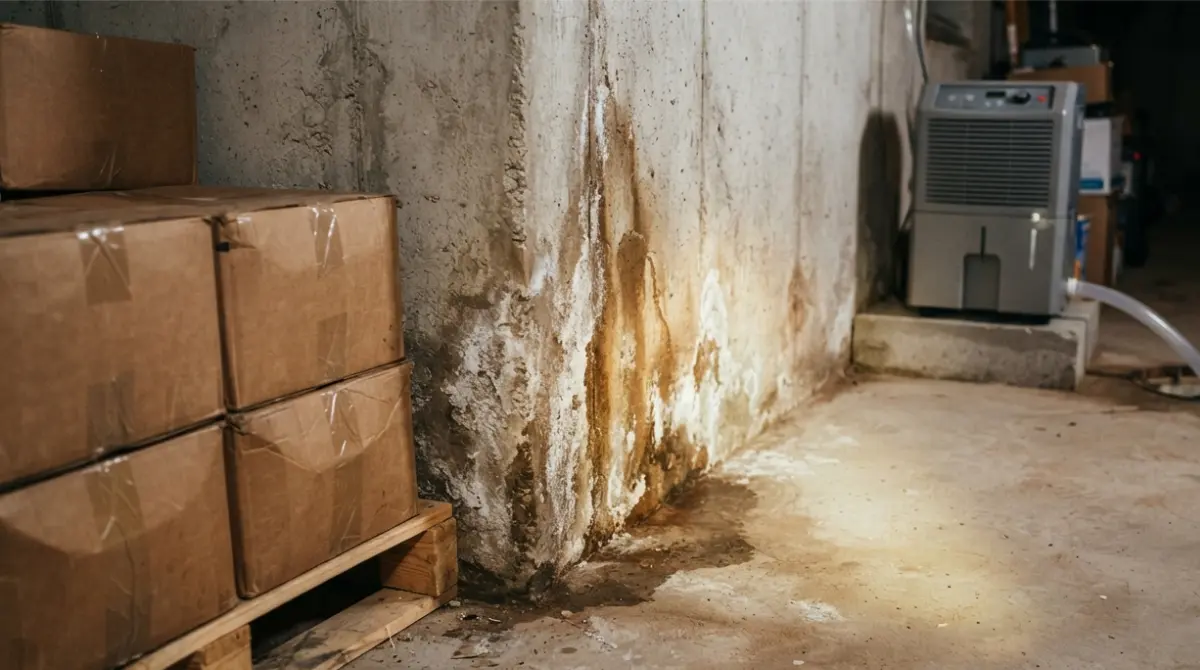
Look for these signs before you make an offer.
Inside: walls, floor, and what’s stored down there
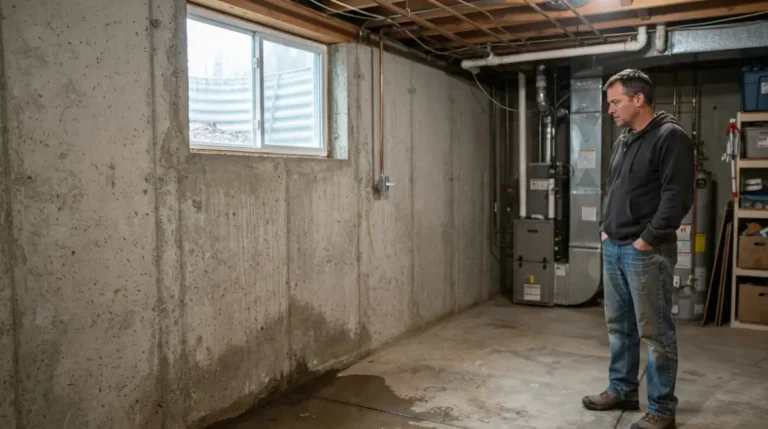
Check the lower walls and floor for water stains and efflorescence. Fresh paint on just one wall or corner is worth a question. Boxes raised on pallets, a dehumidifier running constantly, or a musty smell all suggest the owner has been managing moisture.
Outside: gutters, downspouts, and grading
Downspouts should discharge away from the house, not beside the foundation. The EPA advises that the ground slope away from the foundation so water can’t collect against it.
| Sign you see | Likely cause | Who to call | Negotiation lever |
|---|---|---|---|
| Even “sweating,” humid air | Condensation | Often no one; a dehumidifier may do | Minor |
| Stains or efflorescence at cracks or floor joint | Seepage | Inspector, then waterproofing quotes | Repair credit |
| Tide lines, raised storage | Past pooling or flooding | Inspector, plus a flood-zone check | Price cut or walk |
| Horizontal crack, bowing wall | Pressure on the foundation | Structural engineer | Walk, or engineer-backed repair |
| Visible mold, musty odor | Ongoing moisture | Inspector; mold pro if large | Remediation before closing |
Gladewick editorial framework. The causes shown are typical patterns, not a diagnosis.
Which inspections to order, and who to call
A general home inspection is your starting point, but its scope is limited.
General inspector first, specialists second
Standards-based home inspections are visual and not technically exhaustive, so they won’t find concealed conditions. Inspectors also aren’t required to explain what caused a major repair need. A moisture flag in the report is your cue to bring in a specialist.
Structural engineer vs. waterproofing contractor
Cracks, bowing, or displaced walls go to a licensed structural engineer, who diagnoses the problem without selling the repair. A waterproofing contractor’s free estimate helps with pricing, but it comes from someone who sells the fix. Before either visit, it helps to know which basement wall cracks are structural.
Add a radon test
The cracks that let water in can also let soil gas in. The EPA recommends knowing the radon level in any home you’re considering, and fixing homes that test at 4 pCi/L or higher. Its radon guidance for home buyers explains how testing works during a sale.
✅ Do This: Ask the structural engineer for a written opinion on whether the cracks are structural and what repair they recommend. Get it before your contingency deadline.
Questions to ask the seller and papers to request
Paperwork turns a hunch into evidence you can negotiate with.
Disclosures, warranties, and repair records
Read the seller’s disclosure closely. What sellers must report about water varies by state, so ask your agent what yours requires. Then request:
- Receipts and the scope of any past waterproofing work
- The warranty, and whether it transfers to a new owner
- Sump pump installation and service records
- Any insurance claims for water damage
Check the flood zone and insurance
Look up the address on FEMA’s flood map search. FEMA notes that most homeowners policies don’t cover flood damage, so get a flood insurance quote before you commit.
How to price the fix into your offer
Your ask should match what the fix actually costs, so get numbers in writing.
Get written quotes during your contingency
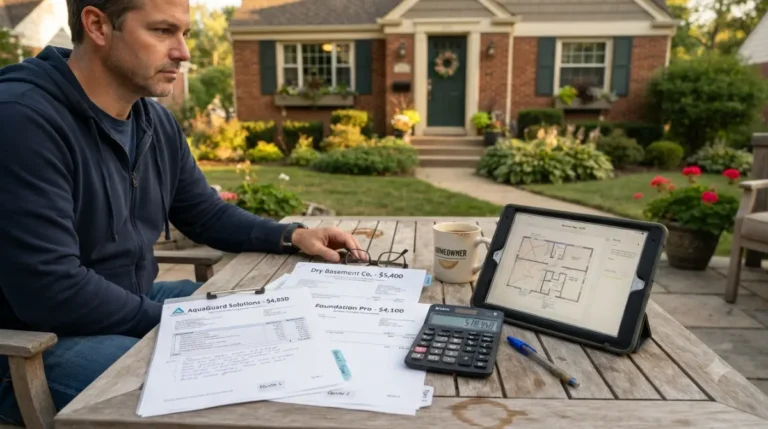
Request two or three itemized quotes. Fixes range from inexpensive ones, like downspout extensions or regrading, to major work such as interior drainage with a sump. Before comparing, learn how to read a basement waterproofing quote line by line.
Credit, repair, or price cut: which to ask for
| Option | Key detail |
|---|---|
| Price reduction | Lowers what you pay and finance |
| Seller credit | Confirm with your lender what’s allowed |
| Seller repairs before closing | You don’t pick the contractor |
⚠️ Watch Out: If the seller repairs before closing, get the written scope, permits where required, and a transferable warranty before you sign off.
Red flags that mean walk away or bring in a pro
Some findings are bigger than a negotiation.
Structural warning signs
Horizontal cracks and bowing or leaning walls are a stop sign until a structural engineer weighs in. The same applies when the disclosure says “no water issues” but the basement says otherwise.
Mold beyond a small patch
The EPA’s mold and moisture guide warns that mold comes back if the water problem isn’t fixed. It points to professional guidelines for growth larger than about 10 square feet. See what a mold inspection costs.
Buying a house with a wet basement: FAQ
1. Should you buy a house with a wet basement?
Buying a house with a wet basement can work when the cause is gutters or grading. Structural cracks or repeated flooding change the decision.
2. How can you tell a basement has had water?
Look for tide lines, efflorescence, stained boxes, raised storage, or fresh paint on lower walls. Each suggests a basement has handled water before.
3. Is a sump pump a red flag?
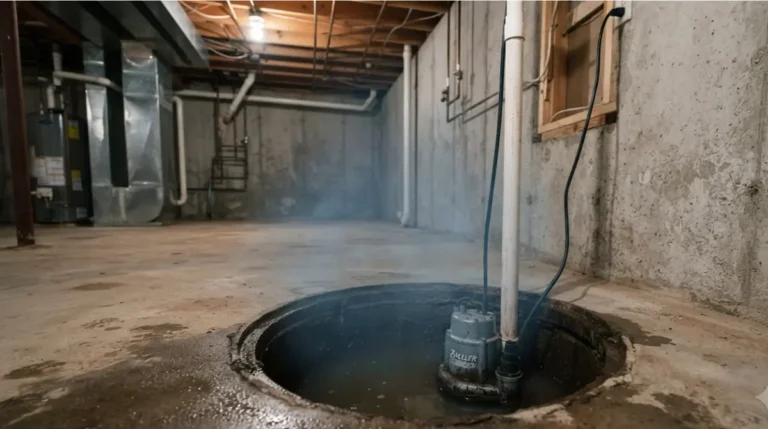
A sump pump isn’t a red flag by itself. It shows the basement needed water management, so ask for installation and service records.
4. Will a home inspector find basement water?
A home inspection is visual and can flag basement moisture, but it won’t find concealed conditions or explain causes. Hire a specialist for diagnosis.
5. Can I ask the seller to fix a wet basement?
Yes. You can ask for repairs before closing, a credit, or a price cut, but insist on written scope and a transferable warranty.
6. Does the seller have to disclose a wet basement?
What sellers must disclose about basement water varies by state. Ask your agent what your state’s disclosure form requires.
7. Should I test a wet basement for mold?
If mold is visible, the EPA says sampling is usually unnecessary; fixing the water source matters most. Consult a mold professional for large areas.
8. Does homeowners insurance cover basement flooding?
FEMA notes most homeowners policies don’t cover flood damage. Check the FEMA flood map and get a separate flood quote.
9. How much does it cost to fix a wet basement?
Wet basement repairs range from cheap downspout extensions to major interior drainage work. Get two or three itemized quotes to know your number.
10. Should I test for radon in a house with a wet basement?
Yes. The EPA recommends knowing the radon level in any home you consider buying, and fixing homes at 4 pCi/L or higher.
Your next step
A wet basement is a question, not a verdict. Match what you see to its likely cause, bring in the right specialist, gather the paperwork, and price the fix before your contingency closes. If the evidence points to structural movement or a flood-prone lot, walking away is a smart outcome, not a failure.