Smart Questions to Ask Basement Waterproofing Contractors

Waterproofing contractor questions to ask before signing, including why the FTC lists a lifetime warranty offer among possible red flags.
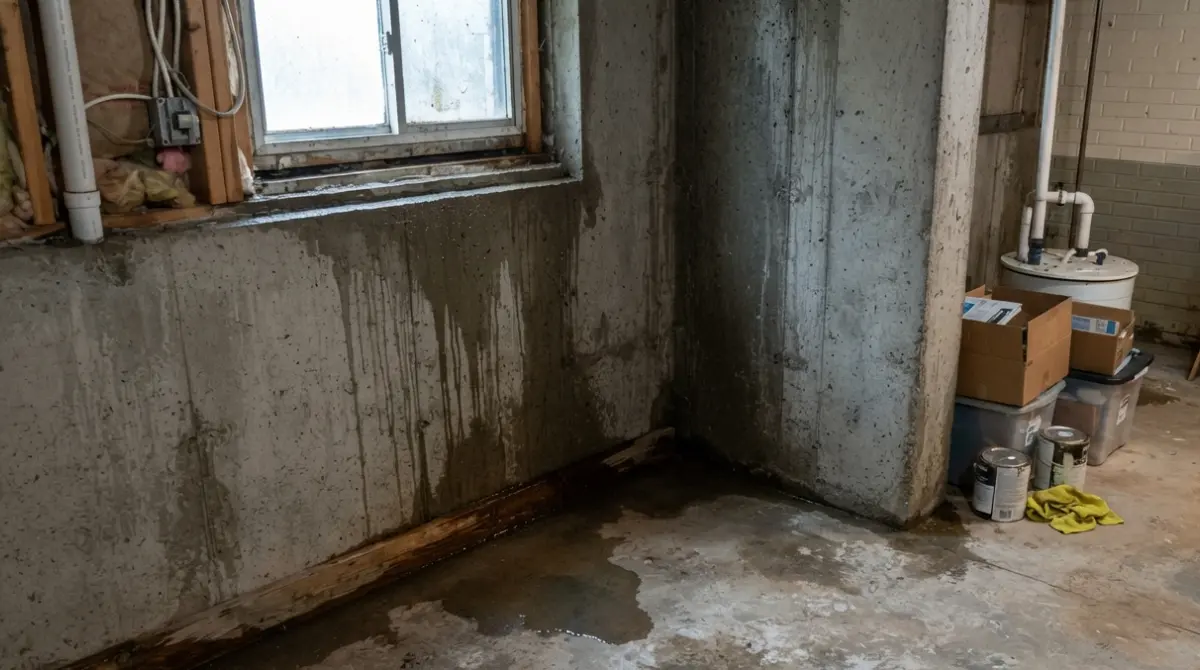
Table of Contents
A waterproofing bid asks you to trust a diagnosis you can’t see and a warranty you won’t test for years. Most guides on this topic are written by companies that sell waterproofing, and this one isn’t.
The 10 questions at a glance
These are the questions to ask basement waterproofing contractor candidates before you sign anything:
- What’s causing my water, and how did you confirm it?
- Did you check gutters, downspouts, and grading first?
- Why this system for my wall type?
- Where does the water go, and what if the pump fails?
- What’s included in the price, and what’s excluded?
- What’s the deposit and payment schedule?
- Are you licensed and insured, and can I verify it?
- Who does the work, and who pulls the permits?
- What does the warranty cover, and is it transferable in writing?
- What happens if water comes back?
Where you are in the process
If you have no quotes yet, start with questions 1 and 2. If you have bids in hand, jump to the scorecard under question 6. If a salesperson wants a signature today, read the right-to-cancel section first, and for what each line on a quote should cost, see our guide to breaking down each line on a waterproofing quote.
ℹ️ Safety Note: This article is consumer guidance, not structural or electrical advice. A foundation crack that may be structural needs a structural engineer’s opinion, and sump pump wiring needs a licensed electrician working to local code. Contract, deposit, and cancellation rules vary by state, so confirm yours with your state’s consumer protection office or contractor licensing board.
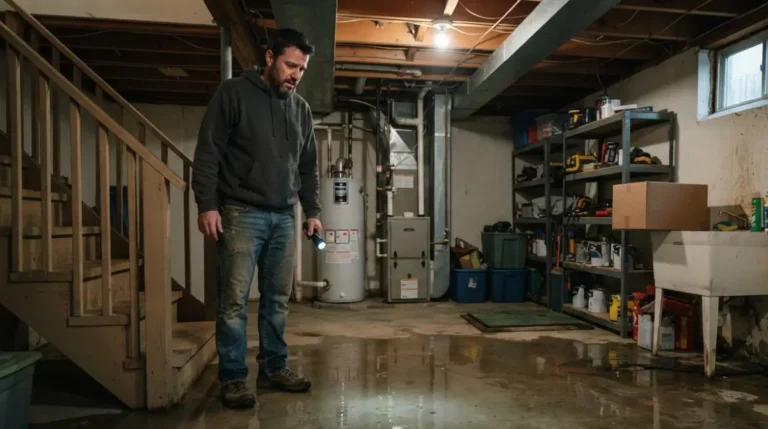
Did they find the cause, or just sell a system?
The source of the water decides the fix, so every good bid starts with a diagnosis.
Q1: What’s causing my water, and how did you confirm it?
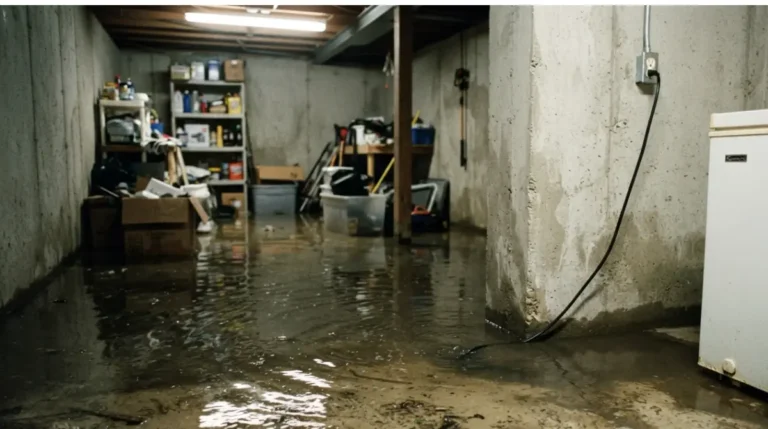
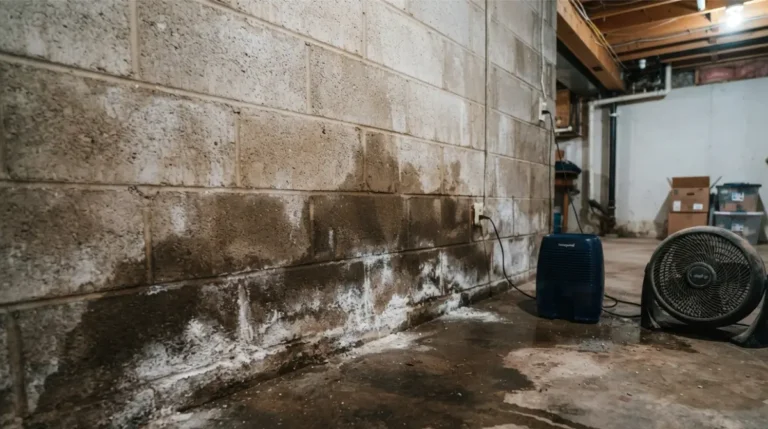
A good answer shows they asked when the water appears: after rain, year-round, or only in humid summer weather. University of Minnesota Extension notes that summer “leaks” are often condensation on cool walls rather than water coming through them. Before paying for drainage, try a simple condensation vs. seepage test.
Q2: Did you check gutters, downspouts, and grading first?
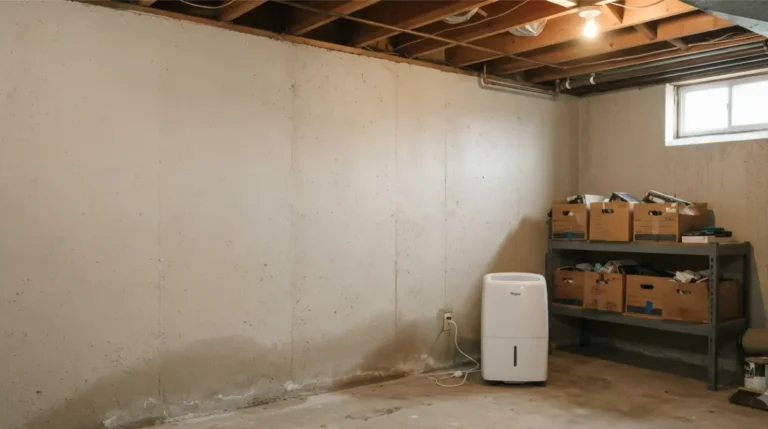
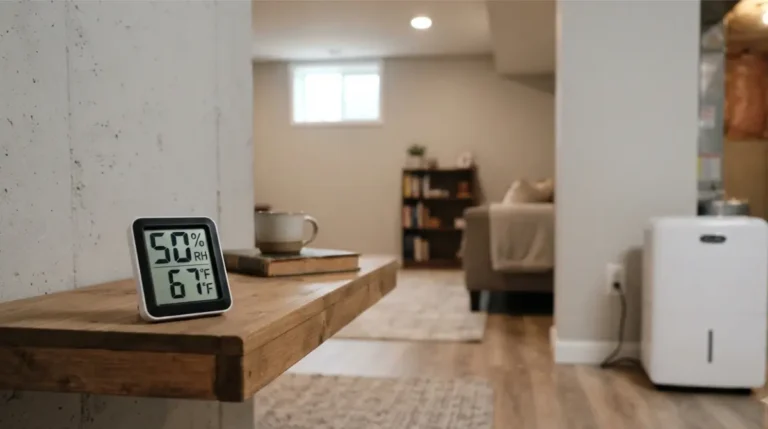
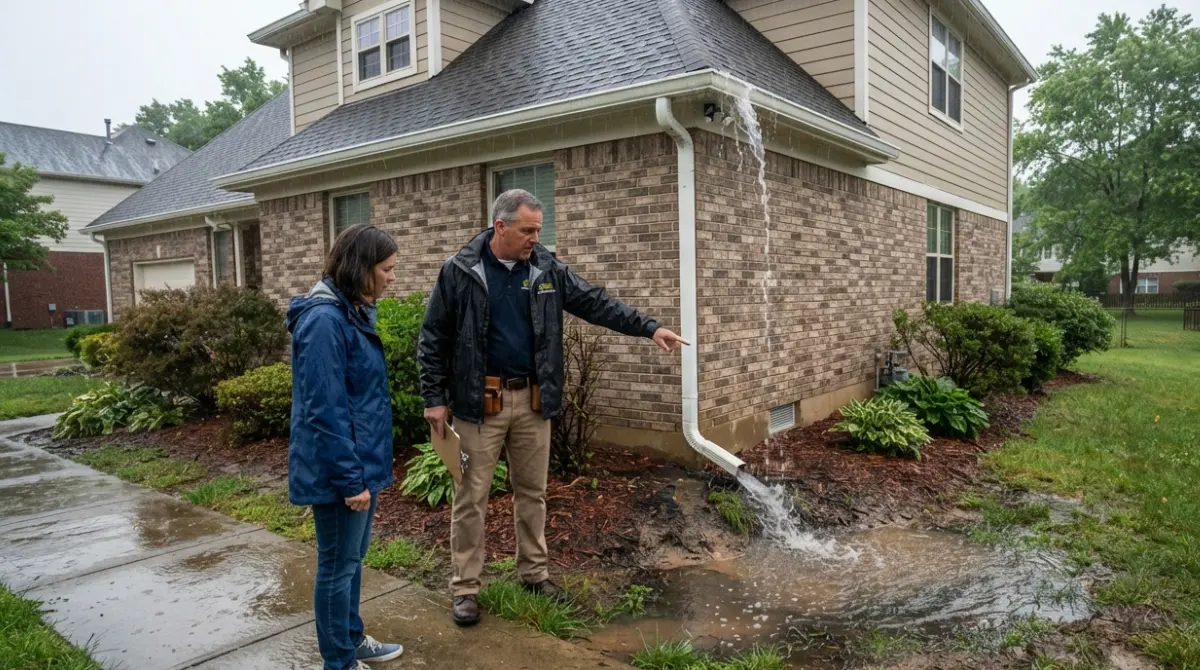
University of Minnesota Extension’s basement moisture guide recommends correcting these before installing any drainage system. That means soil sloping away at least 1 inch per foot for 6 feet, and downspout extensions discharging at least 4 feet from the wall. A dehumidifier eases humidity and odor but doesn’t stop water entry.
🔍 Why It Works: A 1-inch rain drops about 1,250 gallons on a 2,000-square-foot roof, according to UMN Extension. Without gutters and slope, much of that water pools against your foundation.
The red flag is a full system quoted without anyone walking the outside of your house.
Is the proposed fix right for your walls and water?
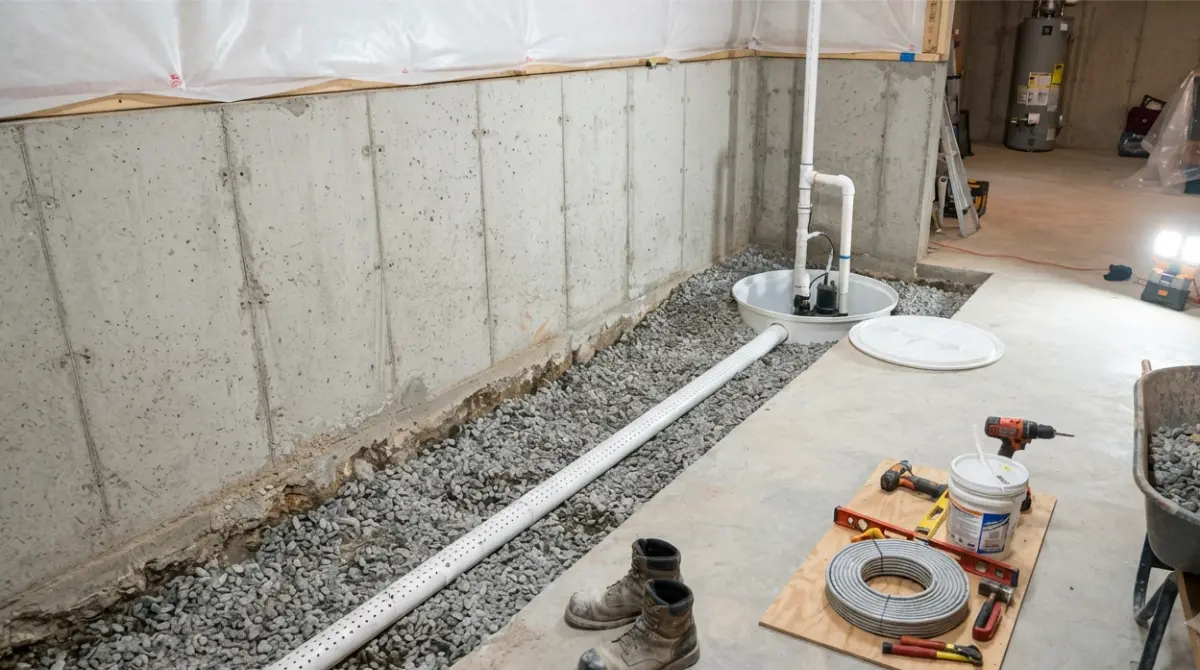
A system that suits one foundation can fail on another, so make the contractor justify theirs.
Q3: Why this system for my wall type?
UMN Extension describes three points worth knowing before you compare bids:
- An interior coating or membrane without drainage is a temporary fix.
- A drainage channel on top of the slab can’t drain concrete block cores or groundwater under the floor.
- Exterior drainage costs the most but is the most effective.
A good answer names your wall type, poured or block, and explains the trade-off. Compare the options in our guide to interior vs. exterior basement waterproofing.
Q4: Where does the water go, and what if the pump fails?
Ask where the discharge line exits and whether the sump gets an airtight, childproof cover, which UMN Extension recommends. Ask whether backup power is included or extra, and review battery backup sump pump options before accepting an upgrade price.
✅ Do This: Ask a licensed home inspector, or a waterproofing contractor who isn’t bidding, to sanity-check the proposed system. If the pump needs new wiring, a licensed electrician should confirm the circuit meets local code.
What’s in the price, and when do you pay?
Two bids can differ by thousands simply because one includes work the other leaves out.
Q5: What’s included in the price, and what’s excluded?
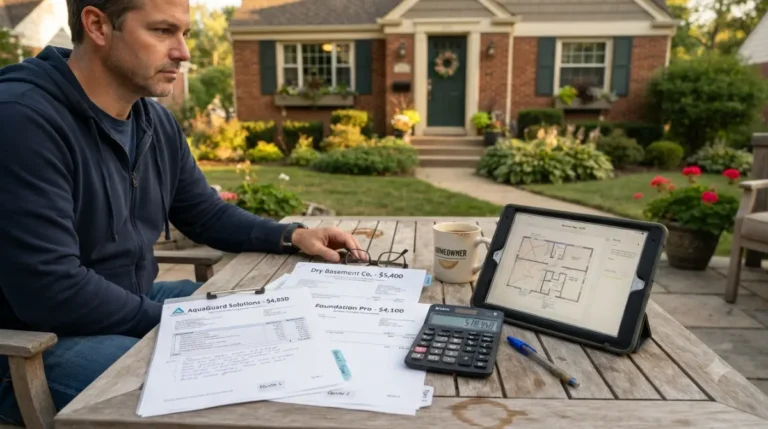
Ask for line items covering excavation, drain pipe, sump and pump, discharge line, concrete patching, cleanup, and permits. Then ask what isn’t covered, because restoring drywall, flooring, or landscaping often isn’t. Virginia’s contractor licensing agency advises getting written estimates from at least three contractors and not automatically choosing the lowest.
Q6: What’s the deposit and payment schedule?
Deposit limits vary by state. California’s contractor licensing board caps home improvement down payments at 10% of the price or $1,000, whichever is less. The contract should list the total price, the scope of work, start and end dates, and a payment schedule, with the final payment held until the work is complete.
Gladewick Bid Scorecard. Print it and fill in one column per bid.
| Question | Good sign | Red flag | Bid A | Bid B |
|---|---|---|---|---|
| 1. Cause | Asked when water appears | Pitch before inspection | ||
| 2. Exterior | Checked gutters, grading | Never went outside | ||
| 3. System | Matched to wall type | One system for everyone | ||
| 4. Discharge | Exit point, cover, backup explained | “Standard setup” | ||
| 5. Scope | Line items plus exclusions | Lump sum only | ||
| 6. Payment | Staged, within state limits | Large upfront, cash | ||
| 7. License | Number you can look up | “Trust us” | ||
| 8. Permits | Contractor pulls them | Asks you to | ||
| 9. Warranty | Written, transfer terms clear | Verbal promises | ||
| 10. Callbacks | Response time, fees stated | Vague |
✅ Do This: Before paying any deposit, check your state’s limit with your attorney general’s consumer protection office or contractor licensing board.
Can you verify who’s doing the work?
A license card on a clipboard proves nothing until you check it yourself.
Q7: Are you licensed and insured, and can I verify it?
The FTC’s guide to avoiding home improvement scams advises hiring only licensed, insured contractors. It also says to confirm the license with your state or county and to ask for proof of insurance. Call the insurer listed on the certificate to confirm the policy is active.
Q8: Who does the work, and who pulls the permits?
Ask whether crews are employees or subcontractors, and who supervises the job. The FTC lists a contractor asking you to get the required permits as a scam sign. If the bid includes crack repair, first check whether your basement wall crack is structural.
What does “lifetime warranty” actually cover?
The warranty is the part of the bid you’ll rely on longest.
Q9: What does the warranty cover, and is it transferable in writing?
A non-transferable lifetime warranty ends when you sell, while a transferable warranty stays with the house. A manufacturer’s warranty covers defective parts, not the installation. Ask whether coverage includes seepage, labor, and the pump.
⚠️ Watch Out: The FTC’s contractor-hiring guide lists an offer of a lifetime warranty or long-term guarantee among signs a contractor may not be reputable. A long warranty isn’t proof of quality on its own. The written terms, and how long the company has existed to honor them, matter more.
Q10: What happens if water comes back?
Ask who you call, how fast they respond, and whether service visits or annual inspections cost extra. Get every answer written into the warranty.
Pressured to sign tonight? Know your 3-day right
Pressure to close on the spot is a warning sign, not a deal.
Red flags in the pitch
The FTC warns about contractors who push for an immediate decision, take only cash, want full payment upfront, or steer you to a lender they know. California’s licensing board also describes “free inspections” that end in scare tactics.
How the FTC Cooling-Off Rule works
The FTC’s Cooling-Off Rule generally lets you cancel home sales of $25 or more by midnight of the third business day, including when you invited the salesperson. Exceptions exist, such as emergencies.
✅ Do This: Ask for the contract and cancellation forms to review overnight. If you’re unsure whether your sale qualifies, call your state attorney general’s consumer protection office.
FAQ
1. How many basement waterproofing quotes should I get?
Get at least three written basement waterproofing quotes, and don’t automatically choose the lowest, as Virginia’s licensing agency advises.
2. Is a lifetime basement waterproofing warranty worth it?
Only with clear written terms. The FTC flags lifetime guarantees as a possible warning sign, so check transferability and exclusions.
3. Can I cancel a basement waterproofing contract after signing?
If it was sold in your home, the FTC Cooling-Off Rule may allow cancellation until midnight of the third business day. Confirm with your state consumer protection office.
4. What deposit is normal for basement waterproofing?
It depends on your state. California caps home improvement down payments at 10% or $1,000, whichever is less. Check your state’s rule before paying.
5. Do I need a permit for basement waterproofing?
Your local building department decides, and the FTC lists a contractor asking you to pull permits as a warning sign. Call your building department to confirm.
6. Should I fix gutters before basement waterproofing?
Yes. UMN Extension recommends correcting gutters, downspouts, and grading first, because those fixes alone may solve the problem.
7. Do interior basement sealers stop leaks?
UMN Extension calls interior basement coatings without drainage a temporary solution that eventually fails or moves water elsewhere.
8. Is a dehumidifier enough for a wet basement?
No. A dehumidifier eases wet basement humidity and odor but doesn’t stop water from entering, according to UMN Extension.
9. What should a basement waterproofing contract include?
A basement waterproofing contract should list the total price, detailed scope, start and end dates, payment schedule, and every warranty promise in writing.
10. What are red flags in a waterproofing sales pitch?
Pressure to sign immediately, cash-only or full upfront payment, scare tactics after a free inspection, and verbal-only warranties.
Your next step
Take the scorecard to every estimate and fill it in while the contractor is still in the room. Fix gutters and grading first, and never sign the same night. A contractor who welcomes all 10 questions is usually the one worth hiring.