The Right Dehumidifier for Basement Damp, With Recalls Checked

Basement dehumidifier shopping starts with the model number: millions of older units were recalled for fire risk. Here’s how to check yours, then shop.
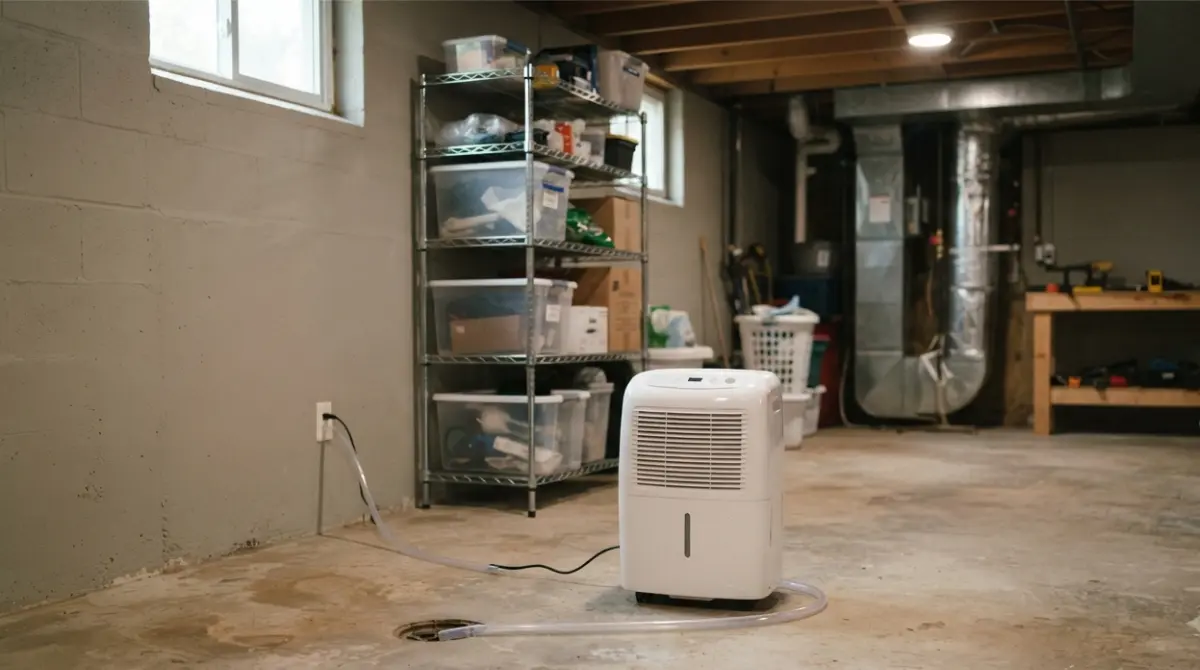
Table of Contents
Picking a basement dehumidifier you won’t have to worry about
A good basement dehumidifier is sized for the space, drains the way your basement allows, and isn’t on a fire-hazard recall list. Start with your situation:
- Buying your first one: size it in the next section, then compare the picks.
- Checking an older or used unit: run the recall check first.
- Still damp with one running: see the troubleshooting section, because the fix may be water, not air.
Buying your first one
Capacity comes first. The right size depends on your square footage and how damp the space is.
Replacing or checking an older unit
Millions of older dehumidifiers sold under familiar brands were recalled because they can overheat and catch fire. If a musty odor started your search, our guide to what’s behind a musty basement smell covers the usual causes.
ℹ️ Safety Note: Several dehumidifier recalls involve units that can overheat, smoke, and catch fire. This article is general guidance. If a unit scorches an outlet or keeps tripping a breaker, stop using it and have a licensed electrician inspect the circuit. Spreading or recurring mold may need a certified mold remediation professional.
How many pints your basement actually needs
Capacity is rated in pints per day, meaning the water a unit removes in 24 hours. ENERGY STAR sizes it by area and dampness:
| Basement condition | Under 2,000 sq ft | Over 2,000 sq ft |
|---|---|---|
| Slightly damp, musty at times (50–75% RH) | 20–30 pints | 30+ pints |
| Very damp, damp spots on walls or floor (75–90% RH) | 25–40 pints | 40+ pints |
| Wet, sweating walls or seepage (90–100% RH) | 30–50 pints | 50+ pints |
Source: ENERGY STAR’s dehumidifier sizing charts
Measure first, then round up
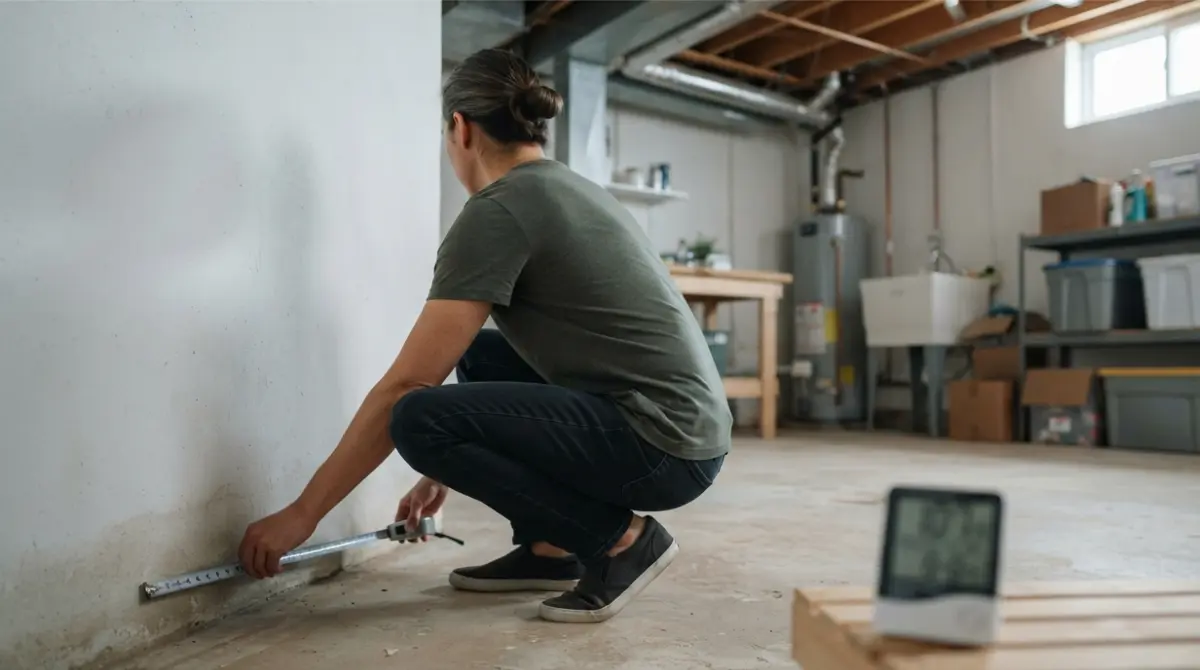
Get your area from our Square Footage Calculator, then match the row to what you see. ENERGY STAR advises oversizing rather than undersizing. If you’re replacing a unit, the water you empty each day is a good guide.
Why new pint ratings look smaller
📊 Spec: Since June 2019, DOE tests portable dehumidifiers at 65°F instead of 80°F, closer to real basement conditions, so the same machine reports a lower number. ENERGY STAR’s rough conversion puts an old 70-pint rating at about 40–45 pints today (why capacity ratings changed).
How to check if a dehumidifier is recalled
Match the model number and date code against CPSC recall notices:
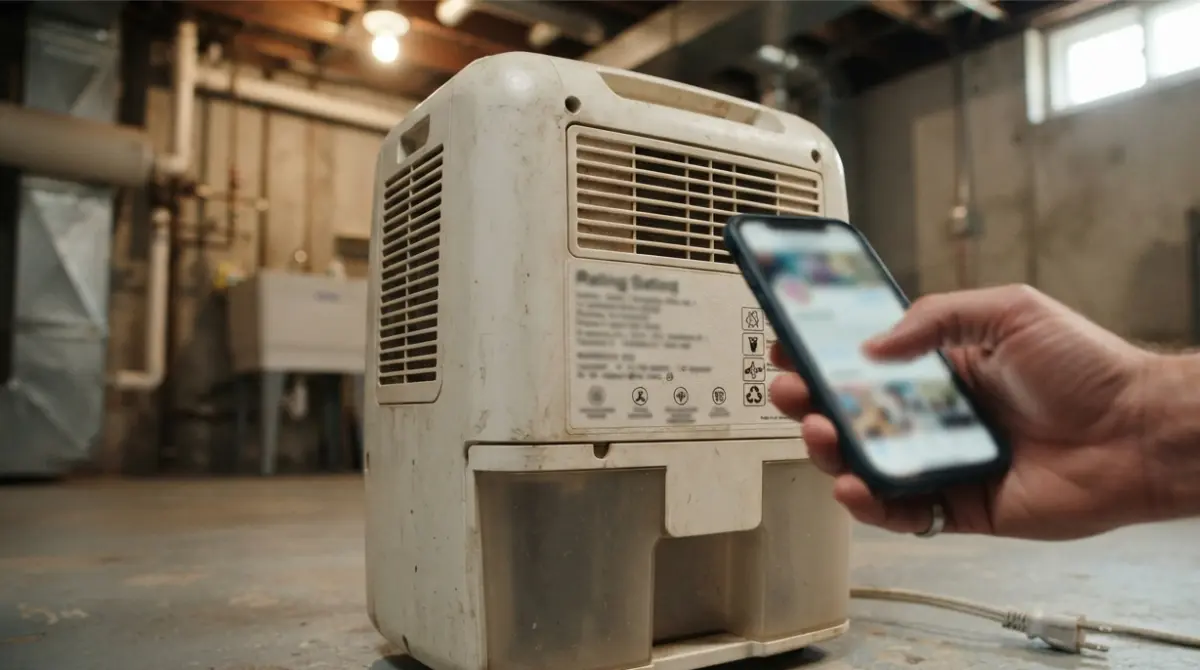
- Find the rating sticker on the back, front, or side of the unit.
- Note the brand, model number, pint capacity, and date code or serial number.
- Search the model on CPSC’s dehumidifier recall page.
- If it matches, unplug it, stop using it, and follow the remedy in the notice.
Find the model number and date code
Some recalls cover only certain production dates or serial ranges. Match those as well as the model number.
The major dehumidifier recalls at a glance
| Manufacturer | Recall date | US units | Brands include | Key Detail |
|---|---|---|---|---|
| Midea | Nov. 2, 2016 | About 3.4 million | Frigidaire, GE, Honeywell, Kenmore, Midea, Danby | Sold 2003–2013 |
| Gree (first recall) | 2013, re-announced through Nov. 2016 | CPSC links it to about 450 fires | ||
| New Widetech | Aug. 4, 2021 | About 2 million | Amana, Danby, Haier, Honeywell, Whirlpool, Whynter | Sold 2009–2017 |
| Gree (second recall) | Aug. 16, 2023 | About 1.56 million | Kenmore, GE, SoleusAir, Norpole, Seabreeze | Made 2011–2014 |
Source: CPSC recall notices, including the 2023 Gree recall notice. A brand name alone isn’t the verdict, because these recalls cover specific older models.
Buying used? Check before you plug in
Ask the seller for a clear photo of the rating sticker and check it with CPSC before paying. Federal law bars selling recalled products, so a match means walk away.
The best basement dehumidifiers, recall-checked
Each pick is a current 50-pint model, ENERGY STAR-listed, independently reviewed, and outside every recall above.
| Model | Best For | Drainage | Key Detail | Recall check |
|---|---|---|---|---|
| Midea Cube MAD50S1QWT | Most basements | Hose or bucket | Extra-large tank | |
| GE APYR50LC | No low drain | Built-in pump | 16-ft pump hose | |
| Frigidaire FFAP5034W1 | Cool basements | Built-in pump | Runs down to 41°F |
GE and Frigidaire appear on the 2016 Midea recall’s brand list, but that recall covers units sold from 2003 to 2013. The model number decides it, not the brand.
Best overall: Midea Cube MAD50S1QWT
Midea says its tank holds up to three times a standard bucket, and the unit adds Wi-Fi control and auto-restart. A specialist test site ranked it its top unit in spring 2026. The trade-off is that this version has no pump.
Best with a built-in pump: GE APYR50LC
Its pump sends water through an included hose up to 16 feet away, and Smart Dry adjusts fan speed to room humidity.
Best for cool basements: Frigidaire FFAP5034W1
Frigidaire rates it to operate down to 41°F, and RTINGS named it the best basement dehumidifier it has tested.
Pump, drain, or bucket: features a basement unit needs
How the unit drains shapes your daily routine more than any other feature.
Built-in pump vs. gravity drain
- Floor drain or sump below the unit: a gravity hose works.
- No drain lower than the unit: a built-in pump pushes water up to a sink or window.
Auto-restart and auto-defrost
Auto-restart turns the unit back on after a power outage, which matters in a room you may not check for days. ENERGY STAR notes that frost can form on the coils below 65°F and stall drying. For a cold basement, look for an anti-frost sensor or a low-temperature rating.
Is ENERGY STAR worth it?
ENERGY STAR says certified units use about 20% less energy to remove the same moisture. The label also guarantees a built-in humidistat.
Dehumidifier running but the basement is still damp?
Check the target first. The EPA recommends keeping relative humidity below 60%, and ideally at 30–50% (EPA’s indoor humidity guidance).
Set the right humidity target
Set the humidistat inside that range and let the unit cycle on and off. If your unit doesn’t display humidity, ENERGY STAR suggests adding a hygrometer.
Placement and airflow
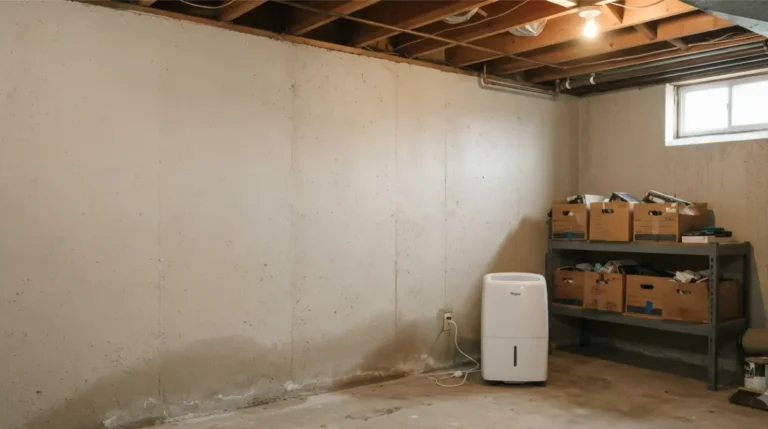
Close doors and windows, and leave space around units that don’t discharge from the top. Keep the unit away from dust, which clogs the coils.
When the real fix is waterproofing
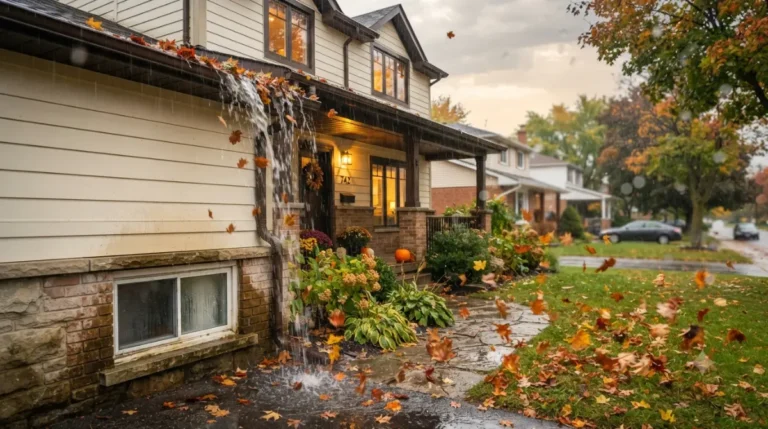
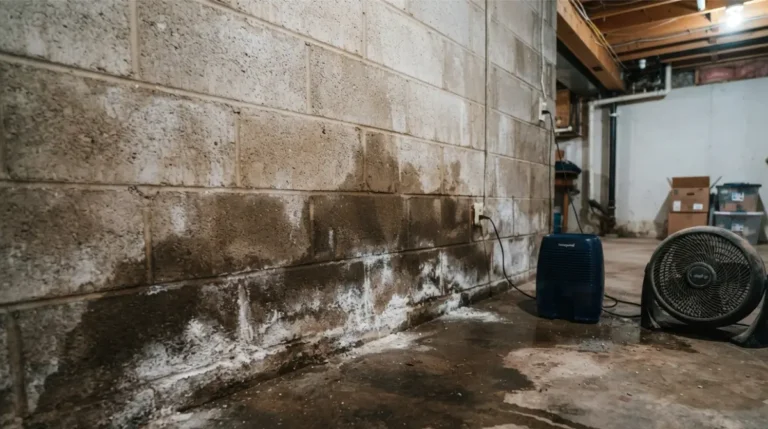
Sweating walls or seepage mean water is getting in, and no dehumidifier stops that. Run our condensation vs. seepage test, then review what basement waterproofing actually costs, line by line.
Running a basement dehumidifier safely
Every recall above involves units that can overheat, smoke, or catch fire. Know the warning signs.
Signs a unit is overheating
A burning smell, smoke, a melted plug or a scorched outlet means unplug it now. Report the incident at SaferProducts.gov.
⚠️ Watch Out: ENERGY STAR says to use a properly grounded outlet and keep drain hoses away from cords. If a breaker keeps tripping, have a licensed electrician inspect the circuit.
When mold needs a professional
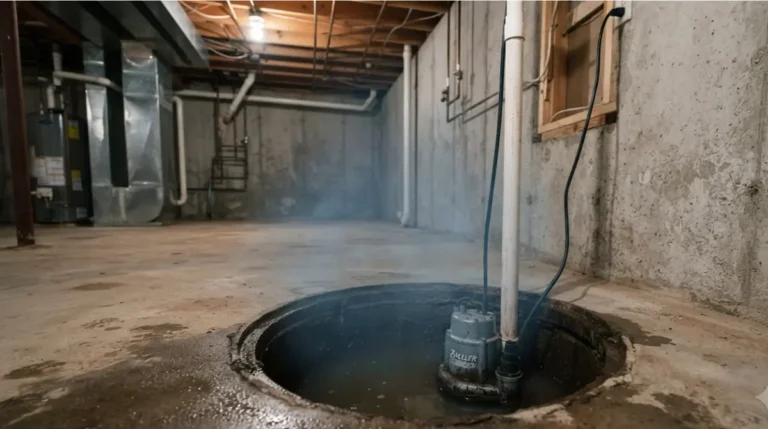
Mold that covers a large area or keeps returning after cleanup calls for a certified mold remediation pro. If water is the source, our recall-checked sump pump picks cover the next layer of protection.
Basement dehumidifier FAQ
1. What size dehumidifier does a 1,000 sq ft basement need?
ENERGY STAR recommends 25–40 pints per day for a very damp basement under 2,000 sq ft, and 30–50 pints if it’s wet.
2. Do I need a basement dehumidifier with a pump?
Only if no floor drain or sump sits lower than the unit. A pump pushes water up to a sink or window.
3. What humidity should a basement be?
The EPA recommends basement humidity below 60%, ideally 30–50%. Set your dehumidifier’s humidistat within that range.
4. Which basement dehumidifiers were recalled?
Major recalls involved units made by Midea, Gree, and New Widetech, sold under dozens of brands. Check your model on CPSC before use.
5. Is a GE or Frigidaire dehumidifier safe?
Brand alone doesn’t decide dehumidifier safety. Recalls cover specific older models, so match your model number and date code on CPSC.
6. Why does a new dehumidifier have a lower pint rating?
DOE now tests dehumidifiers at 65°F instead of 80°F. An old 70-pint rating equals roughly 40–45 pints today.
7. Where should a basement dehumidifier go?
Place the basement dehumidifier with open airflow unless it discharges from the top, keep doors closed, and set it near your drain.
8. Should a basement dehumidifier run all the time?
Let the dehumidifier’s humidistat cycle it on and off to hold your set humidity instead of running it nonstop.
9. Is it safe to buy a used dehumidifier?
Only after checking the used dehumidifier’s model number and date code against CPSC recalls, because selling recalled units is illegal. Check CPSC before plugging it in.
10. Are ENERGY STAR dehumidifiers worth it?
ENERGY STAR says certified dehumidifiers use about 20% less energy to remove the same moisture as conventional models.
Your next step
Size first, check the recall status of anything older, and match the drainage to your basement. If humidity won’t settle into the 30–50% range, treat it as a water problem and get it diagnosed before buying a bigger unit.