How to Tell If a Basement Wall Crack Is Structural

Basement wall crack structural or harmless? Its direction tells you whether to monitor or call an engineer, and why sealing alone isn’t enough for radon.
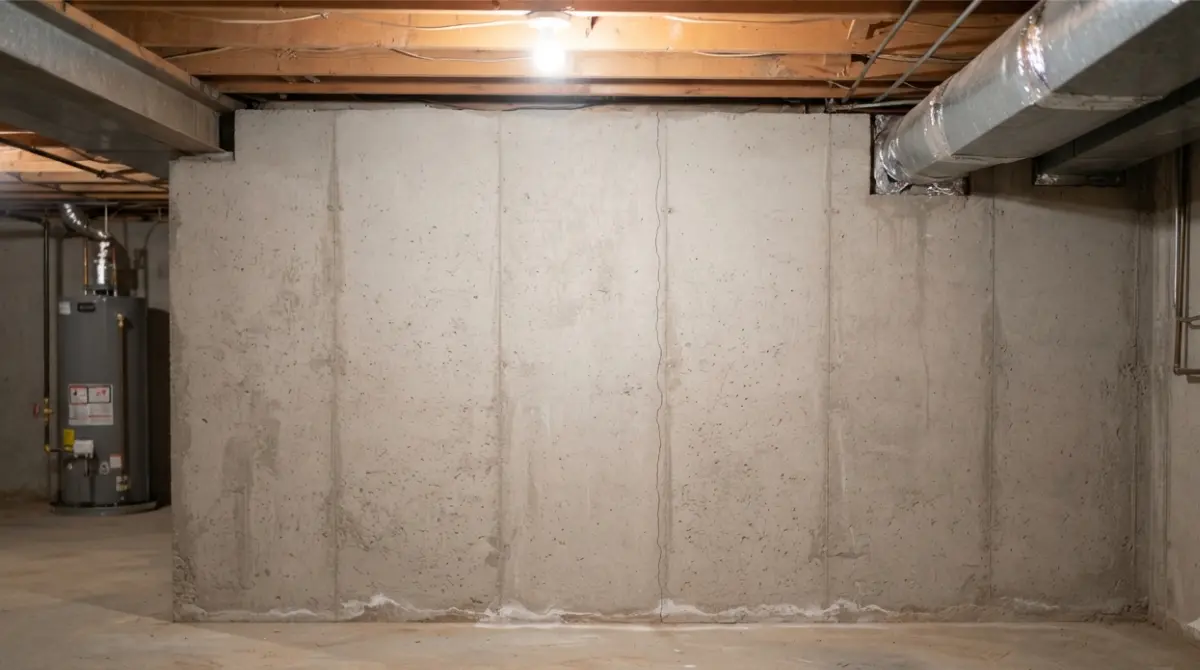
Table of Contents
Found a crack in your basement wall? Start here
A crack in your basement wall is one of the most common things homeowners find, and most turn out to be cosmetic. This guide helps you tell which kind you have and what to do next, without guessing.
Start with your situation:
- Thin vertical or hairline crack on a dry wall? Use the crack-direction table below, then learn to monitor it.
- Horizontal, stair-step, or a wall that looks bowed? Skip to the warning signs and plan to call a structural engineer.
- Found it while hunting a mouse entry point? Jump to the section on mice, water, and radon.
We’re not your engineer. What we can do is show you exactly when you need one.
ℹ️ Safety Note: Foundation cracks can signal structural movement, and cracks can also let radon gas into your home. This article is general guidance only. A crack’s significance can only be confirmed by a licensed structural engineer, and if a wall is visibly bowing or leaning, stay out of that area and get professional help.
Why basement walls crack in the first place
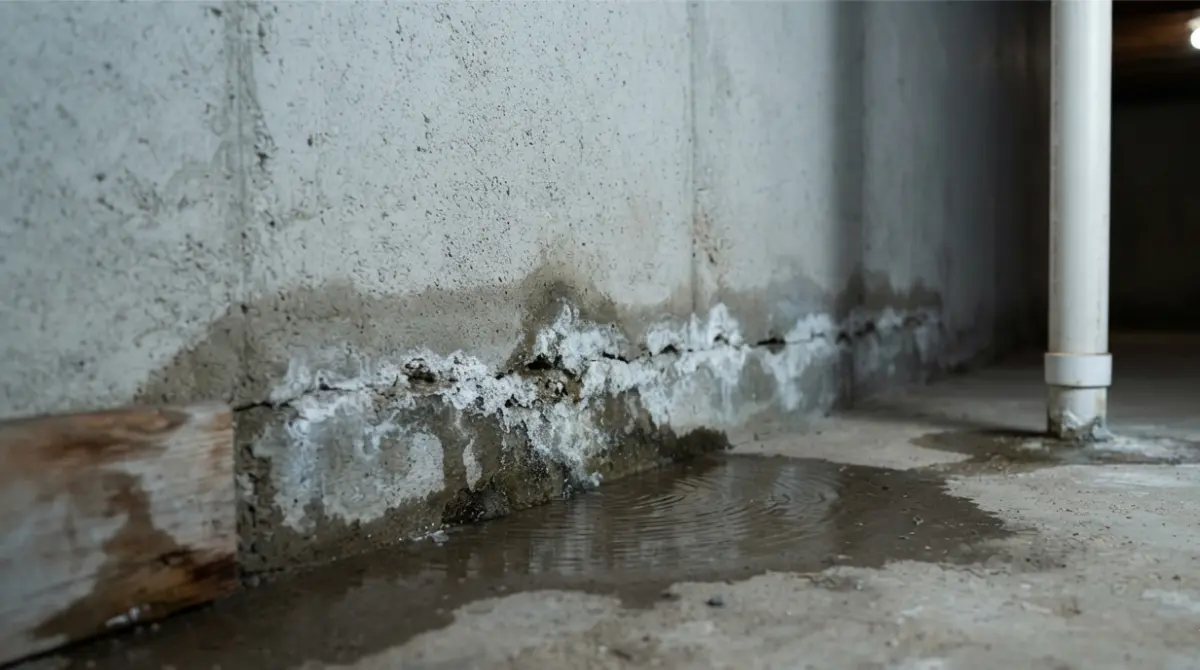
Basement walls crack for two broad reasons: the concrete dried, or something pushed on it.
Shrinkage and cold joints (the harmless majority)
Poured concrete shrinks as it cures, and that shrinkage often leaves thin vertical cracks. A cold joint isn’t a true crack at all. It’s the seam where fresh concrete was poured against a batch that had already begun to set.
Pressure and settlement (the ones to watch)
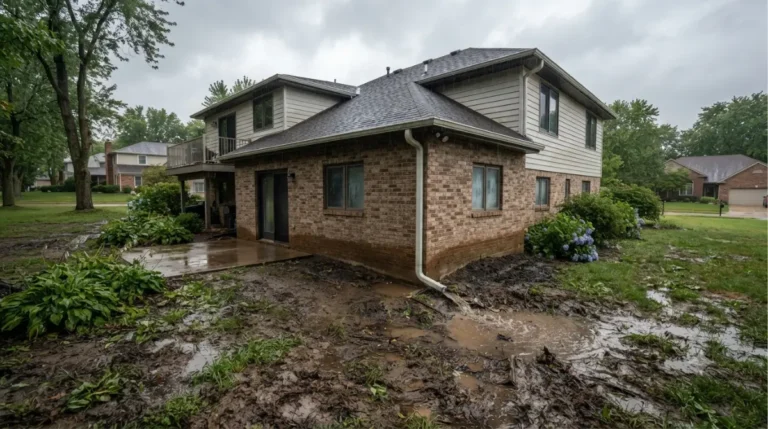
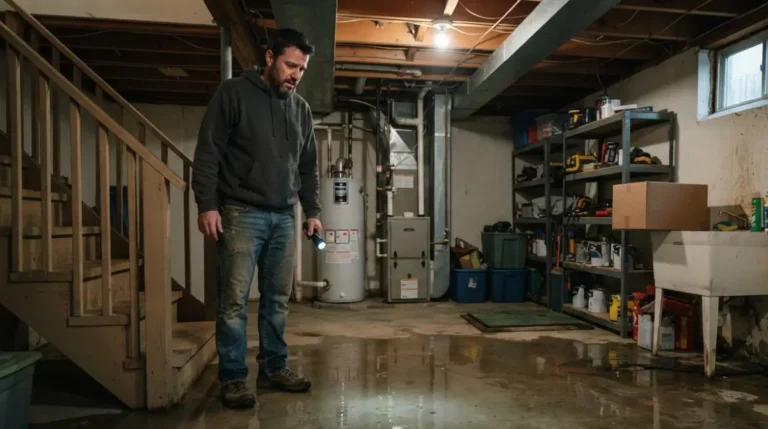
Waterlogged soil pushes sideways on a wall, a force called hydrostatic pressure. Uneven settling beneath the footing can also crack a wall as one section moves more than another. Water is often the common thread, so it helps to understand what’s actually driving water into your basement.
🔍 Why It Works: Concrete is strong when squeezed but weak when bent. A drying crack relieves internal tension and then stops, while a pressure crack keeps getting pushed by a force that hasn’t gone away.
What your crack’s direction is telling you
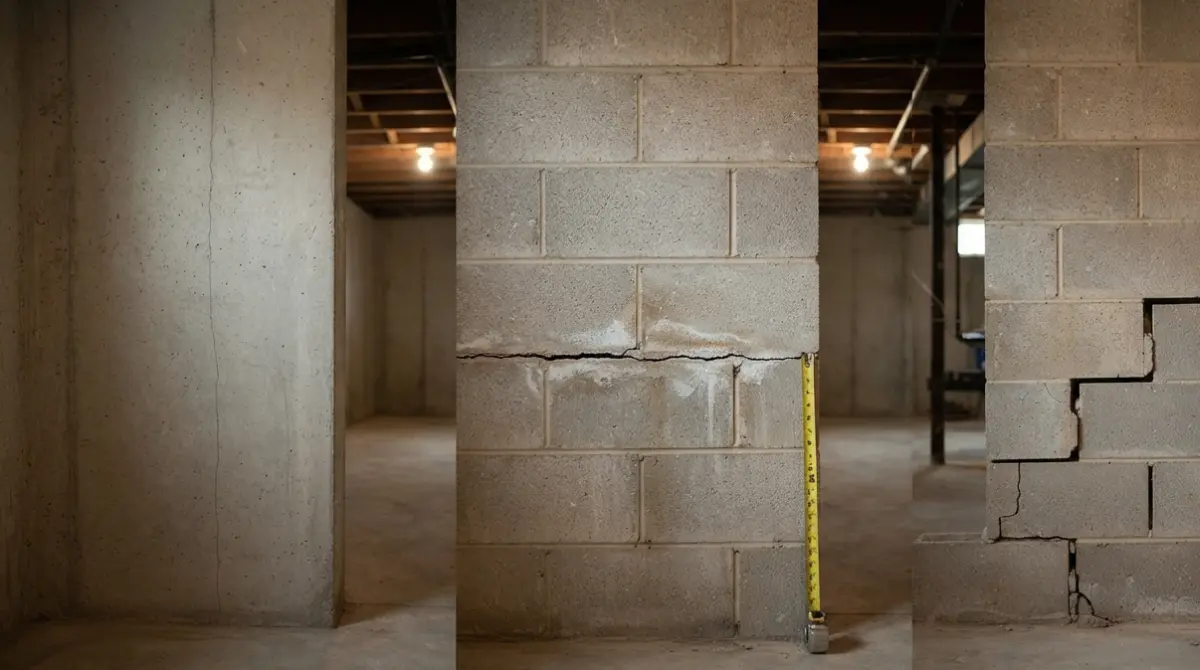
Vertical and hairline cracks are usually shrinkage; horizontal and stair-step cracks deserve a professional look.
| Crack direction | Common cause | Concern level | What to do |
|---|---|---|---|
| Vertical or hairline | Concrete shrinkage while curing | Usually low | Mark and monitor |
| Diagonal | Shrinkage or minor settling | Low to moderate | Monitor; call if it widens |
| Horizontal | Sideways soil or water pressure | High | Call a structural engineer |
| Stair-step (block/brick) | Uneven settlement or wall movement | High | Call a structural engineer |
Table reflects widely documented inspection guidance; confirm with an engineer for your wall.
Vertical and hairline cracks
These are the ones most homeowners find, and most never change. They still matter as entry points, which we cover below.
Diagonal cracks
Diagonal cracks are often cosmetic, but watch them for growth.
Horizontal cracks
A horizontal crack usually means the wall is being pushed inward. Don’t patch it before it’s diagnosed.
Stair-step cracks in block walls
Stair-step cracks follow mortar joints, so they appear in concrete block or brick walls rather than poured ones.
How to tell if a basement crack is getting worse
A crack that stays the same is rarely an emergency; a crack that moves is the one to act on.
Mark, measure, photograph
- Draw a pencil line across each end of the crack and write the date beside it.
- Measure the widest point and record it. A crack monitor gauge makes each reading repeatable.
- Photograph the crack with a ruler or coin beside it, from the same spot each time.
- Recheck regularly, such as monthly, and after heavy rain or a hard freeze.
What counts as change
Growth past your pencil marks, a wider reading, edges shifting out of line, or new dampness all count as change. Log each check:
| Date | Past pencil marks? | Widest point | Damp? | Photo taken? |
|---|---|---|---|---|
✅ Do This: If any warning sign in the next section appears, stop monitoring and call a licensed structural engineer.
Signs a crack needs a structural engineer, not a patch
Some cracks shouldn’t wait out a monitoring period.
The four warning signs
- Direction: the crack is horizontal or stair-step.
- Growth: it’s widening or extending past your pencil marks.
- Displacement: one side sits out of line with the other, or the wall bows inward.
- Companion symptoms: doors upstairs start sticking, floors slope, or water keeps coming through.
There’s no single crack width that every source agrees on. An engineer judges width alongside direction and movement.
Engineer or foundation contractor: who to call first
A licensed structural engineer gives an independent diagnosis, while a foundation repair company sells repairs. Get the engineer’s assessment first, then collect repair quotes against it.
✅ Do This: Ask the engineer: Is this crack active? What’s causing it? Does it need repair or just monitoring? Request the answers in writing.
When a harmless crack still lets in mice, water, and radon
Even a cosmetic crack can be an open doorway.
How small a gap a mouse needs
📊 Spec: According to the CDC, mice can squeeze through a hole the width of a pencil, about 1/4 inch.
The CDC’s guide to sealing up rodent entry points lists the foundation among the places to check. Cracks are only one gap, though, and our guide to sealing gaps to keep rodents out covers the rest of the house.
Why sealing alone won’t fix radon
The EPA lists wall cracks and construction joints among the routes radon takes into a home. Its consumer guide to radon reduction also says it doesn’t recommend sealing alone, because sealing hasn’t been shown to lower levels reliably. Sealing does make a mitigation system work better, as the CDC explains in its guidance on reducing radon at home.
✅ Do This: Test your home for radon. If levels are high, hire a certified radon mitigation professional.
What you can safely seal yourself, and what you shouldn’t
The line is simple: seal what’s stable, and diagnose what’s moving.
Stable, non-structural gaps: rodent-proof sealing
For small holes, the CDC recommends steel wool with caulk around it to hold it in place. For larger holes it recommends cement, hardware cloth, or metal sheeting. Our step-by-step guide shows how to seal mouse entry points. If water drives the crack, fix the source, starting with the grading around your foundation.
Hands off: anything on the red-flag list
Sealing a structural crack hides the symptom while the force behind it continues.
⚠️ Watch Out: DIY crack-injection kits are sold for all crack types. Don’t use one on a horizontal, stair-step, or moving crack until a licensed structural engineer has diagnosed it.
Basement wall crack questions, answered
1. Are vertical cracks in basement walls normal?
Yes. Thin vertical basement wall cracks usually come from concrete shrinking as it cures, and most never change.
2. Are horizontal basement wall cracks serious?
They can be. Horizontal basement wall cracks usually point to soil or water pressure pushing the wall inward. Have a licensed structural engineer inspect it.
3. What does a stair-step crack mean?
A stair-step crack follows mortar joints in block or brick walls and often signals uneven settlement. Call a structural engineer.
4. How wide is too wide for a basement wall crack?
Published cutoffs vary. A basement wall crack that’s widening, offset, or growing matters more than any single number. Ask an engineer.
5. How do I monitor a basement wall crack?
Mark both ends with dated pencil lines, measure the widest point, photograph it with a scale, and recheck regularly.
6. Can I seal a basement wall crack myself?
You can seal stable, non-structural gaps against pests. Sealing a structural crack hides the symptom, not the cause. Get a diagnosis first.
7. Can mice get in through basement wall cracks?
Yes. The CDC says mice fit through a gap the width of a pencil, about 1/4 inch.
8. Does sealing basement wall cracks reduce radon?
Sealing helps a radon system work better, but the EPA doesn’t recommend sealing alone to lower radon. Test your home.
9. Should I call an engineer or a contractor first about a basement wall crack?
For a red-flag basement wall crack, call a licensed structural engineer first for an independent diagnosis, then compare repair quotes.
10. Is a cold joint a basement wall crack?
No. A cold joint is the seam where fresh concrete was poured against a batch that had already begun to set.
Your next step with a basement wall crack
Classify the crack by direction, then mark and monitor it. Seal it against pests only if it’s stable, and call a structural engineer if any warning sign appears. If water is part of the picture, see what each line of a basement waterproofing quote actually covers before you hire anyone.