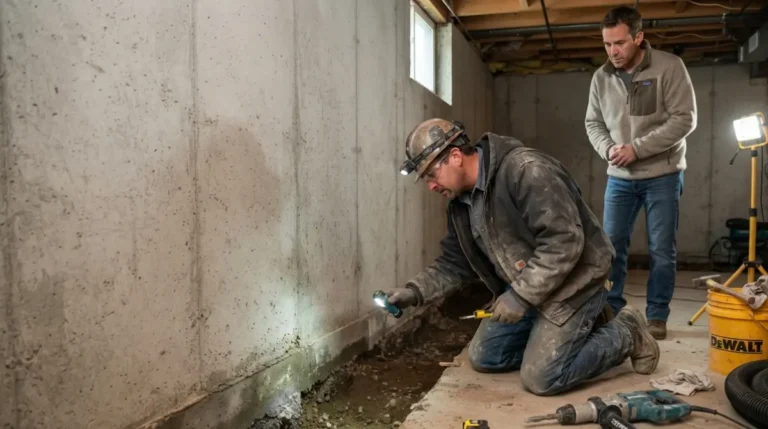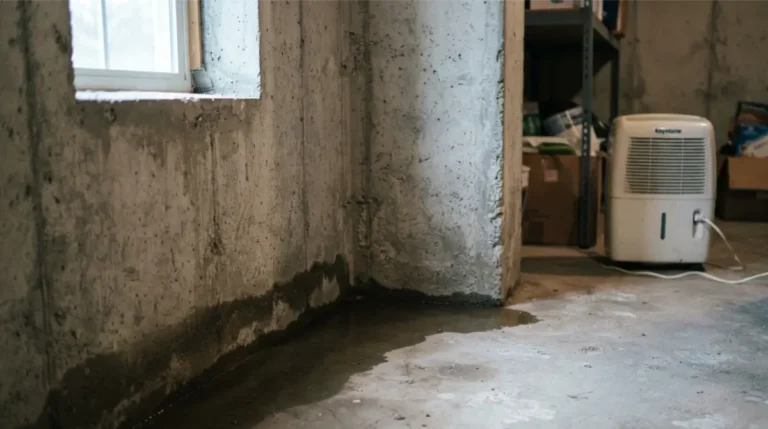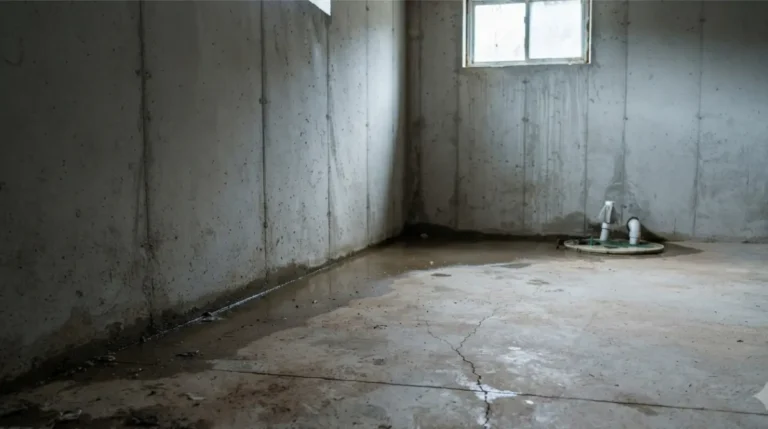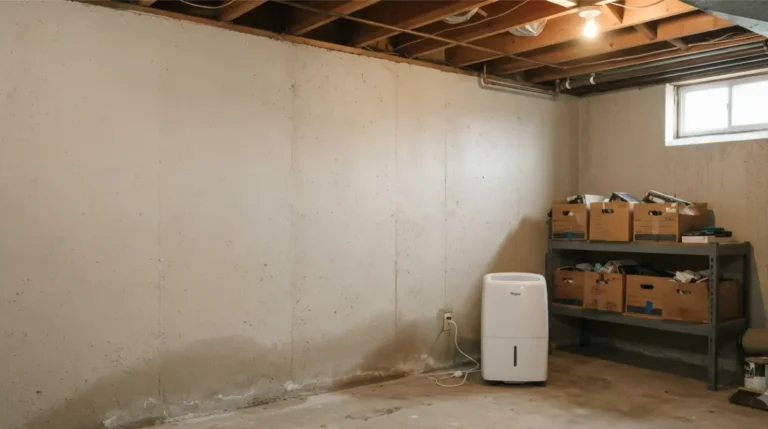
Basement Waterproofing DIY vs Professional, the Right Order

Basement waterproofing starts outside: a 1-inch rain drops about 1,250 gallons on a 2,000-sq-ft roof. Here’s what to fix yourself and what to hire out.
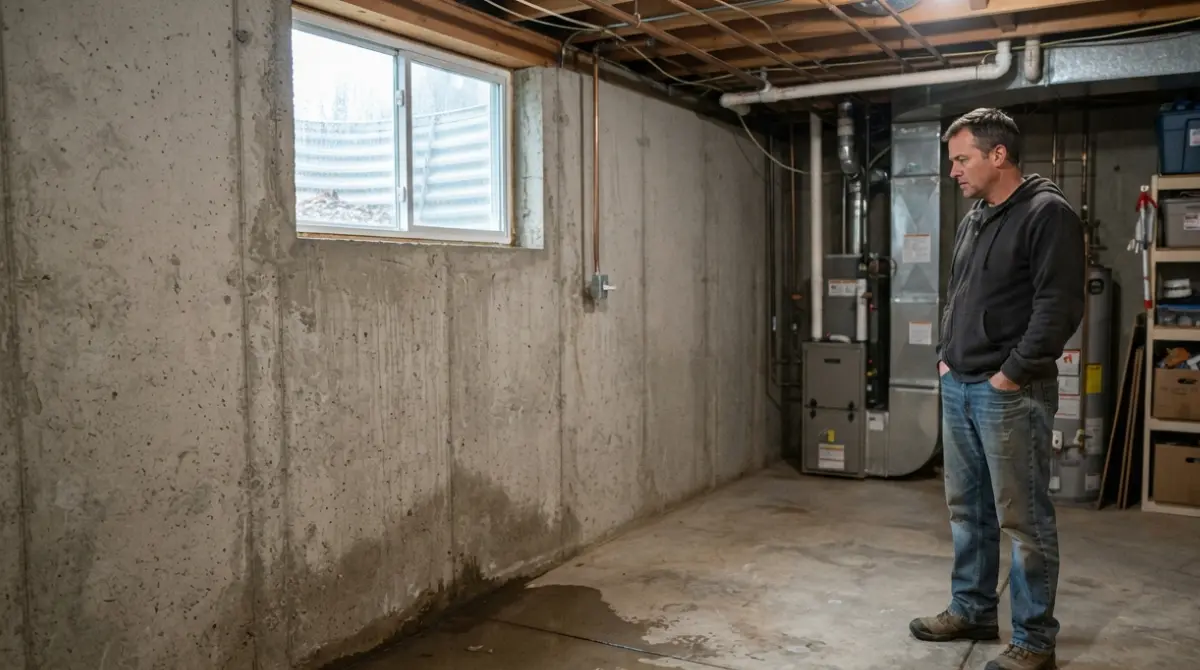
Table of Contents
Wet basement? Start with the source, not the sealant
A wet basement and a five-figure waterproofing quote often arrive the same week. Nearly every guide on this question comes from a company that sells waterproofing; this one doesn’t.
Whether basement waterproofing is a DIY job or a pro job depends on where the water comes from. University of Minnesota Extension notes that many wet basements sit in sound houses that simply drain badly.
- Damp or musty, no puddles? Start with the source.
- Water after rain? Go to the outside fixes.
- Found a crack? Read the sealing and hire-out sections.
- Holding a quote? Skip to costs.
- Renting? Here’s what to do when a landlord won’t fix water or mold.
ℹ️ Safety Note: Basement water work can involve structural failure, buried utility lines, mold exposure, sump pump wiring, and contaminated floodwater. Treat this article as general guidance. For structural cracks, excavation, drainage systems, or new circuits, hire a structural engineer, licensed contractor, or electrician, and follow your local code and permit rules.
Where the water in your basement is actually coming from
Basement water comes from three places, according to University of Minnesota Extension:
- Rain and groundwater reaching the foundation.
- Indoor moisture from dryers, showers, and cooking.
- Humid outside air condensing on cool walls.
Rain, groundwater, or humid air
Only the first is a true waterproofing problem. The other two are humidity problems, and sealing the walls won’t touch them.
Condensation vs seepage: how to tell
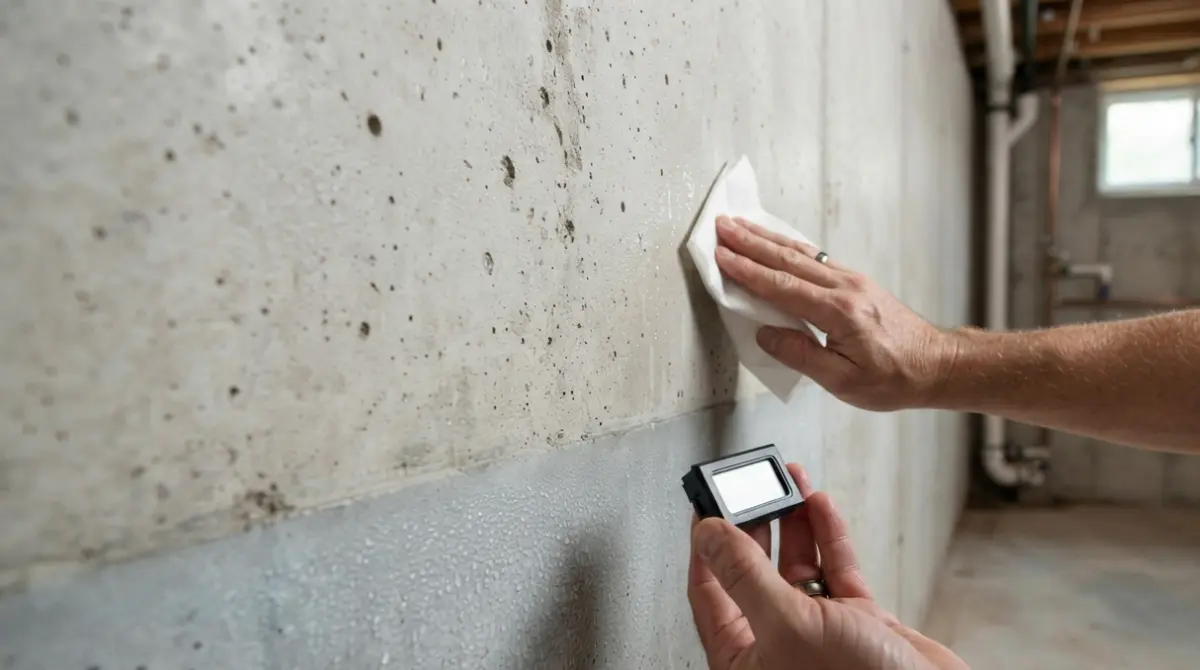
Extension guidance says homeowners often mistake summer condensation for a leak. Water that appears after rain or pools on the floor points to seepage instead.
🔍 Why It Works: Concrete is porous, so moisture wicks upward through it like a paper towel. That’s why dampness often shows as a ring at the base of block walls.
The DIY fixes worth doing first, most of them outside
Start outside. University of Minnesota Extension’s basement moisture guide puts gutters, downspouts, and grading ahead of any drainage system, and these fixes may solve the problem on their own.
Gutters, downspouts and grade
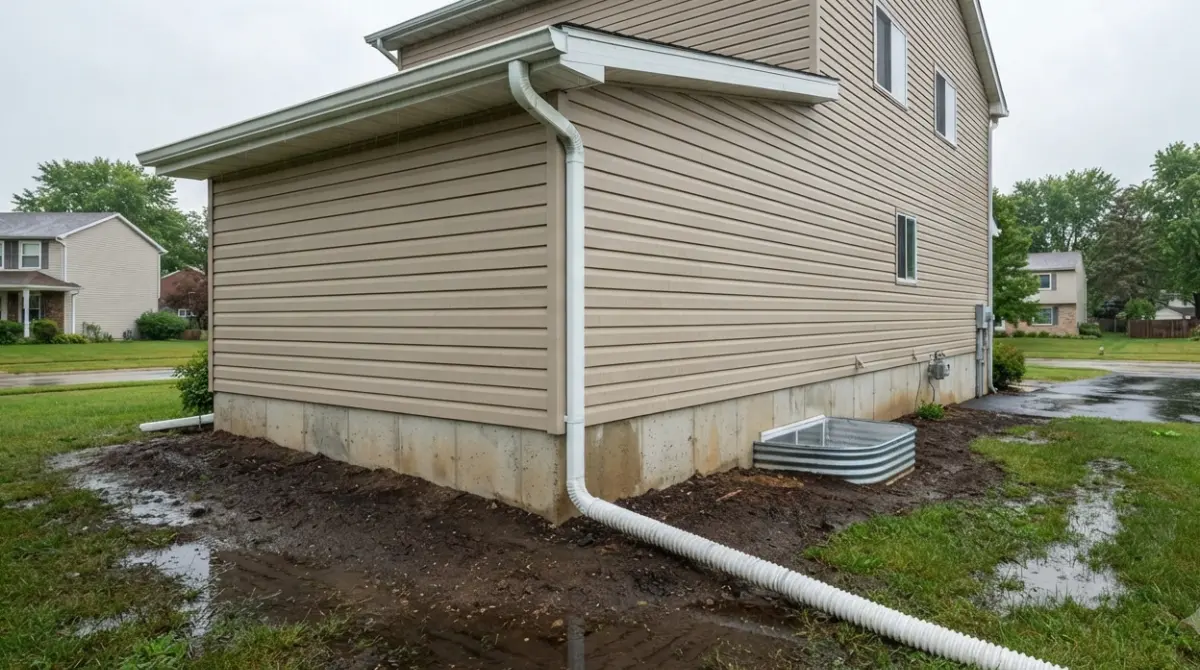
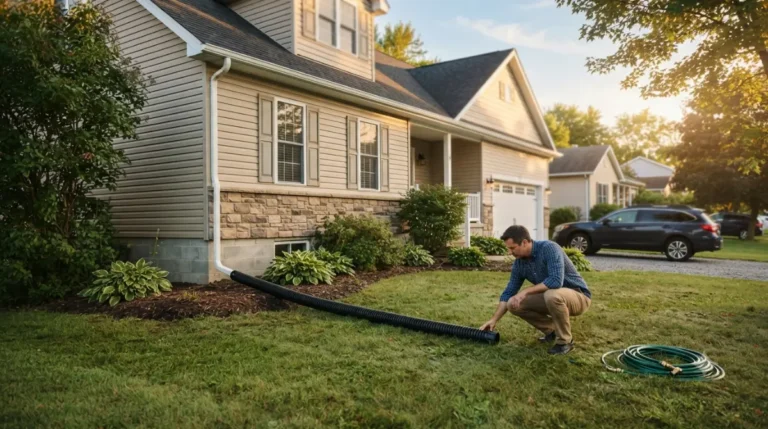
- Extend downspouts so they discharge at least 4 feet beyond the wall.
- Regrade the soil so it slopes away at least 1 inch per foot for 6 feet.
- Check window wells, which can funnel water straight at the wall.
📊 Spec: A 1-inch rain drops about 1,250 gallons on a 2,000-square-foot roof. Source: University of Minnesota Extension.
Humidity: what a dehumidifier can and can’t do
The EPA recommends keeping indoor humidity below 60 percent, ideally 30 to 50, checked with an inexpensive hygrometer. A dehumidifier helps with that, but Extension guidance says it only treats symptoms and can even pull moisture in faster.
⚠️ Watch Out: CPSC still warns owners to check older dehumidifiers against the Gree recalls, which carry a fire risk. Match your model and date code against CPSC’s dehumidifier recall page before you plug one in.
Sealing gaps once, for water and for mice
The gaps around pipes and cables in your foundation let in water, and they’re the same gaps mice use.
Pipe and utility penetrations
UC IPM lists expanding foam as ineffective against mice and calls for metal or concrete at foundation penetrations. Our guide covers the materials that actually stop rodents at the foundation. Pack each gap with stainless fill, then finish it with a cement-based patch, and one repair handles both problems.
Why paint-on waterproofing doesn’t last
Extension guidance calls interior coatings temporary. They may work for a while, but the water is still there and eventually finds another way in.
Which cracks you can patch
A thin crack that isn’t widening or leaking is a reasonable weekend patch. Horizontal, stepped, or widening cracks belong in the next section.
Where DIY stops: the jobs to hire out
Hire out anything structural, anything that means cutting concrete or digging, and any large mold problem.
| Situation | DIY or hire | Who | Key detail |
|---|---|---|---|
| Downspouts, grading, humidity | DIY | You | Extension’s first steps |
| Small stable cracks, pipe gaps | DIY | You | Metal, then cement patch |
| Horizontal crack, bowing wall | Hire | Structural engineer | Written repair spec |
| Drain tile, sump, excavation | Hire | Licensed contractor, electrician | Itemized scope |
| Mold over ~10 sq ft, or sewage | Hire | Experienced mold remediator | EPA threshold |
Compiled from University of Minnesota Extension and EPA guidance. No hands-on testing.
Structural cracks and bowing walls
Horizontal cracks and inward bowing can signal soil pressure overloading the wall. That needs an engineer’s assessment, not a patch.
Drainage systems and sump pumps
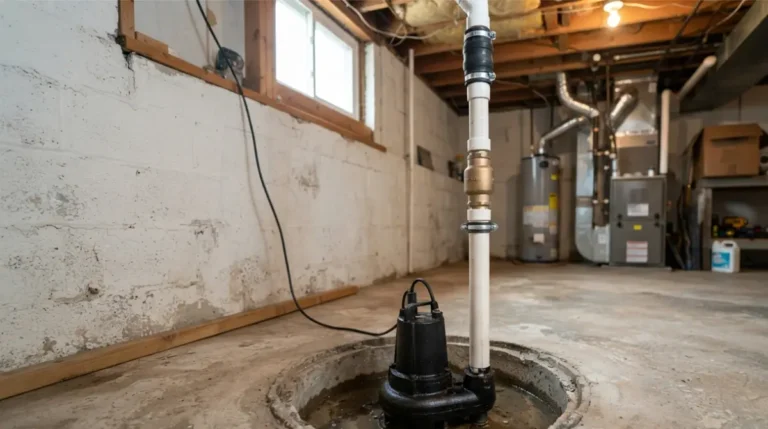
Extension guidance rates exterior drainage as the most effective and the most costly option. Interior systems drain to a sump, which needs an airtight, childproof cover.
Mold over 10 square feet
Per EPA’s mold cleanup guidance, most people can clean up less than about 10 square feet of mold themselves. Hire experienced help beyond that, or after any sewage water. For smaller jobs, use the protective gear checklist for mold cleanup.
✅ Do This: For a structural crack, hire a licensed structural engineer before any contractor. Ask for a written report that specifies the repair, so every bid quotes the same fix.
What basement waterproofing costs, and what a quote should show
Published cost ranges disagree widely, and none of these sites explain how they calculate them.
| Job | Published range | Source (date) |
|---|---|---|
| Epoxy crack injection | $250–$800+ per crack | HomeGuide (Jan 2026) |
| Crack sealing + waterproof paint | About $1,000 | This Old House (Mar 2026) |
| Interior drain system | $60–$120 per linear foot | This Old House (Mar 2026) |
| Interior drain system | $3,000–$10,000 | CostToRenovate (Mar 2026) |
| Exterior excavation + membrane | $8,000–$25,000 | CostToRenovate (Mar 2026) |
These are aggregator estimates, not quotes. We haven’t priced a project ourselves.
What an itemized quote includes
Ask for the drain footage, the sump pump model, and labor as separate lines, plus what the warranty covers. The same vetting questions we use for exclusion contractors apply here too.
The rules to check before you dig, pump, or sign
Three rules catch homeowners out before any work starts.
Call 811 before any digging
Regrading and trenching both count as digging. The national program says to contact your state 811 center a few business days ahead. See 811’s before-you-dig guidance.
Where your sump and downspouts can discharge
Local rules may limit where pumped water can go. Ask your public works department before running a line toward a sewer or a neighbor’s lot.
Permits, code, and renters
The International Residential Code requires the ground to fall at least 6 inches within the first 10 feet of the house, but your city’s adopted version is the one that governs. Renters should report leaks promptly, as the EPA advises.
✅ Do This: Before excavation or structural work, ask your building department whether it needs a permit.
Basement waterproofing questions people actually ask
1. Can I waterproof my basement myself?
Yes, for gutters, downspouts, grading, humidity, and small stable cracks. Structural cracks, drainage systems, and larger mold need a professional.
2. Does waterproof paint work on basement walls?
Only temporarily. Extension guidance says interior coatings may work for a while before water finds another path in.
3. How far should downspouts extend?
University of Minnesota Extension recommends downspout extensions that discharge water at least 4 feet beyond the foundation wall.
4. Will a dehumidifier fix a wet basement?
No. A dehumidifier reduces humidity and odor, but Extension guidance says it doesn’t solve the underlying water problem.
5. When is a basement wall crack serious?
Horizontal, stepped, or widening cracks and inward-bowing walls are warning signs of pressure on the foundation. Have a structural engineer inspect before any repair.
6. Is interior or exterior waterproofing better?
Exterior drainage is the most effective option for basement waterproofing but costs the most. Interior drainage routes water to a sump instead.
7. How much does basement waterproofing cost?
Published 2026 estimates run from about $250 per injected crack to $25,000 for exterior excavation. Get itemized quotes.
8. Can I clean basement mold myself?
EPA guidance says most people can clean mold patches under about 10 square feet. Hire experienced help for larger areas or sewage water.
9. Do I need to call 811 before regrading?
Yes. Regrading is digging, and 811 guidance says to contact your state center a few business days beforehand.
10. Is it condensation or a leak?
Water appearing after rain or pooling on the floor points to seepage. Moisture on cool walls in humid weather is often condensation.
Your next step
At the next heavy rain, walk outside and note where every downspout empties and where water sits against the house. Fix those spots first, because they cost little and often solve the problem. If water still gets in, get a structural engineer’s report or three itemized quotes before you spend five figures.