Interior or exterior basement waterproofing, and which fits yours

Interior vs exterior waterproofing hinges on where your water comes from, not price. Code requires true waterproofing only where the water table is high.
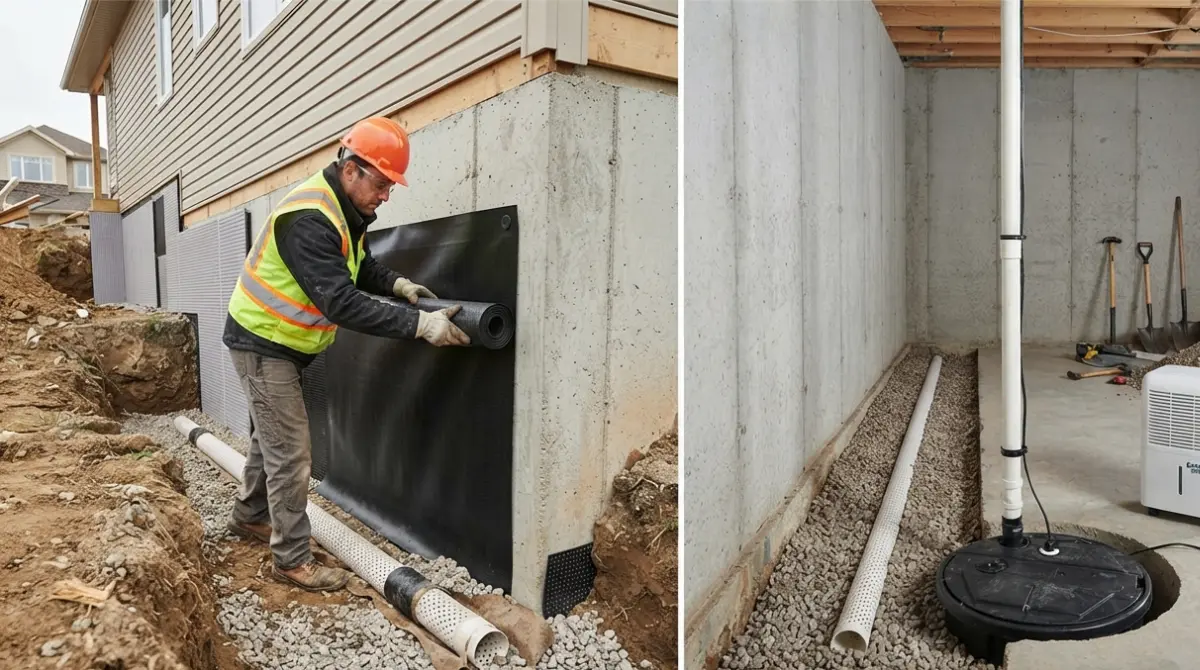
Table of Contents
Which basement waterproofing method do you actually need?
A wet basement forces one expensive question, and the internet answers it backwards. Almost every page ranking for this topic is published by a company that earns money when you request a contractor quote — so the answer is usually “the bigger job.” This article takes no referral fees, and the honest answer sometimes costs a few hundred dollars.
Two fixes, two different problems
Interior waterproofing captures water that reaches your basement and pumps it out. Exterior waterproofing seals the foundation from outside so less water arrives. Cheaper is not automatically worse — they address different water problems.
Start here if you already have a quotes
Holding a bid? Go straight to the cost table and the decision matrix below. If basement water only appears during storms, start with why water shows up after heavy rain. Renting? This is an owner’s repair — report it to your landlord in writing.
ℹ️ Safety Note: Basement water work touches structural, electrical, mold, and soil-gas risks, and excavation near a foundation needs a permit and a utility locate in most places. Everything here is general understanding for making a decision — hire a licensed waterproofing or foundation contractor, and follow your local code and permit requirements.
What interior and exterior waterproofing actually do
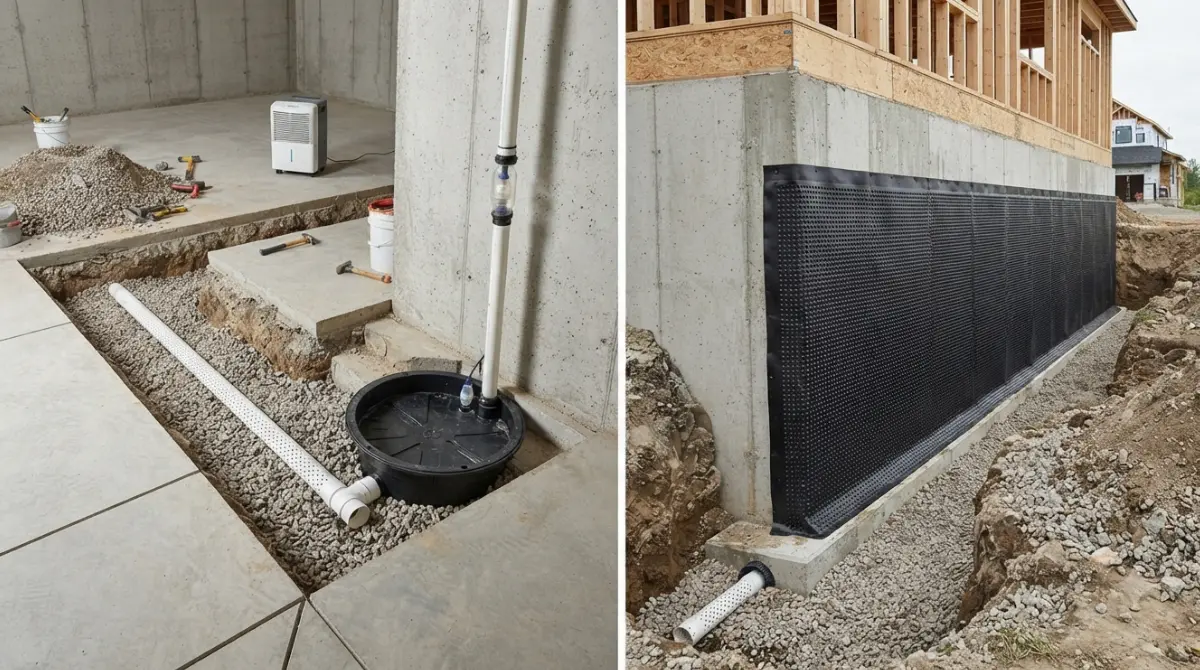
Interior systems manage water after it reaches the wall or slab; exterior systems block it before it touches the wall. That difference is physical, not a price tier.
Interior: capture and pump it out
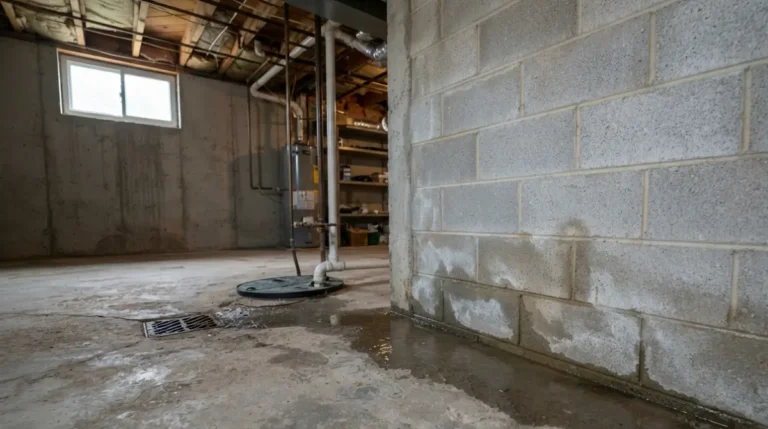
A trench is cut at the floor-wall joint, perforated pipe is set in gravel, and water routes to a sump pit where a pump ejects it away from the house.
Exterior: block it before the wall
The foundation is excavated to the footing, a waterproofing membrane and drainage board go on, and a footing drain carries water off.
Dampproofing is not waterproofing
Building code treats these as separate things. IRC Section R406 requires dampproofing on below-grade foundation walls as a baseline, and true waterproofing where a high water table or severe soil-water conditions exist — dampproofing resists moisture, not water under pressure.
🔍 Why It Works: Saturated soil pushes water against your wall with real force — hydrostatic pressure. A coating that stops damp will not stop pressure, which is why drainage, not sealant, does the heavy lifting in both systems.
Find where your water is getting in first
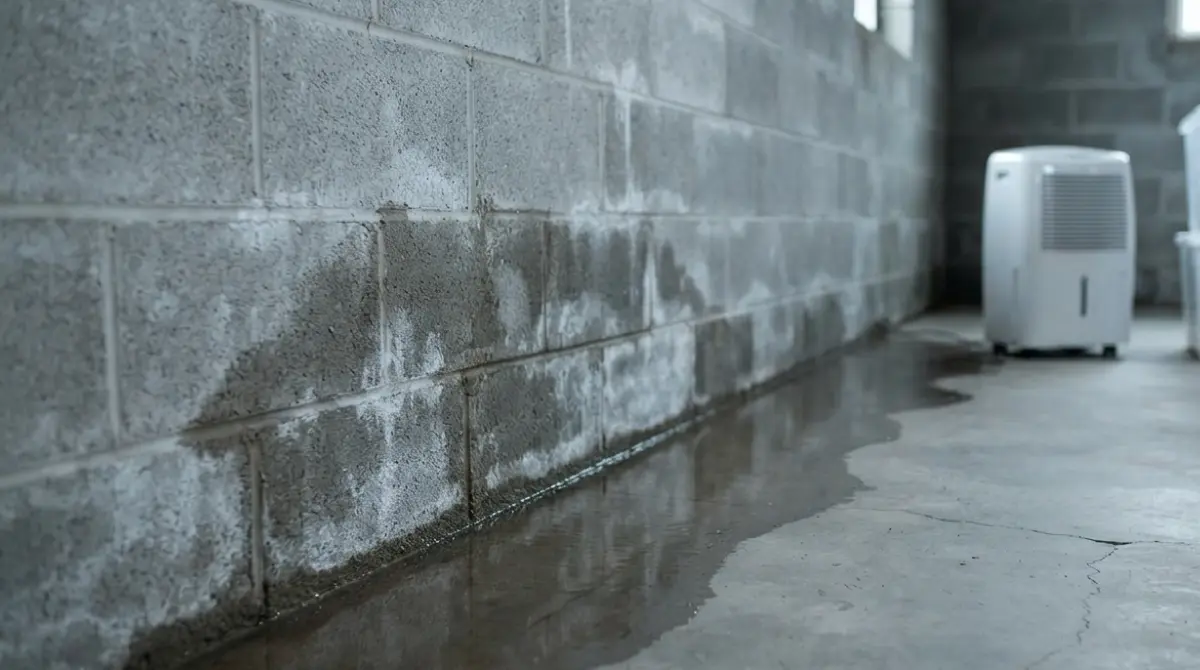
Buy the diagnosis before you buy the system. University of Minnesota Extension identifies exactly three sources of basement moisture: liquid water from rain or groundwater, interior sources like dryers and cooking, and humid outdoor air condensing on cool surfaces. Their guide to basement moisture causes and solutions also sets the sequence — control the source before defending the last line.
Check gutters and grading before you spend
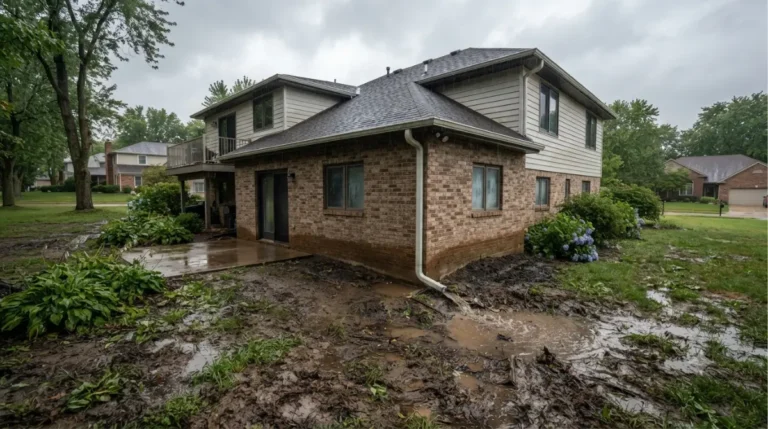
Overflowing gutters and soil sloping toward the house deliver roof water straight to your foundation. The IRC drainage requirement is the benchmark to measure against.
📊 Spec: IRC R401.3 requires grade to fall at least 6 inches within the first 10 feet of the foundation, with impervious surfaces in that zone sloped at least 2 percent away. Source: 2024 International Residential Code.
Signs it’s pressure, not a leak
Water at the floor-wall joint after rain suggests pressure below; damp walls with no standing water may be condensation. A simple foil test separates condensation from seepage, and if the symptoms still don’t add up, work through where the water is actually entering.
What each method costs, and where the numbers come from
Interior work is commonly reported around $3,000; exterior work around $7,000 and up. Read the sourcing note below before you trust any of it.
| Approach | Reported range (2026) | What it involves | Key detail |
|---|---|---|---|
| Grading and gutter correction | Often a few hundred | Slope soil away, extend downspouts | Cheapest, and sometimes sufficient |
| Interior drainage + sump | $3,000–$10,000 | Slab trench, drain tile, sump pit, pump | Priced per linear foot of perimeter |
| Sump pump alone | $600–$2,500+ | Pit, pump, discharge line | Mechanical part that eventually fails |
| Exterior excavation + membrane | $7,000–$18,000+ | Dig to footing, membrane, drainage board, footing drain | Access can rule it out entirely |
⚠️ Watch Out: These figures are compiled from Angi, This Old House, HomeGuide and Fixr (2026 data) — platforms that earn revenue when you request a quote. Treat them as a sanity check on your bid, not as a price. Permits commonly run $150–$500 and vary by jurisdiction.
Your bid should break down every line, not present one number. Compare it against what a waterproofing quote should itemize.
Which method fits your basement
“Which is better” is the wrong question. The water source and your site access decide it.
| Your situation | Method that fits | Why |
|---|---|---|
| Water rising at the floor-wall joint under pressure | Interior drainage + sump | Relieves pressure below the slab where the water is |
| Documented high water table or severe soil-water conditions | Exterior waterproofing + drainage | The condition IRC R406 writes waterproofing for |
| Driveway, porch, or attached structure against the wall | Interior drainage | Excavation isn’t physically available |
| Grading and gutters not yet corrected | Neither yet | You may be buying a system for a surface-water problem |
💡 Pro Tip: Interior systems trade a construction cost for a maintenance one. The pump becomes a single point of failure, so budget for a backup and a service habit from day one.
How to hire without getting oversold
A scoped bid survives questions; a maximized one usually doesn’t.
Questions before you sign
- What water source did you diagnose, and what evidence points to it?
- Why this method rather than the other one?
- What does this system not solve?
- Is the discharge line routed where it won’t return to the foundation?
- Who pulls the permit, and is a utility locate included?
What the warranty actually covers
Ask what “lifetime” means here, whether the warranty transfers to a buyer, what voids it, and which specific failures it excludes. Get every answer in the written contract.
Permits and who pulls them
Structural and excavation work typically requires a permit, and rules differ by jurisdiction — confirm with your local building department before work starts.
✅ Do This: Verify license and liability insurance through your state or local licensing authority yourself, and get a second bid from a contractor who didn’t do the first diagnosis.
When this stops being a DIY job
Two risks here are health risks, not project risks.
Water becomes a mold problem on a clock
The EPA’s guide to mold, moisture and your home advises drying water-damaged areas and items within 24 to 48 hours to prevent mold growth. If growth is already established, work through basement mold removal before finishing anything.
What slab and soil work can disturb
Cutting a slab and adding a sump pit opens new paths between soil and living space. EPA guidance calls for sealing slab openings against radon and other soil gases, and the CDC’s radon reduction guidance directs homeowners to a qualified professional at 4 pCi/L or above.
⚠️ Watch Out: Horizontal cracking, bowing walls, standing water near electrical service, or sewage backup are stop-work conditions. Call a licensed structural engineer or contractor before anyone touches the wall.
Interior vs exterior basement waterproofing: common questions
1. Does interior waterproofing actually fix the problem?
It relieves pressure and removes water reliably, but water still reaches the foundation wall. That trade-off is the method, not a defect.
2. Is exterior waterproofing worth the extra cost?
It is where a high water table or severe soil-water conditions exist, since that is the condition IRC R406 requires waterproofing for.
3. Can you waterproof a basement from the inside only?
Yes, and for homes with blocked exterior access it is often the only available option. Interior drainage is a legitimate fix, not a shortcut.
4. What causes hydrostatic pressure in a basement?
Saturated soil around and beneath the foundation pushes water against walls and slab, forcing it through cracks and joints.
5. Do I need a permit to waterproof a basement?
Structural and excavation work usually requires one, and requirements vary — confirm with your local building department before work begins.
6. How long does each method last?
Exterior membranes are buried and largely passive; interior systems depend on a pump, which is a wearing part needing replacement and backup.
7. Will fixing gutters and grading stop basement water?
Sometimes, and it is the cheapest thing to try first. Extension guidance says control the source before defending the last line.
8. Does a wet basement always mean mold?
No, but the window is short — EPA advises drying affected areas within 24 to 48 hours. If growth covers a large area, contact a qualified mold professional.
9. Is basement waterproofing covered by homeowners insurance?
Gradual seepage and maintenance are commonly excluded while sudden events may not be — read your policy and ask your insurer directly.
10. Can I install an interior drain system myself?
No. It involves cutting the slab, routing discharge, and permitted work, so hire a licensed waterproofing contractor.
Deciding with the water, not the budget
Find the source, then match the method to it. If grading and gutters haven’t been corrected, correct those first and re-watch a storm before spending thousands. Take the diagnosis question and the warranty questions to every contractor, and get a second bid from someone who didn’t write the first one.