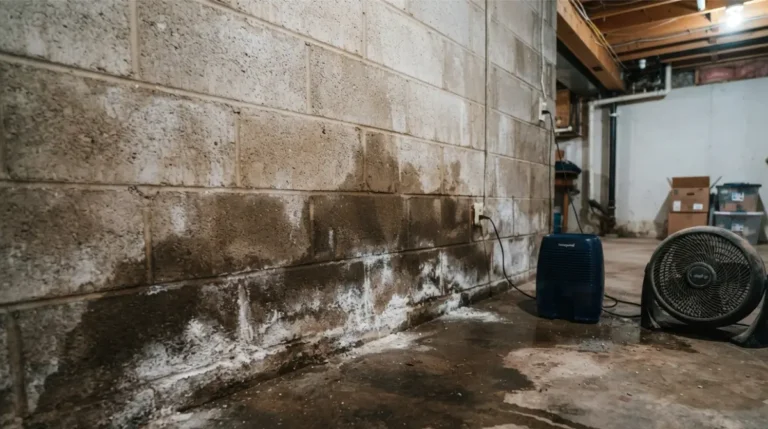
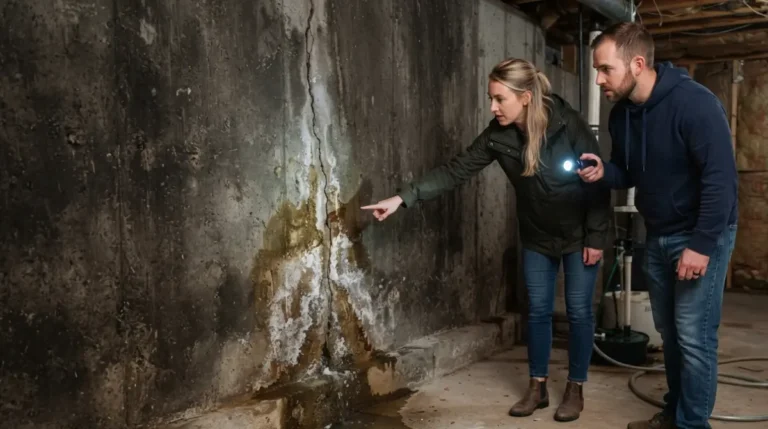
The Right Way to Tell Why Water Is Coming Into Your Basement

Basement water that shows up during rain often starts outside. Read the timing, extend downspouts at least 4 feet, and know when to stop DIY.
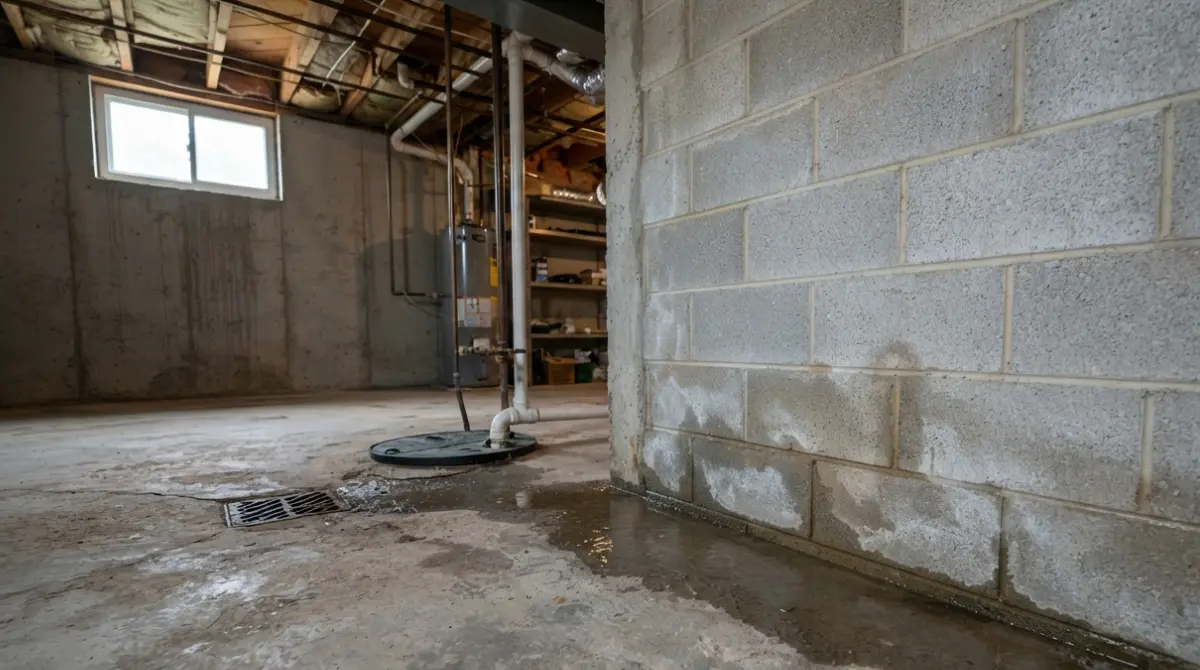
Table of Contents
Water in a basement usually traces back to one of five sources: rain runoff, groundwater, condensation, a backed-up drain, or a plumbing leak. You can narrow it down yourself by noting when the water appears and where, then running one cheap test.
If water is standing right now
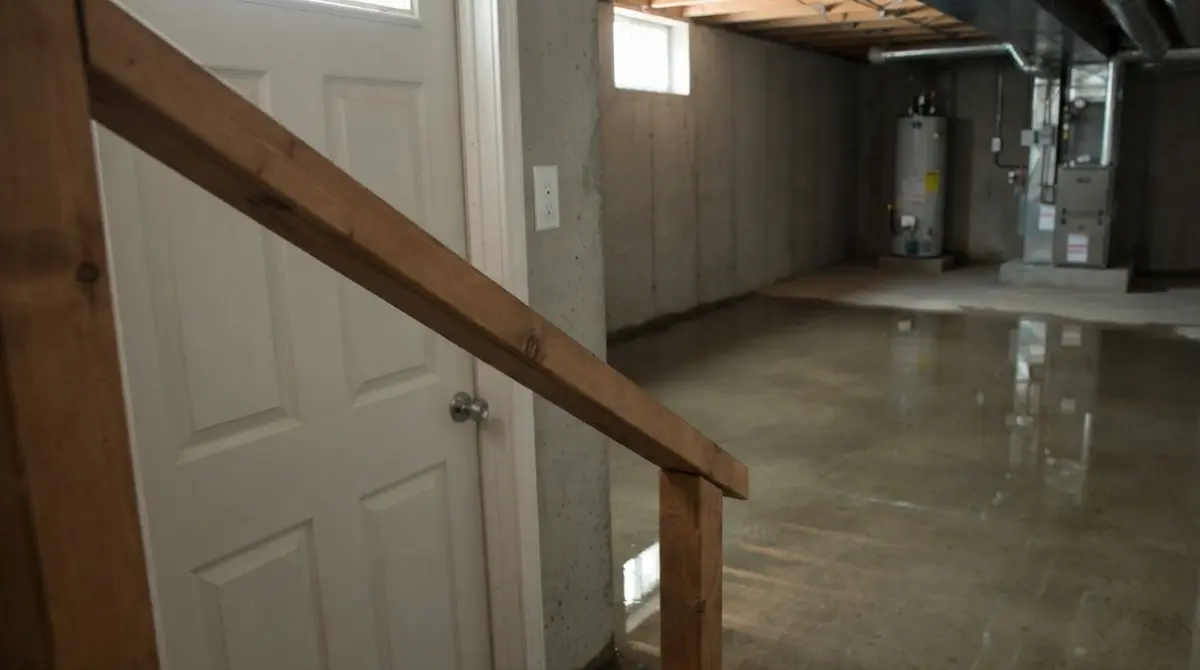
Stay out of it. The Milwaukee Metropolitan Sewerage District’s basement water guidance warns that electricity and standing water are a dangerous mix. Wait for it to drain, or have a qualified electrician disconnect power first.
If it’s damp, not pooled
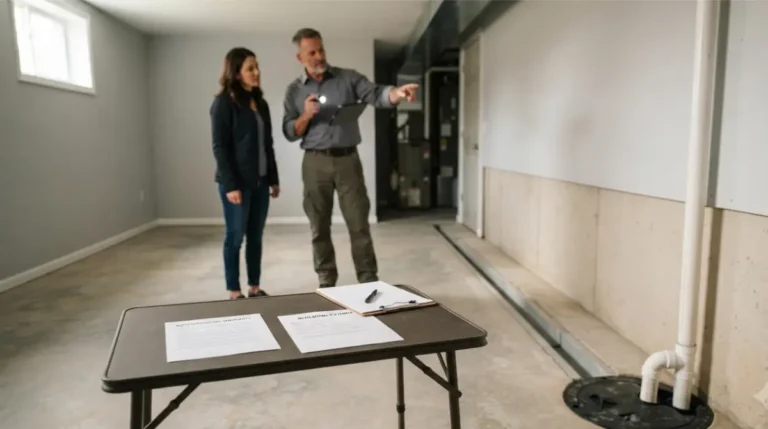
Start with the timing table below, then run the foil test. If you see sewage or a bowing wall, go straight to the section on calling a pro.
ℹ️ Safety Note: Standing basement water carries electrocution risk. Water from a floor drain may be contaminated, and damp basements can grow mold. Structural cracks need professional assessment. Treat this article as general understanding: for power, sewage, or structural concerns, hire a licensed electrician, plumber, or structural engineer and follow your local code.
When the water shows up tells you where it’s from
When and where water appears usually identifies its source. Water during rain along outside walls usually means surface runoff. Water at floor cracks in wet seasons suggests groundwater, and damp walls in humid weather often mean condensation.
| When it shows up | Where you see it | Likely source | Key detail |
|---|---|---|---|
| During or soon after rain | Along exterior walls | Surface water | Ground sloping toward the house, or downspouts dumping at the wall |
| Wet seasons, high water | Floor cracks, wall-floor joint | Groundwater | A rising water table pushes water through cracks |
| Humid weather, no rain link | Walls, cold pipes | Condensation | Moisture on walls or pipes signals high humidity |
| Heavy storms | Around the floor drain | Drain or sewer backup | Treat the water as possibly contaminated |
| Not tied to rain | Near pipes or fixtures | Plumbing leak | Check supply lines and fixtures nearby |
Sourced from MMSD, University of Minnesota Extension, and EPA guidance. Not tested by us.
Only during or right after rain
Look outside first. Grading and gutters are the usual suspects.
During wet seasons, not just single storms
Suspect groundwater, especially if water enters at several points.
In humid weather with no rain
Run the foil test before paying for any waterproofing.
The foil test: leak or condensation?
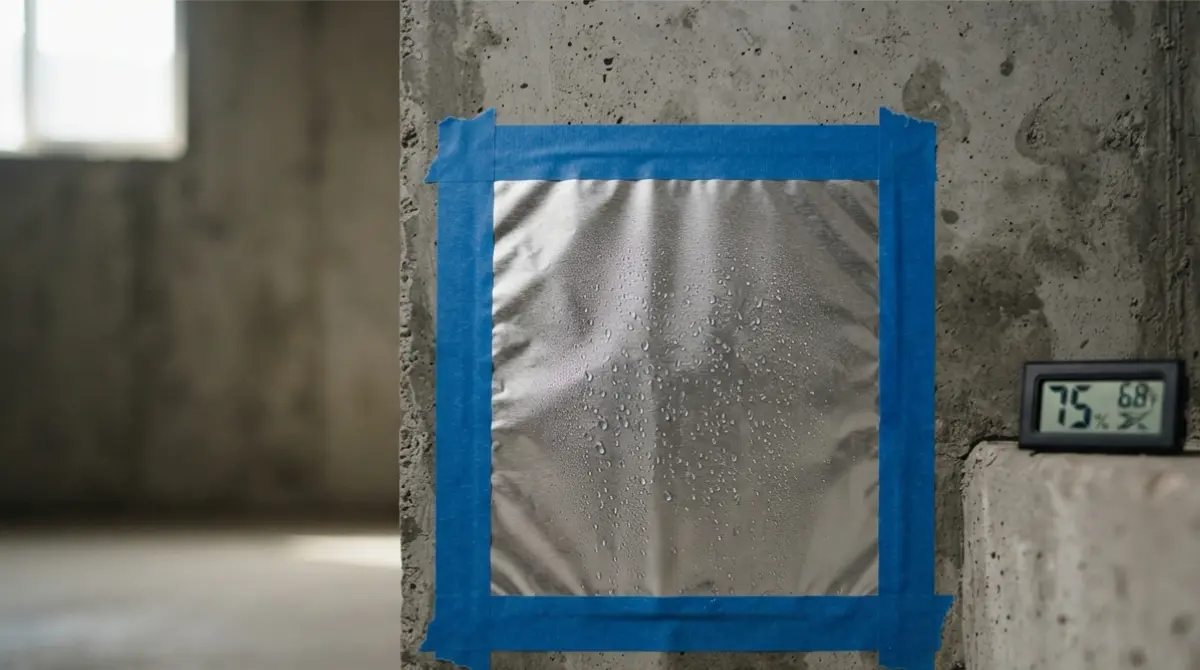
A damp wall is either water coming through it or humid air condensing on it, and the two need opposite fixes. The foil test, widely described by inspectors and basement contractors, tells them apart. We haven’t run it ourselves for this article.
How to set it up
- Tape a roughly 12-inch square of aluminum foil flat against the damp wall.
- Seal all four edges so no air gets behind it.
- Leave it for 24 to 48 hours, then peel it off.
Reading the result
- Wet on the room side: condensation. Lower the humidity.
- Wet behind the foil: seepage. Start outside.
🔍 Why It Works: Surrounding soil keeps basement walls cool, so humid air touching them condenses, like a cold glass sweating. Moisture trapped behind sealed foil can only have come through the wall.
Walk the outside first: gutters, downspouts, grade
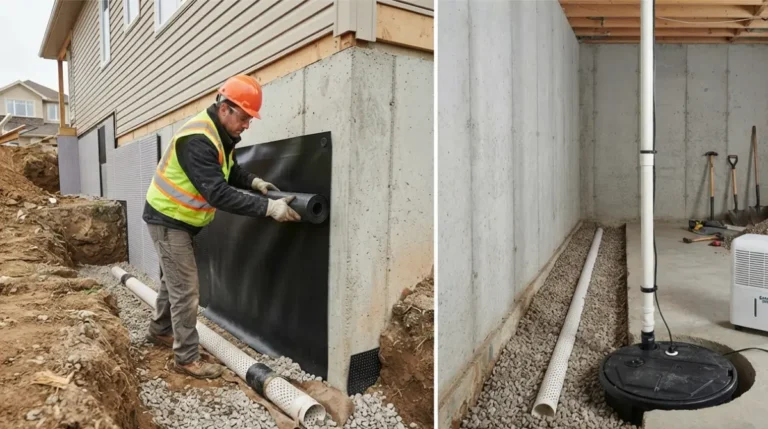
Rain-driven basement water starts outside, and much of it is within a homeowner’s reach to fix.
Is the ground sloping the wrong way?
The International Residential Code (section R401.3) requires the grade to fall at least 6 inches within the first 10 feet from the foundation. The University of Minnesota Extension’s basement moisture guide recommends at least 1 inch per foot for at least 6 feet. Backfill settles over time, so a slope that once worked can reverse.
Where do your downspouts dump?
UMN Extension recommends downspout extensions that discharge water at least 4 feet beyond the wall. Keep gutters clear, and hire out any high or steep roofline work.
📊 Spec: In a 1-inch rain, about 1,250 gallons of water fall on the roof of a 2,000-square-foot house. Source: University of Minnesota Extension.
Reading where it enters: cracks, cove joint, drain
Where water shows up inside narrows the cause further.
Up through the floor or at the wall-floor joint
Floor cracks and the wall-floor joint are common seepage points. MMSD advises redirecting the water outside before any patching, because blocking it from inside can trap it in the wall. Those cracks and pipe gaps are also the same foundation gaps rodents use.
Around the floor drain
Water rising from the drain can be a sewer or storm backup. Treat it as contaminated and read our sewage backup cleanup guide before touching it.
What your sump pump is telling you
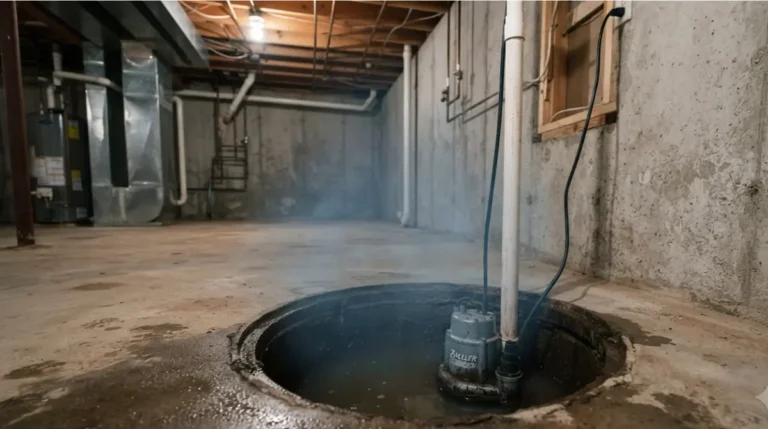
With seepage, water should be flowing into the sump basin. If it isn’t, foundation drains may be clogged.
✅ Do This: Call a licensed plumber for a drain backup, or for a dry sump basin while water is seeping in. Ask whether they’ll camera-inspect the drain line.
What to have on hand while you track it down
Finding and drying a wet basement takes very little gear.
For diagnosis
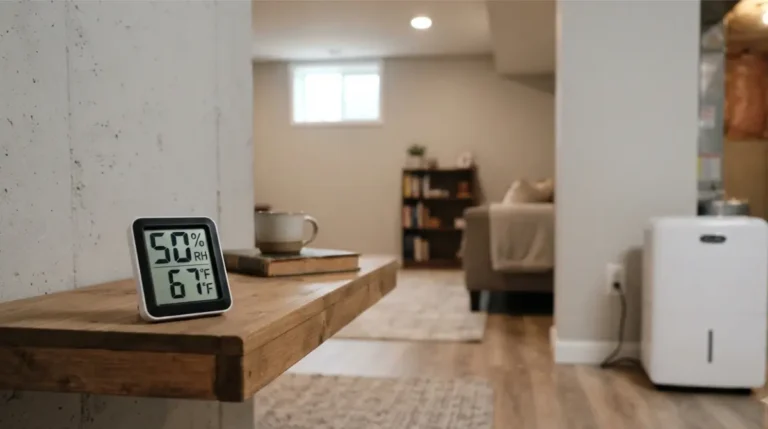
A hygrometer and the foil test cover most of it. The EPA’s mold and moisture guide recommends keeping indoor humidity below 60 percent, ideally between 30 and 50.
For drying out
The EPA notes that a water-extraction vacuum can pull water off concrete or block, and that dehumidifiers and fans speed drying. See what a dehumidifier can and can’t do about mold before you buy one.
When to stop and call a pro
Some findings take this past DIY.
Standing water, sewage, or mold
The EPA advises drying water-damaged areas within 24 to 48 hours to prevent mold growth. If sewage may be involved, the EPA’s water damage cleanup table says protective equipment and containment are needed, and to consult an experienced professional.
Cracks that may be structural
A wall that bulges or bows, or cracks that keep widening, need a structural engineer’s assessment, not just sealant.
If you rent
Report the water to your landlord in writing, and see your options when a landlord won’t fix mold.
Basement water questions people actually ask
1. Why does my basement leak only when it rains?
Rain-only basement water usually means surface runoff: ground sloping toward the house, or downspouts dumping water at the wall.
2. How do I tell basement condensation from seepage?
Tape sealed foil to the damp basement wall for 24–48 hours. Room-side moisture is condensation; moisture behind it is seepage.
3. Why is water coming up through my basement floor?
Water at basement floor cracks often points to groundwater, especially when the water table rises in wet seasons.
4. Why does water enter where my basement wall meets the floor?
That joint is a common basement seepage point. Redirect water outside before patching, since interior blocking can trap moisture.
5. How far should downspouts discharge from a basement wall?
University of Minnesota Extension recommends extensions discharging water at least 4 feet beyond the basement wall.
6. How much should ground slope away from a basement?
Code requires at least 6 inches of fall within 10 feet; UMN Extension recommends 1 inch per foot for 6 feet.
7. Is it safe to walk into a flooded basement?
No, because electricity and standing basement water are a dangerous mix. Wait for it to drain, or have an electrician disconnect power first.
8. Why does my basement floor drain back up in heavy rain?
It may be a sewer or storm backup, so treat that basement water as contaminated. Call a licensed plumber.
9. Should my sump basin fill when the basement is seeping?
Yes. If the basin stays dry during basement seepage, foundation drains may be clogged. Have a licensed plumber assess it.
10. How fast should I dry a wet basement to prevent mold?
The EPA advises drying water-damaged basement areas within 24 to 48 hours to prevent mold growth. For contaminated water, call a professional.
Your next step
Before you call anyone, note when the water shows up and where, run the foil test, and check the grade outside. That short list tells you which problem you have. If you hire out, check what a basement waterproofing quote should itemize so every line matches the source you found.