What to Ask a Rodent Exclusion Contractor Before You Hire

A rodent exclusion contractor can legally use rat poisons you cannot buy. EPA restricts second-generation anticoagulants to professionals.
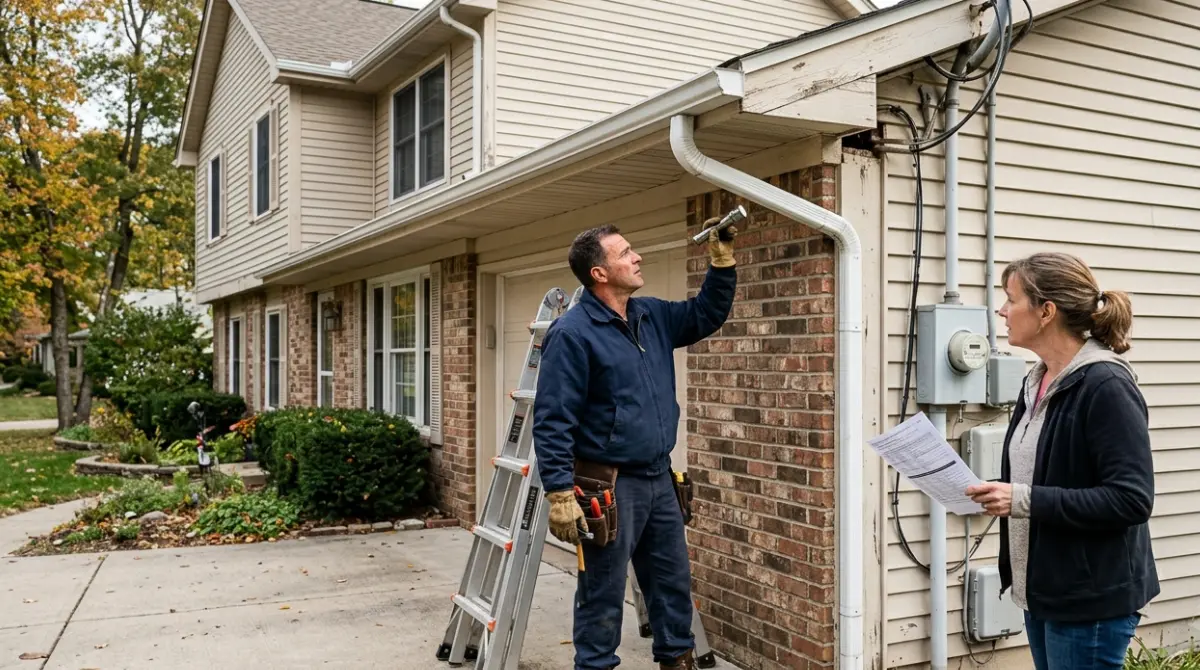
Table of Contents
Why most rodent quotes fail before anyone signs
Ask a rodent exclusion contractor these nine questions before signing:
- What’s your license number and state?
- Is exclusion in this price?
- What gap size, and what material?
- Will you seal before baiting outside?
- Which rodenticide will you use?
- Who removes droppings and contaminated insulation?
- What voids the guarantee?
- Who’s licensed for structural repairs?
- What photo documentation do I get?
What you’re actually paying for
Exclusion is construction work, not a monthly chemical visit.
Who should read on
Rodents inside already? Start at question three. Renters, sealing is your landlord’s job.
ℹ️ Safety Note: Rodent work involves pesticides, contaminated material and structural repair. This article covers how to vet and question a contractor, not how to do the work — application and cleanup belong to a licensed pest control professional following the product label and your state’s rules.
Exclusion versus extermination: what you’re buying
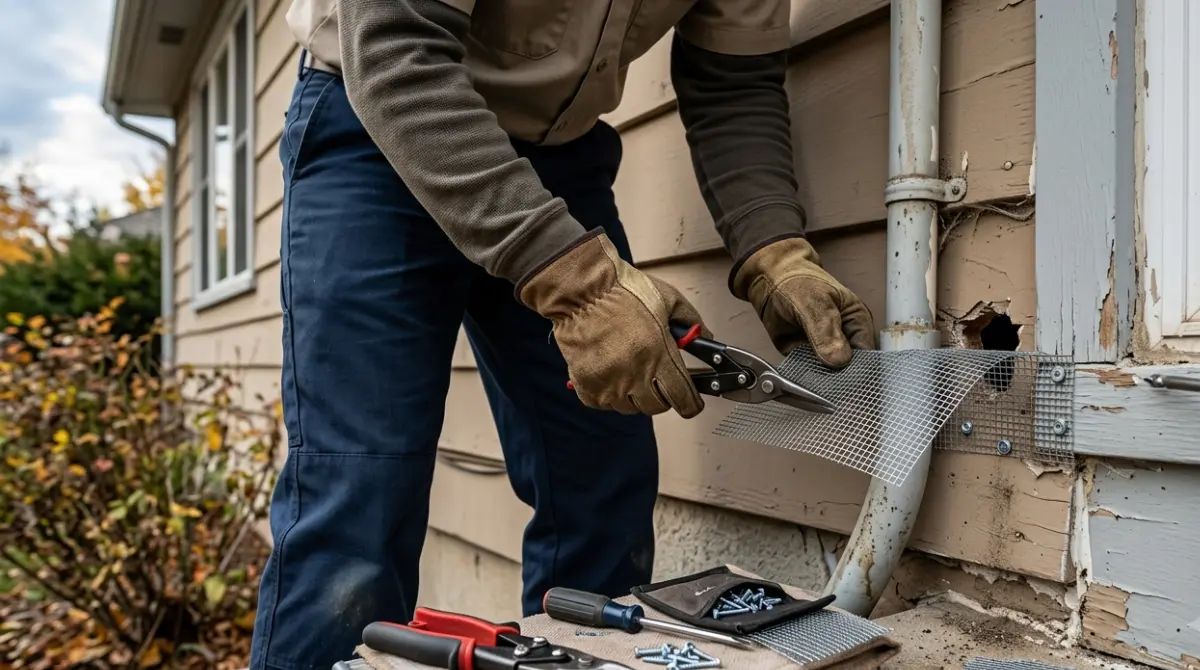
The two trades share a phone number and almost nothing else.
What exclusion work consists of
Structural exclusion is physical: sealing cracks, pipe penetrations, vents, thresholds and rooflines. University of California IPM calls it “building them out” — the longest-lasting strategy for rat control.
Why bait-only contracts keep failing
Bait kills the rodents inside now. It does nothing to the entry point they used, so the next ones follow.
A monthly plan suits some properties. As the fix for a hole in your soffit, it’s a subscription — see what rodent proofing involves.
Questions 1 and 8: licenses, insurance and the repair work
Question 1 — your license number, and which state?
The EPA’s guidance on hiring a rodent control professional says to ask for the license and call your state pesticide regulatory agency.
How to check it yourself
Look up your state pesticide regulatory agency by ZIP and confirm it. A bidder who won’t produce one has answered you.
Question 8 — who’s licensed for the repairs?
A pesticide license covers chemical application, not cutting into a soffit.
✅ Do This: Get the license number and insurance certificate before work starts, then ask your state contractor board whether repairs need a separate license.
Questions 3, 4 and 9: what gets sealed, and in what order

- Durable Galvanized Hardware Cloth: This 1/2-inch mesh hardware cloth roll measures 36 inches by 50 feet (19 gauge) and i…
- Long-Lasting & Strong: Built to withstand the elements, this wire mesh is rustproof, corrosion-resistant, and highly dur…
- Versatile Applications: Perfect for a wide range of uses, including snake fences, chicken coops, garden fencing, rabbit …
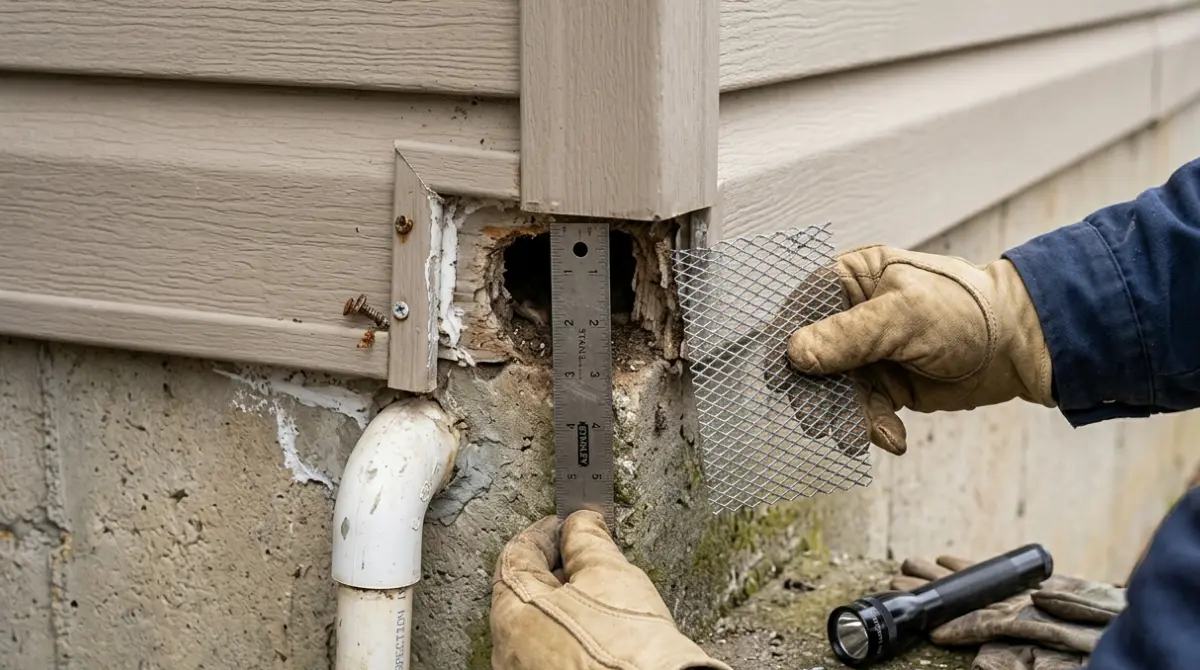
Every hole larger than 1/4 inch should be closed with metal or masonry, not foam.
Question 3 — what gap size, and what material?

- ACCURACY AND LONG-RANGE MEASURING: This laser tape measure provides accuracy up to ±1/16 in. and measures up to 165 ft. …
- JOBSITE TOUGH: The BOSCH laser measure withstands rainy or dusty jobsite conditions and is IP54 rated
- DEFAULT REAL-TIME MEASUREMENT MODE: This laser distance measuring tool immediately provides accurate measurement that au…
UC IPM’s rat guidance sets that threshold for rats and mice, and warns rats chew through plastic, foam, wood and caulk. A bidder who says “expanding foam” has told you the seal won’t hold.
📊 Spec (sourced): UC IPM specifies 18-gauge, 1/2-inch galvanized expanded metal or 16-gauge, 1/2-inch galvanized wire cloth for vents — never chicken wire.
Question 4 — seal first, or bait first?
🔍 Why It Works: UC IPM advises minimizing entry points before baiting outdoors, so a poisoned rat doesn’t die inside a wall.
Question 9 — what documentation do I get?
Ask for a photograph of every sealed opening, before and after — your only proof for a space you’ll never enter. See how to seal mouse entry points.
Question 5: which rodenticide, if any, will you use?

- What you get: Set of 6 Tomcat Outpost rat bait stations (8.5″ x 7″ x 5″ each) with lockable, tamper-resistant design. Ba…
- Versatile configuration: Install vertically or horizontally to target everything from small mice to large rats. Each sta…
- Safety & security: Lockable single-key design meets EPA Tier 1 Standard for tamper resistance, helping protect children …
A professional can legally place products in your home you cannot buy.
What professionals can use that you can’t
The EPA’s restrictions on rodenticide products removed second-generation anticoagulants — brodifacoum, bromadiolone, difenacoum, difethialone — from consumer products, leaving them registered for structural pest control.
Why it matters with pets and children
Labels require tamper-resistant bait stations wherever children under six, pets or wildlife reach bait. UC IPM notes a poisoned carcass can hold several lethal doses.
What to ask about placement
State rules diverge — California prohibits most anticoagulant use. Check where rat poison is restricted first.
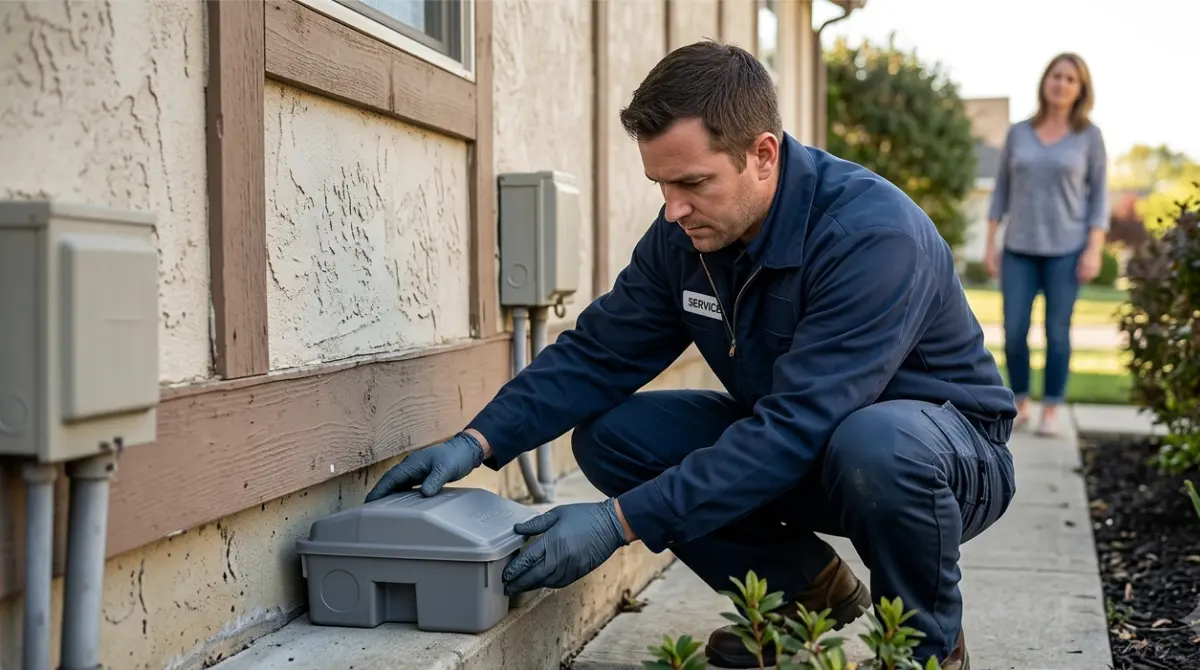
⚠️ Watch Out: Ask your licensed pest professional for the active ingredient, whether it’s restricted-use, and where stations sit around pets or children.
Questions 2 and 7: what’s in the quote, and what the guarantee covers
Three quotes for “rodent control” often describe three different jobs.
Question 2 — exclusion included, or billed after trapping?
Ask for line items, not one number. A total hides whether sealing is included or billed on a second invoice.
| Line item | What to ask | Key detail |
|---|---|---|
| Inspection | Credited against the work? | Sometimes, not always |
| Exclusion | Per opening or linear foot? | Varies most between bids |
No cost figures here — Gladewick hasn’t collected quote data yet. For ranges, see what this work costs.
Question 7 — what voids the guarantee?
Ask whether the warranty covers re-entry anywhere or only at a sealed point, what voids it, and whether it transfers.
Question 6: who cleans up the droppings and insulation?

- NIOSH-APPROVED: NIOSH, a USA federal government regulatory agency, has tested and approved the 6300 with 3M cartridges, …
- COMFORTABLE: Soft, lightweight facepiece with easy-to-adjust head straps for a customized fit
- DURABLE AND REUSABLE: Respirator can be disassembled, cleaned, and reused. Supplied with reclosable storage bag
Sealing a contaminated attic seals the contamination inside it.
What decontamination should be in scope
Rodent waste spreads disease, including through contaminated air, and the CDC’s rodent control guidance sets respiratory protection for heavy infestation cleanup. Confirm in writing whether cleanup and attic insulation replacement are in scope.
The answers that end the conversation
- A quote issued without an on-site inspection
- Pressure to sign the same day
- No license number offered when asked
✅ Do This: Ask which professional holds the cleanup license, and what respiratory protection the crew uses.
Rodent exclusion contractor questions, answered
1. Do rodent exclusion contractors need a license?
Anyone applying rodenticide needs a state pesticide license. Verify the number with your state regulatory agency.
2. Is a pest control license the same as a contractor license?
No. One covers chemical application, the other structural repair. Requirements vary by state and job value.
3. What size gap can a rat or mouse get through?
Seal every hole larger than a quarter inch, UC IPM’s threshold for excluding rats and mice.
4. Can spray foam or caulk keep rodents out?
No. Rats chew through plastic, foam, wood and caulk, so lasting exclusion uses metal or masonry.
5. What rodenticide can professionals use that I can’t buy?
Second-generation anticoagulants. EPA removed them from consumer products, though they stay registered for structural pest control. Ask your applicator which product, and where.
6. Is rodent bait safe around pets?
A poisoned carcass can hold several lethal doses, so one dead rodent may poison a dog. Ask your professional about placement.
7. Should entry points be sealed before or after baiting?
Seal first. UC IPM advises minimizing entry points before baiting outdoors, so poisoned rodents don’t die indoors.
8. Who cleans up droppings and contaminated insulation?
Confirm before signing. Heavy cleanup needs respiratory protection, and exclusion quotes frequently exclude it. A licensed professional should direct it.
Your next step
Ask these nine and you compare scopes, not prices. The one who answers question three with a gap size and material has done this before.