The Overlooked Rule on Attic Insulation Replacement After Rodents

Attic insulation replacement after rodents isn’t all-or-nothing: CDC’s rule covers the material, not the extent. That threshold is a judgment call
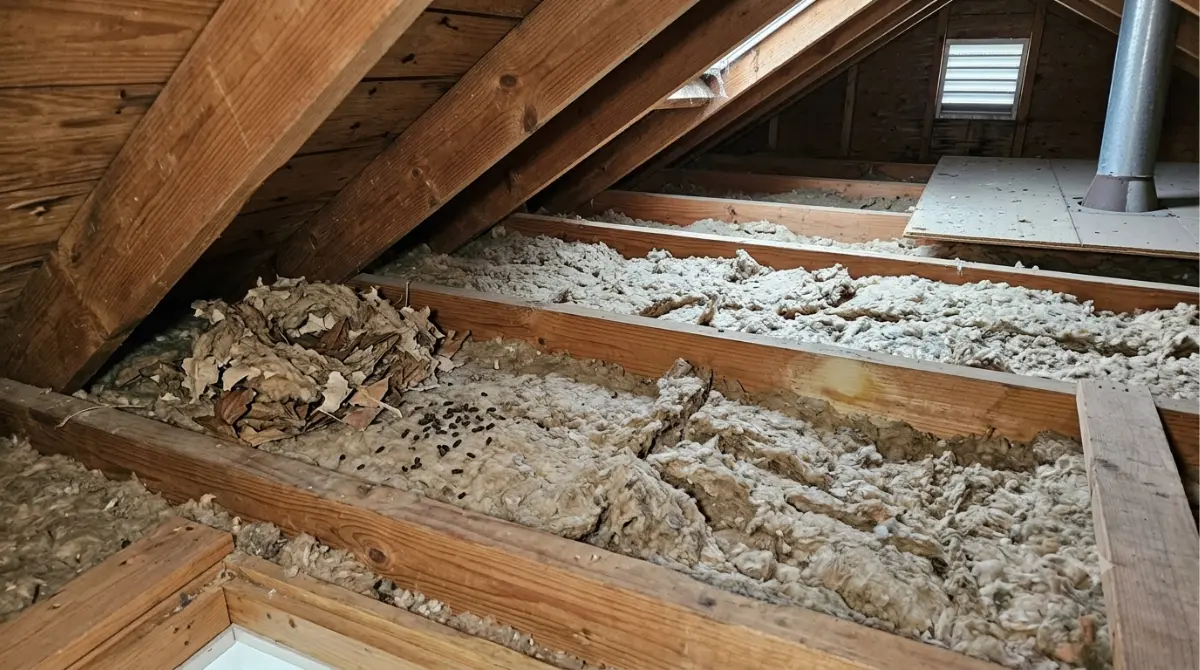
Table of Contents
Attic insulation replacement after rodents is not automatic, but contaminated material does come out. CDC guidance is to bag exposed insulation fouled with urine and droppings rather than clean it in place. The real question is how much.
Nearly every page ranking for this question is published by a company paid to do the removal.
If rodents are still active, exclusion comes first. Holding a quote? Start with the mapping method and cost tiers. Doing it yourself?
ℹ️ Safety Note: This work involves airborne pathogens, unfloored joists, and possibly gnawed wiring. Anyone pregnant, immunocompromised, or with a respiratory condition should not do it. Follow CDC cleanup guidance and hire a licensed pest control operator and a qualified remediation contractor for anything beyond a small area.
What rodents actually do to attic insulation
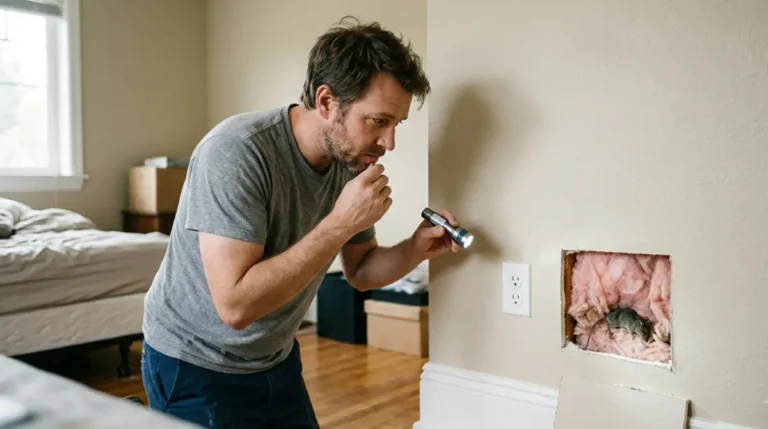
Three kinds of damage get bundled into one quote, and roof leaks often get bundled in too. Ask which you are paying for.
Contamination, compression and chewing are separate problems
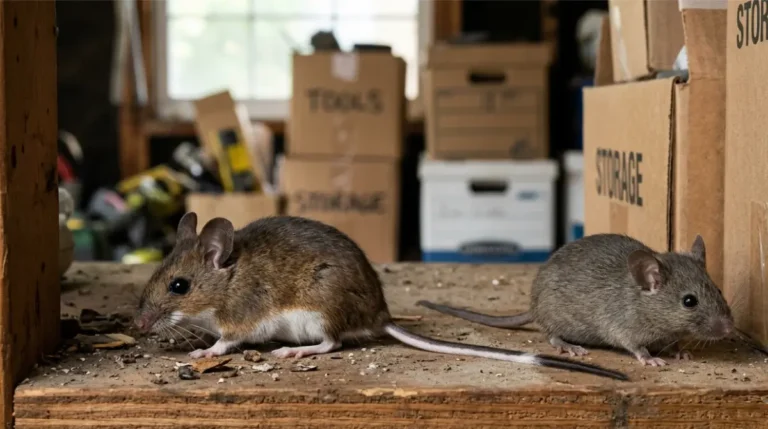
Rodent contamination — urine, droppings and nesting in the fibers — drives removal. Compression is flattening from tunneling, and flattened insulation no longer performs at its rated depth. Chewing is the structural risk, since rodents gnaw wiring as readily as fiberglass.
The health risk, stated accurately
In the US, Sin Nombre virus — the strain behind hantavirus pulmonary syndrome — is carried by deer mice, not house mice or rats. That shapes which mouse you had, not your precautions.
🔍 Why It Works: Infection comes from breathing particles stirred out of dried waste. Wetting it first is the point.
The rule that decides whether it comes out
CDC’s guidance is material-specific: exposed insulation contaminated with urine and droppings goes into plastic bags for removal, while hard, non-porous surfaces can be disinfected and kept.
Why porous material can’t be disinfected in place
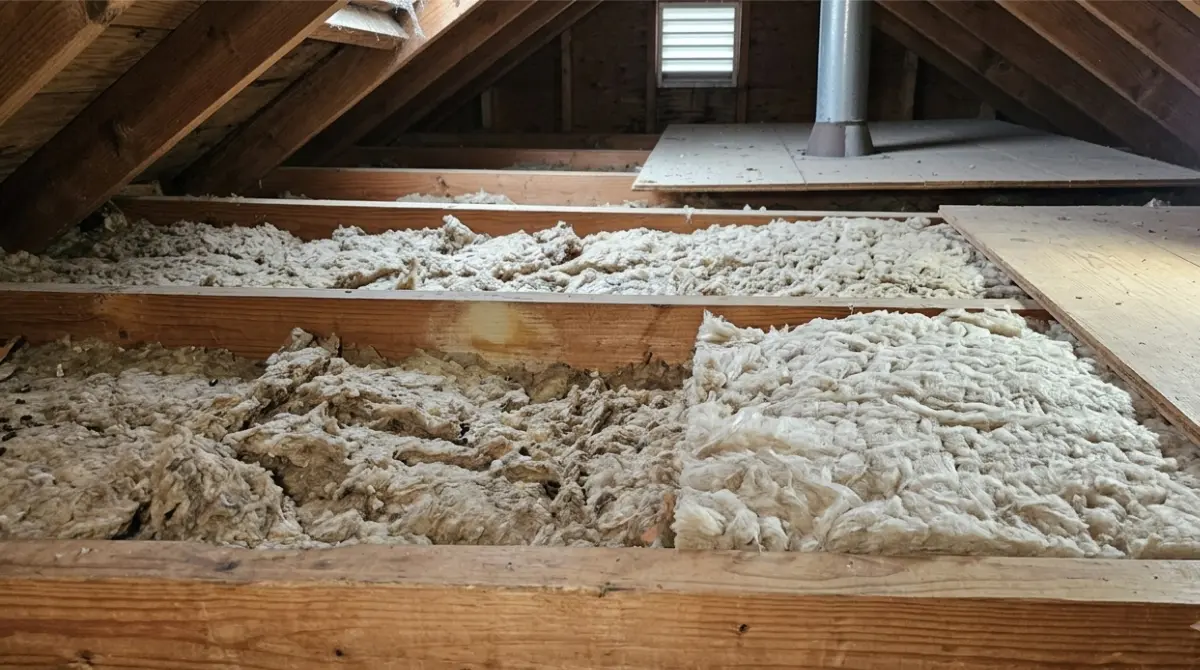
A disinfectant works on a surface it can wet and wipe. Insulation is depth, not surface, so spraying the top treats a fraction.
What can be cleaned and kept
Framing, duct exteriors, plastic and metal are cleanable. The sequence: ventilate 30 minutes, spray until very wet, soak five minutes, wipe and bag.
📊 Spec: CDC’s current bleach solution is 1.5 cups per gallon — 1 part to 9, mixed fresh. The 1-to-10 ratio still circulating comes from an archived page. An EPA-registered disinfectant works too. Source: CDC, reviewed April 2024.
Never vacuum or sweep it first
⚠️ Watch Out: Dry disturbance puts particles in the air, and a shop vac blows them back out. Already vacuumed? CDC’s guidance still applies.
CDC defines what happens to contaminated material. No authority defines how much of it means all of it goes. That threshold is judgment — your contractor’s included.
How to map the contamination in your own attic
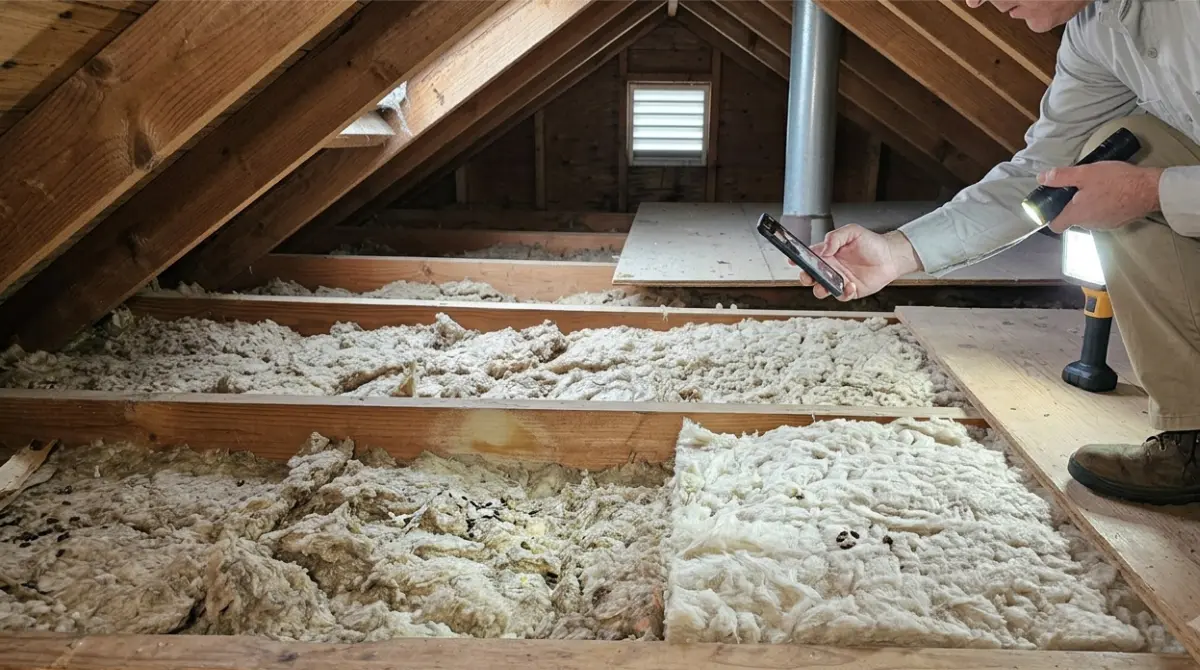
A Gladewick framework, not a published standard — it turns a feeling into a number.
Divide the attic floor into zones
Split the floor into six to eight zones along the joist runs.
Score each zone from the hatch
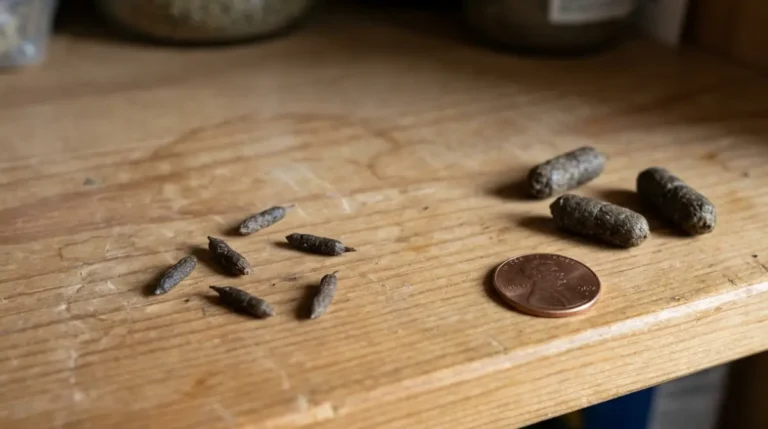
Work from the hatch with a bright light and your phone’s zoom. Score each zone clear, traffic only (droppings, no staining), or nested (nesting, staining or ammonia odor). Photograph every zone, clear ones included.
Turn the zone count into a percentage
Nested zones divided by total is your figure. One in eight is a targeted job; five is not.
What the work costs, and what a fair quote looks like
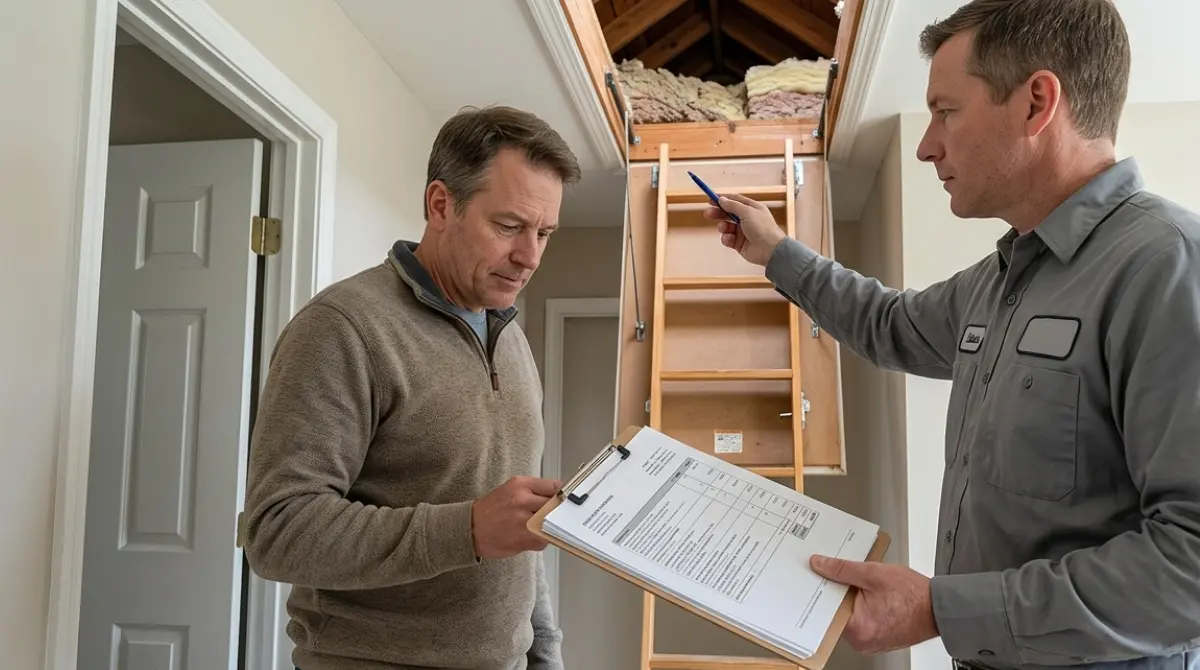
Removal, decontamination and re-insulation are three jobs quoted as one number.
| Tier | Scope | Typical range | Key detail |
|---|---|---|---|
| Targeted | Nested zones only | Priced on affected area | Rarely offered — ask |
| Full replace | Remove and re-insulate all | $2–$6 per sq ft | Removal alone is $1–$2 |
| Full restoration | Plus decontamination and air sealing | Higher; contaminated removal reported past $25 per sq ft | An extreme, not a benchmark |
2026 published cost data (HomeGuide, Angi), not Gladewick pricing. A 1,600–1,800 sq ft attic runs $1,600–$3,600 for clean removal.
The six line items a fair quote itemizes
Exclusion, removal priced on affected area, disposal, disinfection of hard surfaces, air sealing, and new insulation with its R-value.
Why your homeowners policy almost certainly won’t pay
Standard HO-3 policies exclude rodent and vermin damage because insurers treat infestation as maintenance. A fire from chewed wiring may be covered; the damage is not.
Replacing it in the right order
Exclude, remove, clean, air seal, then insulate.
Exclusion comes before insulation, always
New insulation installed while entry points are open is fresh nesting material. Seal every gap first, and confirm it before the crew is scheduled. Air seal at the same time — you are already paying for attic access.
What R-value to install in your zone
| Climate zone | If uninsulated | Over existing 3–4 inches |
|---|---|---|
| 1 | R30 | R25 |
| 2 and 3 | R49 | R38 |
| 4A and 4B | R60 | R49 |
| 4C, 5 and 6 | R60 | R49 |
| 7 and 8 | R60 | R49 |
Source: ENERGY STAR recommended R-values, per 2021 IECC Table R402.1.3. Local code may require more.
⚠️ Watch Out: Clearance around recessed lights and exhaust fans is a fire matter. Have your insulation contractor confirm it against local code before anything is blown in.
When to stop and hire this out
Some conditions end the DIY conversation.
The conditions that end it
Rodents still active. More than one or two nested zones. Ductwork, which CDC routes to a professional. Pregnancy, immunocompromise, or respiratory conditions. No safe footing.
What CDC’s PPE list actually specifies
For heavy infestations, CDC specifies disposable coveralls, boots or shoe covers, gloves, goggles, and a half-mask air-purifying respirator with a HEPA filter, or a PAPR. It does not name an N95 for light cleanup. Buy to that spec, not to a brand.
✅ Do This: Ask any contractor for license and insurance, whether they follow CDC cleanup guidance, and for a quote separating removal from decontamination.
Common questions about attic insulation replacement after rodents
1. Do I have to replace insulation after mice?
Only contaminated material. CDC guidance bags exposed insulation fouled with urine and droppings; clear zones stay.
2. Can it be disinfected instead?
No. Insulation is depth, not surface, so spraying treats only the top layer of it.
3. What does replacement cost?
Roughly $2–$6 per square foot for full removal and replacement, per 2026 cost data.
4. Can I vacuum rodent droppings?
No. Dry disturbance puts particles into the air. If you already did, follow CDC’s guidance now.
5. Does insurance cover rodent-damaged insulation?
Standard policies exclude rodent damage. A fire from chewed wiring may be covered; insulation is not.
6. Can new insulation go over the old?
Only over clean material. Blowing over contaminated insulation buries the contamination and the entry points.
7. What R-value should I install?
R30 to R60 by climate zone, per ENERGY STAR. Zones 4 through 8 uninsulated call for R60.
8. What mask do I need?
CDC specifies a half-mask air-purifying respirator with a HEPA filter, or a PAPR, for heavy infestations.
9. Seal gaps before or after insulating?
Before, always. Insulation installed while gaps are open becomes nesting material for the next rodents.
10. Does it cause lingering odor?
Ammonia odor from urine is one of three signs that scores a zone nested rather than traffic-only.
Your next step
You have a rule, a way to measure your attic, and three price tiers. Map your zones, photograph each one, and take that percentage into the quote conversation.