How to Clean Mouse Droppings Safely and Avoid the Airborne Risk

Cleaning mouse droppings safely starts with one rule: never sweep or vacuum. CDC’s protocol runs seven steps, and the order is what keeps particles down.
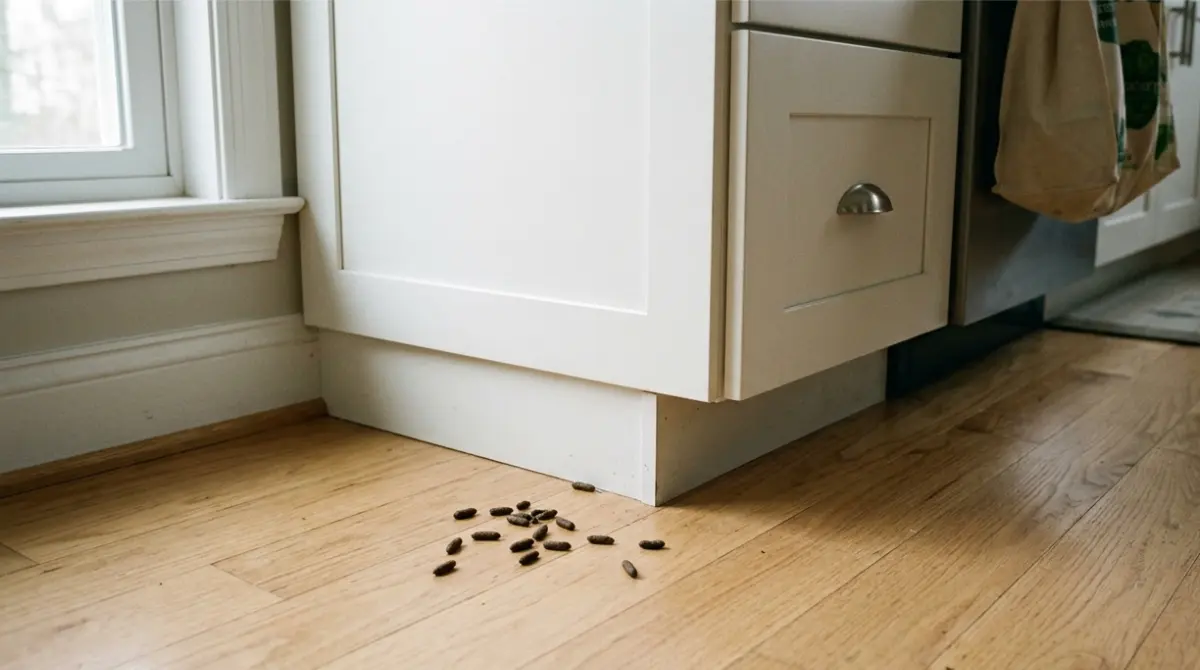
Table of Contents
Don’t sweep or vacuum — start here instead
Never sweep or vacuum mouse droppings. Dry droppings and urine break into fine particles you can breathe in, and that is the main route rodent-borne illness takes into people.
Sort yourself first: scattered pellets on a washable surface is routine. An attic, crawlspace, or months of buildup is not.
If you already swept or vacuumed
Leave the room, air it out, then follow the wet-cleaning steps below. CDC addresses this exact case, so the guidance does not change.
How much are you dealing with?
A drawer or pantry corner is manageable. Contaminated insulation or ductwork is a different job.
Confirm it’s actually mouse droppings
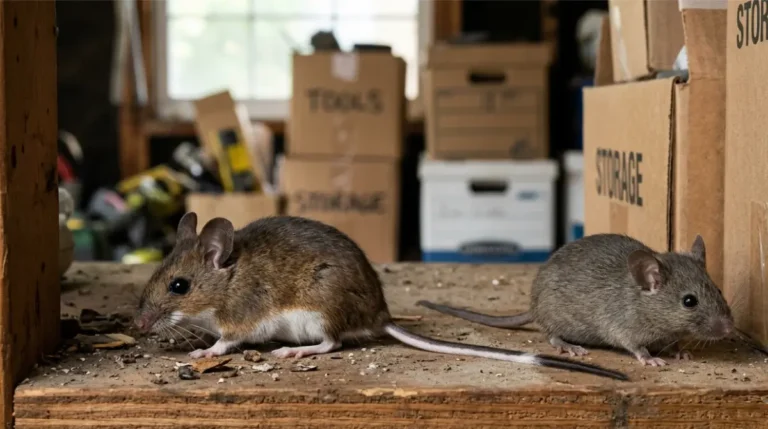
Mouse pellets are rice-sized with pointed ends. Our guide to telling rodent droppings apart can save you a cleanup you don’t need.
ℹ️ Safety Note: Cleaning up after rodents carries a risk of breathing in airborne particles, and disinfectants are regulated pesticides. This is general guidance for small household cleanups. For heavy infestations, contaminated ducts, or any space you can’t ventilate, hire a licensed pest management professional and contact your local health department.
What you need before you touch anything
Your disinfectant matters more than anything else on the supply list. Gloves, paper towels, a spray bottle, and two heavy bags cover the rest.
The disinfectant that actually counts
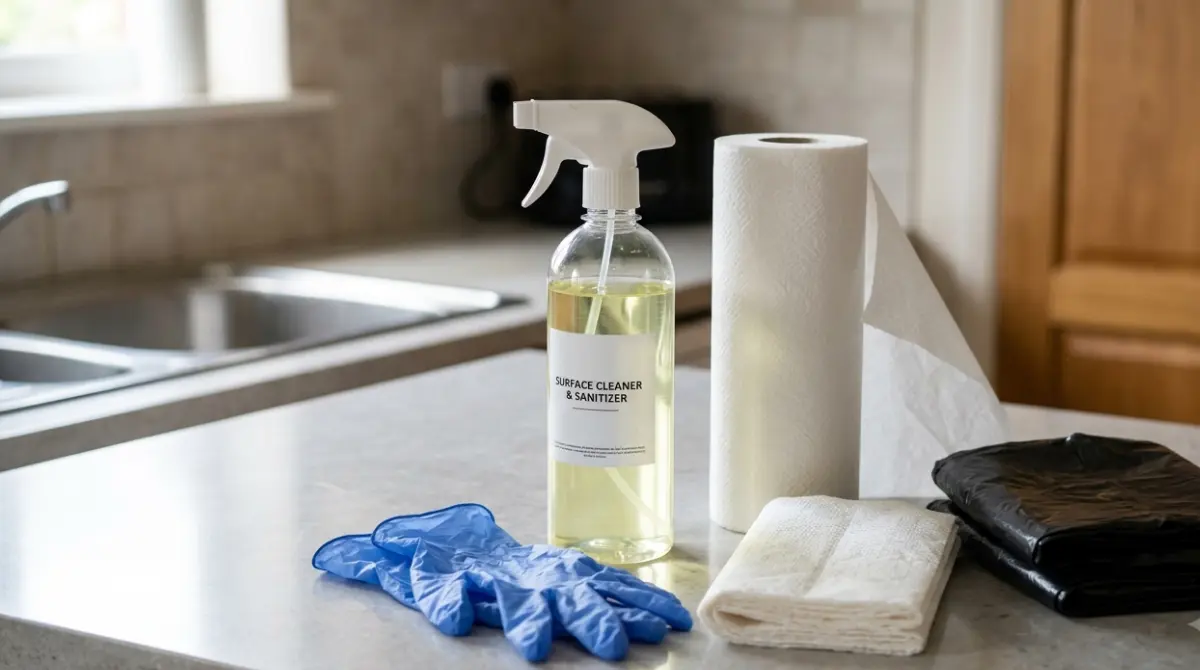
Use a general-purpose household product with the word “disinfectant” on the label, or a bleach solution. The EPA’s guidance on registered disinfectants explains how to read a label and its contact time.
🔍 Why It Works: Contact time is the period the product must stay on the surface to work. The surface has to remain visibly wet for that whole time — if it dries early, reapply.
Mixing bleach correctly
📊 Sourced: CDC’s current figure is 1.5 cups of household bleach in 1 gallon of water, or 1 part bleach to 9 parts water. Mix it fresh before each use.
What you can skip
A small cleanup needs no fogger, no ozone machine, and no product marketed specifically at rodent viruses.
⚠️ Watch Out: Never combine bleach with ammonia-based or other cleaners. Read the precautionary language on any disinfectant label first — EPA registers these products as pesticides, and they can be harmful when used outside the label directions.
The cleanup, step by step
CDC’s protocol for rodent urine and droppings runs seven steps, and the order is what keeps particles out of the air.
Ventilate first, then leave the room
Open doors and windows for 30 minutes and leave the area during that time. A vehicle needs 20 minutes with the hood, doors, and trunk open.
Spray, wait, wipe
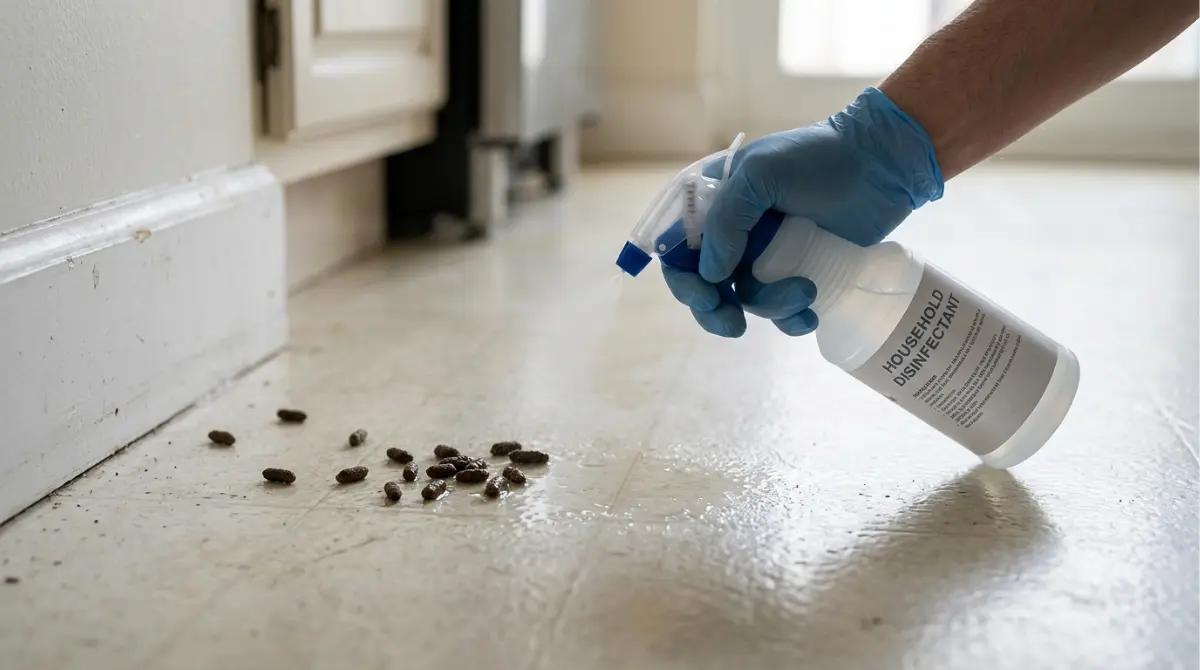
- Put on rubber or plastic gloves.
- Spray droppings and urine until very wet.
- Let it soak 5 minutes, or per the label.
- Wipe up with paper towels.
Bagging and washing up
- Put the towels in a covered bin that’s emptied regularly.
- Mop or sponge all hard surfaces with disinfectant.
- Wash gloved hands, remove gloves, then wash hands again.
The full CDC guidance on cleaning up after rodents covers vehicles and outbuildings too.
Dead mice, nests, and things you can’t wipe down
The wet-cleaning rule still applies, but disposal and soft materials each have their own method.
A dead mouse or a used trap
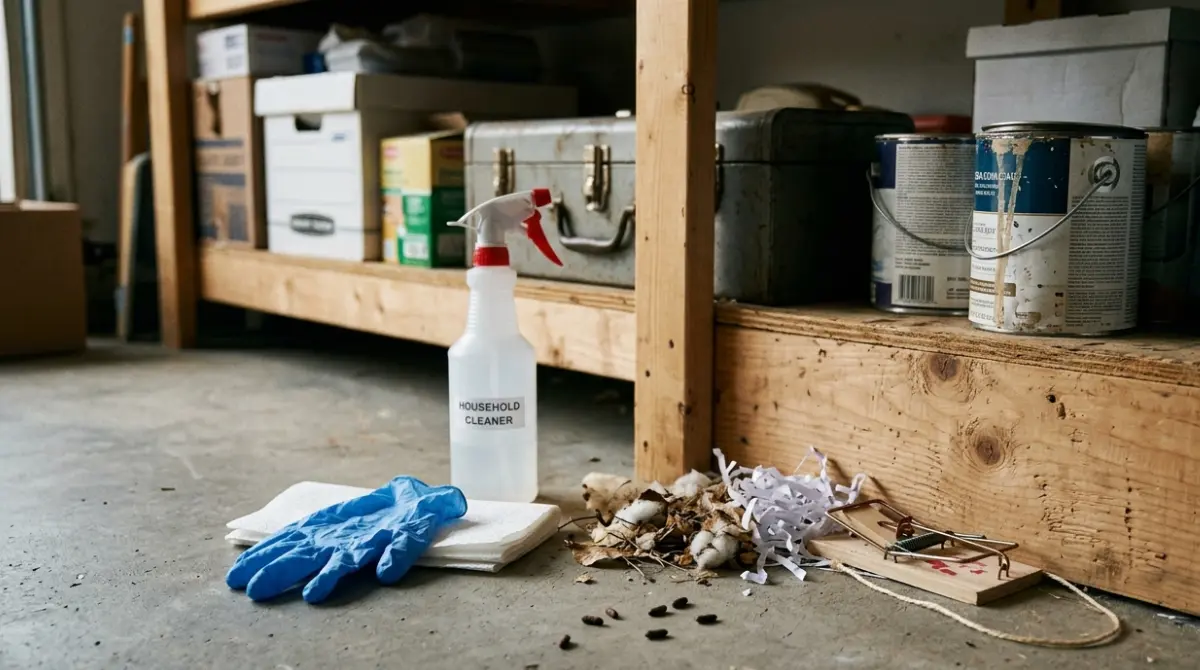
Spray the carcass and surrounding area, wait 5 minutes, then lift with paper towels. Bag it, knot the bag, double-bag, knot again, and put it in a covered outdoor bin. Fleas are common on rodents, so CDC suggests an EPA-registered repellent on your hands, shoes, and clothing first.
💡 Pro Tip: Snap traps are reusable. Submerge trap and rodent in disinfectant for 5 minutes, release it over a bag, then rinse well to remove the disinfectant scent and dry completely — mice avoid the smell. Our guide covers where mouse traps actually work.
Clothing, bedding, and upholstery
Launder in hot water with detergent. Shampoo carpets and upholstered furniture with a commercial disinfectant or commercial-grade steam cleaner.
Books, papers, and cardboard
Discard contaminated cardboard. Leave non-washable items in direct sunlight for several hours, or in a rodent-free indoor space for three weeks minimum — six weeks is strongly suggested.
When to stop and call a professional
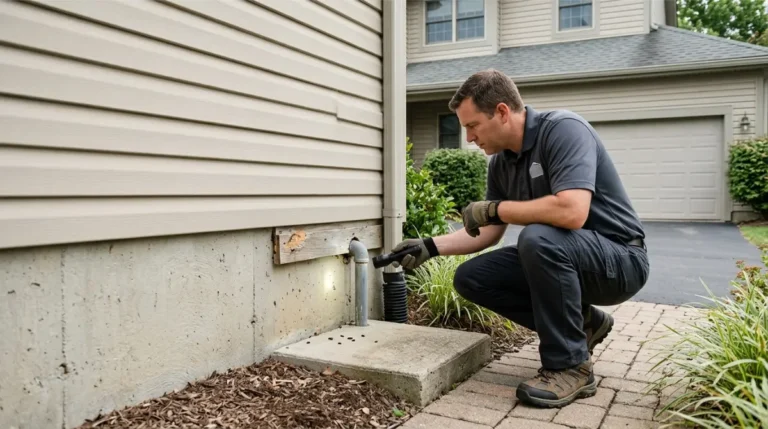
Some jobs need equipment and training that a household cleanup doesn’t involve. Stop if any of these apply.
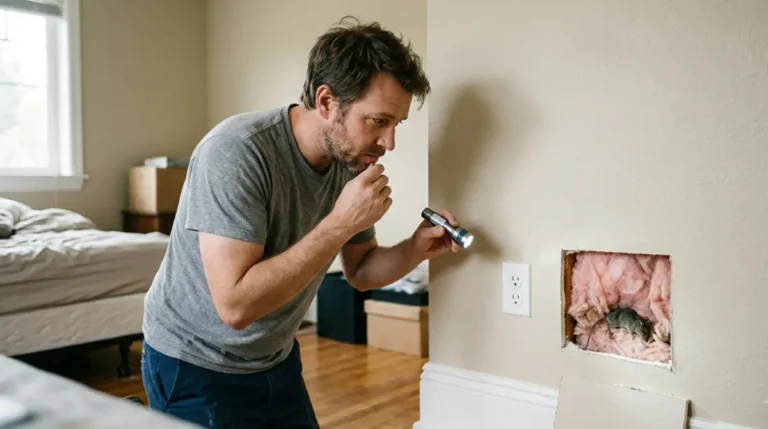
Heavy infestation, attics, crawlspaces, and insulation
- Droppings across a large area or accumulated over months
- Contaminated insulation, which has to be bagged and removed
- A vacant building that has drawn large numbers of rodents
- Any space you cannot ventilate before entering
Rodents in your ducts or HVAC
CDC directs people to a professional rodent exterminating service when rodents have reached heating and cooling systems. Duct specialists handle the contamination risk that ordinary cleaning can’t.
What CDC actually says about respirators
For heavy infestations, CDC’s hantavirus prevention guidance specifies coveralls, boots or shoe covers, gloves, goggles, and a half-mask air-purifying respirator with a HEPA filter or a powered air-purifying respirator. Local and state rules require fit testing before use. A consumer dust mask is not that equipment.
✅ Do This: Call a licensed pest management professional or an Associate Certified Entomologist. Ask whether they’re licensed in your state, whether remediation and disposal are included or only trapping, and what protective equipment their crew uses. Renters should put the request to a landlord in writing. Then find where they’re getting in.
Who’s at risk, and does your region matter?
Two different rodent-borne illnesses sit behind this cleanup, and which one matters depends on your mouse and your household.
House mouse or deer mouse?
The deer mouse is the main US carrier of the hantavirus behind HPS, and cases cluster geographically. The common house mouse in your kitchen carries a different virus. Here’s how to tell a deer mouse from a house mouse.
📊 Sourced: CDC’s reported case data shows 890 hantavirus disease cases in the US from 1993 through the end of 2023 — rare, but 35% resulted in death, and 94% occurred west of the Mississippi.
Pregnancy and immune-compromised households
CDC’s page on lymphocytic choriomeningitis notes the house mouse spreads LCM, that healthy people usually recover, and that it can cause serious illness in pregnancy or with a weakened immune system. Someone else should do this cleanup.
Symptoms that mean call a doctor
Talk to a healthcare provider if you feel unwell after rodent exposure, and tell them about the exposure. Don’t wait it out.
Where popular cleanup advice has gone out of date
Two measurements widely repeated online come from CDC’s older pages, not its current one.
The numbers that drifted
| Guidance point | Older CDC wording | Current CDC page | Key detail |
|---|---|---|---|
| Bleach mix | 1 part bleach to 10 parts water | 1.5 cups per gallon (1 to 9) | Mix fresh each time |
| Non-washable items | About 1 week indoors | 3 weeks minimum, 6 suggested | Or sunlight for several hours |
Common questions about cleaning mouse droppings
1. Can you vacuum mouse droppings?
No. Vacuuming or sweeping mouse droppings puts fine particles into air you breathe. Wet everything with disinfectant first.
2. What if I already vacuumed them?
Leave the room, ventilate it, then clean using the same wet-cleaning steps. CDC addresses this situation directly.
3. What disinfectant should I use?
A household product labeled “disinfectant,” or a fresh bleach solution. Follow the label’s stated contact time exactly.
4. How much bleach do I mix with water?
CDC’s current figure is 1.5 cups of household bleach per gallon of water, roughly 1 part to 9.
5. How long should the disinfectant sit?
Five minutes, or whatever the label states. The surface must stay visibly wet for that entire period.
6. Do I need a mask to clean mouse droppings safely?
Not for a small cleanup done with gloves and wet cleaning. Heavy infestations need fit-tested respiratory protection. Call a licensed pest management professional for those.
7. How do I dispose of a dead mouse?
Spray it, wait five minutes, lift with paper towels, then double-bag with knotted ends into a covered outdoor bin.
8. Can I reuse a snap trap?
Yes. Submerge trap and rodent in disinfectant five minutes, release over a bag, rinse thoroughly, and dry completely.
9. Are mouse droppings dangerous during pregnancy?
House mice spread LCM, which can cause serious illness in pregnancy. Have someone else handle the cleanup. Speak with your own clinician about any exposure.
10. How long before books and papers are safe?
Several hours in direct sunlight, or three weeks minimum indoors in a rodent-free space, with six weeks strongly suggested.
After the cleanup
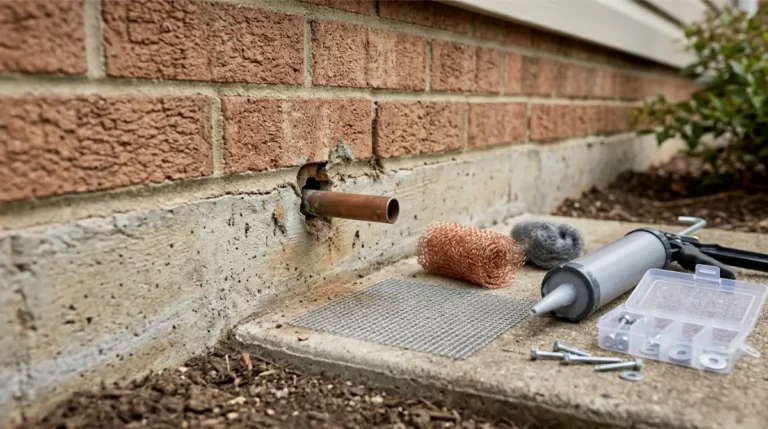
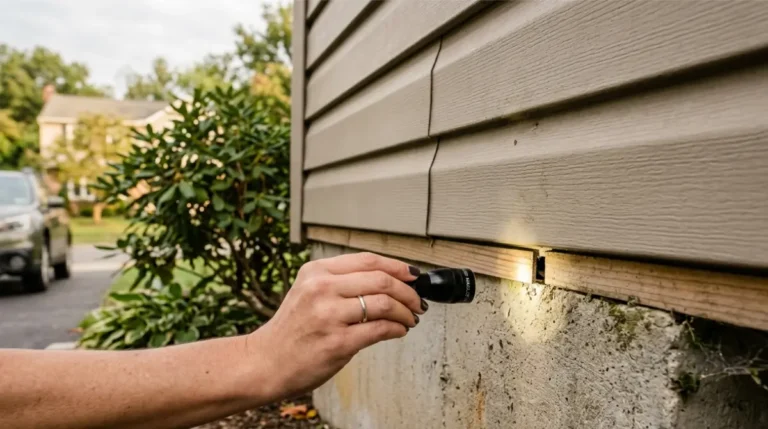
Cleaning without exclusion resets the clock. Mice return through the same gaps, and you repeat this in a month. Our guide to sealing the gaps mice actually use covers the work that ends it. Re-check cleaned areas weekly — fresh pellets mean an active entry point, not a failed cleanup.