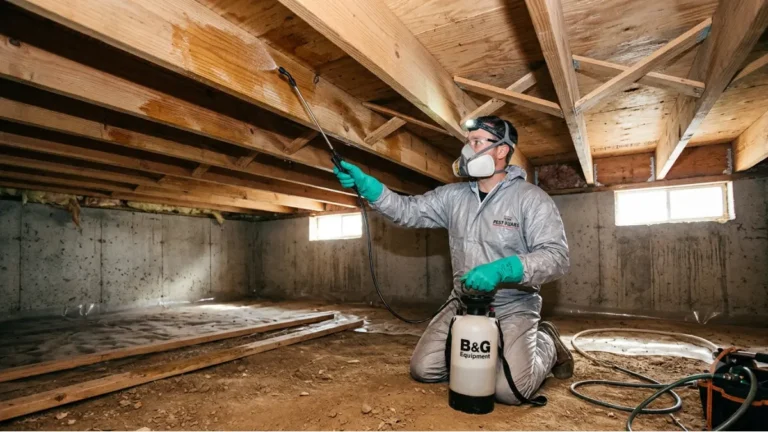
Termite inspection cost and what the report can’t see

An NPMA-33 termite inspection report is good for 90 days for a mortgage or closing, and it is not a warranty. What the fee buys and where it stops.
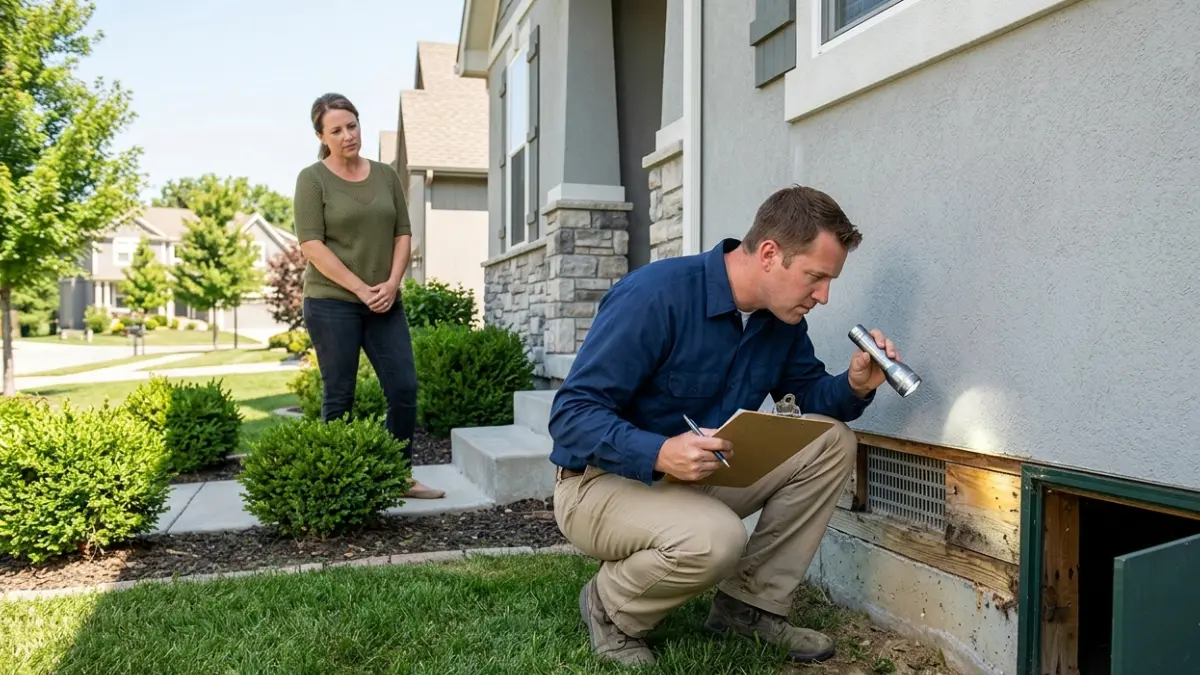
Table of Contents
A termite inspection can cost nothing or come with a fee, and the price turns on the kind of report you need, especially whether a lender or your state requires an official form. Whatever you pay, the report covers only the wood the inspector could see and reach on one day, a limit printed in the fine print of the official report forms.
That limit shapes what the fee buys, what a second visit costs, and what to ask before anyone comes out.
Free termite inspection or a paid report on a state form
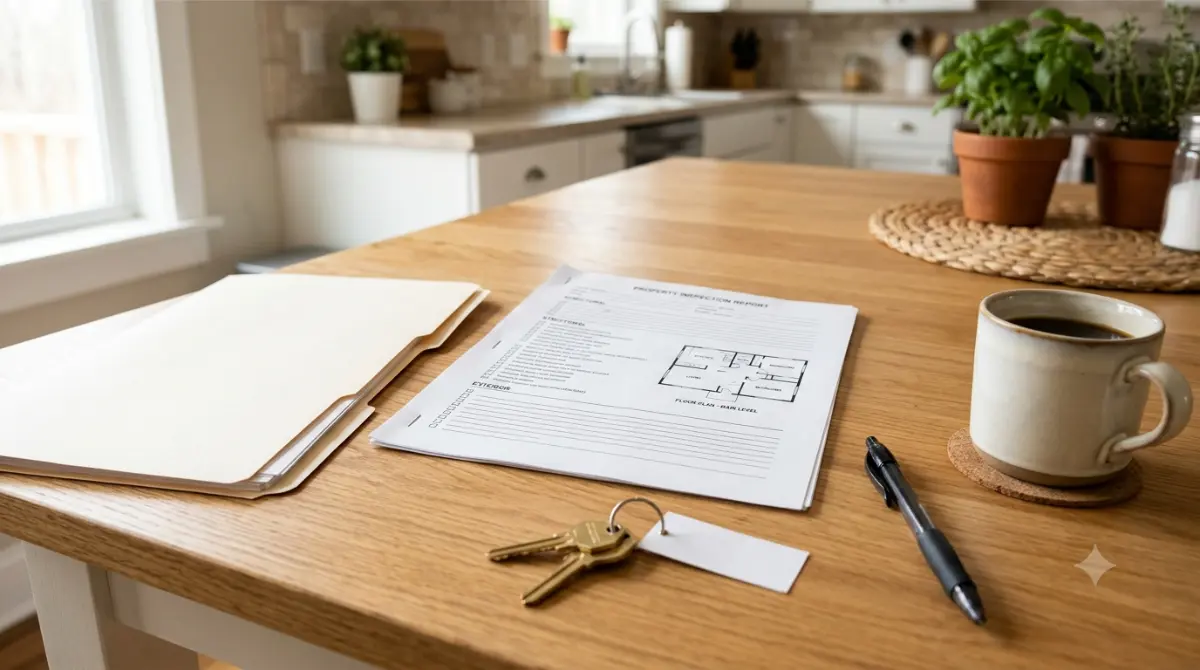
Two different services go by the same name. An inspection a pest control company offers at no charge is a separate product from a report written for a home sale, and the sale report is the one bound by form rules.
For FHA loans, the national NPMA-33 form is used when a report is needed, except in 14 states with their own mandated form: Alabama, Arizona, California, Florida, Georgia, Hawaii, Louisiana, Maryland, Mississippi, Nevada, North Carolina, Oklahoma, South Carolina and Texas (HUD FHA pest control reference guide).
Texas shows how strict a state form can be. Any report on termites or other wood-destroying insects issued for a property sale must be made on the form the Texas Department of Agriculture prescribes, with no alterations (4 Tex. Admin. Code § 7.176). The inspection behind that report must be done by a licensed certified applicator or technician in the termite and wood-destroying insect category (4 Tex. Admin. Code § 7.175). The current form is the Texas Wood Destroying Insect Report, SPCS/T-5. A home inspector without that license cannot issue it.
In Florida, Form 13645 is required when the inspection is part of a sale. The licensee named on that form should match the business you pay, because a mismatch can point to an unlicensed operator (UF/IFAS extension guide). Before you book in any state, ask the company: “Will the licensee named on my report be the business I’m paying?” The page on choosing a termite company and checking its license shows where to look that up.
Every report form prints the same access limit
The national NPMA-33 termite report form describes a visual inspection of the readily accessible areas of a house, including probing and sounding of unobstructed wood. It warns that infestation or damage may exist in concealed or inaccessible areas, and it states that the inspecting firm cannot guarantee its report shows all of it. A termite inspection, in other words, covers only what the inspector could see and reach that day.
State forms carry the same limit in their own wording. Florida’s Form 13645 has a section for obstructions and inaccessible areas, broken out by attic, interior, exterior and crawlspace. It provides no information on wood-destroying organisms in the places listed there. In Texas, the inspection rule itself allows that concealed infestations and damage may go undiscovered (§ 7.175).
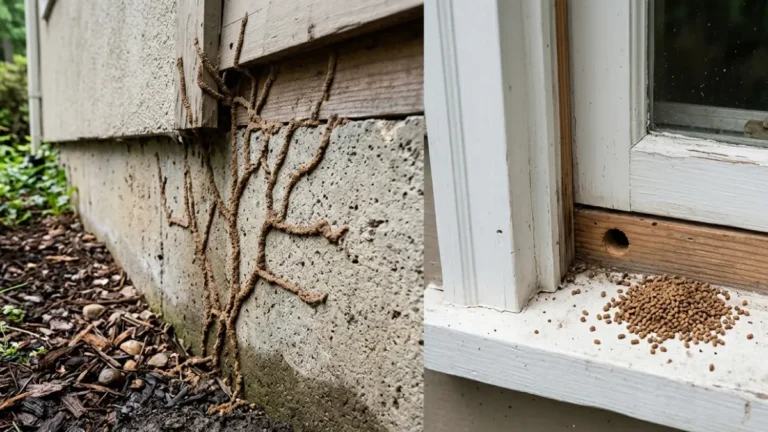
Spray foam insulation is one example of a blocker. Mississippi State University Extension describes a buyer whose report said large areas of the building could not be inspected because of spray foam, with a photo showing termite tracks on the hidden back of the foam (MSU Extension). An area on the inaccessible list holds no finding either way. It marks where the report is silent. If you have already seen mud tubes or swarmers yourself, the signs that point to active termites weigh more than any blank on the form.
Further inspection and reinspection fees
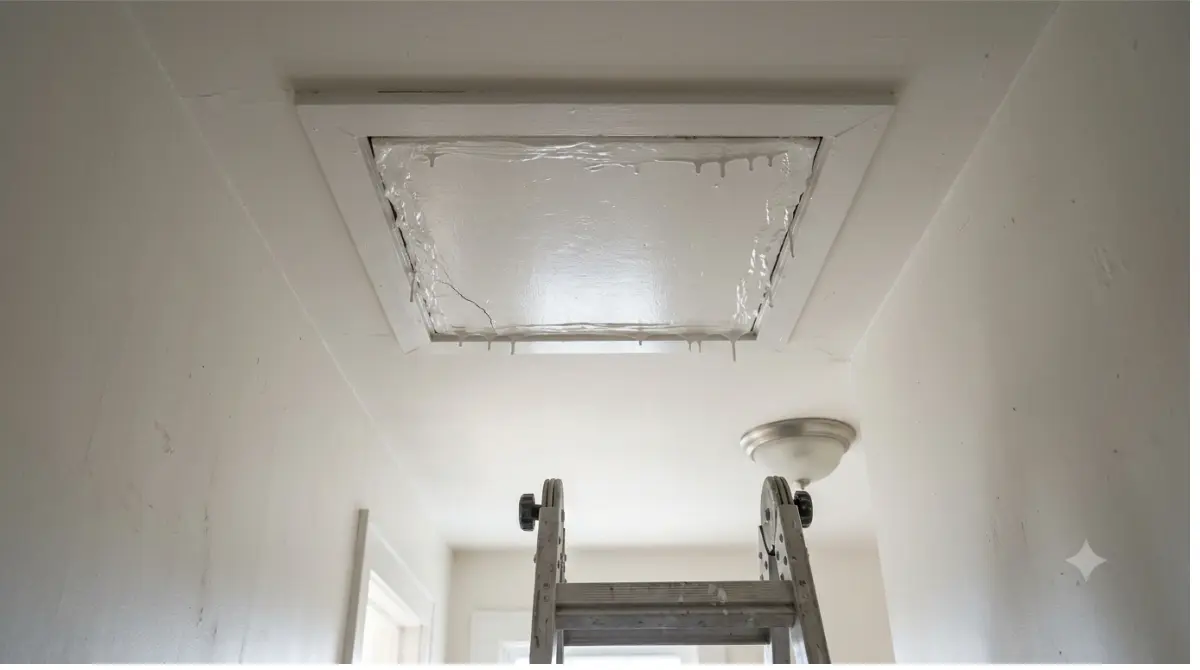
Suppose the report lists the attic as inaccessible because the hatch is painted shut, or the crawlspace as blocked by stored boxes. The NPMA-33 form says the inspection company may be contacted for another inspection once an area reported as inaccessible is made accessible (NPMA-33).
California sets a ceiling on one kind of repeat visit. Every report that comes with a repair bid must carry a promise to reinspect repairs done by others within four months of the original inspection, within 10 working days of a request, for no more than the original inspection fee (16 CCR § 1993.1).
For scale, a report filed with the City of Oroville, California, for an inspection on May 27, 2025, lists a $200 inspection fee (City of Oroville report). Another report from the same company in the city’s files says further inspection of inaccessible areas is done on request at an additional charge (City of Oroville report). That is one company’s price in one California town, and nothing broader can be read from it.
Spray foam raises the later bill too. Treatments and prevention methods that work in foam-insulated buildings take more labor and cost more (MSU Extension).
How long is a termite report good for?
Ninety days is the window printed on the national form. The NPMA-33 report is invalid for securing a mortgage or settling a property transfer if it is not used within 90 days of the inspection, and the form adds that this is not a 90-day warranty. If your lender names a different form, ask the lender what window it accepts.
Whether you need the report at all depends on the loan. For FHA loans, an inspection is called for only with evidence of active infestation, a state or local mandate, local custom, or the lender’s discretion (HUD FHA reference guide, archived). The lender decides. Separate pages cover where the VA requires a termite report and who pays for the termite letter in a sale.
Get these answers in writing before you book
Ask for the terms by email before the inspector arrives, so the price and the limits are on record.
- Which report form they will use, and whether it matches the one your lender or contract names.
- Whose license will appear on the report, and whether that business is the one you pay.
- Which areas they expect not to reach, such as a finished basement or a foam-lined crawlspace.
- What a return visit for blocked areas costs, and how long that price holds.
- Any fee for paying through escrow or for canceling.
- Whether a treatment estimate comes with the report, and whether booking the inspection commits you to anything.
If the visit ends with an offer of a termite bond, its contract terms are a separate decision, and the questions to ask before signing a termite bond cover them. If the report does find activity, termite treatment costs by method is the next page to read. When the report arrives, read the inaccessible-areas section before the findings page.