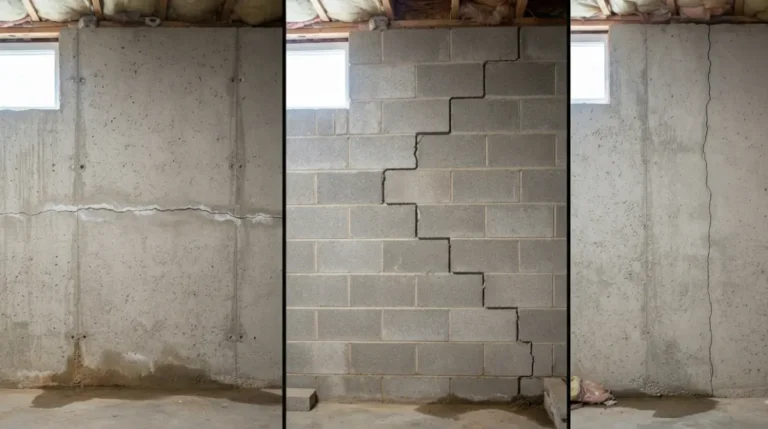
The Right Foundation Repair Financing for Your Job Size

Foundation repair financing runs from a fixed 1% USDA loan to plans that can charge interest back to the purchase date. See which fits your quote.
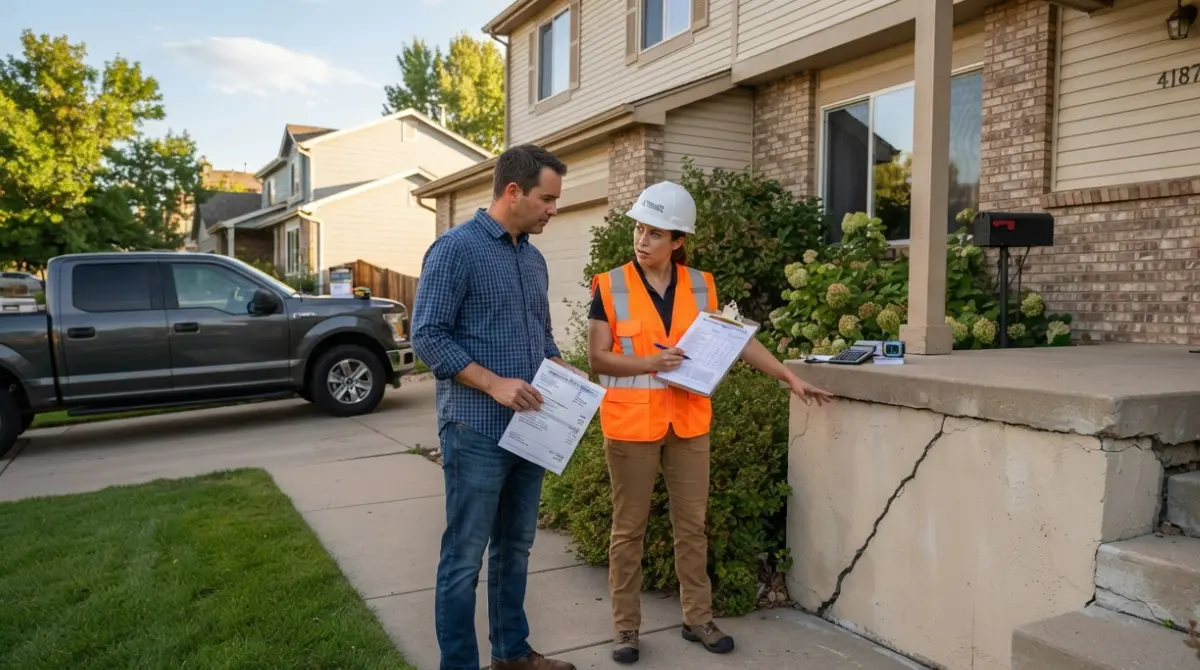
Table of Contents
Foundation repair financing: your options by job size
A foundation quote can feel overwhelming, but you have more ways to pay than most contractors mention. Terms come from CFPB, FTC, HUD, and USDA pages opened in October 2026.
Check insurance before you borrow
Standard homeowners policies typically exclude settling, shifting soil, and gradual water damage; a sudden covered event, like a burst pipe, can qualify. See what foundation repair costs and whether insurance pays.
Match the loan to the job
Small repairs suit cash or a personal loan; big structural jobs push owners toward home equity or a rehab mortgage. Rural owners with limited income can check USDA; denied? Skip to the last section.
ℹ️ Safety Note: Borrowing against your home carries real risk, and this article is general information, not financial, legal, or lending advice. Compare written offers from licensed lenders, and ask a HUD-certified housing counselor for neutral help; HUD’s 203(k) fact sheet lists (800) 569-4287 for referrals.
Which way to pay for foundation repair fits your job?
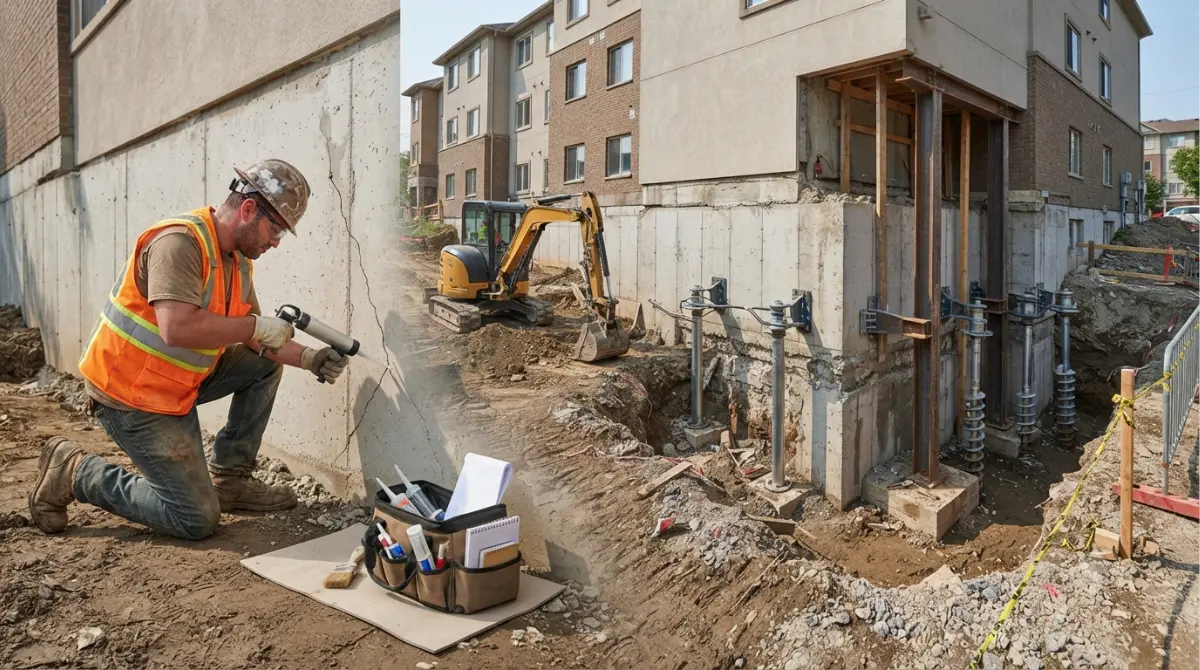
Six main ways to pay, matched to job size by typical fit:
Six options at a glance
| Option | Typical fit | Main watch-out |
|---|---|---|
| Savings or cash | Small repairs | Don’t drain emergency savings |
| Personal loan or card | Small to mid jobs | Promo cards may defer interest |
| Contractor plan | Any size | Check when the promotion ends |
| Home equity loan or HELOC | Bigger jobs | Your home is collateral |
| FHA 203(k), Standard | Major structural work | A mortgage; consultant required |
| USDA Section 504 | Low-income rural owners | Income, area, funding limits |
How to read the “typical fit” column
“Typical fit” is our editorial judgment, not a lender rule, using the pillar’s cost bands: cracks $250–$800, major structural work $10,000–$40,000. See how each repair rung is priced.
Is contractor financing for foundation repair a good deal?

Often not interest-free: many “no interest” offers are deferred interest, so unpaid balances can be charged interest back to the purchase date.
What “no interest” can really mean
CFPB explains how deferred interest works for retail credit cards: miss the payoff date or run over 60 days late, and interest is charged back. Contractor plans can work the same way, so ask which kind you’re offered.
🔍 Why It Works (illustration, not a quote): Assume $6,000, a 12-month deferral, and a 29.99% example APR. Pay $400 a month and $1,200 remains at month 12, plus about $1,140 in back-interest (simplified math).
Shop the loan, not just the repair
The FTC’s warning about contractor-arranged loans: never agree to financing through your contractor without comparing loan terms, and never sign anything blank. Not every contractor lender is a scam.
✅ Do This: Ask the lender, or a HUD-certified housing counselor, “Is this deferred interest, and when does it start charging?”
Using a home equity loan or HELOC for foundation repair
A HELOC is a credit line secured by your home, so if you fall behind, you could lose it. It lets you borrow repeatedly against your home equity, your home’s value minus your mortgage balance.
How a HELOC works
The CFPB’s HELOC explainer describes a draw period that could last 10 years, then a repayment period with often significantly higher payments. Rates are usually variable, and lenders might freeze draws if your finances change.
What you put on the line
The biggest jobs push owners toward secured loans; see foundation replacement cost first.
⚠️ Watch Out: A home equity loan or HELOC puts your home on the line. Get written offers from licensed lenders; a HUD-certified housing counselor can explain them.
Can an FHA 203(k) loan pay for foundation repair?
Often yes: the Standard 203(k) covers major rehabilitation and structural repair, and a 2023 HUD announcement named repairing a foundation.
What the Standard 203(k) covers
HUD’s 203(k) program types page says the Standard version needs at least $5,000 in repairs, a HUD-approved 203(k) consultant, and a property value within your area’s FHA limit.
The trade-offs before you apply
Homeowners can use it to refinance a current mortgage, so compare new and current rates and terms.
✅ Do This: Ask an FHA-approved lender if your current rate beats the new one and what the consultant costs.
Government help for foundation repair: USDA grants and loans
USDA’s Section 504 program offers repair loans up to $40,000 and grants up to $10,000, up to $50,000 combined.
What USDA’s Section 504 offers
USDA’s Section 504 repair program page lists loans at a fixed 1% over 20 years. Loans fund repairs and modernization; grants must remove health and safety hazards, so ask your local office if your repair qualifies.
Who can qualify
- You own and live in the home.
- Your income is at or below your county’s low or very-low limit; grants need very-low income and age 62 or older.
- Your address is in a USDA-eligible rural area.
- Grants must be repaid if you sell within 3 years.
Denied or can’t afford the payment? What to do next
A “no” or an unaffordable payment doesn’t have to end the project.
Ask for the reason, then fix one thing
Ask the lender for the reason, fix the one item you can, and apply again.
Shrink or phase the scope
Ask a licensed structural engineer which work is urgent and which can wait, so a smaller job can be funded first. An independent inspection report confirms scope, and patching alone can hide movement.
Foundation repair financing questions, answered
1. Does homeowners insurance cover foundation repair?
Homeowners insurance usually excludes foundation repair from settling or gradual water damage; a sudden covered event can qualify. Read your policy.
2. Can I use a HELOC for foundation repair?
Yes, a HELOC can fund foundation repair, but your home is collateral and you could lose it if you can’t repay. Compare offers.
3. Is 0% contractor financing really interest-free?
Not always: with deferred interest, unpaid contractor financing can be charged interest back to the purchase date. Ask which kind.
4. Should I use my contractor’s lender?
Shop first: the FTC advises never agreeing to contractor financing for foundation repair without comparing loan terms. Get two offers.
5. Does FHA 203(k) cover foundation repair?
Yes, the Standard FHA 203(k) covers major structural work, and HUD named foundation repair, with a $5,000 minimum and a consultant. Ask a lender.
6. Can I use a 203(k) if I own my home?
Yes, homeowners can use an FHA 203(k) to refinance their current mortgage and fold repairs into one loan. Compare rates.
7. Are there grants for foundation repair?
Grants for foundation repair are limited: USDA offers up to $10,000 to very-low-income owners 62 or older in rural areas. Call your local office.
8. How much can a USDA home repair loan be?
A USDA Section 504 home repair loan can reach $40,000 at a fixed 1% over 20 years. Check county limits.
9. What’s the cheapest way to pay for foundation repair?
A USDA loan is 1% fixed if you qualify; otherwise compare APRs and fees on foundation repair financing. Get written offers.
10. What if my financing is denied?
Ask the lender why, fix one item, then have an engineer separate urgent from deferrable foundation repair work. Get an inspection report.
Your next step before you borrow
Collect two or three written offers, then compare the APR, fees, whether your home secures the loan, and when any promotion ends. Choose the plan whose monthly payment you can still carry after the promotion ends.