How to Tell Settling From Signs of Foundation Problems

Signs of foundation problems show up in combinations, not single cracks: horizontal with bowing, one side higher, doors and floors changing.
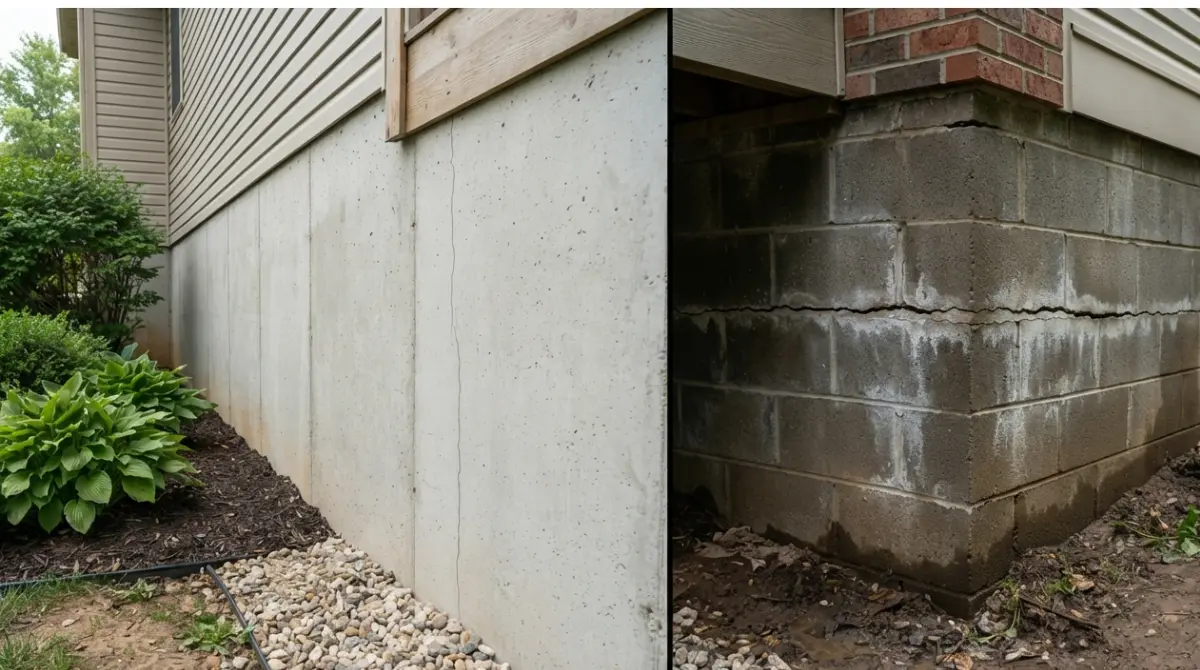
Table of Contents
Settling or a foundation problem? Start here
Most houses crack somewhere, and most cracks are harmless. Telling normal settling from signs of foundation problems comes down to three checks: the crack’s pattern, whether it’s growing, and whether anything else in the house is changing.
Where to start: new home with hairline cracks, read about normal settling. One specific crack, go to the crack section. Sticking doors or sloping floors, see the signs beyond cracks. Worried about cost, jump to monitoring and repair costs.
ℹ️ Safety Note: Structural movement can affect how safe a house is to live in. This article is general information, not a diagnosis. If you see a wall bowing inward or a crack that keeps widening, hire a licensed structural engineer and follow your local code and permit requirements.
What normal house settling looks like
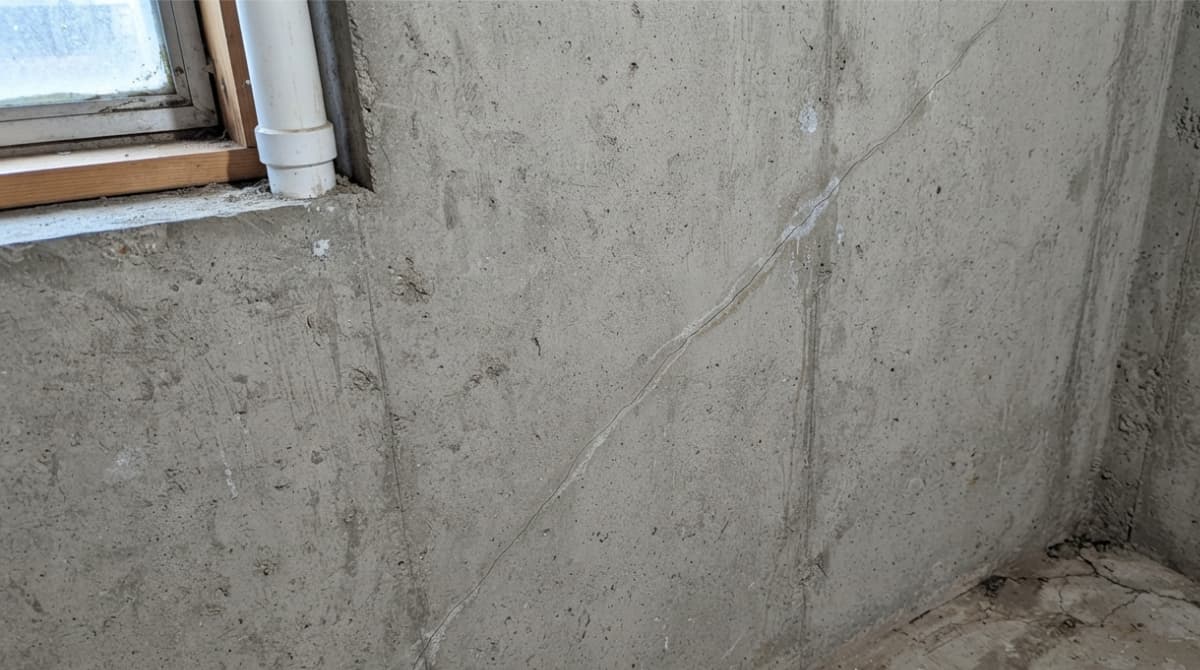
Normal settling is the slow, small adjustment a house makes as soil compacts and materials dry. NAHB says every foundation on soil moves to some degree, and most are designed for about an inch of soil movement.
New homes
Concrete and mortar shrink for months after construction, so builders often wait until near the end of the one-year warranty to make repairs.
Seasonal movement
Soil swells when wet and shrinks when dry, so movement follows moisture. Concrete and block foundations usually develop some cracks, says UMN Extension.
The change test
Watch whether a crack grows over several months; growth, not the crack itself, is the warning.
Which foundation cracks are serious?
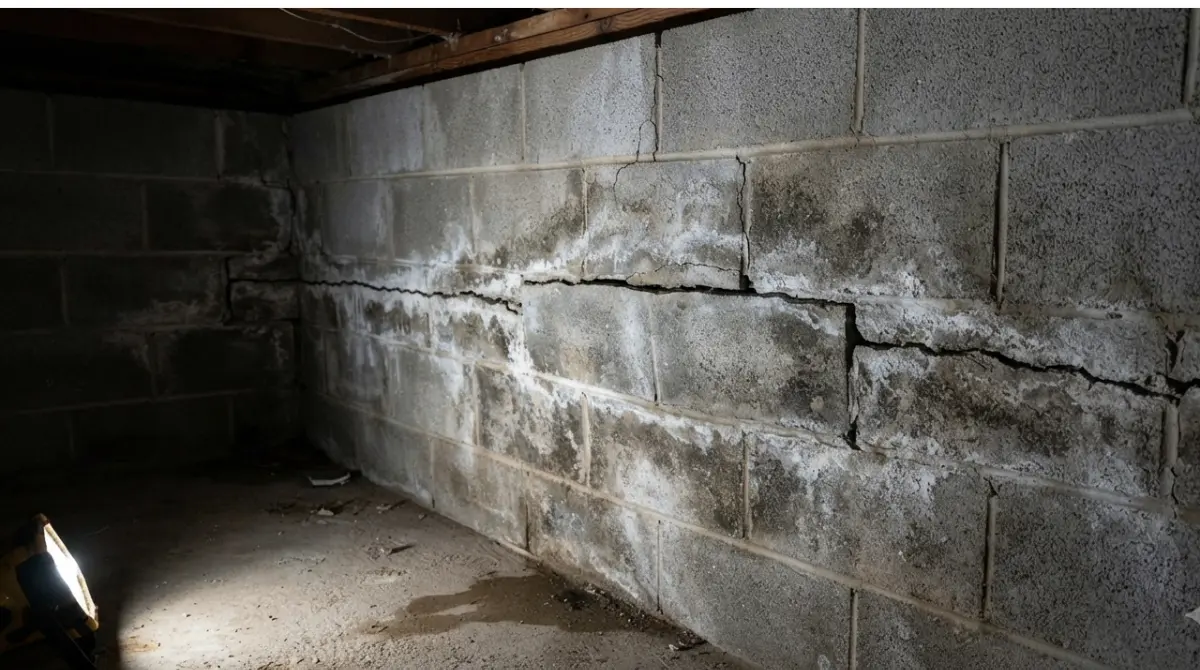
Pattern and change over time tell you more than a crack’s width alone.
| Crack pattern | What it may mean | Next step |
|---|---|---|
| Hairline | Usually shrinkage; most cracks aren’t structural | Mark and monitor |
| Horizontal, with bowing | Cause for concern in a basement wall | Structural engineer |
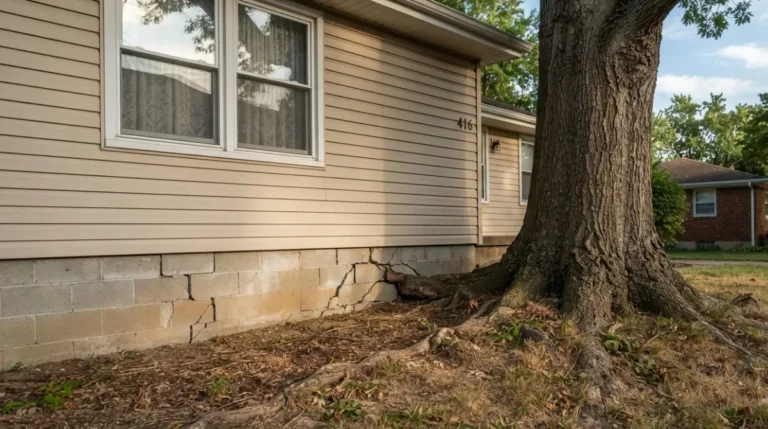
| Stair-step or diagonal | Often read as uneven settling | Monitor; engineer if growing |
| One side noticeably higher | Possible structural concern | Structural engineer |
Sources: NAHB; stair-step reading per This Old House and Angi guides.
Horizontal and offset cracks
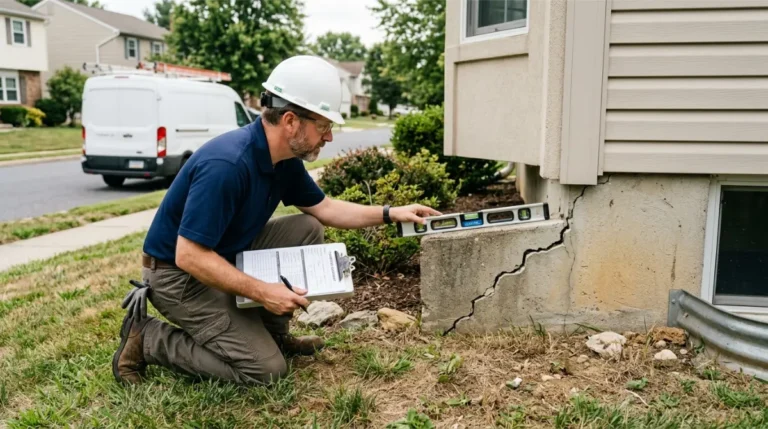
NAHB calls a horizontal basement-wall crack with bowing or leaning cause for concern. See when a basement wall crack is structural for detail.
Does width matter?
✅ Do This: For a horizontal, offset, or steadily growing crack, hire a licensed structural engineer and ask for measurements and a written report.
Signs of foundation problems beyond cracks
The house itself can show foundation movement through how it works, not just how it looks.
Signs worth taking seriously, roughly in order of urgency:
- A wall bowing or leaning inward
- A crack with one side higher
- Cracks that keep growing
- Doors and windows that stop working
- Floors that slope noticeably
Doors, windows, and floors
NAHB says cracks are likelier to be structural when doors and windows stop operating or floors slope excessively. Wood also shrinks as it dries, so one sticking door alone proves little.
Water and gaps
A wet basement is first a drainage question; UMN Extension notes many structurally sound basements simply handle water poorly. Trim gaps can also come from shrinking materials, so note the date and watch for change.
✅ Do This: If a bowing wall or several signs appear together, call a licensed structural engineer.
Settling vs. foundation problems: side by side
Use this as a guide, not a diagnosis.
| Normal settling | Possible foundation problem | |
|---|---|---|
| Crack pattern | Hairline | Horizontal with bowing, offset, or stair-step |
| Over time | Stays the same size | Grows across months |
| Other signs | Doors and floors normal | Doors jam, floors slope, walls bow |
| Next step | Monitor; cosmetic repair | Structural engineer |
The three-question test
Ask: Is the pattern horizontal, offset, or stair-step? Is it growing? Are doors, floors, or walls changing too? Any yes deserves a professional’s opinion; several yeses make it more urgent.
When movement has stopped
Once movement has ceased, NAHB says cosmetic repair is fine; an engineer’s measurements show whether it has.
What causes foundation movement in the first place
Foundations move mostly because the soil around them compacts, swells, shrinks, or heaves with frost, according to NAHB.
Clay soil that swells and shrinks
NRCS rates shrink-swell potential by linear extensibility: above 3 percent, shrinking and swelling can damage buildings. NRCS’s Web Soil Survey guide shows how to look up your soil.
🔍 Why It Works: Clay swells when wet and shrinks when dry, so uneven moisture under a foundation pushes and pulls it unevenly. Cracks form where that stress concentrates.
If your home sits on clay, basement waterproofing in clay soil covers the water side.
Drainage and grading
UMN Extension recommends sloping soil away from the wall at least 1 inch per foot for 6 feet, and extending downspouts at least 4 feet out. See regrading around a foundation for how.
How to monitor a crack and who to call first
A simple crack log
- Mark both ends with a pencil and write the date.
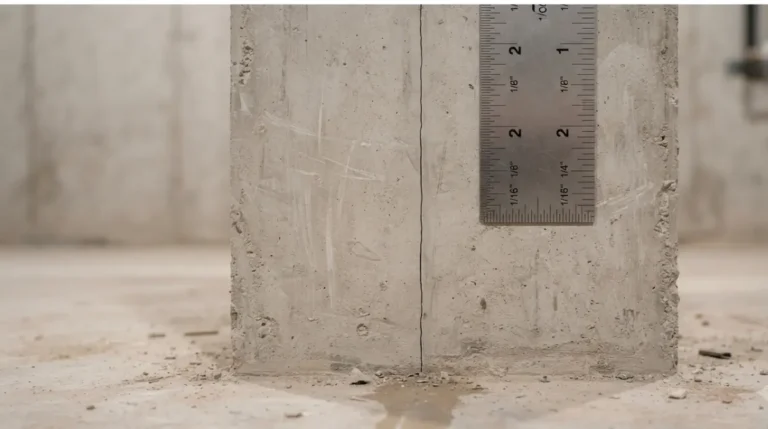
- Measure the width at the same spot with a clear ruler or crack card, and photograph it beside the ruler from the same angle.
Engineer or contractor first?
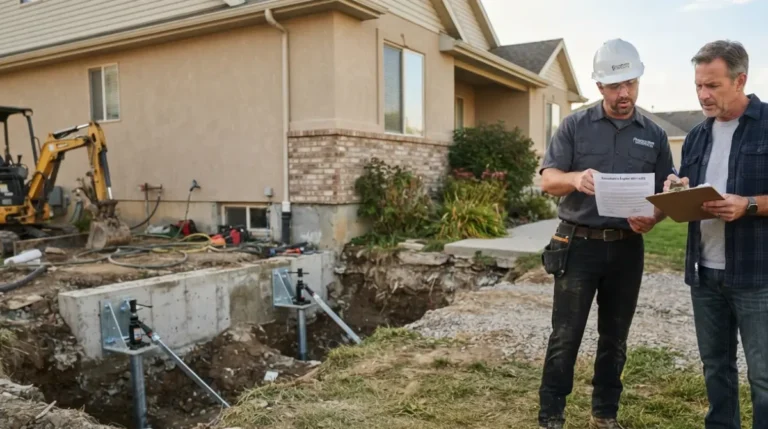
NAHB advises calling a structural engineer licensed in your state when you’re unsure; the engineer measures, photographs, and may recommend drainage fixes or repair. Starting there keeps diagnosis separate from any repair quote. For prices and next steps, see foundation repair costs and who to call first.
✅ Do This: Verify the engineer’s license with your state board and ask for written findings.
Foundation settling FAQ
1. Is house settling normal?
Yes. Normal settling happens because every foundation on soil moves to some degree, and most are designed for about an inch of movement.
2. How can you tell settling from signs of foundation problems?
Settling cracks stay small and steady, while signs of foundation problems include growth, horizontal or offset cracks, bowing walls, and jamming doors. Consult a licensed structural engineer if unsure.
3. What size foundation crack is a problem?
A foundation crack’s width is one clue; an engineering guideline rates hairline to 1/8 inch negligible and over 1 inch very severe. Have a licensed structural engineer assess anything larger.
4. Are horizontal cracks always serious?
Not always, but NAHB calls horizontal cracks in basement walls cause for concern, especially with bowing or leaning. Have a licensed structural engineer inspect them.
5. Are stair-step cracks a foundation problem?
Homeowner guides treat stair-step cracks as a sign of uneven settling, so measure them and watch for growth. Call a licensed structural engineer if they grow.
6. Do sticking doors mean foundation problems?
Sticking doors alone rarely prove foundation problems, since wood shrinks as it dries, but doors plus cracks make a structural cause likelier. Get an engineer’s opinion if both appear.
7. How long does a house keep settling?
House settling has no fixed end date; NAHB says new-home soils need time to adjust and builders often wait a year for repairs.
8. Can drainage cause foundation problems?
Poor drainage can contribute to foundation problems; UMN Extension advises sloping soil away from the wall 1 inch per foot for 6 feet.
9. Can a foundation problem fix itself?
Don’t assume so: only measurement over time shows whether a foundation problem has stopped; cosmetic repairs are best done after movement ceases, per NAHB. Ask an engineer to confirm.
10. Who should I call first about foundation problems?
NAHB advises a structural engineer licensed in your state when you’re unsure; the engineer measures, photographs, and recommends next steps.
Your next step
Cracks alone rarely tell the story. Check the pattern, measure change over a few weeks, and note what else in the house is moving. If you see a bowing wall, a horizontal or offset crack, or steady growth, bring in a licensed structural engineer before anyone quotes a repair.