Common Foundation Repair Cost Ranges, and Who to Call First

Foundation repair cost averages disagree by almost 4×. See the sources side by side, what each fix runs by problem, and when to call an engineer.
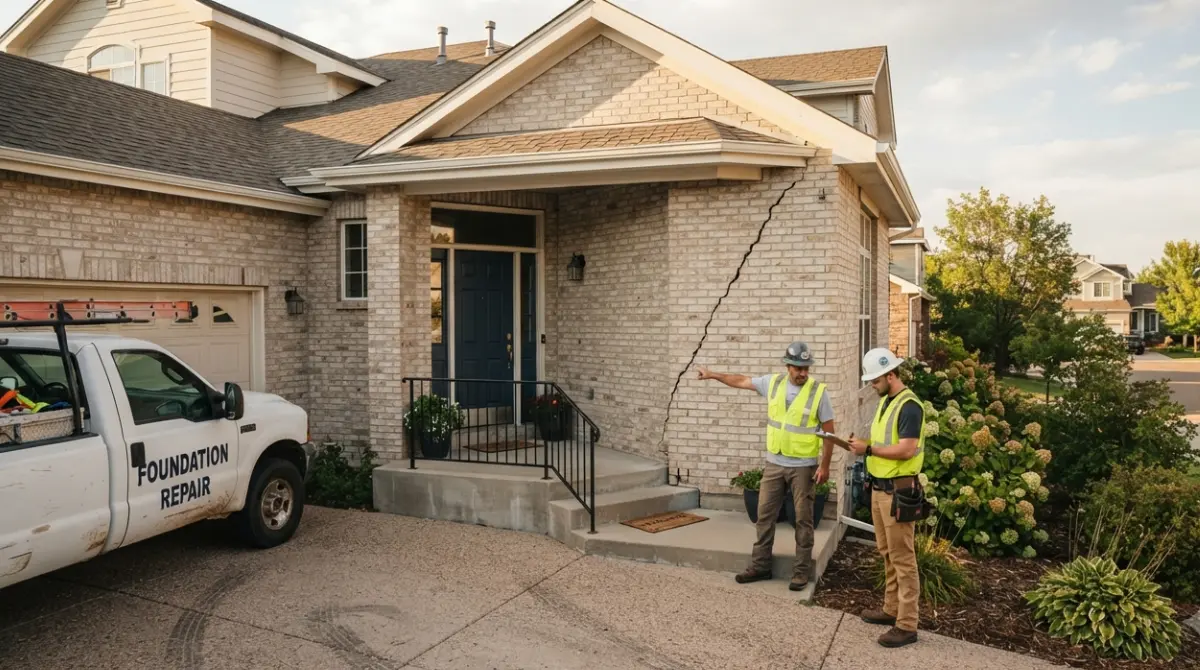
Table of Contents
Foundation repair cost: what you’ll pay and who to call
Most foundation problems cost less than people fear, and a few cost far more, so first work out which kind you have.
The short answer on cost
Foundation repair runs from a few hundred dollars to six figures, depending on the problem. Angi’s 2026 data puts a minor crack repair at $250–$800 and a full foundation replacement at $20,000–$100,000. Most national projects land between about $2,225 and $8,133, while one contractor guide places major structural work at $10,000–$40,000.
The short answer on who to call
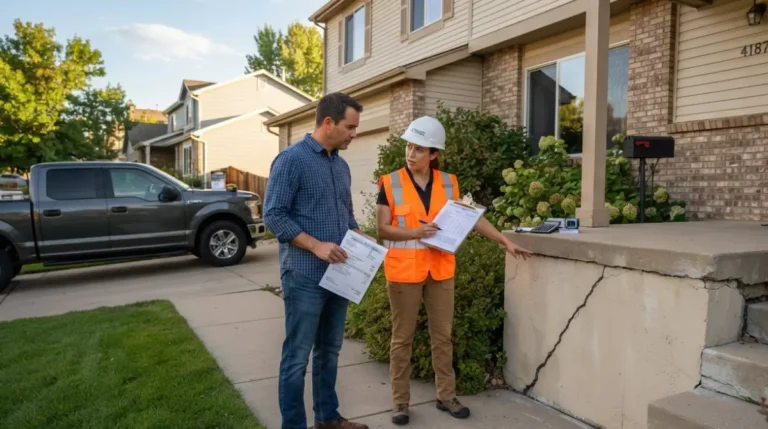
If a crack is horizontal, is growing, or shows up alongside sticking doors, call an independent structural engineer first. If you already know what is wrong and just need it fixed, a foundation repair company is a reasonable first call. Either way, get multiple written quotes before you sign.
Find your situation
- Just found a crack? Start with how to read it.
- Holding a quote you don’t trust? Read who to call, then how to check a quote.
- Buying or selling with a flagged foundation? An independent engineer’s report matters most.
- On a tight budget? Fixing water is often the cheapest place to start.
ℹ️ Safety Note: Judging structural damage, sealing active cracks, and any jacking, pier, or excavation work near a foundation carry risk of injury and major damage. This article is general information, not an engineering evaluation, legal advice, or insurance advice. Hire a licensed structural engineer or licensed contractor, follow local code and permit requirements, and read your own insurance policy and contract.
Foundation cracks: which are serious and which are normal
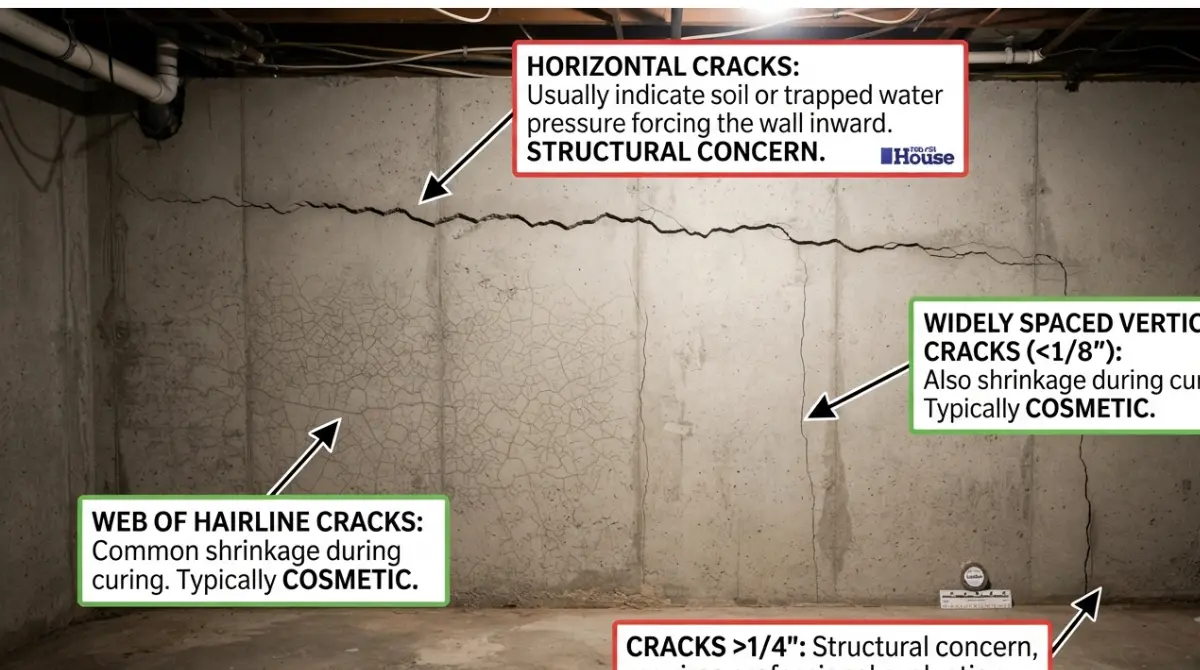
Cracks show what is pushing on your foundation, and direction tells you more than width alone.
Read the crack: direction first, width second
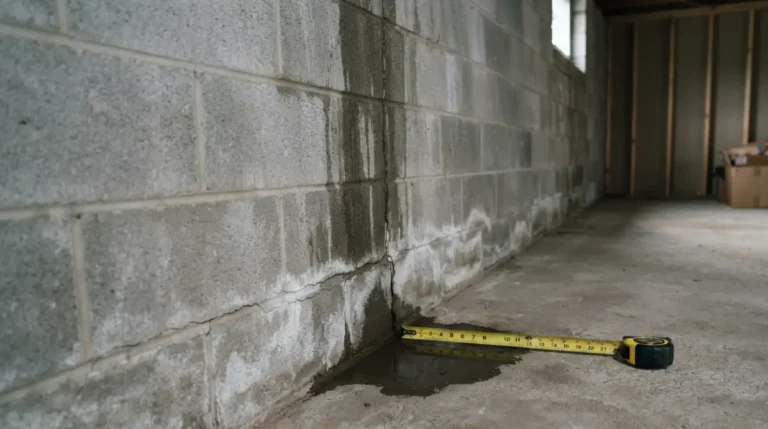
Horizontal cracks in a basement wall usually mean soil or trapped water is pressing the wall inward. A structural engineer who assesses cracks for This Old House reads a web of hairline cracks, or widely spaced vertical cracks under about 1/8 inch, as concrete shrinkage during curing, and treats cracks wider than 1/4 inch as a concern. Other guides use 1/8 inch as the point for closer inspection, so treat any width number as a rule of thumb, not a code limit.
Hairline and vertical cracks: usually normal
Hairline cracks and vertical cracks are the ones most likely to be harmless. Vertical wall cracks usually are not structural, because nothing blocks the home’s load from reaching the footing, though they can still leak. Sealing a stable, dry crack can keep water out, but cement or epoxy on an active crack can hide the problem without solving it.
Horizontal and stair-step cracks: call sooner
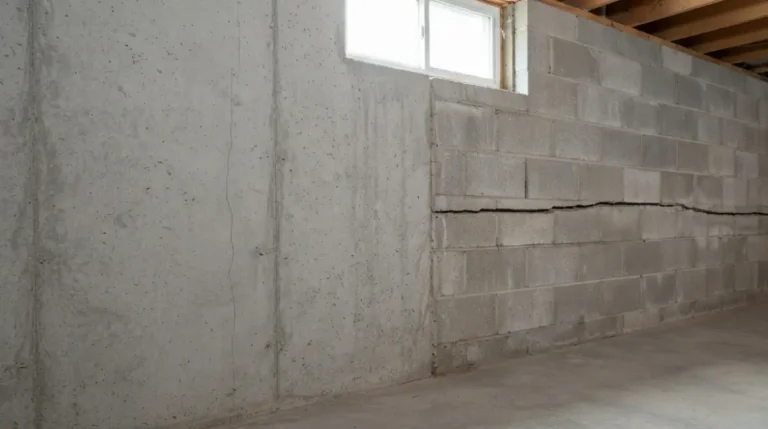
Horizontal cracks, and stair-step cracks in block walls, deserve a professional look even when narrow. One engineering firm advises calling an engineer, not a contractor, for horizontal basement cracks of any width and for measurable inward bowing. See what makes a basement wall crack structural.
🔍 Why It Works: Saturated soil expands and presses on foundation walls, and trapped water adds hydrostatic pressure.
Other signs: sticking doors, sloping floors, wet walls
Sticking doors, sloping floors, and leaking walls can point to foundation movement. Small cracks from normal settling are usually not a safety problem, but large structural cracks, sinking, or bulging walls can make a house unsafe. Sagging floors can also be caused by rotting floor joists, so it helps to know how to tell termite damage from water rot.
How to measure and log a crack
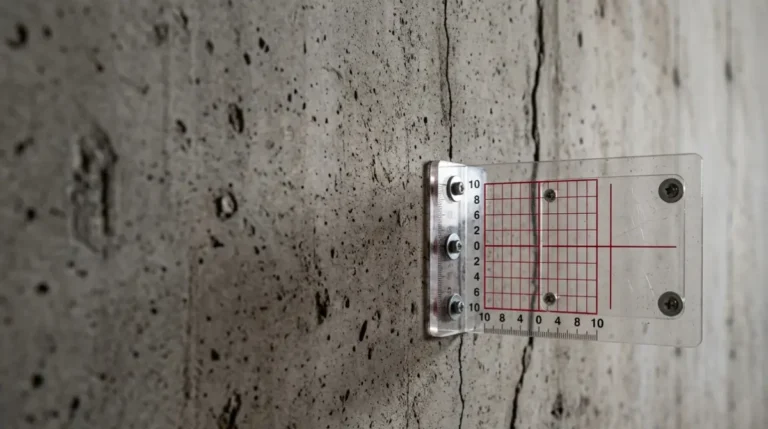
Photograph the crack with a ruler in frame and measure its width at two or three points. Recheck every three to six months, and more often if water or new cracks appear. Bring the log to any engineer or contractor, because a documented history speeds up diagnosis.
✅ Do This: If a crack is horizontal, growing, offset, or leaking, book a licensed structural engineer before anyone patches it. Ask whether the firm also sells repairs, and confirm their license in your state.
Structural engineer or foundation company: who to call first
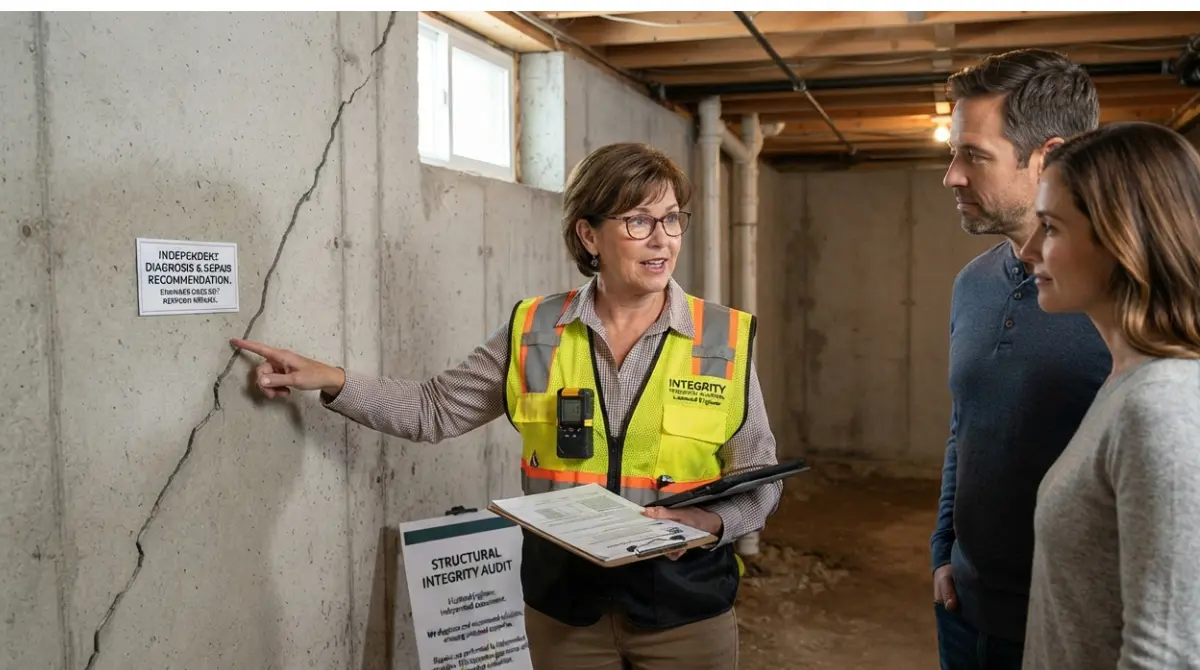
Who you call first shapes both the diagnosis and the price.
Call an independent structural engineer first when a crack is horizontal, bowing, growing, or tied to a home sale or insurance claim. Call a foundation repair company first when you already know the problem and need it fixed.
| Option | What you get | First-visit cost | Financial interest | Best for |
|---|---|---|---|---|
| Independent structural engineer | An independent diagnosis and recommendation, with no repairs | About $200–$1,000, depending on source and scope | Paid for their time, not for what you build | Horizontal or bowing walls, sales, claims, conflicting quotes |
| Foundation repair company | An inspection, a repair plan, and a bid | Some offer free inspections | Earns money if you buy the repair | A known problem, warranty work, minor stable issues |
What an independent structural engineer does (and doesn’t)
A licensed structural engineer diagnoses the problem independently and recommends a fix, but does not perform repairs. That independence is what you pay for. The report can go to several foundation companies so each bids on the same scope. A repair company inspects and does the work, which is faster when the problem is clear, but the person recommending the repair is also selling it. A certified foundation repair specialist quoted by Bob Vila notes that online searches mostly surface contractors who send commissioned salespeople.
When to call the engineer first
- Horizontal cracks or measurable inward bowing (engineering guidance).
- A home purchase or sale, since an independent report carries weight with buyers, sellers, lenders, and insurers.
- A storm-related insurance claim or a dispute with a previous owner (a stamped report is essential).
- Several companies giving very different diagnoses, or a large quote you want checked.
When calling a foundation company first is fine
If you already know you have a foundation problem and need it repaired, going straight to a foundation company can streamline the process. The same goes for warranty work with a company that did earlier repairs. Get multiple written quotes either way.
What each first call costs
Angi puts a structural report at $300–$1,000, while Thumbtack cites $200–$400 for a typical engineer inspection. Ask what the fee covers.
Foundation repair cost by problem, from $250 to $40,000+
Foundation repair cost depends on the problem: a stable crack runs about $250–$800, drainage and leak fixes run into the low thousands, and major structural work runs $10,000–$40,000 or more.
| Problem or repair | Typical range | Key detail |
|---|---|---|
| Minor crack repair | $250–$800 | Stable, non-structural cracks |
| Foundation leak repair | $2,000–$7,000 | One contractor guide goes up to $12,000 |
| Drainage problems | $800–$15,000 | A drainage system install averages $2,800–$6,500 |
| Mud- or slab-jacking | $500–$1,300 | Another guide cites $500–$1,500 per section |
| Bowing wall repair | $4,000–$12,000 | Usually part of a larger plan that includes drainage or soil work |
| Piers and underpinning | $1,000–$3,000 per pier | One contractor cites $1,000–$1,500 per installed steel pier |
| Home settling repair | $5,000–$25,000 | Depends on cause and method |
| House lifting | $20,000–$23,000 | Usually only for severe damage |
| Full replacement | $20,000–$100,000 | Worst case |
📊 Tested / Spec: Sourced, not tested by us. Angi’s national average for foundation repair is about $5,174, within a $2,225–$8,133 range, updated August 3, 2026.
For the water-control side of these numbers, see what a basement waterproofing quote includes line by line and what an interior French drain costs.
Costs that come before the repair: inspection, reports, permits
A structural report runs $300–$1,000, a geotechnical soil report $500–$3,000, and permits about $75–$150. Soil reports come up when soil movement is suspected, and permit rules vary, so ask your local building department.
Cost per square foot and per pier: reading unit prices
Angi’s average is $1.50–$12 per square foot of foundation, so a 1,000-square-foot foundation lands between $1,500 and $12,000. Pier work is priced per pier, so ask for the pier count and price per pier in writing.
What $40,000+ actually buys
One contractor guide places underpinning with piers, bowed-wall stabilization, and house leveling at $10,000–$40,000, with full replacement near $100,000 in the worst cases. Another puts major stabilization above $35,000. Those figures sit at the top of the range. Repairs are usually worth doing for a real problem, because foundations typically only get worse with time.
Foundation repair methods and what each one actually fixes
Each method solves a specific cause, and none of them lasts if the water problem stays.
Sealing and injection for stable cracks
Injection seals a crack but does not stop whatever made it. Recurring cracks, horizontal cracks, or signs of wall movement typically need more than a surface repair.
Leveling a slab: mudjacking and foam
Mudjacking or slab-jacking is mainly used to level a slab, not to correct deep structural problems.
Piers and underpinning for sinking foundations
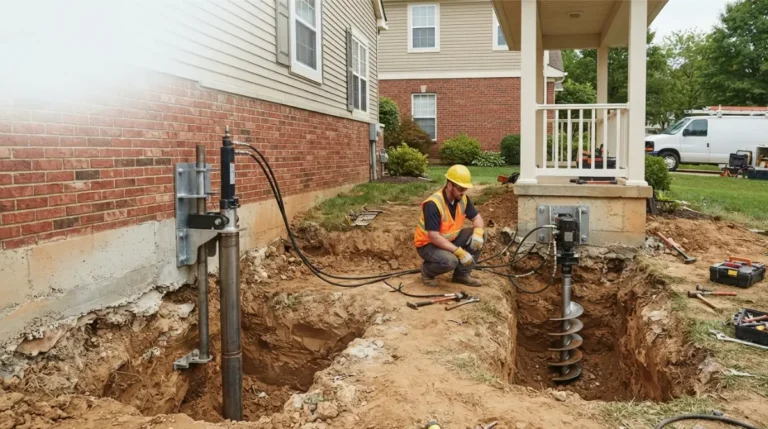
Piers or pilings are the most common fix for more extensive structural damage.
Wall anchors, straps and beams for bowing walls
Carbon fiber straps or wall anchors can stabilize a bowing wall, usually as part of a larger plan.
Drainage fixes that come first
Regrading or installing a French drain typically costs $1,500–$4,000, far less than most structural work. Compare interior and exterior waterproofing before you choose.
⚠️ Watch Out: Piers, jacking, and wall reinforcement are licensed-professional work, not weekend projects. One engineering firm calls foundation repair major surgery for a house and advises discussing the risks of lifting a building. Have a licensed engineer or contractor design and perform it.
Why foundation repair quotes vary so much
Two honest quotes for one house can differ, and so can two national averages.
Foundation type, soil and access
Basement foundations average $2,300–$7,600 to repair, while pier-and-beam foundations range from $750 to $25,000. Hard-to-reach work costs more, and crawl spaces usually cost less because they are easy to access. Soil matters too: Colorado State University Extension notes that expansive clay swells when wet and shrinks when dry, and swelling soils damage thousands of homes in Colorado every year.
Region and labor
Angi’s city ranges show the spread: about $1,700–$5,500 in New York, $3,300–$6,800 in Houston, and $3,500–$14,000 in Denver, with labor around $200 an hour.
Why the national averages disagree by almost 4×
| Source | Source type | Reported figure |
|---|---|---|
| Thumbtack (page labeled 2025) | Marketplace | Most people pay about $3,254; range $1,574–$6,717 |
| Angi (updated Aug 2026) | Marketplace | Average $5,174; range $2,225–$8,133 |
| NerdWallet | Editorial | Average just over $5,000; range about $2,200–$8,100 |
| Perma Pier | Contractor | Typical $2,000–$15,000+ |
| Olshan Foundation Repair | Contractor | 2026 average of $11,950 |
Thumbtack’s and Olshan’s averages differ by nearly four times. Differences in who they survey, where, and which jobs they count are plausible, not confirmed. Budget by problem, not by a single average.
Does homeowners insurance cover foundation repair?
Whether insurance pays depends on what caused the damage, not how bad it is.
What standard policies usually exclude
Foundation damage from shifting or settling earth is typically not covered by homeowners insurance. Damage from water pressure in the soil or poor grading typically falls under a gradual-water-damage exclusion. Soil expansion and contraction generally falls under the earth-movement exclusion.
When a covered event changes the answer
Coverage generally applies only when a covered peril causes the damage. A burst pipe, explosion, or vehicle impact can qualify. For water cases, read when homeowners insurance covers basement water.
Flood and earthquake need separate coverage
Flood and earthquake damage typically require separate coverage.
Document the damage before you call your insurer
Photograph and video the damage, note the date and likely cause, and review your policy before you call. A stamped engineer’s report can support a storm-related claim. Your policy language controls, and a licensed insurance agent can tell you which exclusion applies.
How to check a foundation repair quote before you sign
A quote is a starting point for questions, not a verdict.
Verify the license and insurance
The FTC’s guidance on avoiding home improvement scams says to consider only licensed and insured contractors, confirm the license with your state or county, and ask for proof of insurance.
Get written estimates and compare them line by line
A written estimate should describe the work, materials, completion date, and price, and the FTC says not to automatically choose the lowest bidder. For a walkthrough, see how to compare basement waterproofing quotes.
Payment, contracts and your right to cancel
The contract should include the contractor’s name, address, phone number, and license number, start and completion dates, and every promise made verbally. If you sign at home, it should state your right to cancel within three business days. Don’t pay the full amount up front, and don’t make final payment until the work is done and you’re satisfied.
Red flags: pressure, cash and door-to-door offers
The FTC lists these scam tactics:
- A contractor knocking on your door because they are “in the area.”
- Pressure for an immediate decision.
- Demands for full payment up front, or cash only.
- A request that you obtain the permits yourself.
- Financing arranged through a lender they know.
Questions to ask about warranties and permits
Reputable foundation companies typically warrant their work, so get the terms in writing and ask whether the warranty transfers if you sell. Ask who pulls the permit and what your local building department requires, since permits typically run $75–$150.
✅ Do This: Before you sign, confirm the contractor’s license with your state or county, get proof of insurance, and have a second, independent professional review the scope if the quote is large.
Foundation drainage and crack monitoring: what to do this week
Water is the one foundation factor you can change today without a contractor.
Fix the water first: grading, gutters and downspouts
The Department of Energy’s grading guidance calls for a slope away from the house of at least 0.5 inch per foot for 10 feet, which is 5 inches of drop over 10 feet. If you have less than 10 feet of room, use swales or drains to carry water away. That guidance describes new-construction grading, so a sloped yard may need a pro. For the hands-on side, see how to regrade around your foundation.
In swelling-soil areas, Colorado State University Extension advises against removing downspout extensions to collect water near the house. Keep gutters clear and downspouts discharging away from the wall.
Watch, don’t patch: keep the log through wet and dry spells
Keep your crack log going through at least one wet and one dry stretch, with dated photos and a ruler in the frame. Swelling soils move with moisture, so a log that spans both is more useful to an engineer.
Keep soil moisture steady near the foundation
In swelling-soil areas, Colorado State University Extension recommends keeping thirsty plants and sprinklers five feet from the foundation, and trees fifteen feet away. That is Colorado guidance, so check your local extension office.
Call before you dig
Before digging near a foundation for drains or regrading, call 811. It is the free national service that gets buried utilities marked. Waiting periods vary by state. If a contractor is digging, confirm they request the locate.
Foundation repair questions, answered quickly
1. Is it safe to live in a house with a foundation crack?
Often yes for small, stable cracks, but horizontal cracks, bowing walls, or fast-growing cracks can signal real structural stress. Have an engineer look before you decide.
2. How much does a structural engineer cost for a foundation?
A foundation report typically runs about $300 to $1,000, though some sources put a basic inspection at $200 to $400. Ask what the fee covers.
3. Does homeowners insurance cover foundation repair?
Usually not when settling, shifting soil, or poor drainage causes the damage; coverage generally requires a sudden covered event such as a burst pipe. Read your own policy.
4. What is the cheapest way to fix a foundation?
Fixing drainage and sealing small stable cracks usually cost least; regrading or French drains run roughly $1,500 to $4,000 in one estimate.
5. Are horizontal foundation cracks always serious?
They often point to soil or water pressure pushing the wall inward, so they deserve a professional look even when narrow. Call a licensed structural engineer.
6. Can I repair a foundation crack myself?
Only stable, dry, non-structural cracks are reasonable candidates for homeowner sealing, and sealing an active crack can hide ongoing movement. Have an engineer assess horizontal, growing, or leaking cracks first.
7. How much does mudjacking cost?
Angi lists mud- or slab-jacking at roughly $500 to $1,300, and another contractor guide cites $500 to $1,500 per section.
8. Is foundation repair worth it?
For a significant problem, usually yes, because foundation issues tend to worsen over time; a stable hairline crack may only need monitoring. Get a diagnosis first.
Your next step for foundation repair
Your next step today
A crack in your foundation feels urgent, but most cases start with measuring, not spending. Measure and photograph the crack today, then call an independent structural engineer if it is horizontal, growing, or showing up with sticking doors. Otherwise, get multiple written quotes. If you live on clay soil, see basement waterproofing in clay soil.
Get the worksheet and crack log
Our free quote-comparison worksheet and crack log keep your measurements and bids in one place. Next, read how gutter maintenance prevents basement water or use the basement water maintenance checklist.