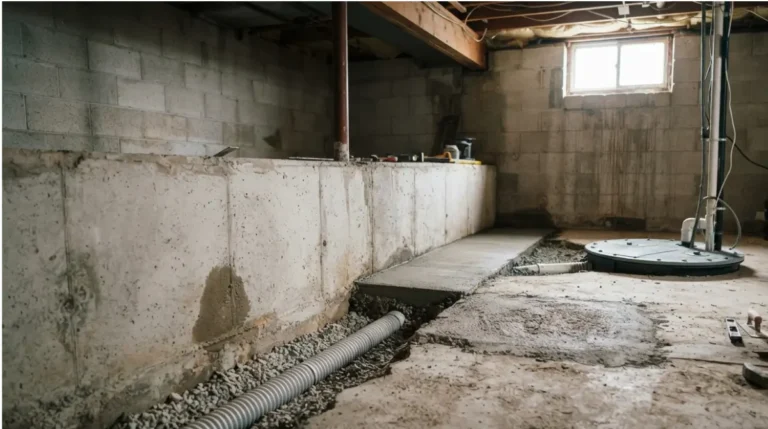
Right Basement Waterproofing for Clay Soil Starts in the Yard

Clay soil basement waterproofing starts with roof water: 1 inch of rain on a 2,000 sq ft roof drops 1,250 gallons. Here’s where it should go.
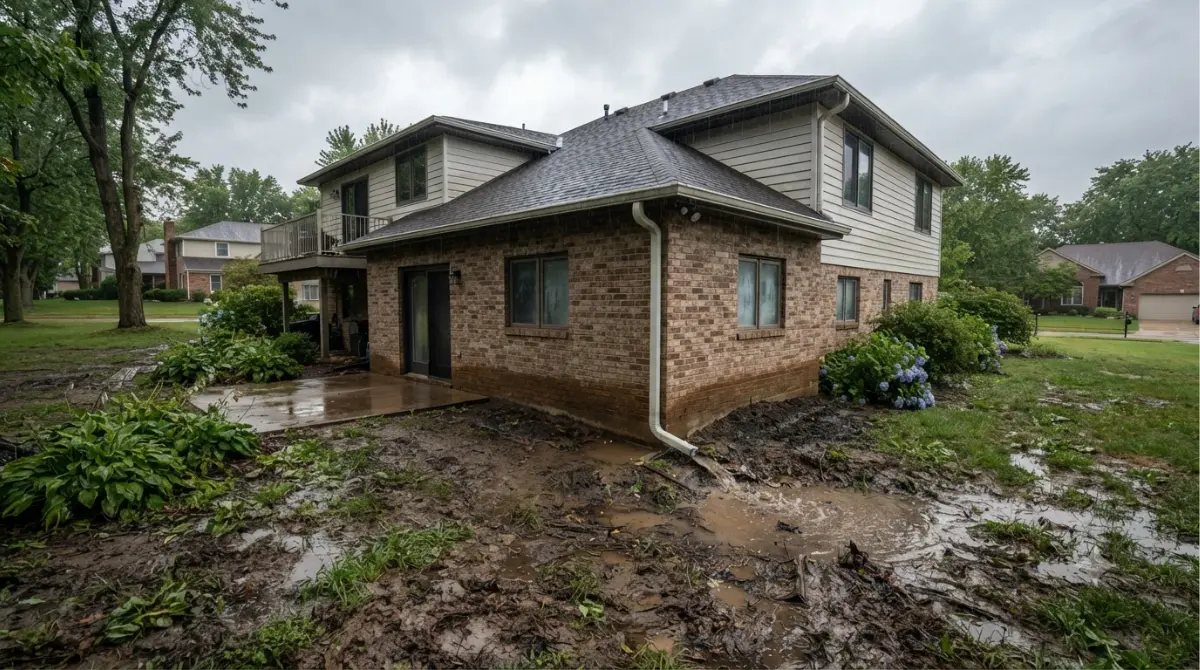
Table of Contents
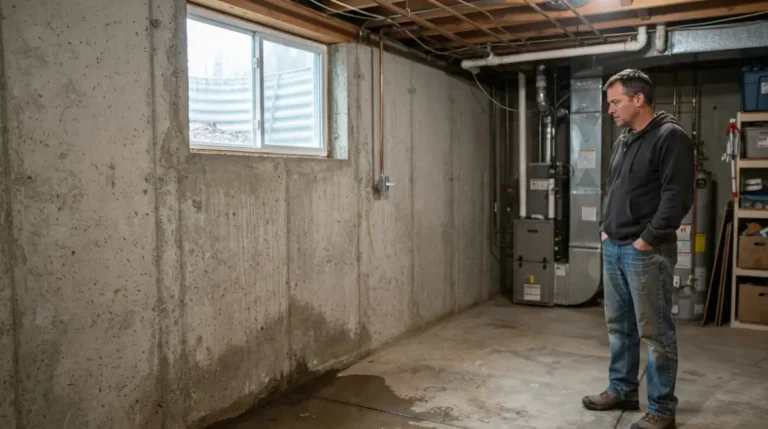
If your basement gets wet after rain and your yard turns to sticky mud, clay soil is likely part of the story. Clay holds water against your foundation longer than sandy soil, so small drainage mistakes show up fast. That’s why basement waterproofing in clay soil starts outside, with the cheapest fixes first.
- Water only after storms? Start with grading and downspouts.
- Holding a waterproofing quote? Read the drainage-system section, then learn how to read a basement waterproofing quote line by line.
- Bowing walls or widening cracks? Skip to the structural warning signs.
ℹ️ Safety Note: Digging near a foundation, installing drainage systems or sump pumps, and dealing with structural cracks carry risks of property damage, electrical hazards, and injury. This guide is for general understanding. For anything beyond grading and downspouts, hire a licensed waterproofing contractor or structural engineer and follow your local code and permit rules.
Why clay soil pushes water into your basement
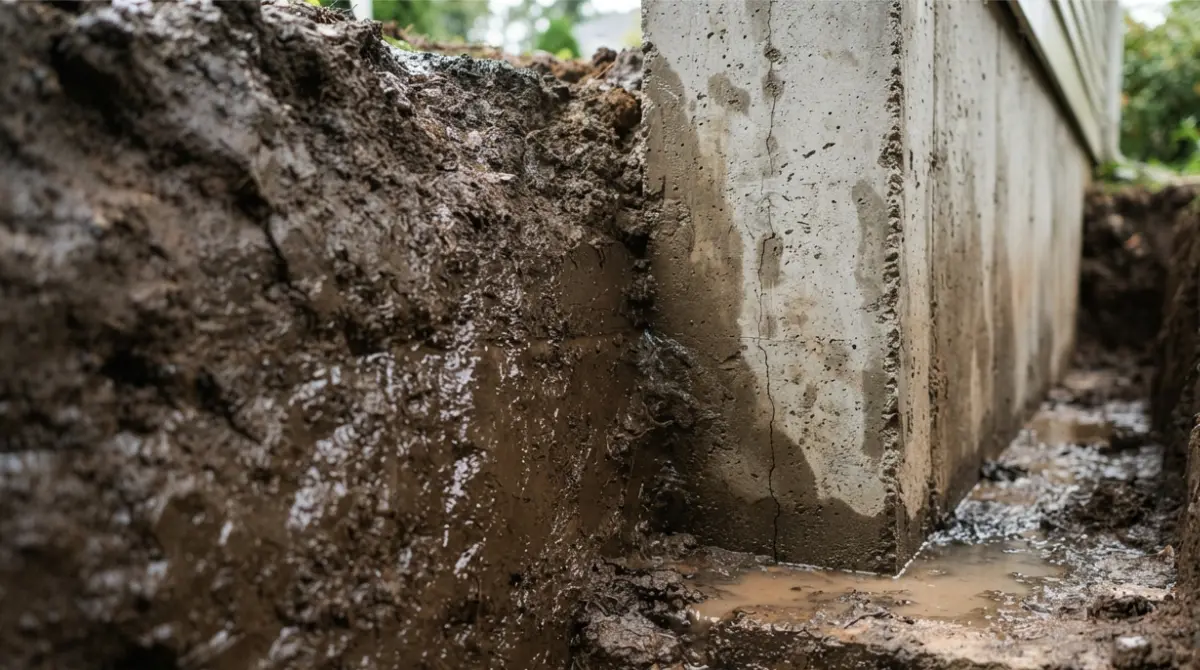
Clay’s tiny, tightly packed particles slow water down, so rain lingers beside your walls.
Clay drains slowly and stays saturated
Wet clay also wicks water. University of Minnesota Extension lists capillary rise by soil type of 12 to 20 feet in clay, versus less than a few inches in gravel. That wicking helps create the ring of dampness at the base of many basement walls.
The loose backfill “bowl” around your walls
Soil dug out for a basement goes back against the walls later. UMN notes this backfill often isn’t compacted properly and settles, so ground that sloped away can flatten or tip toward the house.
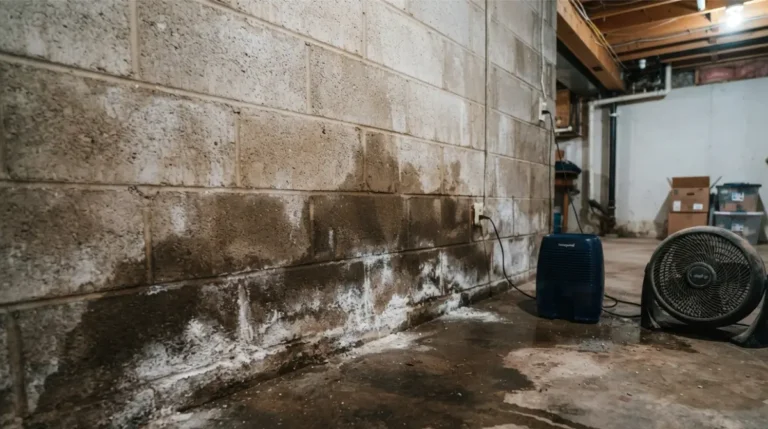
🔍 Why It Works: Saturated soil presses water against the wall, a force called hydrostatic pressure. That water takes the easiest way in: cracks and the wall-floor joint.
How to tell if clay is behind your wet basement
You can check your soil for free in a few minutes.
Look up your lot on the USDA Web Soil Survey
The USDA’s Web Soil Survey covers more than 95% of US counties. UF/IFAS Extension publishes a step-by-step guide to using it:
- Open the Web Soil Survey and click Start WSS.
- Enter your address under Quick Navigation and outline your lot.
- Read your soil’s name and texture, plus any shrink-swell ratings.
Water after rain vs. humid-weather sweating
Clay matters most when water appears after rain or snowmelt. If walls sweat in humid weather instead, it may be condensation, which UMN says homeowners often mistake for leaks.
Regrade clay soil so water runs away from the walls
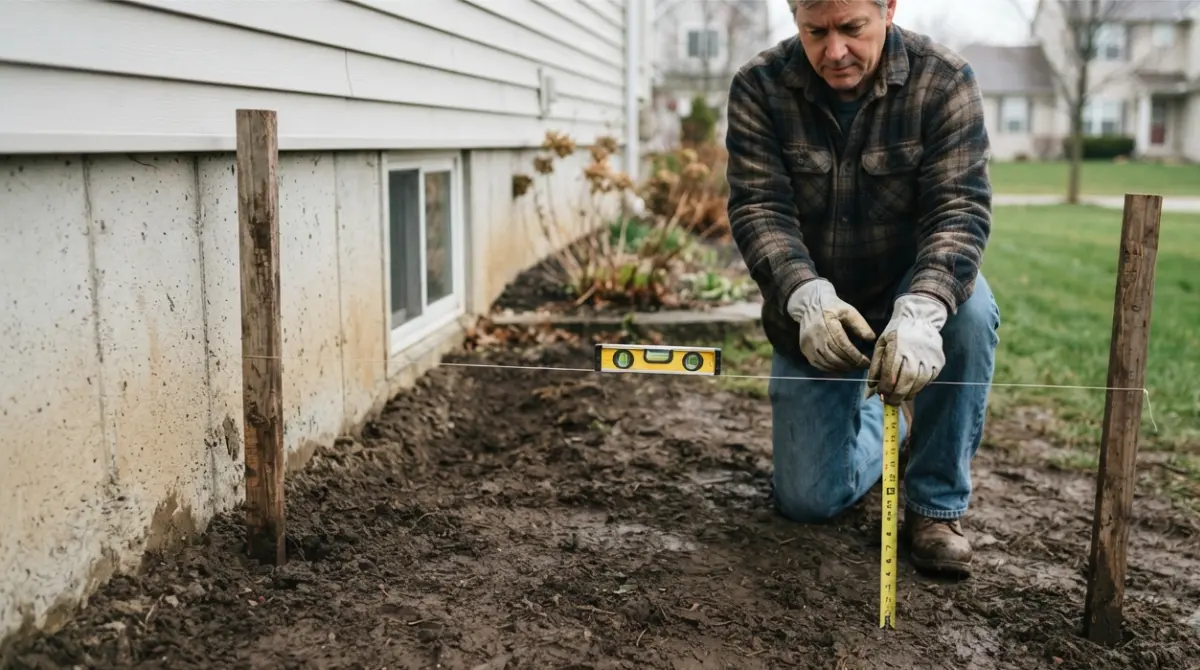
The ground should fall at least 6 inches within the first 10 feet of your foundation, the minimum in the International Residential Code’s drainage rule. UMN Extension suggests a steeper start where possible: at least 1 inch per foot for 6 feet.
The 6-inches-in-10-feet check with stakes and string
- Drive one stake at the foundation and one 10 feet out.
- Run string from the house stake at ground level to the outer stake, and level it with a line level.
- At the outer stake, measure from the string to the ground. Six inches or more meets the code minimum.
What fill to use near the wall
Add soil where the grade dips, and tamp it in layers so it won’t settle again. Ask a local landscape supplier which soil suits grading. Our guide to regrading around your foundation covers the full job.
⚠️ Watch Out: Call 811 before you dig, even for shallow regrading, so buried utility lines get marked.
Move roof water past the clay around your foundation
Downspout extensions should discharge water at least 4 feet beyond the foundation wall, according to UMN Extension. UMN also says a downspout without an extender or splash block is worse than none, since it dumps roof runoff in one spot.
How much water your roof sends down in 1 inch of rain
| Roof footprint | Water per 1-inch rain | Key Detail: per downspout (4 total) |
|---|---|---|
| 1,000 sq ft | ~625 gal | ~155 gal |
| 1,500 sq ft | ~935 gal | ~235 gal |
| 2,000 sq ft | ~1,250 gal | ~310 gal |
| 2,500 sq ft | ~1,560 gal | ~390 gal |
Gladewick calculation: roof area × 0.623 gallons per sq ft per inch of rain. The 2,000 sq ft row matches UMN’s figure.
Extensions vs. buried lines in clay
A surface extension or splash block is the cheapest fix. If water pools near the outlet, extend it onto ground that keeps falling away.
Buried lines look tidier but are harder to check. For overflowing gutters, see our guide to gutter maintenance that keeps basements dry.
French drain or interior drain in clay: what to ask
If water still gets in after grading and downspouts are fixed, UMN’s next step is a drainage system.
Exterior drains in dense clay
UMN calls exterior drainage the most costly but most effective fix for an existing home. It means excavating around the foundation, which is licensed-contractor work.
Interior drain tile and sump as the relief valve
Interior systems collect water at the wall and pipe it to a sump pump. UMN rates a perforated pipe beneath the slab edge as the most effective interior option. But in low-permeability soils it can’t take rising groundwater without aggregate under the slab. Compare interior French drain costs before you sign.
| What you see | Likely cause | First step |
|---|---|---|
| Water at one corner after storms | Downspout or grading | Extend and regrade |
| Damp ring at wall base | Wicking from wet soil | Fix grading and roof water |
| Water at wall-floor joint after heavy rain | Saturated soil | Surface fixes, then drainage quotes |
| Bowing wall or widening crack | Possible movement | Structural engineer first |
✅ Do This: Ask each contractor to write three things on the quote: the water entry point, the drain length in linear feet, and whether aggregate goes under the slab.
Signs clay soil is moving your foundation, not just wetting it
Some cracking is normal, and UMN notes drainage usually removes the water from it.
Bowing walls and widening cracks
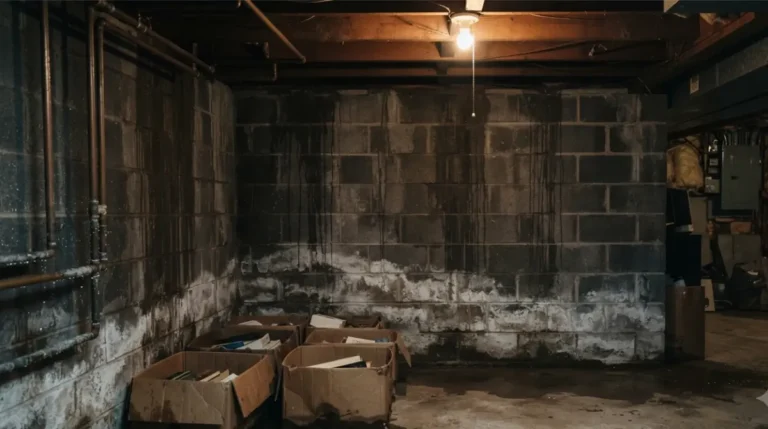
Clay with high shrink-swell potential expands when wet and shrinks when dry, and USDA soil surveys flag this as a hazard to foundations. Walls that bow or lean, or cracks that keep widening, point to movement, not just water.
✅ Do This: Before signing any waterproofing contract, hire a licensed structural engineer for a written assessment of whether movement is active. See which basement wall cracks are structural.
Dry it fast to head off mold
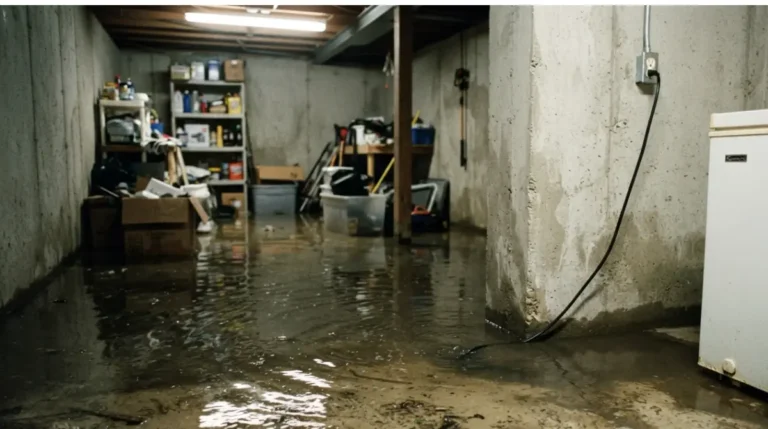
The EPA’s guide to mold and moisture says to dry water-damaged areas and items within 24 to 48 hours to prevent mold growth.
Basement waterproofing clay soil questions
1. Does clay soil cause basement leaks?
Clay soil drains slowly and holds water against foundation walls, so basement leaks start more easily with poor grading or short downspouts.
2. How do I know if my yard has clay soil?
Enter your address in the USDA Web Soil Survey to see your lot’s soil name, texture, and shrink-swell ratings.
3. What slope should the ground have around a foundation?
The IRC requires at least 6 inches of fall within 10 feet of a foundation; UMN suggests 1 inch per foot for 6 feet.
4. What soil should I use to regrade in clay?
To regrade, use soil a local supplier recommends, and tamp it in layers so it doesn’t settle into a dip.
5. How far should downspouts discharge in clay soil?
UMN Extension says downspouts should discharge at least 4 feet beyond the wall; extend them farther if water pools.
6. Does a French drain work in clay soil?
A French drain can work in clay; UMN calls exterior drainage the most effective but costliest fix for existing homes. Get quotes from a licensed waterproofing contractor.
7. Is interior or exterior waterproofing better for clay soil?
Exterior is most effective but costliest; under-slab interior drains need aggregate beneath the slab to handle rising groundwater in low-permeability soils. Ask your contractor what’s under your slab.
8. Can clay soil crack a foundation?
Clay with high shrink-swell potential expands and shrinks with moisture, which USDA soil surveys flag as a foundation hazard. Have a licensed structural engineer check bowing walls or widening cracks.
9. How fast should a wet basement dry to prevent mold?
The EPA advises drying water-damaged areas and items in a wet basement within 24 to 48 hours to prevent mold.
Your fix order for a wet basement in clay soil
Work from the outside in. Check your grade against the 6-inch rule, send roof water at least 4 feet out, then watch the next storm. If water still gets in, compare drainage quotes line by line, and if walls bow or cracks widen, call a structural engineer first.