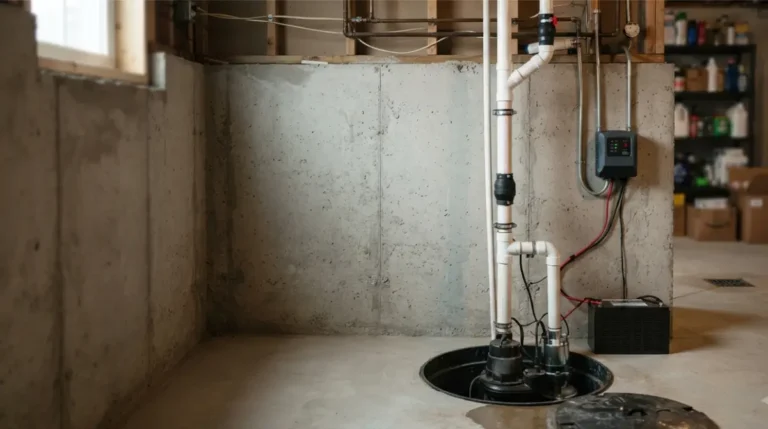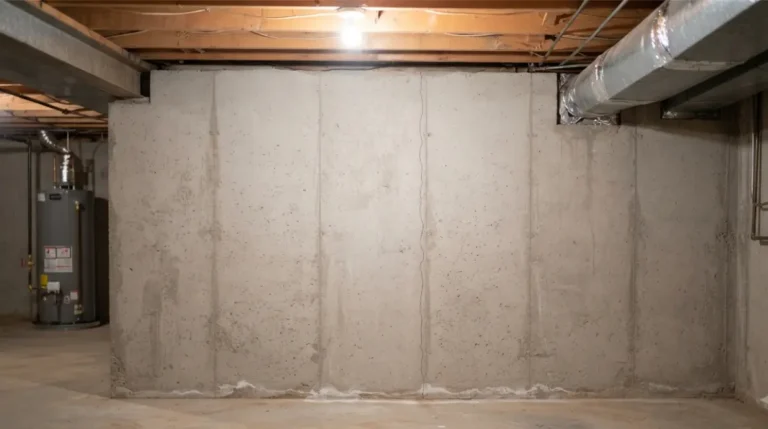
Handle Water in the Basement After Heavy Rain in the Right Order

Water in the basement after heavy rain is a safety call before it’s a cleanup job — and pumping it dry too fast can push your foundation walls in.
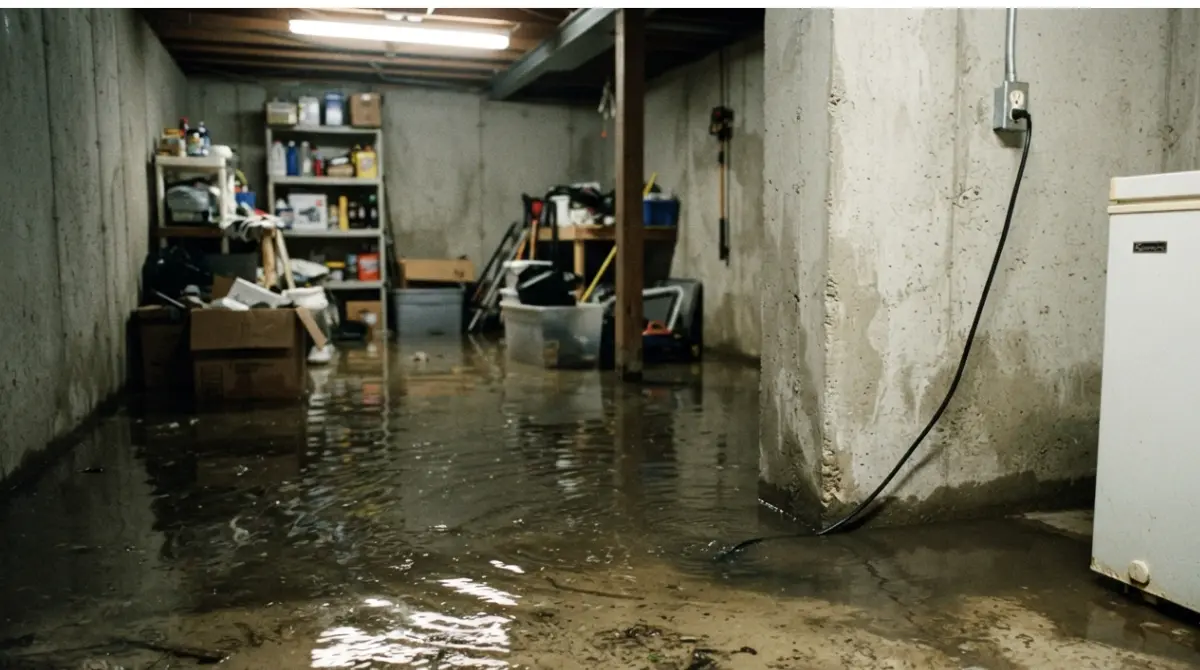
Table of Contents
Before you go down there
Finding water in the basement after heavy rain is not a cleanup job yet. It is a safety decision, and the order you work in decides how much of it you get back.
Which situation are you in?
- Standing water is touching outlets, cords, or a plugged-in appliance. Do not go in. Read the next section first.
- Water rose through a floor drain or smells of sewage. That is contaminated water, and the sewage backup cleanup process is different from what follows here.
- Walls are damp but nothing is pooled. You may have condensation rather than seepage, and a simple foil test tells you which.
If you rent, stop here first
Photograph everything, then report it to your landlord in writing today. Do not start a paid cleanup you may never be reimbursed for.
ℹ️ Safety Note: Flooded basements combine standing water with electrical circuits, gas appliances, and soil pressure against foundation walls. Everything below is general guidance. Where it says to call your utility, a licensed electrician, or a qualified technician, make that call rather than improvising.
Is the water safe to step into?
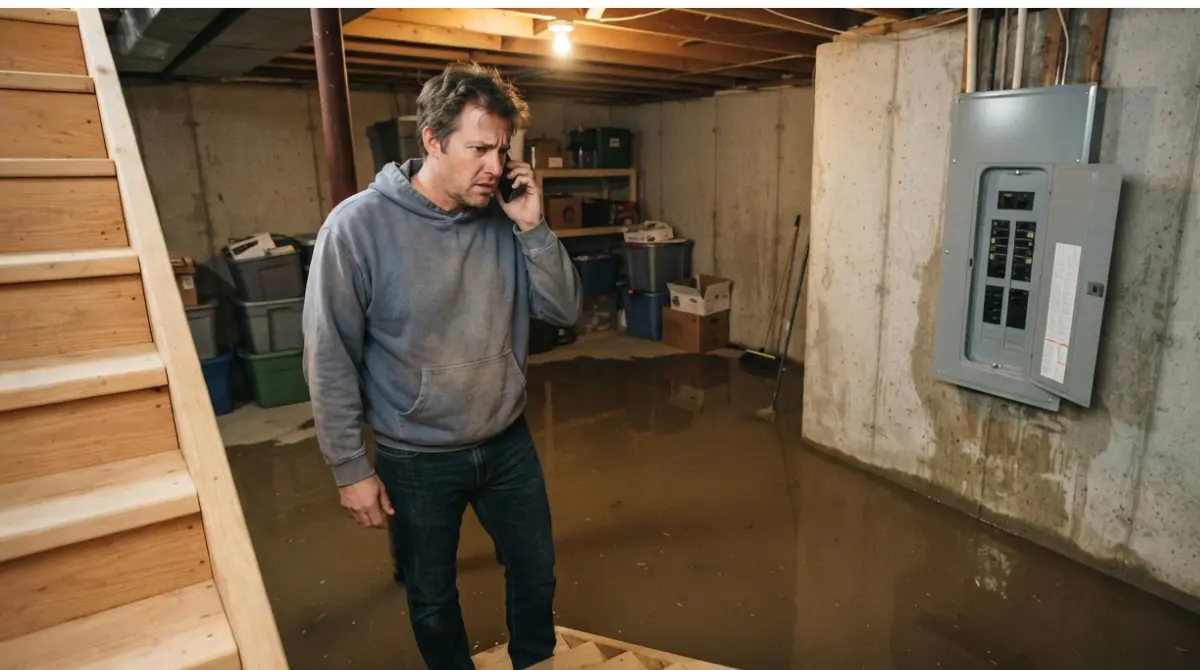
No, not if the water is in contact with outlets, extension cords, or anything plugged in. Water conducts, and a flooded basement can be energized without a single visible spark.
Who should switch off the power
The CDC’s guidance on re-entering a flooded home is specific on this point. If reaching the main switch means standing in water, you call an electrician instead of wading to it.
The same guidance says an electrician should check the system before power goes back on.
Never run a generator or gas pump indoors
Portable generators and gasoline engines produce carbon monoxide fast enough to kill in an enclosed space. The CDC puts the limit at no closer than 20 feet from any window, door, or vent.
⚠️ Watch Out: Submerged breakers, GFCIs, and outlets are not dried and reused. They are replaced. Ask your electrician to confirm which devices were underwater rather than assuming a working breaker is a safe one.
✅ Do This: Call your electric utility to cut power at the meter when the panel is unreachable dry, and book a licensed electrician for the pre-restoration inspection at the same time.
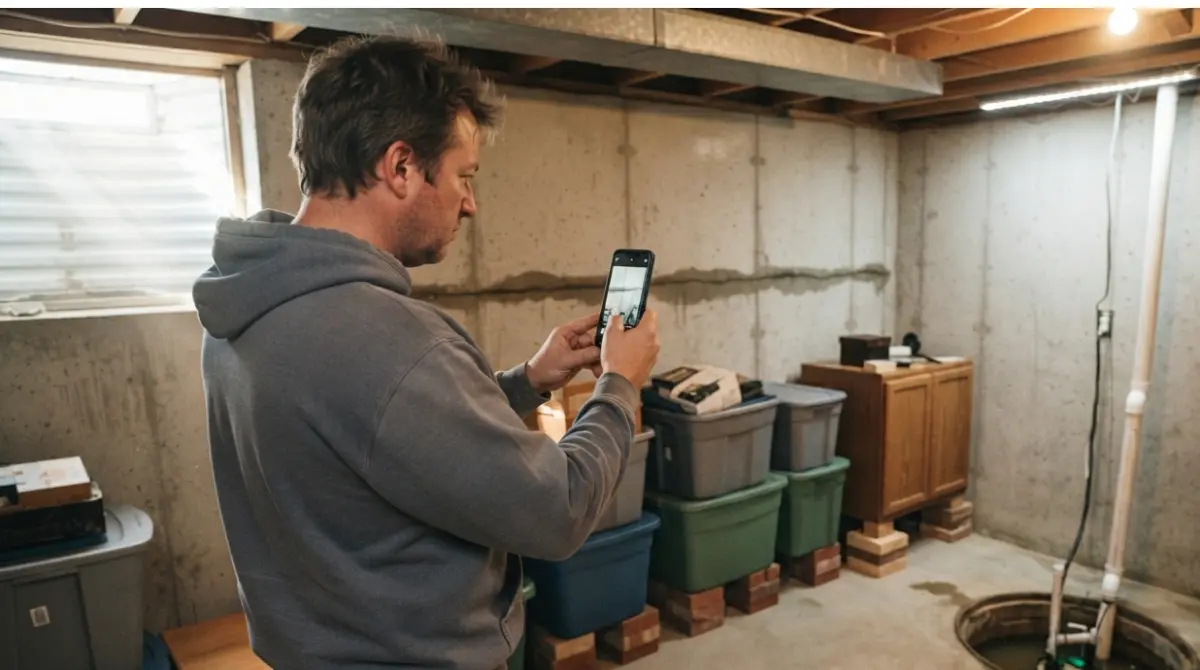
The first thirty minutes, in order
Once the space is safe to enter, sequence matters more than speed. These five steps come before any mopping.
Photograph before you move anything
- Photograph the water line on the walls, the floor, and every wet item, before you touch them.
- Check the sump pump — is it running, is the pit overflowing, is the outside discharge line blocked or frozen?
- Check whether the water is still arriving or has stopped, which tells you if this is active or residual.
- Lift what you can off the floor and away from wet walls.
- Note where water appeared first, because that is your entry point evidence.
What your insurer will ask
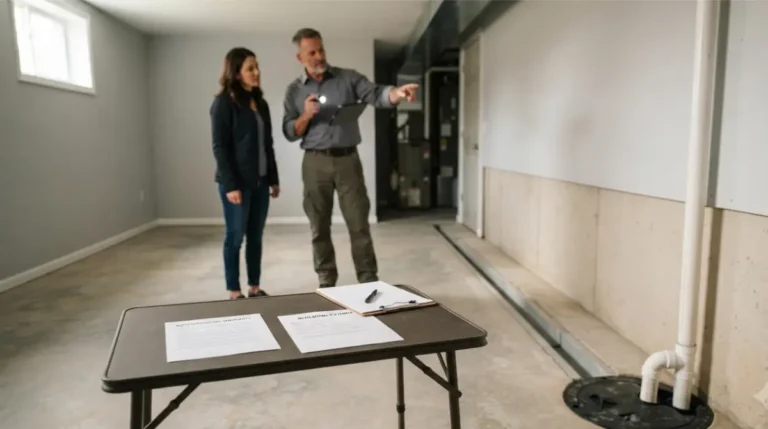
Adjusters ask for pre-cleanup photographs, so take them before the wet vac comes out.
Be realistic about coverage. Rainwater seepage and sewer backup are commonly excluded from a standard homeowners policy without a specific endorsement, and flood policies limit what counts in a basement. Read your own declarations page and call your agent.
Why pumping the water out too fast can crack your walls
Yes, you can pump a basement out too quickly, and it is the mistake almost nobody warns about. The water inside is helping brace your foundation walls against the saturated soil pushing in from outside.
How fast to bring the level down
📊 Sourced: The University of Missouri Extension advises pumping in stages rather than all at once, at roughly two feet of water per day, because removing it all quickly risks serious structural damage.
🔍 Why It Works: Heavy rain saturates the soil around your foundation, and that wet soil presses inward. Water standing inside pushes back with roughly equal force. Drop the inside level to zero in an hour and the wall takes the full outside load alone.
Don’t run a house-powered pump in the water
The same extension guidance on removing water from flooded basements says not to use an electric pump running off the home’s own system. A gas-powered pump sits outside with its hose run in, because of the exhaust.
⚠️ Watch Out: If you see bowing, bulging, or stair-step cracking in a foundation wall, stop pumping and call a structural engineer or foundation contractor. Ask for a written assessment before anyone quotes you a repair.
You have 24 to 48 hours before mold starts
The drying window is short and the clock started when the water did.
📊 Sourced: The EPA advises drying water-damaged areas and items within 24 to 48 hours to prevent mold growth, and notes that in most cases mold will not grow if materials are dried inside that window.
Read that honestly. The EPA’s guide to mold and moisture treats the window as a guideline, not a guarantee — mold can appear despite quick drying, and may not appear after longer exposure.
What to run, and where to point it
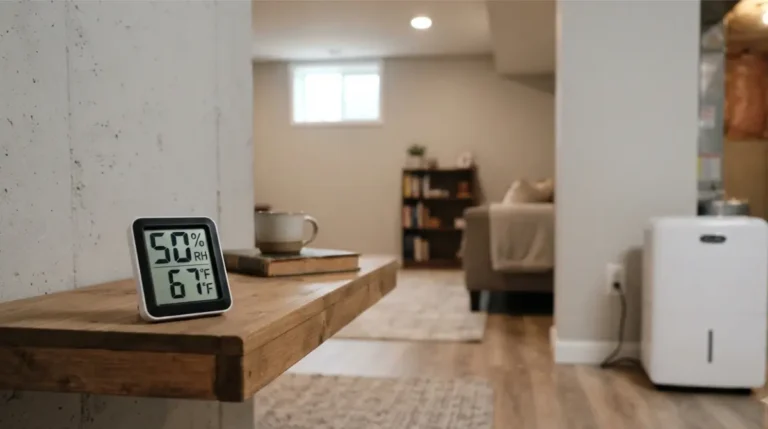
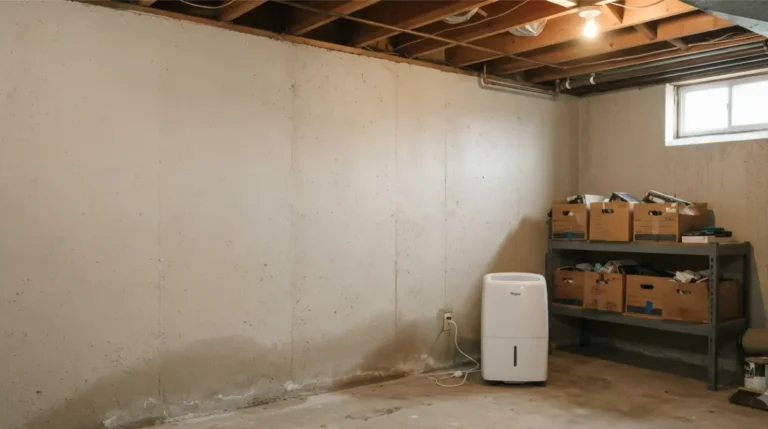
Open windows if the weather allows, run fans to move air across wet surfaces, and run a dehumidifier to pull moisture out of the air. Fans should push damp air out rather than around.
What usually can’t be saved
Carpet pad, wet fibreglass insulation, particleboard, and anything porous that stayed wet past two days generally go. Carpet and pad can sometimes be saved if water is extracted and both are lifted and air-moved quickly.
If the water was contaminated
Sewage, floodwater, and anything that came up a drain change the rules entirely — water damage categories determine what gets cleaned and what gets cut out.
Find the entry point while it’s still wet
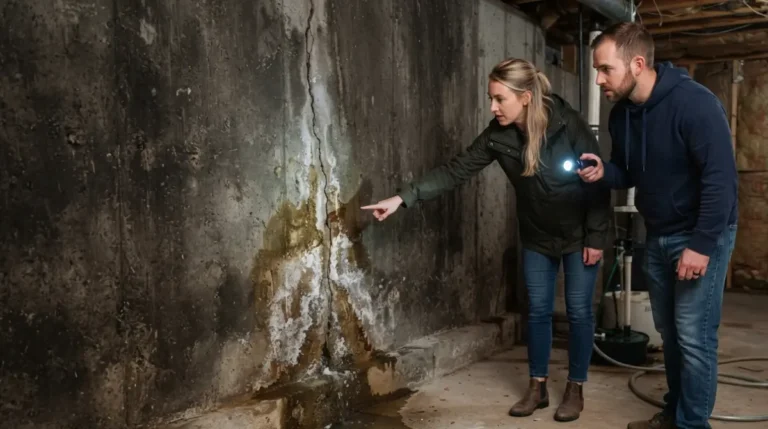
This is the part you cannot do next month. A wet foundation wall shows you exactly where water arrived, and that evidence dries up within a day.
| Where water shows | Likely entry | Key detail to note now |
|---|---|---|
| Along the floor edge | Cove joint | Water rising, not running down |
| A wet vertical line | Wall crack | Photograph its width |
| Under a window | Window well drain | Check if the well is full |
| Around the pit | Sump failure | Was the pump running? |
| Up a floor drain | Backup | Treat as contaminated |
What to check outside
Walk the perimeter during the next storm. Overflowing gutters and downspouts discharging at the wall are the most common cause, and the University of Minnesota Extension’s standard is ground sloping away at a minimum of one inch per foot for at least six feet.
That extension breakdown of basement moisture also says to finish above-grade corrections before installing any interior drainage system, because the outside fix sometimes resolves it alone.
Once you know the entry point, the full diagnostic on why water comes into a basement and what waterproofing actually costs, line by line tell you what you are facing.
Anything the water touched that heats, burns, or plugs in
Do not relight, reset, or run it. A gas control valve corrodes internally after flooding, and the outside can look perfectly clean and dry while the inside is ruined.
Furnaces, boilers, and water heaters
NC State Extension’s guidance on flood-damaged appliances notes that manufacturers generally recommend replacing motors, electrical components, safety controls, and gas valves after flooding, and replacing flooded water heaters outright.
Everything with a motor or a control board
Same rule. Work on flooded equipment belongs to a qualified, licensed contractor.
✅ Do This: Ask your HVAC technician directly whether the gas valve and safety controls are being replaced or only dried and tested. If you smell gas at any point, leave and call your gas utility from outside.
Questions people ask when the basement floods
1. Is it safe to go in a basement with standing water?
Not if the water touches outlets, cords, or plugged-in appliances. Water conducts electricity and the hazard is invisible. Call your utility or an electrician.
2. Should I turn off the electricity if my basement floods?
Only if you can reach the panel without standing in water. Otherwise your utility cuts power at the meter instead.
3. How fast should you pump out a flooded basement?
In stages, around two feet per day. Water inside braces the walls against saturated soil pressing in from outside.
4. How do I get water out without a pump?
A wet/dry vacuum handles shallow water. Household vacuums cannot, and running one in water creates a shock risk.
5. How long before mold grows in a wet basement?
The EPA advises drying within 24 to 48 hours. Past that window, assume growth has started somewhere you cannot see.
6. What can’t be saved after a basement floods?
Carpet pad, wet fibreglass insulation, and particleboard that stayed wet past two days generally come out rather than dry.
7. Will a dehumidifier dry out a wet basement?
Yes, alongside fans and ventilation. Extract standing water first, because a dehumidifier removes airborne moisture, not puddles.
8. Does homeowners insurance cover water in the basement after heavy rain?
Often not. Rain seepage and sewer backup are commonly excluded without a specific endorsement. Check your declarations page and call your agent.
9. Can I use my furnace after it’s been in flood water?
No. Gas valves and safety controls corrode internally with no visible sign. Have a qualified technician inspect it before any use.
10. Why does my basement only leak during heavy rain?
Saturated soil pushes water through the cove joint, cracks, and window wells under pressure that only builds during sustained rainfall.
What to do next
Make it safe, photograph it, bring the water down in stages, and get everything dry inside two days. Then walk the outside during the next storm with gutters and grading in mind, because that is where most of these start and where the cheapest fix lives.